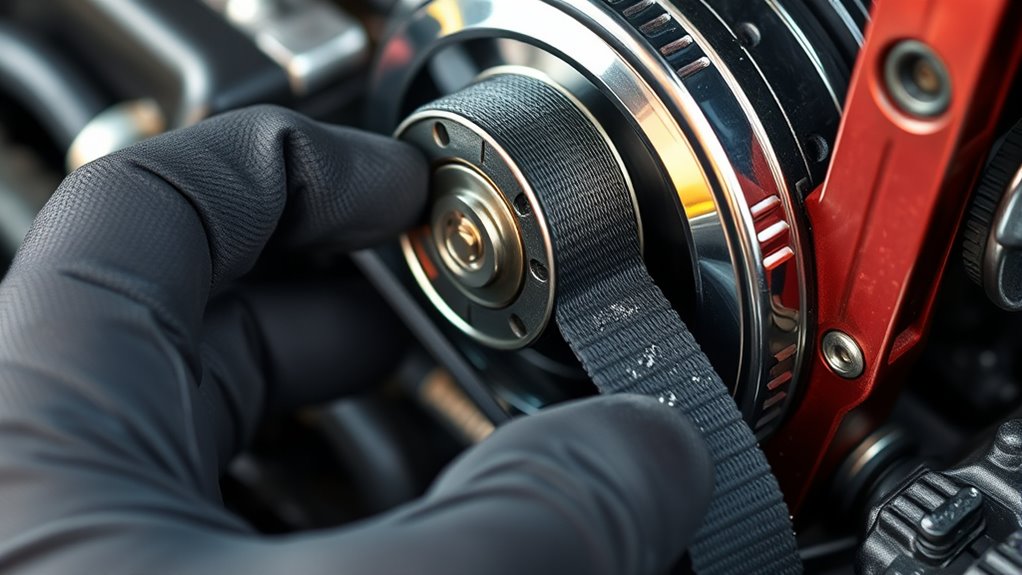

To inspect your serpentine belt, look for surface cracks, fraying, or missing chunks along the edges or ribs, which indicate wear. Check the belt’s tension by pressing it mid-pulley; it should have about half an inch of give. Also, examine pulleys and tensioners for smooth operation and proper alignment. Address any signs of damage or looseness promptly. Keep going to discover more detailed tips on maintaining your belt’s health and avoiding breakdowns.
Key Takeaways
- Regularly inspect the belt for surface cracks, fraying, glazing, or missing chunks.
- Check belt tension by pressing midway; it should have about half an inch of give.
- Examine pulleys and tensioners for smooth operation and proper alignment.
- Look for signs of belt misbehavior, such as slipping, fraying, or cracks.
- Perform inspections every few thousand miles or during oil changes to prevent unexpected failures.
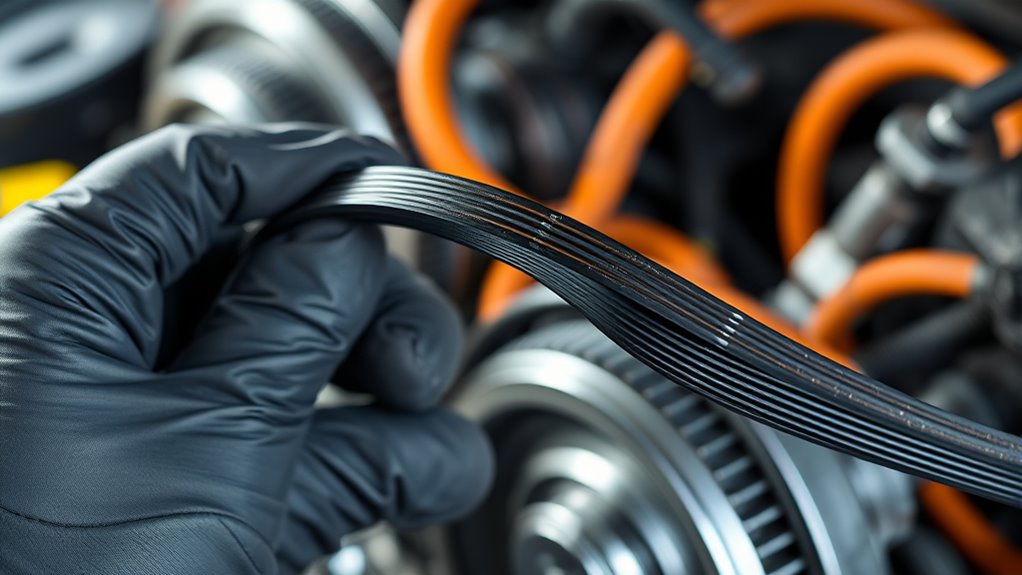
Regularly inspecting your serpentine belt is essential to keep your vehicle running smoothly. This belt drives multiple critical components, including the alternator, power steering pump, and air conditioning compressor. Over time, wear and tear can compromise its effectiveness, leading to unexpected breakdowns. One of the most common issues you’ll notice during inspection is belt cracks. These cracks often appear on the surface of the belt, especially along the edges or across the ribs. While minor surface cracks might not immediately cause failure, deep or extensive cracks are clear signs that the belt is deteriorating and needs replacement. Ignoring these cracks increases the risk of the belt snapping suddenly, which can leave you stranded or cause damage to other engine parts.
Regularly check your serpentine belt for cracks to prevent unexpected breakdowns.
Along with checking for belt cracks, performing a tension check is equally important. The tension of your serpentine belt determines how well it transmits power without slipping. If the belt is too loose, it can slip off the pulleys or fail to turn the accessories efficiently, leading to poor performance or overheating. Conversely, if it’s too tight, it can strain the pulleys and bearings, accelerating wear and potentially causing damage. To check tension, press down on the belt at its midpoint between pulleys. It should have a slight give—generally about half an inch of movement—indicating proper tension. If the belt feels slack or overly tight, adjust the tensioner accordingly. Many modern vehicles have automatic tensioners that maintain proper tension, but it’s still good to verify their condition regularly.
Inspecting the belt for cracks, checking tension, and understanding the importance of belt maintenance go hand in hand. A cracked belt with proper tension might still be at risk if the cracks are deep or widespread. Conversely, a belt with minimal cracks but incorrect tension can also cause issues. During your inspection, look for any signs of glazing, fraying, or missing chunks, as these indicate that the belt is nearing the end of its lifespan. Don’t forget to also examine the pulleys and tensioner for smooth operation, as misaligned or worn pulleys can accelerate belt wear or cause slipping.
Performing these checks regularly, ideally every few thousand miles or during routine oil changes, keeps your vehicle in top shape. Catching signs of belt cracks or improper tension early saves you money and hassle in the long run. It’s a simple task that can prevent major engine problems, ensuring your drives remain smooth and safe. Keep a close eye on your serpentine belt, and you’ll enjoy a more reliable vehicle with fewer unexpected breakdowns.
Frequently Asked Questions
How Often Should I Replace My Serpentine Belt?
You should replace your serpentine belt every 60,000 to 100,000 miles, but check it regularly for signs of wear. Make sure to inspect the belt tension and pulley alignment, as loose tension or misaligned pulleys can cause premature failure. If you notice cracks, fraying, or shiny spots, replace it promptly to prevent engine damage. Routine inspections help guarantee your belt stays in good condition and your vehicle runs smoothly.
Can I Inspect the Belt Without Removing Engine Components?
Did you know that over 80% of serpentine belt failures could be prevented with regular checks? You can perform a visual inspection without removing engine components by carefully examining accessible areas for cracks, fraying, or glazing. Just make certain you follow safety precautions like disconnecting the battery and wearing gloves. Keep an eye on the belt’s condition regularly to avoid unexpected breakdowns and maintain your vehicle’s reliability.
What Are the Signs of an Impending Serpentine Belt Failure?
You’ll notice signs of impending serpentine belt failure if you see belt cracking or fraying, indicating it’s weakening. Squealing sounds when you start or run your engine also signal trouble, often caused by a slipping or loose belt. Pay attention to these signs, and don’t ignore them. Addressing them early can prevent more serious issues like engine overheating or loss of power steering.
Are There Different Types of Serpentine Belts for Various Vehicles?
Yes, there are different types of serpentine belts for various vehicles. You should consider the belt material, such as rubber or synthetic compounds, to suit your vehicle’s needs. Additionally, the belt length varies depending on your engine configuration. Always check your vehicle’s specifications or consult your owner’s manual to guarantee you get the right belt size and material, which helps maintain proper function and longevity.
How Do I Choose the Right Replacement Belt for My Car?
You choose the right replacement belt by checking your vehicle’s manual for the correct size and specifications. Focus on belt material quality—rubber or reinforced materials last longer. Also, consider brand compatibility; sticking to reputable brands ensures better durability and fit. Measure the existing belt carefully or bring it to the store. This guarantees you get a belt that fits perfectly, performs reliably, and matches your vehicle’s requirements.
Conclusion
Now, as you glance under the hood, imagine the serpentine belt as the lifeline of your engine, quietly turning the heartbeat of your car’s essential systems. A simple inspection keeps this crucial ribbon in check, preventing sudden failures that can leave you stranded in the middle of nowhere. Take a moment to look closely—your attentive eye ensures the smooth, rhythmic pulse of your vehicle’s journey continues, guiding you safely down every road ahead.