If your vehicle has mass air flow sensor issues, you might notice rough idling, hesitation, or a drop in fuel efficiency. A faulty sensor can send incorrect airflow data, causing your engine to run rich or lean, which triggers poor performance or stalling. Dirt, debris, or wiring problems often cause these issues. Regular cleaning and inspection can fix many problems, but persistent trouble means you should check further details to get it fully sorted.
Key Takeaways
- A faulty MAF sensor causes rough idling, hesitation, poor acceleration, and decreased fuel efficiency.
- Dirt, dust, or debris buildup can miscalibrate the sensor, leading to inaccurate airflow readings.
- Damaged or corroded wiring hampers signal transmission, resulting in engine performance issues.
- Regular cleaning with MAF cleaner and inspecting wiring help maintain proper sensor function.
- If issues persist after cleaning and checks, replacing the sensor is often necessary.
A failing mass air flow (MAF) sensor can cause your vehicle to run poorly or even stall, making it vital to recognize the signs early. One common issue that affects MAF sensor performance is improper sensor calibration. Over time, dirt, dust, or debris can accumulate on the sensor, throwing off its calibration and leading to inaccurate readings. When the sensor isn’t properly calibrated, your engine control unit (ECU) receives incorrect data about the amount of air entering the engine. This miscommunication can cause your vehicle to run rich or lean, resulting in rough idling, hesitation during acceleration, or decreased fuel efficiency. To avoid these problems, it’s imperative to periodically check and recalibrate the sensor if needed, especially after cleaning or replacing the MAF sensor. Some vehicles might require professional calibration tools, but in many cases, simple cleaning can restore proper function. Proper calibration is essential for maintaining airflow accuracy, which directly impacts engine performance.
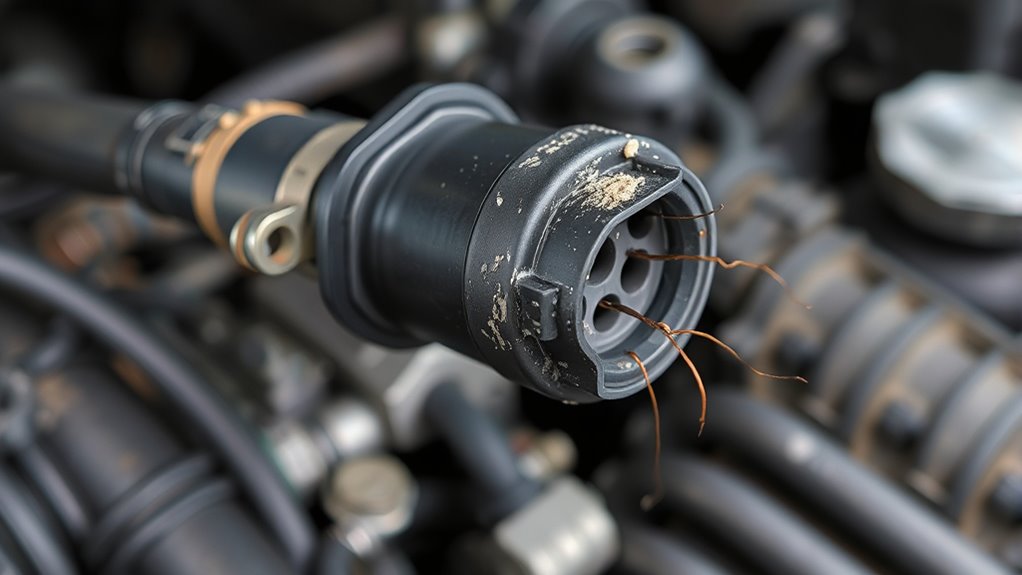
Wiring problems are another common culprit behind MAF sensor issues. The sensor relies heavily on its wiring harness to transmit signals to the ECU. Damaged wires, corrosion, or loose connections can interfere with this communication, making the sensor’s readings unreliable. If the wiring is compromised, you might notice symptoms like fluctuating engine idle, sudden stalling, or the check engine light illuminating. It’s vital to inspect the wiring harness thoroughly, looking for visible signs of damage or corrosion. Sometimes, a simple repair or replacement of damaged wires can resolve the issue. Additionally, ensure that connectors are securely attached and free of dirt or corrosion, which can hinder electrical conductivity. If you suspect wiring problems, using a multimeter to test the continuity of the wires can help identify broken or shorted circuits.
In many cases, addressing wiring problems and guaranteeing proper sensor calibration can considerably improve your MAF sensor’s performance. Regular maintenance, such as cleaning the sensor with a specialized MAF cleaner and inspecting wiring connections, can prevent many issues before they escalate. Remember, a poorly functioning MAF sensor impacts your vehicle’s overall performance, fuel economy, and emissions. If cleaning and wiring checks don’t resolve the problem, you might need to replace the sensor altogether. However, always start with simple diagnostics like verifying calibration and wiring integrity, as these are often the root causes of MAF sensor trouble. By staying vigilant and proactive, you’ll keep your engine running smoothly and avoid costly repairs down the line.
Frequently Asked Questions
How Can I Prevent Mass Air Flow Sensor Problems?
To prevent mass air flow sensor problems, you should regularly check for airflow restrictions and keep the sensor clean. Guarantee proper sensor calibration during maintenance to maintain accuracy. Avoid using harsh cleaners that can damage the sensor. Also, replace air filters when dirty to reduce debris that can cause contamination. By following these steps, you’ll help your sensor function correctly and extend its lifespan.
What Are the Signs of a Failing MAF Sensor?
Like a warning bell ringing loud, signs of a failing MAF sensor include engine misfires, rough idling, and a sudden drop in fuel efficiency. You might notice your car stalls or struggles to accelerate smoothly. These symptoms act as your vehicle’s way of telling you something’s wrong, so pay attention. Ignoring them can lead to more serious issues, so get your sensor checked out as soon as these signs appear.
Can Cleaning the MAF Sensor Fix Issues?
Cleaning the MAF sensor can sometimes fix issues caused by dirt or debris, but it doesn’t address sensor calibration problems or airflow obstruction. If your sensor is dirty, gentle cleaning with MAF sensor cleaner may improve performance. However, if there’s a calibration issue or airflow obstruction, cleaning alone won’t resolve the problem. In those cases, replacing the sensor or fixing airflow blockages is necessary for proper engine function.
How Much Does It Cost to Replace a MAF Sensor?
Replacing your MAF sensor typically costs between $150 and $300, depending on your vehicle make and model. The price includes parts and labor, and some sensors come with a part warranty for added peace of mind. Keep in mind that a new sensor may require calibration for peak performance, which could add to the cost. Always ask your mechanic if calibration is included in the price to ensure proper function.
Is Driving With a Faulty MAF Sensor Safe?
Driving with a faulty MAF sensor isn’t safe because it can cause airflow disruption, leading to poor engine performance. You might think it’s just an inconvenience, but ignored issues can worsen, risking engine damage or breakdown. A malfunctioning sensor can also affect sensor calibration, making your vehicle less reliable. For your safety and your engine’s health, get it checked and repaired promptly to avoid bigger problems down the road.
Conclusion
Dealing with mass air flow sensor issues can be tricky, but catching problems early can save you a lot of headaches down the road. Keep an eye on your car’s performance and don’t ignore warning signs. Remember, a stitch in time saves nine—addressing sensor problems promptly keeps your engine running smoothly and avoids costly repairs. Stay proactive, and your vehicle will thank you for it.