
Fuel economy ratings show how efficiently a vehicle uses fuel, helping you compare different models easily. They are determined through standardized tests that simulate city and highway driving in controlled conditions, providing MPG numbers for each. Keep in mind that real-world results may vary based on driving habits, terrain, and maintenance. These ratings are a useful starting point for making smart choices, and exploring further can help you understand how they best apply to your driving needs.
Key Takeaways
- Fuel economy ratings indicate how many miles a vehicle can travel per gallon of fuel, helping compare efficiency.
- These ratings are based on standardized EPA testing procedures simulating city and highway driving conditions.
- The labels display two MPG numbers: one for city driving and one for highway, aiding in understanding real-world performance.
- Actual fuel economy can vary due to driving habits, terrain, weather, and vehicle maintenance, despite standardized ratings.
- Ratings provide a consistent baseline for comparison, but real-world mileage may differ, so consider driving conditions when evaluating vehicles.
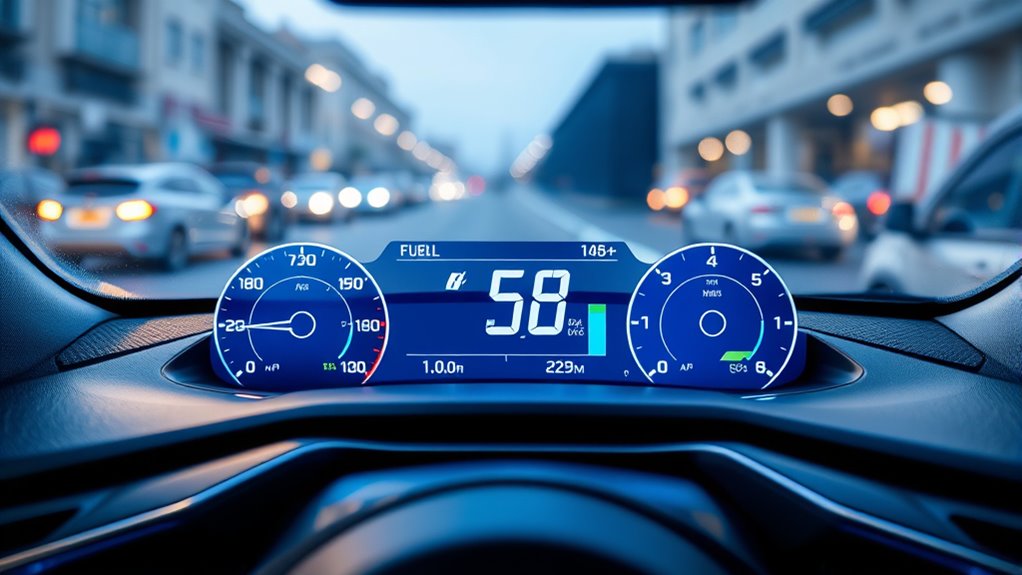
When shopping for a new vehicle, understanding fuel economy ratings can help you make smarter decisions and save money in the long run. These ratings are primarily based on EPA testing procedures, which are designed to provide consistent and comparable data across different vehicle models. The EPA (Environmental Protection Agency) conducts standardized tests that simulate real-world driving conditions, including city and highway driving, to determine how much fuel a vehicle consumes. This process guarantees that the fuel economy figures you see are not just estimates but are grounded in rigorous testing designed to reflect typical driving habits.
Fuel economy labels, often found on new cars and in vehicle brochures, display these EPA ratings clearly. You’ll typically see two numbers: one for city driving and one for highway driving. These figures give you a quick snapshot of how efficiently a vehicle uses fuel in different conditions. It’s important to remember that actual mileage can vary based on factors like driving style, terrain, and maintenance, but these labels offer a reliable baseline. By understanding what these labels represent, you can better compare different vehicles and choose one that aligns with your daily driving needs and budget. Additionally, high contrast in test conditions ensures the ratings are consistent and comparable across models, aiding consumers in making informed choices.
Fuel economy labels show city and highway MPG to help you compare vehicle efficiency reliably.
The EPA testing procedures involve a series of controlled driving cycles performed in laboratory settings. These cycles mimic stop-and-go city traffic and steady highway cruising. The vehicle’s fuel consumption during these tests is measured, then translated into miles per gallon (MPG). Automakers submit their vehicles for testing, and the EPA verifies the results for accuracy. This system helps guarantee that the ratings are fair and consistent across the industry. When reviewing fuel economy labels, pay attention to both city and highway MPG, as they can differ markedly depending on the vehicle type and driving conditions. Knowing the distinction can help you anticipate real-world performance better.
While EPA testing procedures aim for accuracy, actual fuel economy can vary. Factors such as driving habits, vehicle load, tire pressure, and even weather can influence your real-world MPG. Nonetheless, the fuel economy labels provide a valuable starting point for making comparisons. They help you weigh the trade-offs between different vehicles—such as size, power, and fuel efficiency—so you can select a model that best fits your lifestyle. Ultimately, understanding these ratings and the testing behind them empowers you to make informed choices, avoid surprises, and save money over the vehicle’s lifespan.
Frequently Asked Questions
How Do Driving Habits Affect Fuel Economy Ratings?
Your driving style and route choice directly impact your fuel economy ratings. Aggressive driving, like speeding or rapid acceleration, wastes fuel, while smooth, steady driving conserves it. Choosing routes with less traffic, fewer stops, and flatter terrain helps improve efficiency. By adopting a calmer driving style and planning your routes wisely, you can maximize your fuel economy and save money on fuel costs.
Do Fuel Economy Ratings Vary Across Different Vehicle Models?
Did you know that fuel economy ratings can differ by up to 30% between vehicle models? Yes, they do vary across different vehicle models due to engine variants and adherence to fuel efficiency standards. Some models, equipped with advanced engines or hybrid systems, often outperform others. So, when choosing a vehicle, consider these factors, as they notably impact your fuel economy and overall savings.
How Often Should I Check My Vehicle’s Fuel Efficiency?
You should check your vehicle’s fuel efficiency regularly, ideally every few weeks or after every tank of gas. Use mileage tracking apps or manual logs to monitor changes over time. This helps you spot issues early and apply fuel efficiency tips, like proper tire inflation and smooth driving. Consistent checks make certain you’re getting the best mileage, saving you money and reducing your environmental impact.
What Role Does Vehicle Maintenance Play in Fuel Economy?
Coincidentally, your vehicle’s maintenance directly impacts your fuel economy. When you keep your engine tuned, it runs more efficiently, saving you gas. Proper tire pressure also plays an essential role—under-inflated tires increase rolling resistance, lowering mileage. Regularly checking and maintaining these aspects guarantees your car operates at its best, helping you get the best fuel efficiency possible and saving money on fuel in the long run.
Are Electric Vehicles Included in Fuel Economy Ratings?
Yes, electric vehicle ratings are included in fuel economy standards, but they’re measured differently from gasoline-powered cars. Instead of miles per gallon, electric vehicles are rated using MPGe (miles per gallon equivalent) to show how efficiently they use energy. When you look at electric vehicle ratings, you’ll see how they compare to traditional cars, helping you make informed decisions aligned with fuel economy standards.
Conclusion
Think of fuel economy ratings as your car’s trusted compass on a long journey. Just like a compass guides you through unfamiliar terrain, these ratings help you navigate your driving choices, saving you time and money. By understanding what the numbers mean, you steer wisely, avoiding hidden pitfalls. With this knowledge, you’re equipped to chart a smoother, more efficient course—making every mile count, and ensuring your trip is as effortless as following a clear, steady path.