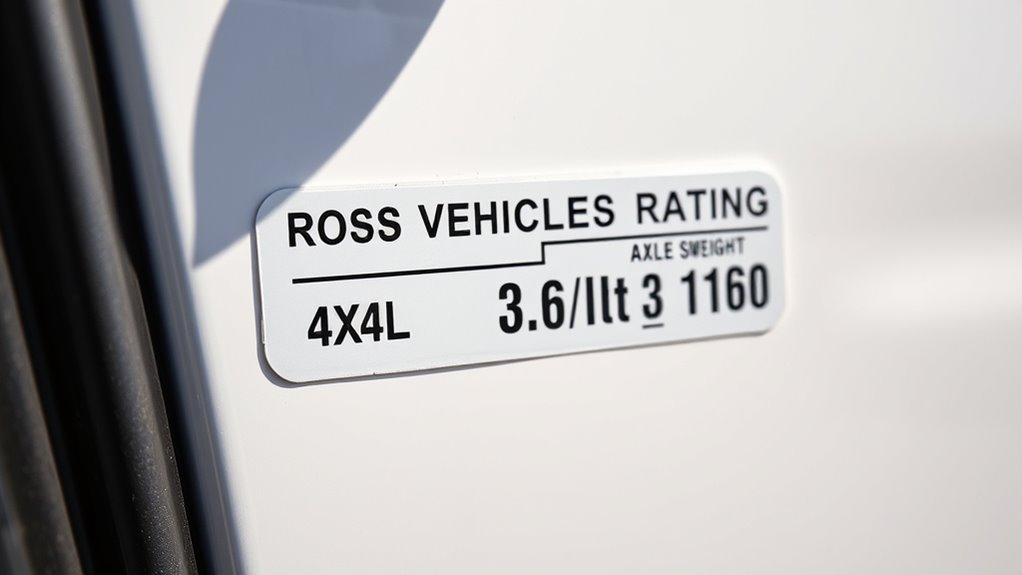

Understanding your vehicle’s weight ratings is key to staying safe and avoiding damage. These ratings include towing capacity and payload limits, which are based on manufacturer testing and provided on your vehicle’s manual or door placard. Always check these before hauling loads or trailers, distribute the weight evenly, and keep within limits. Respecting your vehicle’s ratings improves safety, longevity, and performance—keep going to discover how proper load management makes your trips safer and smoother.
Key Takeaways
- Vehicle weight ratings specify safe limits for towing capacity, payload, and overall vehicle weight to ensure safe operation.
- Find weight ratings on the owner’s manual or placard on the driver’s side door frame.
- Overloading beyond rated limits can cause steering, brake, drivetrain damage, and safety hazards.
- Distribute loads evenly and use accessories rated for your vehicle’s weight capacity.
- Respecting weight ratings maintains safety, vehicle performance, and prolongs the lifespan of your vehicle.
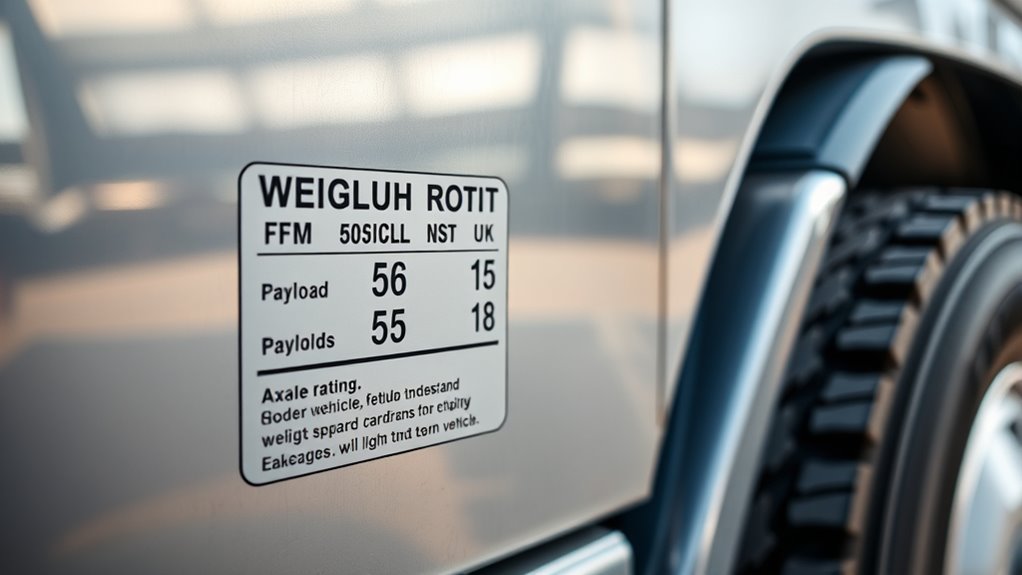
Understanding vehicle weight ratings is vital for guaranteeing your vehicle operates safely and efficiently. These ratings, which include towing capacity and payload limits, are set by manufacturers to specify the maximum weight your vehicle can handle under different conditions. Recognizing and respecting these limits helps prevent accidents, mechanical failures, and excessive wear, ultimately prolonging your vehicle’s lifespan. When you know your vehicle’s towing capacity, you can confidently haul trailers, boats, or other loads without risking overload. Towing capacity refers to the maximum weight your vehicle can safely pull, and exceeding it can cause steering issues, brake failure, or damage to the drivetrain. Similarly, payload limits indicate the maximum weight your vehicle can carry in its cargo bed or cabin, including passengers and gear. Overloading beyond payload limits can lead to suspension damage, tire blowouts, or compromised handling, putting you and others at risk.
To make the most of your vehicle’s weight ratings, always check the specifications provided in the owner’s manual or on the placard typically found on the driver’s side door frame. These ratings are based on rigorous testing and consider factors like engine power, suspension strength, and braking capacity. When planning to tow or carry heavy loads, weigh your cargo beforehand to confirm it stays within the recommended payload limits. If you’re unsure about your vehicle’s towing capacity, consult the manufacturer’s guidelines or speak with a professional. Avoid the temptation to estimate or guess, as underestimating the weight can lead to dangerous situations. Remember that the combined weight of the trailer or load, including any additional gear or passengers, impacts your vehicle’s overall performance. Additionally, understanding vehicle weight ratings helps you optimize your vehicle’s performance and safety during operation.
Properly distributing the load is also essential. Keep heavier items centered and low to maintain balance, which improves handling and reduces strain on your vehicle. Use appropriate towing accessories, like hitches and brake controllers, rated for your specific load. Regularly inspect your vehicle’s tires, suspension, and braking system to ensure they’re in good condition, especially when approaching weight limits. Respecting your vehicle’s towing capacity and payload limits not only keeps you safe but also helps maintain fuel efficiency and reduces maintenance costs over time. Educating yourself about these ratings empowers you to make smarter decisions when hauling or carrying loads, ensuring every trip is both safe and efficient.
Frequently Asked Questions
How Do I Determine My Vehicle’s Maximum Towing Capacity?
You determine your vehicle’s maximum towing capacity by checking the owner’s manual, which provides specific towing limits. Look for the Gross Vehicle Weight Rating (GVWR) and Gross Combined Weight Rating (GCWR). Always prioritize towing safety by not surpassing these limits. Regular vehicle maintenance guarantees your vehicle handles towing tasks safely. If unsure, consult a professional or the manufacturer to avoid risking damage or safety issues when towing.
Can Vehicle Weight Ratings Change Over Time?
Like a clock that keeps ticking, vehicle weight ratings can change over time due to vehicle maintenance and wear. Regularly check your manual and stay attentive to weight distribution, as factors like suspension wear or added modifications can alter your vehicle’s limits. Staying proactive guarantees you don’t push beyond safe boundaries, helping you avoid surprises on the road and keep your vehicle performing at its best.
What Are the Risks of Exceeding Weight Ratings?
Exceeding weight ratings risks compromising your vehicle’s load distribution and braking performance. You could lose control, increase stopping distances, and cause tire or suspension damage. Overloading strains your vehicle’s components, making it harder to handle safely. Always stick to the manufacturer’s weight ratings to guarantee ideal load distribution and braking performance, protecting both your vehicle and your safety on the road.
How Do I Calculate the Weight of My Trailer?
To calculate your trailer weight, start by weighing the trailer alone using a public scale or a weighbridge. Then, add the weight of your cargo to determine the total trailer weight. Keep in mind your trailer’s cargo capacity to make certain you don’t exceed its limits. Regularly check your trailer’s weight to stay within safe operating ranges and avoid damaging your vehicle or risking safety on the road.
Are Weight Ratings the Same for All Vehicle Models?
Think of vehicle weight ratings like shoe sizes—each model has its own fit. Not all vehicle models have the same weight ratings, which are essential for vehicle safety and towing regulations. For example, a small SUV might have a lower towing capacity than a larger truck. Always check your specific vehicle’s ratings to avoid safety issues, as exceeding them could lead to accidents or fines.
Conclusion
Now that you understand vehicle weight ratings, you can confidently choose the right vehicle for your needs, avoiding any potential pitfalls. Remember, ignoring these ratings is like trying to navigate the internet without a browser—bound to lead to trouble. Always keep safety top of mind, and don’t be a Luddite when it comes to vehicle specs. With this knowledge, you’re better equipped than a knight with a trusty steed—ready for any journey ahead.