
Hybrid cars combine a gasoline engine with a small battery that charges itself through braking and engine use, ideal for longer trips and areas with limited charging options. Plug-in hybrids have larger batteries that let you drive further on electric power alone, especially if you can access charging stations. Your choice depends on your daily driving habits and infrastructure access. To learn more about how these vehicles differ and which might suit you best, keep exploring the details.
Key Takeaways
- Hybrids have smaller batteries, rely on gasoline and regenerative braking, and do not need charging stations.
- Plug-in hybrids feature larger batteries for extended electric-only driving, typically 20-50 miles.
- Charging infrastructure benefits plug-in hybrids, enabling maximum electric use, while hybrids recharge via engine and braking.
- Hybrids are suited for longer trips and areas with limited charging, whereas plug-in hybrids excel with daily short commutes and charging access.
- Battery capacity and driving habits determine whether a hybrid or plug-in hybrid best fits your needs.

Are you trying to decide between a hybrid and a plug-in hybrid vehicle? Understanding the key differences can help you make the best choice for your driving needs. One major factor to consider is battery capacity. Hybrid vehicles typically have smaller batteries, designed to work seamlessly with the gasoline engine, which means they rely less on electric power alone. These batteries are charged through regenerative braking and the engine itself, so you don’t need to plug them in. On the other hand, plug-in hybrids come equipped with larger batteries that can store more electric energy, allowing you to drive significant distances on electricity alone. This makes battery capacity a vital aspect if you’re aiming to maximize electric driving and reduce fuel consumption.
Hybrid cars have smaller batteries that don’t need charging, while plug-in hybrids feature larger, rechargeable batteries for extended electric driving.
The size of the battery directly influences how much electric range you can achieve on a single charge. With hybrid models, since the batteries are smaller, you’ll mostly use the electric motor at lower speeds or for short distances, switching over to gasoline power for longer trips. Plug-in hybrids, however, can often cover 20 to 50 miles purely on electric power, depending on the model. This means you can often do daily commutes without using any gasoline, saving money and reducing emissions. But to take advantage of that electric range, you’ll need access to a reliable charging infrastructure. Charging infrastructure refers to the network of charging stations and outlets available to recharge your vehicle’s larger battery. If you live in an area with plenty of charging stations, a plug-in hybrid becomes a more convenient and practical option.
Without sufficient charging infrastructure, the benefits of a plug-in hybrid diminish. You might find yourself limited to charging at home or work, which could be inconvenient if you lack a dedicated charging setup. Conversely, hybrids don’t depend on charging stations since their smaller batteries are replenished through regenerative braking and engine operation. This makes hybrids more flexible in areas where charging infrastructure is sparse. Additionally, advancements in battery technology continue to improve the electric range and charging times for plug-in hybrids, potentially making them even more appealing in the future. However, if your daily driving involves mostly short trips and you have good access to charging stations, a plug-in hybrid could greatly reduce your fuel costs and emissions by allowing more electric-only driving.
Ultimately, your choice hinges on your driving habits and access to charging infrastructure. If you often drive longer distances or lack convenient charging options, a hybrid might suit you better. But if you have a short daily commute, a reliable charging network, and want to maximize electric driving, a plug-in hybrid could be the smarter choice. Both options offer benefits, but understanding battery capacity and charging infrastructure helps you pick the vehicle that aligns with your lifestyle and environmental goals.
Frequently Asked Questions
How Do Maintenance Costs Compare Between Hybrids and Plug-In Hybrids?
You’ll likely find that maintenance costs for hybrids are generally lower than for plug-in hybrids. Hybrids tend to have more reliable battery longevity and fewer complex systems, which keeps repair costs down. Plug-in hybrids might require more frequent battery checks and potential replacements, increasing costs over time. Overall, hybrids usually save you money on maintenance, but keep in mind that both types need regular upkeep to stay in top shape.
Can You Convert a Hybrid Into a Plug-In Hybrid? if So, How?
You can’t directly convert a hybrid into a plug-in hybrid, as the modification process isn’t straightforward—”you can’t teach an old dog new tricks.” While some companies offer conversion kits, feasibility varies, and it often requires significant work, including installing a larger battery pack and charging system. It’s usually more practical to buy a plug-in hybrid rather than attempt such a conversion, saving you time and money in the long run.
What Are the Environmental Impacts of Hybrids Versus Plug-In Hybrids?
You’ll find that plug-in hybrids generally have a lower environmental impact than traditional hybrids because they can run on electric power longer, reducing emissions. By choosing a plug-in, you help decrease emissions and support battery recycling, which lessens environmental harm. However, manufacturing and disposing of larger batteries can have negative effects. Overall, plugging in more often benefits the environment through emission reduction and responsible battery management.
How Do Insurance Rates Differ for Hybrid and Plug-In Hybrid Vehicles?
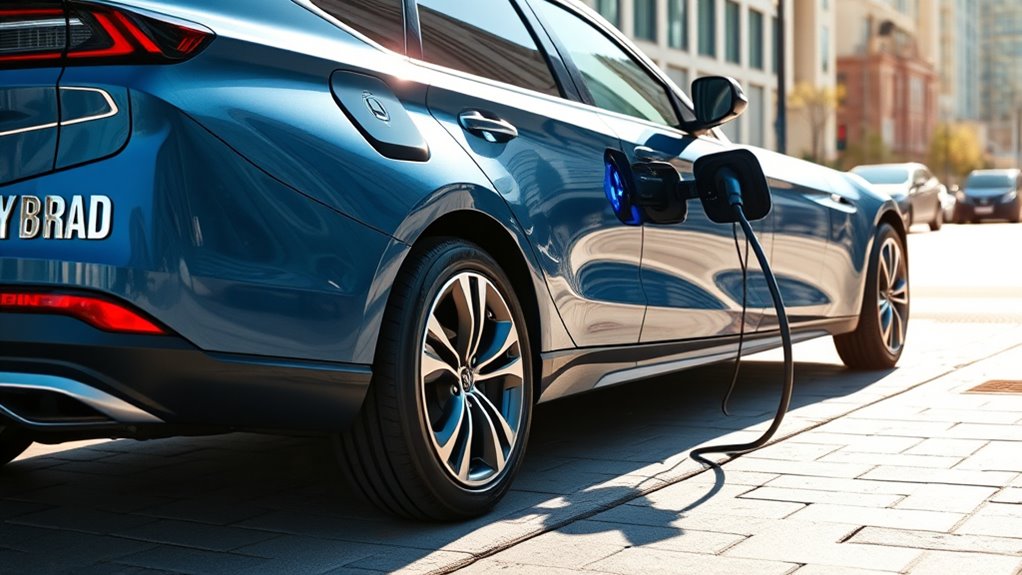
Imagine driving a sleek hybrid or plug-in hybrid, the sun glinting off its shiny surface. Insurance premiums for plug-in hybrids often run higher because they’re considered riskier, with higher repair costs and advanced technology. Your risk assessment influences your rates, and insurers see plug-ins as more vulnerable to theft or damage. However, some insurers offer discounts for eco-friendly vehicles, so shopping around can help you find better rates.
Are There Incentives or Rebates Specific to Either Hybrid or Plug-In Hybrid Models?
Yes, there are incentives and rebates for both hybrid and plug-in hybrid models. You might qualify for manufacturer incentives offered directly by automakers, which can reduce your vehicle’s price. Additionally, many states provide rebates specifically for plug-in hybrids, encouraging clean energy use. These incentives vary by location and model, so it’s worthwhile to check local programs to maximize your savings on these eco-friendly vehicles.
Conclusion
Now that you understand the differences between hybrids and plug-in hybrids, it’s clear each offers unique benefits. Do you want the convenience of shorter trips with less fuel or the option to go fully electric for longer drives? Ultimately, the choice depends on your driving habits and values. Whichever you choose, you’re taking a step toward a cleaner, more sustainable future. Are you ready to make that shift and drive change today?