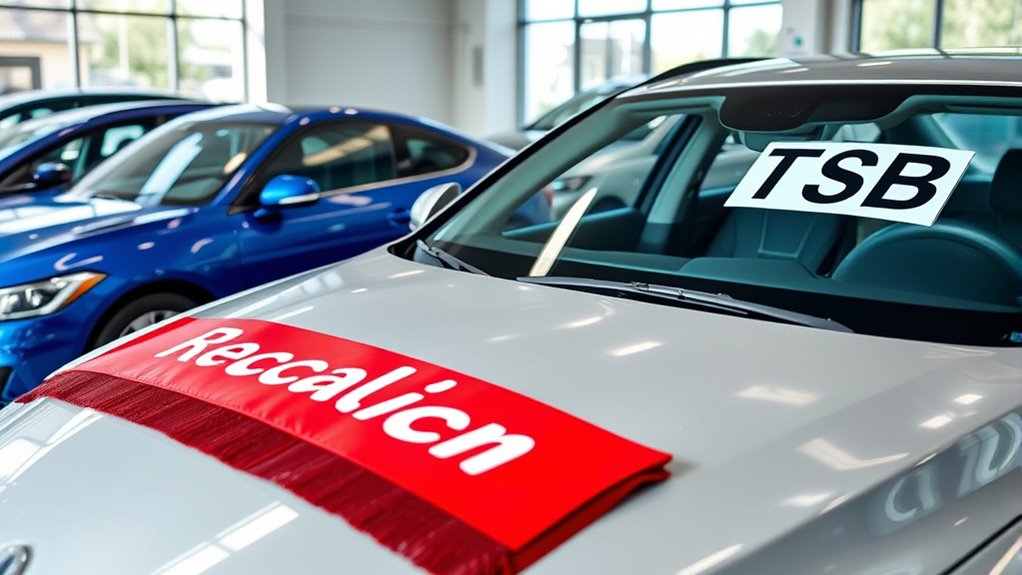

A recall campaign is a formal process initiated by manufacturers to fix safety-related defects in vehicles, requiring owner notification and usually free repairs. A TSB, or Technical Service Bulletin, is a guide for technicians that details known issues and how to fix them, without legally mandating repairs or owner notification. While recalls focus on safety and legal obligations, TSBs help maintain vehicle performance. To understand how these two mechanisms differ and connect, keep exploring their roles and procedures.
Key Takeaways
- Recall campaigns are legally mandated efforts to fix safety-related vehicle defects, while TSBs are non-mandatory guides for known issues.
- Recall campaigns require manufacturer notification, free repairs, and focus on safety-critical problems; TSBs provide troubleshooting advice without owner action.
- Recall campaigns address widespread safety defects affecting vehicle operation; TSBs typically cover recurring non-safety-related problems.
- Recall campaigns are initiated by manufacturers to ensure safety compliance; TSBs are issued to assist technicians during repairs.
- Recall campaigns are legally binding with owner notifications; TSBs serve as informational resources for repair procedures.
When it comes to automotive safety, understanding the differences between a recall campaign and issues with TSBs (Technical Service Bulletins) is crucial. Both play a role in maintaining your vehicle’s safety and performance, but they serve different purposes and involve distinct processes. Recognizing these differences helps you stay informed and ensures you know when your vehicle might need attention from the manufacturer. As a vehicle owner, you rely on manufacturers to uphold their responsibility for safety, whether through recalls or TSBs. Knowing how these mechanisms work can save you time, money, and potential safety risks.
A recall campaign is a formal process initiated by the manufacturer when a widespread safety defect or non-compliance with safety standards is identified. When a manufacturer discovers a problem that could threaten vehicle safety, they are legally responsible to notify owners, dealerships, and regulators. This notification typically involves mailing notices directly to owners and posting information online. The goal of a recall campaign is to fix the defect, often at no cost to you, regardless of whether your vehicle has exhibited issues. The manufacturer’s responsibility here is clear: they must address safety concerns proactively and ensure affected vehicles are repaired or, in severe cases, replaced. Recalls are usually extensive, affecting large groups of vehicles, and focus on safety-critical problems such as faulty airbags, brake failures, or steering issues.
Recall campaigns fix widespread safety issues at no cost, affecting many vehicles and addressing critical defects proactively.
In contrast, TSBs are issued by manufacturers to guide technicians through repairs or maintenance related to known problems that do not necessarily compromise safety or violate regulations. Think of TSBs as troubleshooting guides or updates to existing repair procedures. They are not mandates for vehicle owners to get repairs done immediately but serve as helpful resources for mechanics and service centers to resolve issues efficiently. TSBs often address recurring problems, but the responsibility for fixing them lies with the owner or the dealership during routine maintenance or warranty service. While TSBs are essential for vehicle safety and reliability, they do not carry the same legal weight as recalls. They’re more about improving the quality of repairs and informing technicians about best practices. Additionally, the automotive industry is increasingly adopting technological innovations to streamline these processes and improve overall safety standards.
Understanding the distinction between a recall campaign and TSBs helps you grasp manufacturer responsibility in maintaining vehicle safety. Recalls are legally binding and directly involve fixing safety-related defects at no cost to you. TSBs, on the other hand, are informational and aid in troubleshooting but don’t automatically mean your vehicle needs repairs unless specified during service. Being aware of these differences empowers you to take appropriate action, whether that’s waiting for a recall repair or asking your mechanic about TSB-related updates. Ultimately, both serve the broader goal of keeping your vehicle safe and reliable on the road.
Frequently Asked Questions
How Long Does a Recall Campaign Typically Take to Complete?
A recall campaign typically takes anywhere from a few days to several weeks to complete, depending on the complexity of the recall process and the number of vehicles involved. You’ll need to coordinate with dealerships or service centers, order parts, and schedule repairs. The campaign duration can vary, but manufacturers aim to resolve issues promptly to ensure safety and customer satisfaction. Stay in touch with your dealer for updates on the progress.
Are Recall Campaigns Mandatory for All Vehicle Owners?
Think of the recall process as a essential chapter in your vehicle’s safety story. Recall campaigns are generally mandatory for all vehicle owners, ensuring safety compliance. Ignoring them is like skipping a critical page—potentially risking your safety and that of others. Manufacturers are required by law to notify you, and following through helps keep your vehicle safe and compliant with safety standards. So, it’s best to participate fully.
Can a TSB Be Issued Without a Safety Defect?
A TSB can be issued without a safety defect because manufacturer liability and consumer rights are involved. Manufacturers may issue a TSB to address issues that aren’t safety-related but still affect vehicle performance or reliability. This helps protect your rights as a consumer by providing guidance and solutions. While not mandatory, TSBs offer valuable information, and staying informed can help you guarantee your vehicle remains safe and well-maintained.
How Do Recall Campaigns Impact Vehicle Resale Value?
Think of your car like a trusted friend; when recall campaigns happen, it’s like fixing a friend’s flaw—restoring trust. Recall campaigns can lower your vehicle’s resale value since buyers worry about brand reputation and potential future issues. This resale depreciation makes your car less appealing, even after repairs. Addressing recalls promptly can help maintain your vehicle’s value and reassure future buyers of its reliability.
Is There a Cost Associated With Participating in a Recall Campaign?
Yes, there is usually no cost to participate in a recall campaign because manufacturer liability covers the expenses. During the recall process, the manufacturer is responsible for fixing the issue at no charge to you. They handle the costs related to parts and labor, ensuring your safety without financial burden. You just need to follow the instructions provided and schedule the necessary repairs through your dealership.
Conclusion
Understanding the difference between a recall campaign and a TSB helps you stay informed and protected. While a recall campaign directly addresses safety issues and involves manufacturer action, a TSB offers guidance and troubleshooting without mandatory repairs. Think of a recall as a safety net, catching serious problems before they cause harm, whereas a TSB is more like a helpful map, guiding you through minor issues. Both keep your vehicle safer, but one’s a proactive fix, the other a helpful hint.