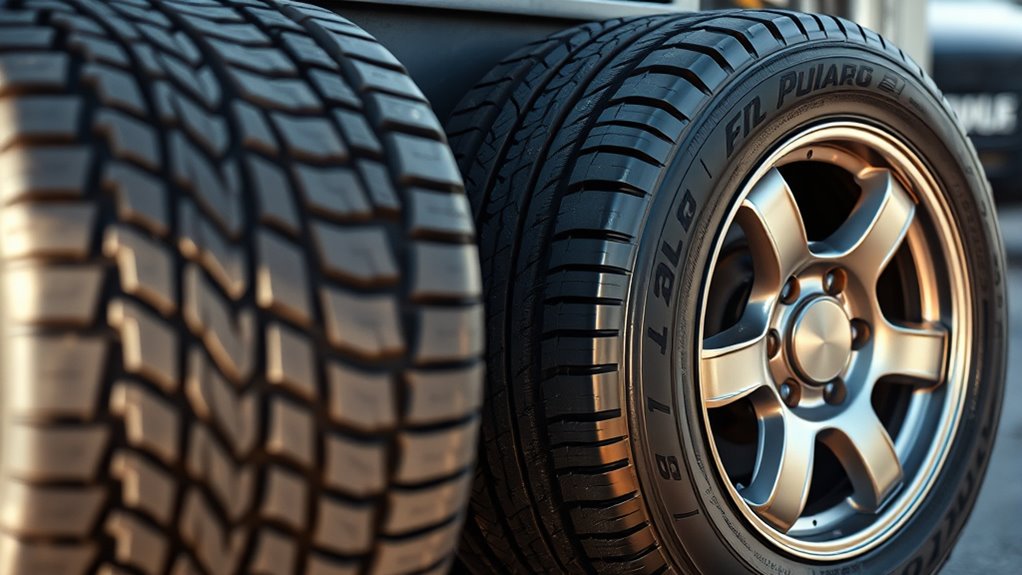
There are mainly two types of spare tires you should know about: full-size spares and space-savers, or “donuts.” Full-size spares match your regular tires and can often be used longer distances, while space-savers are smaller and meant for short-term use only. Each type has limitations on speed, distance, and compatibility. Understanding these differences helps you stay safe on the road—continue along to learn more about proper use and maintenance.
Key Takeaways
- Full-size spares match regular tires for seamless replacement, while space-savers are smaller and intended for short-term use.
- Space-saver spares require specific inflation levels and should be used within limited distances and speeds.
- Compatibility depends on wheel size, bolt pattern, and design; incorrect spares can cause handling issues.
- Full-size spares generally allow for longer drives, whereas space-savers are for emergency, short-term use only.
- Regularly check tire pressure and verify compatibility to maintain spare readiness and ensure safe vehicle operation.
When a flat tire strikes, knowing the type of spare tire in your vehicle can make all the difference. Whether you’re stranded on the side of the road or trying to get to a service station quickly, understanding your spare’s characteristics can help you make safe and informed decisions. One of the key factors to think about is tire inflation. Some spare tires, like the space-saver or “donut” types, require specific tire pressure levels to function correctly. If you don’t maintain proper tire inflation, the spare might not perform as expected, increasing the risk of further damage or a blowout. Regularly checking the inflation pressure of your spare guarantees it’s ready when you need it most. Maintaining correct tire pressure also helps preserve wheel compatibility, especially when switching between different types of tires. Using a spare with incorrect inflation can cause uneven wear or compromise the integrity of the wheel, making it vital to keep the spare properly inflated and in good condition.
Wheel compatibility is another vital aspect. Not all spare tires fit every vehicle or wheel well. Some vehicles come equipped with full-size spares that match their regular tires, offering the advantage of seamless replacement without affecting vehicle handling or balance. Others, like space-savers, are smaller and designed specifically to save space in your trunk but may not be compatible with your regular wheels. When replacing a flat, you need to guarantee that the spare you use is compatible with your vehicle’s wheel size, bolt pattern, and overall design. Using an incompatible spare can cause vibrations, uneven steering, or even damage to the suspension system. It’s a good idea to consult your vehicle’s owner’s manual to understand which spare types are compatible with your car. Additionally, some spare tires are designed for short-term use only, emphasizing the importance of understanding limitations. A space-saver might be suitable for driving a limited distance at reduced speeds, but it’s not meant for long highway trips. In contrast, a full-size spare typically allows you to continue your journey as if nothing changed. Recognizing the limitations of your spare tire, including its wheel compatibility, helps prevent unsafe situations down the road. By keeping track of tire inflation, guaranteeing wheel compatibility, and understanding the specific use-case of your spare, you’re better prepared to handle flat tires safely and efficiently. This knowledge helps you avoid unnecessary damage and guarantees your vehicle remains safe on the road until a permanent repair can be made. Additionally, understanding paint sprayer types and benefits can be useful if you need to replace or repair vehicle parts involving paint, ensuring proper application and maintenance for a professional finish.
Frequently Asked Questions
Can I Drive on a Spare Tire Long-Term?
You shouldn’t drive on a spare tire long-term. It’s designed for temporary use only, and its tire durability isn’t built for extended driving. Using it beyond the recommended distance or time can compromise safety and damage your vehicle. Always replace or repair your regular tire as soon as possible, and use the spare only to get to a service station. Relying on it too long risks accidents and unnecessary wear.
Are All Spare Tires Compatible With Every Vehicle?
Not all spare tires are compatible with every vehicle, as they vary in tire pressure and wheel size. You need to check if your spare matches your car’s specifications, ensuring proper fit and safety. If the wheel size is too small or the tire pressure isn’t correct, it can lead to handling issues or damage. Always verify these details before using a spare to avoid potential problems on the road.
How Do I Know if My Spare Tire Is Still Usable?
You can tell if your spare tire is still usable by checking its tire pressure and tread depth. Confirm the tire pressure matches your vehicle’s recommended PSI—use a gauge to verify. Also, examine the tread depth; if it’s worn down to less than 2/32 inch, it’s unsafe to use. Regularly inspect your spare to avoid surprises when you need it most.
What Are the Signs a Spare Tire Needs Replacing?
You’ll want to replace your spare tire if the tire tread is worn down below 2/32 inch or if it shows cracks, bulges, or dry rot. Also, check the inflation pressure regularly; if it’s low or inconsistent with recommended levels, it’s a sign the tire needs replacing. These signs indicate your spare might not keep you safe in an emergency, so don’t delay in swapping it out.
Do Spare Tires Affect Vehicle Handling or Safety?
Yes, a spare tire can affect your vehicle’s handling and safety if it isn’t properly maintained. Guarantee your spare has correct tire pressure and adequate tread depth; low pressure or worn tread can lead to poor traction and control. Using an underinflated or worn spare may make your vehicle harder to steer and increase the risk of accidents, especially in emergency situations. Regularly check your spare to stay safe on the road.
Conclusion
Knowing the different spare tire types helps you stay prepared, but remember their limitations. For example, a space-saver tire can last only about 50 miles at speeds up to 50 mph. That’s roughly the distance from your driveway to the nearest gas station. Keep in mind, using the wrong spare can lead to unsafe driving. Stay informed, check your spare regularly, and replace it when needed—so you’re never caught off guard on the road.