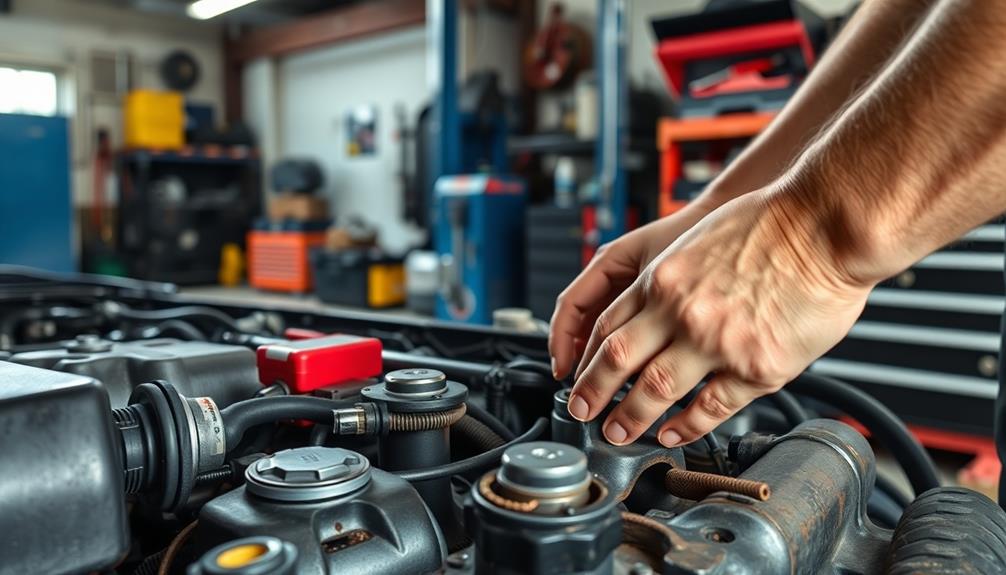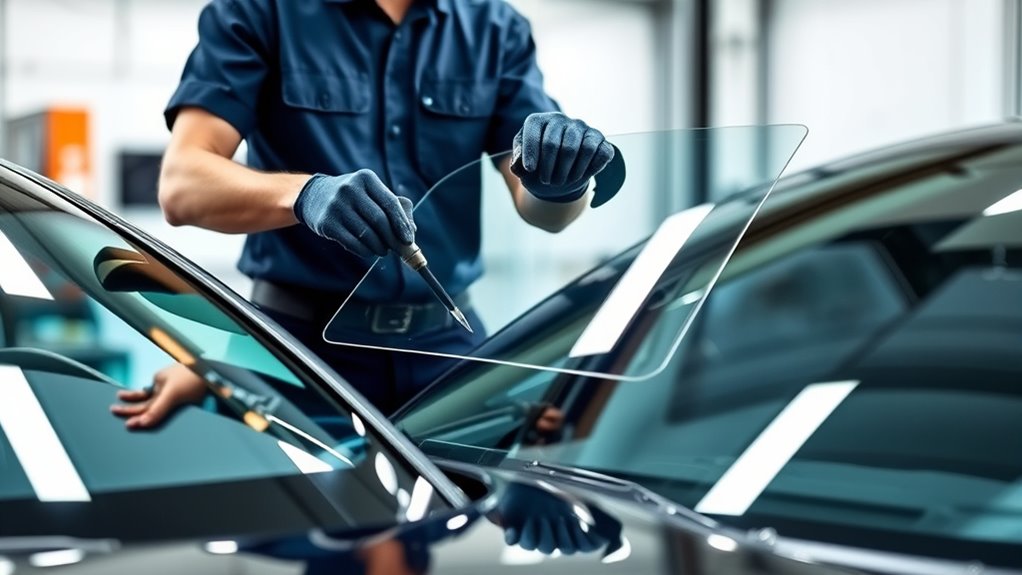

An auto glass technician specializes in installing, repairing, and replacing vehicle glass like windshields, side, and rear windows. Your job is to guarantee repairs meet strict safety standards and help keep drivers protected on the road. You carefully remove damaged glass, apply adhesives, and make sure everything fits perfectly. If you want to see how this work keeps vehicles safe and durable, keep exploring to learn more.
Key Takeaways
- An auto glass technician installs, repairs, and replaces vehicle glass such as windshields and windows.
- They ensure repairs meet safety standards to protect drivers and passengers.
- They use specialized tools, adhesives, and techniques to restore glass integrity safely.
- They assess damage to determine whether repairs or full replacements are necessary.
- They follow industry regulations and safety protocols to ensure high-quality, reliable work.

Have you ever wondered what it takes to become an auto glass technician? If you’re interested in vehicle safety and want to play a essential role in keeping drivers secure on the road, this career might be perfect for you. Auto glass technicians specialize in installing, repairing, and replacing various types of vehicle glass, including windshields, side windows, and rear windows. Your primary goal is to guarantee that each repair or replacement upholds the highest safety standards, protecting drivers and passengers during daily commutes or long trips. To do this effectively, you need a solid understanding of repair techniques and the significance of vehicle safety.
Discover how auto glass technicians ensure vehicle safety through expert repairs and replacements.
One key aspect of the job is mastering repair techniques that restore the integrity of damaged glass while maintaining the vehicle’s safety features. For example, you’ll learn how to remove broken glass pieces carefully, clean and prepare the surface, and apply adhesives or sealants with precision. Using proper repair techniques is essential because improper installation can compromise the vehicle’s structural strength, especially with windshields that provide rollover protection and support for airbags. Your work directly impacts vehicle safety by ensuring that the glass is securely in place and capable of withstanding impact.
In addition to technical skills, understanding the materials involved is fundamental. You’ll work with specialized adhesives, primers, and sealants designed for automotive glass, all of which require precise application. The proper use of these materials not only guarantees a secure fit but also prevents leaks, reduces noise, and maintains the vehicle’s overall integrity. As you develop your expertise, you’ll learn to evaluate different types of damage to determine whether a repair or replacement is necessary. Small chips and cracks can often be repaired using specific techniques, but larger or more severe damage typically calls for replacing the entire glass unit to guarantee safety.
Throughout your career, you’ll also stay updated on industry standards and regulations that govern auto glass work. This knowledge helps you perform repairs that meet safety requirements and pass inspections. Your attention to detail in following repair techniques and safety protocols demonstrates your commitment to vehicle safety and customer satisfaction. Whether you’re working in a shop or on-site, your goal is to deliver reliable, durable results that protect lives and keep vehicles functioning at their best. Becoming an auto glass technician means combining technical skill with a passion for safety, guaranteeing every repair contributes to safer journeys for everyone on the road. Additionally, understanding the vetted products used in repairs ensures you select the safest and most effective materials for each job.
Frequently Asked Questions
What Tools Do Auto Glass Technicians Typically Use?
You’ll typically use safety gear like gloves and goggles to safeguard yourself during repairs. Auto glass technicians also rely on specialized tools such as repair kits, including urethane applicators and blades, to remove old glass and install new panes. Additionally, you’ll use suction cups and pry tools to handle glass safely and precisely. These tools ensure you perform repairs efficiently while maintaining safety and quality standards.
How Long Does a Typical Windshield Replacement Take?
A typical windshield replacement takes about 1 to 2 hours, depending on your vehicle and the complexity of the job. During this time, you’ll make certain the windshield’s durability is restored, and any glass tinting is properly applied. You’ll wait patiently as adhesives cure, ensuring a secure fit, and enjoy the peace of mind that comes with a properly installed, durable windshield. Rushing this process can compromise safety and longevity.
Are Auto Glass Repairs Covered by Insurance?
Yes, auto glass repairs are often covered by insurance. You should check your policy’s insurance coverage to confirm, but many providers include windshield and auto glass repairs. When filing a claim, you’ll need to follow the claim process outlined by your insurer, which usually involves providing photos and an estimate. Once approved, your insurer may cover the full or partial cost, saving you money on repairs.
What Safety Precautions Do Technicians Follow?
You follow strict safety protocols and wear protective gear that’s as essential as a superhero’s armor. This includes gloves, goggles, and masks to prevent injuries and guarantee a safe working environment. By adhering to these precautions, you minimize risks from shattered glass or harmful chemicals. Your commitment to safety not only protects you but also assures top-quality repairs, making every job as secure as a fortress.
Can Auto Glass Be Repaired Instead of Replaced?
You can often repair a windshield cracking if the damage is small and not in the driver’s line of sight. Repair is quicker and more cost-effective, especially when your auto glass insurance covers it. However, if cracks are large, deep, or spreading, replacement becomes necessary to guarantee safety and structural integrity. Always have a professional evaluate the damage to determine the best course of action for your vehicle.
Conclusion
Think of an auto glass technician as the guardian of your vehicle’s window, the steady hand that keeps your journey clear and safe. Just like a lighthouse guides ships through fog, they illuminate the path to a safer drive, restoring your vehicle’s integrity with skill and care. Their work shields you from the storm outside, ensuring every mile is a smooth voyage. Trust in their expertise—your journey’s safety depends on it.