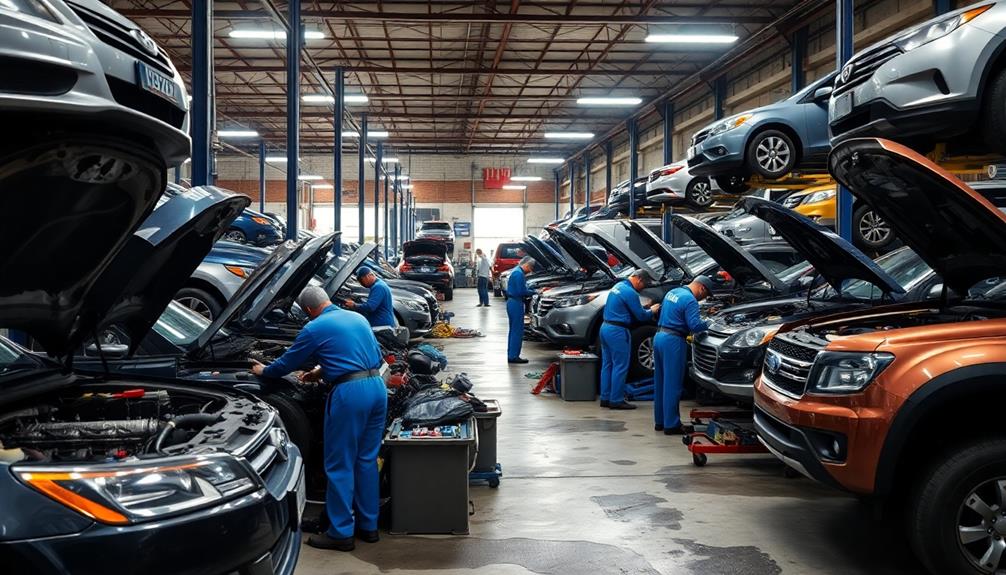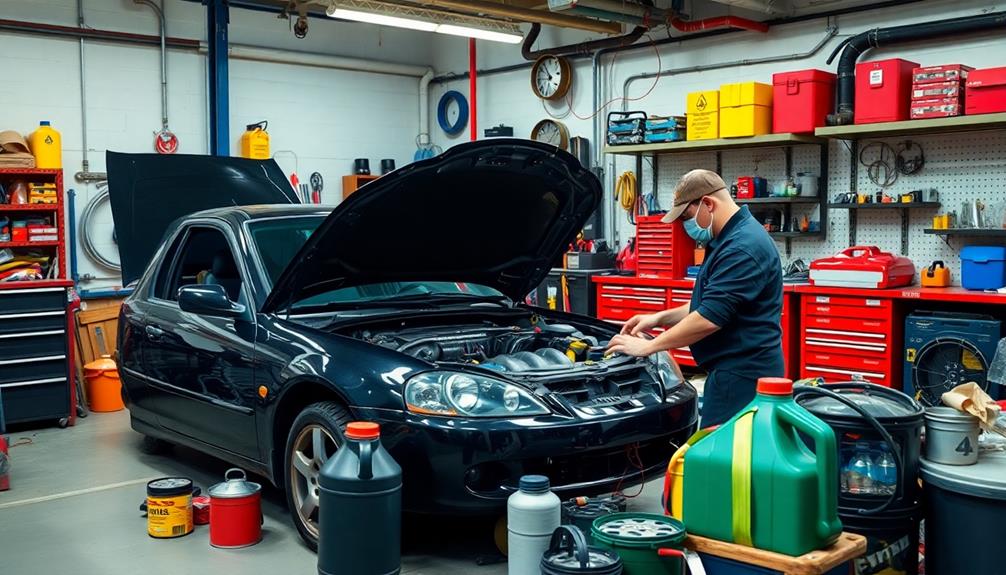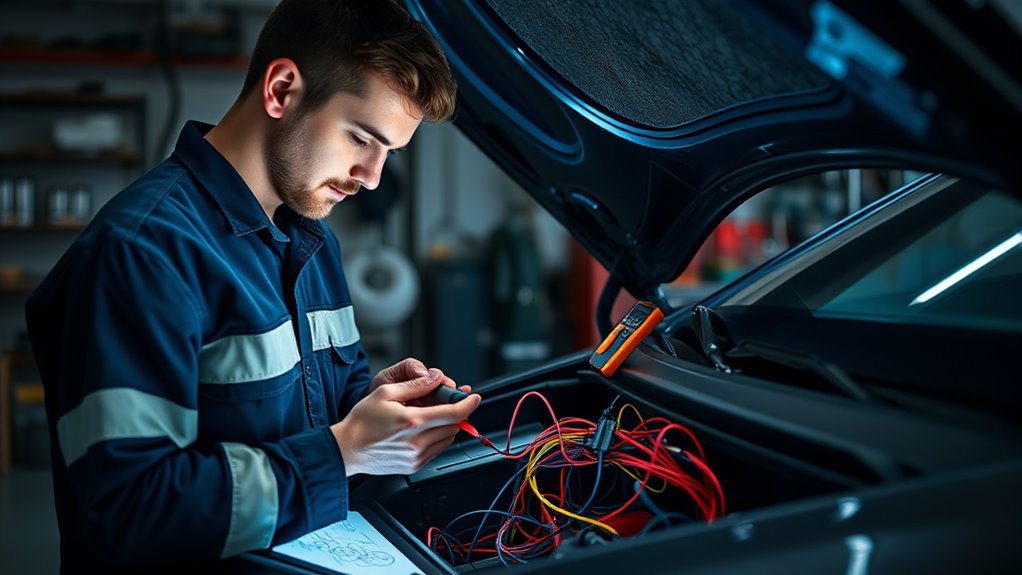

An automotive electrician specializes in diagnosing, repairing, and maintaining your vehicle’s complex electrical systems. They work on wiring, electronic modules, sensors, and advanced components like infotainment and driver-assistance features. Using specialized tools and diagnostic techniques, they quickly find issues like flickering lights or starting troubles, ensuring your car runs safely and reliably. If you want to understand the critical role they play in keeping your vehicle in top shape, stick around for more details.
Key Takeaways
- An automotive electrician specializes in diagnosing and repairing electrical systems in vehicles.
- They handle wiring, electronic modules, sensors, and electrical circuits.
- They use advanced diagnostic tools to identify faults accurately.
- Their work ensures vehicle safety, reliability, and electrical system performance.
- They focus specifically on electrical issues, unlike general mechanics.

If your vehicle’s electrical system is acting up, an automotive electrician is the professional you need to contact. These specialists are trained to handle everything from minor glitches to complex electrical failures. When your car’s lights flicker, the dashboard gauges malfunction, or you notice your battery isn’t holding a charge, an automotive electrician can quickly diagnose the problem. They use advanced tools and techniques to perform vehicle diagnostics, pinpointing exactly where the issue lies within your vehicle’s intricate electrical network. This precise identification helps guarantee repairs are accurate and efficient, saving you time and money.
Once they’ve identified the root cause, the automotive electrician proceeds with electrical system repairs. Whether it’s replacing a faulty wiring harness, fixing a malfunctioning sensor, or upgrading your car’s electrical components, they have the skills and experience to get the job done right. Unlike general mechanics, who may focus on engine or transmission issues, automotive electricians specialize specifically in electrical systems, making them the go-to experts for anything involving wiring, circuits, or electronic modules. They understand how each part interacts within the system, allowing them to perform repairs that restore your vehicle’s functionality and safety.
You might be surprised by how complex a modern vehicle’s electrical system really is. From sophisticated infotainment setups to advanced driver-assistance features, today’s cars rely heavily on electronic components. When something goes wrong, it can be challenging to identify the issue without specialized knowledge and equipment. That’s where an automotive electrician’s expertise in vehicle diagnostics comes into play. They use diagnostic scanners, multimeters, and other tools to analyze electrical signals and trace faults through wiring diagrams. This methodical approach ensures they don’t just treat symptoms but address the underlying problem, preventing future failures.
Your safety and the longevity of your vehicle depend heavily on a well-functioning electrical system. If you ignore warning signs like flickering lights, erratic gauges, or trouble starting your engine, minor issues can escalate into major repairs. An automotive electrician can provide a thorough assessment of your electrical system, perform necessary repairs, and advise you on maintenance to keep everything running smoothly. Their goal is to restore your vehicle’s electrical integrity, so you can drive confidently without worrying about unexpected breakdowns. Modern vehicles also incorporate wave and wind influences on their electrical systems, which can sometimes cause additional challenges that only a skilled electrician can address effectively. In short, they’re the experts who keep your vehicle’s electrical heartbeat healthy and strong.
Frequently Asked Questions
What Certifications Are Required to Become an Automotive Electrician?
You need to meet certification requirements and licensing standards to become an automotive electrician. Typically, this involves completing a relevant apprenticeship or technical program, gaining hands-on experience, and passing certification exams. In many regions, you must obtain a license from local or state authorities, demonstrating your knowledge of electrical systems and safety protocols. Staying current with industry certifications guarantees you’re qualified and compliant with evolving automotive technology standards.
How Do Automotive Electricians Diagnose Electrical Issues?
Imagine you’re a detective in a maze of wires, hunting for clues. You use diagnostic procedures like scanning codes, testing circuits, and inspecting connections. Troubleshooting techniques help you pinpoint issues—be it a blown fuse or faulty sensor—by systematically ruling out suspects. With a keen eye and specialized tools, you unravel electrical mysteries, ensuring your vehicle’s system runs smoothly again. You turn chaos into clarity, one circuit at a time.
What Tools Do Automotive Electricians Commonly Use?
You’ll use diagnostic tools like multimeters, oscilloscopes, and scan tools to troubleshoot electrical issues effectively. Wiring diagrams are essential for understanding complex circuits and pinpointing problems quickly. These tools help you measure voltage, check continuity, and interpret data from vehicle sensors. By combining diagnostic tools and wiring diagrams, you can accurately diagnose and repair electrical systems, ensuring the vehicle’s electronics function safely and efficiently.
Are Automotive Electricians Trained to Work on Hybrid Vehicles?
As an automotive electrician, you’re trained to handle hybrid system repair and electric vehicle charging with finesse. You won’t be caught off guard by those mysterious battery packs or high-voltage wiring. Think of yourself as the wizard of electric vehicles, ensuring hybrids run smoothly and charging stations stay powered. Your skills make you the hero in the race toward eco-friendly driving, mastering everything from basic maintenance to complex hybrid repairs.
How Often Should Vehicle Electrical Systems Be Inspected?
You should inspect your vehicle’s electrical systems at least once a year, especially if you notice issues like dimming lights or battery problems. During inspections, focus on battery maintenance, checking for corrosion and secure connections, and wiring repairs if needed. Regular checks help prevent breakdowns, improve safety, and verify your vehicle runs smoothly. Don’t wait until something fails—stay proactive with routine electrical system inspections.
Conclusion
So, now you see how an automotive electrician quietly keeps your vehicle running smoothly behind the scenes. Their expertise guarantees your car’s electrical system is in good hands, preventing potential hiccups on the road. When you’re trusting someone to handle those intricate wires and circuits, you’re actually appreciating a skilled craftsman working discreetly to keep your journey safe and effortless. It’s a subtle art that makes your driving experience much more comfortable and worry-free.