As a diagnostic specialist, you analyze a variety of data like medical images and lab results to identify health issues accurately. You interpret imaging techniques such as X-rays, MRIs, and CT scans, spotting subtle abnormalities that others might miss. You also review lab tests to confirm or rule out conditions, combining these insights to support healthcare teams. Your attention to detail and speed directly impact patient outcomes, and staying updated helps you improve your skills further. If you keep exploring, you’ll uncover even more about this critical role.
Key Takeaways
- Analyze diverse data sources, including imaging and lab results, to identify abnormalities and support accurate diagnoses.
- Interpret advanced imaging techniques like X-rays, MRI, and CT scans to detect subtle medical anomalies.
- Review and synthesize lab data, such as blood tests, to confirm or rule out specific health conditions.
- Communicate diagnostic findings effectively to healthcare teams, aiding in treatment planning and decision-making.
- Ensure precision and efficiency in data analysis to improve diagnostic accuracy and positively impact patient outcomes.
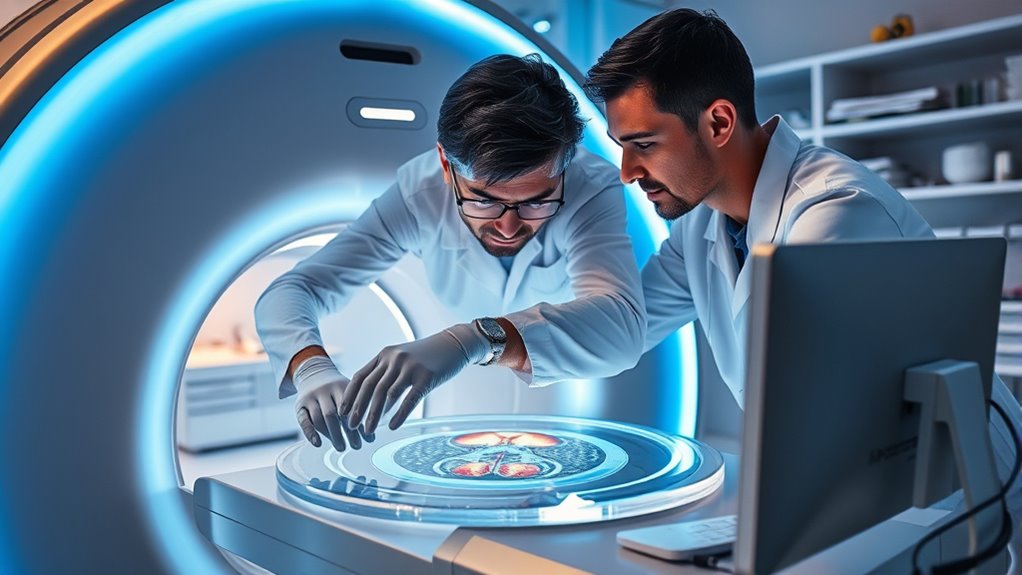
Have you ever wondered how complex medical conditions are accurately identified? That’s where a diagnostic specialist steps in, playing a critical role in uncovering what’s really going on inside a patient’s body. Your job involves analyzing a variety of data, primarily through medical imaging and lab analysis, to piece together an accurate diagnosis. Medical imaging tools—like X-rays, MRI scans, CT scans, and ultrasounds—are essential in providing detailed pictures of internal structures. You interpret these images carefully, looking for abnormalities or signs that point to specific conditions. Your expertise allows you to spot subtle differences that might go unnoticed by others, helping to determine the presence of diseases, injuries, or other health issues. The use of advanced imaging techniques enhances your ability to detect even minute anomalies, making your role crucial in the diagnostic process.
Diagnostic specialists analyze medical images and lab results to identify complex health conditions accurately.
Lab analysis is another cornerstone of your work. You review blood tests, tissue samples, and other laboratory results, searching for markers that confirm or rule out potential diagnoses. This process requires a keen eye and a deep understanding of how various substances in the body respond to different illnesses. Combining insights from medical imaging with lab data enables you to form an in-depth picture of the patient’s health status. For example, an abnormal growth seen in an imaging scan might be further examined through lab tests to determine if it’s benign or malignant. This synergy between imaging and lab analysis speeds up the diagnostic process and enhances its accuracy.
Your role isn’t just about interpreting data; it’s about synthesizing it into meaningful information that guides other healthcare professionals. You communicate your findings clearly, often working closely with doctors, radiologists, and pathologists to ensure everyone understands the diagnosis. You also stay updated on the latest technology and techniques to improve the accuracy and efficiency of your assessments. In doing so, you help clinicians decide on the most effective treatment plans, potentially saving lives and reducing patient suffering.
Efficiency and precision are your priorities. Time is often critical, and your ability to quickly analyze and interpret complex information can make a significant difference in patient outcomes. You thrive on attention to detail and accuracy because even small errors can lead to misdiagnosis. Ultimately, your work as a diagnostic specialist provides the foundation for effective medical intervention, ensuring patients receive the right treatment at the right time. Your expertise bridges the gap between symptoms and a definitive diagnosis, making you an indispensable part of the healthcare team.
Frequently Asked Questions
What Certifications Are Required to Become a Diagnostic Specialist?
To become a diagnostic specialist, you need to meet certification requirements such as acquiring relevant professional credentials. Typically, you should earn certifications like the Certified Diagnostic Medical Sonographer (RDMS) or Registered Radiologic Technologist (ARRT). These credentials demonstrate your expertise and guarantee you meet industry standards. You’ll also need to complete accredited training programs. Having the right certifications enhances your credibility and helps you stand out in this specialized field.
How Does a Diagnostic Specialist Keep up With Technological Advancements?
You stay current with the latest innovations by actively participating in continuing education courses and industry seminars. Subscribing to professional journals and joining relevant organizations helps you stay informed about technological advancements. You also network with peers to share insights and experiences, ensuring you’re always up-to-date. Regularly exploring new tools and updates allows you to implement cutting-edge techniques, ultimately improving diagnostic accuracy and patient outcomes.
What Are Common Challenges Faced by Diagnostic Specialists?
You face challenges like equipment malfunctions that seem to happen at the worst possible times, disrupting your workflow. Clear patient communication can also be tough, especially when explaining complex procedures. Balancing technical issues with compassionate interactions requires patience and skills. Staying calm under pressure and troubleshooting swiftly are essential to ensure accurate diagnoses and maintain trust. These hurdles test your expertise but also motivate you to become a better diagnostic specialist every day.
How Do Diagnostic Specialists Collaborate With Other Healthcare Professionals?
You collaborate with other healthcare professionals through multidisciplinary communication, guaranteeing everyone shares essential information for accurate diagnoses. You focus on patient-centered approaches, actively involving patients in discussions and decisions. By maintaining open, clear communication, you help create cohesive treatment plans that address individual needs. Your teamwork ensures extensive care, fostering trust and improving outcomes, all while emphasizing the importance of shared expertise and a holistic view of patient health.
What Is the Typical Career Progression for a Diagnostic Specialist?
You typically start as a diagnostic technologist, gaining hands-on experience and honing your skills. With career advancement, you can move into supervisory roles, specialized fields, or teaching positions. Continuous skill development through certifications and additional training helps you stay current and opens doors for promotions. Over time, you might pursue roles like department manager or clinical educator, expanding your expertise and increasing your impact within healthcare teams.
Conclusion
As a diagnostic specialist, you’re the lighthouse guiding the ship through foggy waters of uncertainty. Your keen eye and precise skills illuminate hidden issues, turning chaos into clarity. Every diagnosis you make is like a carefully crafted key, opening the door to healing. Remember, your expertise doesn’t just solve problems—it shapes the story of recovery, painting hope on the canvas of each patient’s journey. You’re the silent hero in the symphony of healthcare, steady and true.