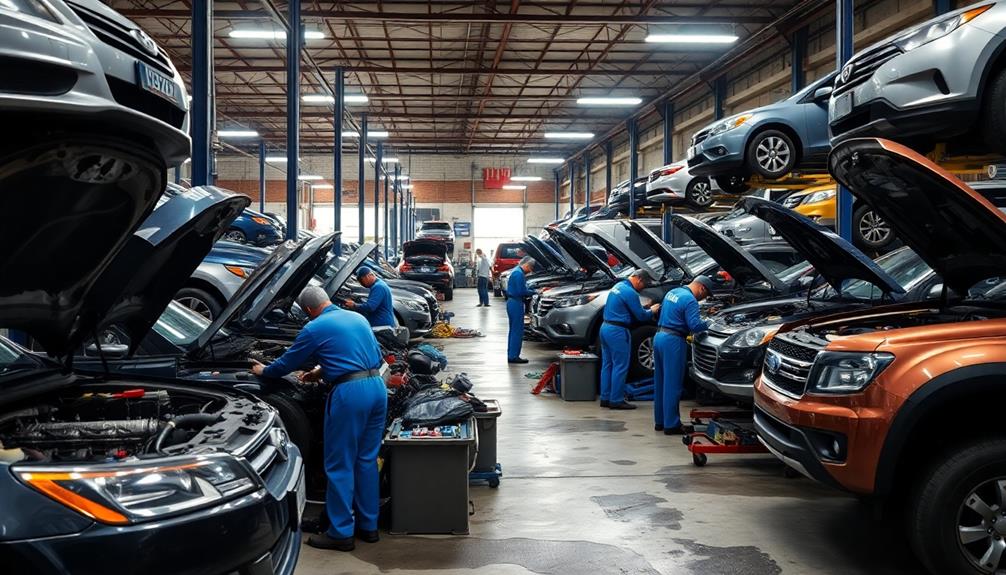
A field service engineer is a skilled technician who installs, maintains, and repairs complex equipment directly at client sites to keep things running smoothly. You diagnose issues on-site, perform repairs, and implement maintenance strategies to prevent future problems. Your work helps make certain equipment performs at its best, reducing downtime and costly repairs. If you want to learn more about how this role keeps operations efficient and advances your career, keep exploring further.
Key Takeaways
- A Field Service Engineer diagnoses, repairs, and maintains equipment on-site at client locations.
- They serve as the link between advanced machinery and end-users, ensuring optimal operation.
- Their work includes troubleshooting complex systems, performing preventive maintenance, and implementing solutions.
- They work in diverse environments such as factories, remote sites, and industrial facilities.
- Continuous technical skill development is essential for adapting to evolving technology and advancing careers.

Have you ever wondered what it takes to keep complex equipment running smoothly across various locations? As a field service engineer, you’re the crucial link between advanced machinery and the people who rely on it. Your role involves not only fixing problems but also implementing effective maintenance strategies that prevent breakdowns and extend equipment lifespan. You’re responsible for diagnosing issues on-site, performing repairs, and ensuring that everything operates at peak performance. The job demands a mix of technical expertise, problem-solving skills, and adaptability since you’ll be working in diverse environments, from factories to remote sites. Your ability to develop and follow tailored maintenance strategies directly impacts operational efficiency, reducing downtime and costly repairs for your clients or employer. This proactive approach to maintenance is what sets successful field service engineers apart and makes your role indispensable. Developing a diverse skill set is essential, as it allows you to adapt to rapidly changing technology and industry standards.
When it comes to career advancement, a role as a field service engineer offers plenty of opportunities. Gaining hands-on experience with various types of equipment broadens your skill set, making you more versatile and marketable. Many engineers choose to specialize in certain industries or machinery, which can lead to higher-paying positions or supervisory roles. Continuous learning is key; staying updated on the latest technology, tools, and maintenance techniques enhances your value. Certifications and specialized training can open doors to more senior positions, such as technical manager or regional supervisor. As you build expertise, you may also move into roles that involve planning, consulting, or training new engineers, further expanding your career path. The technical foundation you develop on the field is essential for climbing the career ladder, and your ability to adapt to technological advancements keeps you relevant in a competitive job market.
Moreover, being a field service engineer places you at the forefront of technological innovation. As industries evolve and new equipment enters the market, your knowledge and skills will be in high demand. This continuous evolution offers not only job security but also the chance to shape your career in exciting directions. Your ability to troubleshoot complex systems, implement maintenance strategies effectively, and work independently makes you a vital asset to any organization. By embracing ongoing professional development, you can unlock new opportunities that align with your career aspirations. Whether you aim to specialize further or move into managerial roles, your hands-on experience and technical proficiency serve as a solid foundation for growth. Ultimately, being a field service engineer means being adaptable, skilled, and ready to tackle challenges head-on, securing both your immediate role and future career success.
Frequently Asked Questions
What Certifications Are Required to Become a Field Service Engineer?
To become a field service engineer, you’ll need relevant certifications like CompTIA A+, Cisco CCNA, or manufacturer-specific certifications. These certification pathways boost your technical skill development and demonstrate your expertise. You should focus on gaining hands-on experience and staying current with industry standards. Many employers value ongoing training, so pursuing additional certifications can help you advance your career and handle diverse technical challenges confidently.
How Do Field Service Engineers Stay Updated With New Technology?
You stay updated with new technology by regularly following the latest tech trends through industry blogs, webinars, and trade shows. Participating in continuing education programs helps you learn about emerging tools and techniques. You also network with peers and manufacturers to gain insights and hands-on experience. This proactive approach guarantees you’re always prepared to troubleshoot and maintain the newest systems, keeping your skills sharp and relevant in a fast-evolving field.
What Are the Typical Work Hours for a Field Service Engineer?
Your work schedule as a field service engineer can be quite flexible, often involving early mornings, late nights, and on-call duties. While standard hours typically span 40 hours a week, overtime is common to meet urgent service needs. You might find yourself working weekends or holidays, especially during critical repairs. This unpredictable schedule demands adaptability, but it also offers variety and the chance to solve diverse technical challenges.
How Does One Handle Difficult Customer Interactions in the Field?
When handling difficult customer interactions, you should focus on clear customer communication and active listening. Stay calm, acknowledge their concerns, and show empathy. Use conflict resolution skills to find common ground and offer solutions. Keep a professional tone, avoid arguments, and reassure the customer you’re committed to resolving the issue. By maintaining professionalism and patience, you can turn challenging situations into positive outcomes and build trust.
What Are the Common Tools and Equipment Used by Field Service Engineers?
You typically use diagnostic tools like multimeters, oscilloscopes, and specialized software to identify issues quickly. Safety equipment such as gloves, goggles, and helmets is essential to protect you during repairs. You also rely on handheld tools like screwdrivers, pliers, and wrenches to perform maintenance. These tools and safety gear help you work efficiently and safely, ensuring you can diagnose problems accurately and complete repairs effectively in the field.
Conclusion
So, now you know a field service engineer is like a tech superhero, swooping in to fix and maintain equipment wherever it’s needed. You’re the hero who saves the day, preventing disasters before they strike and keeping everything running smoothly. Without you, entire systems could come crashing down faster than a house of cards. So, embrace your role—you’re truly the backbone of the modern world, and your skills are more powerful than you might realize!