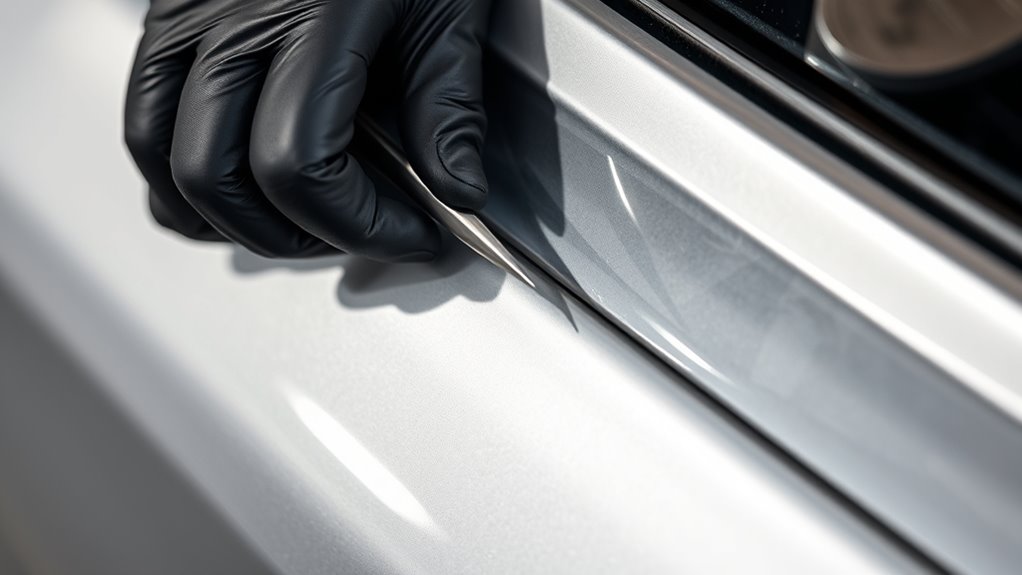

A paintless dent repair (PDR) tech specializes in fixing car dents and dings without damaging the paint. They carefully manipulate the metal from behind the panel using specialized tools, restoring your vehicle’s original look quickly and affordably. PDR avoids traditional bodywork or repainting, saving you time and money. If you want to know more about how these skilled technicians achieve seamless repairs while preserving your car’s factory finish, keep exploring the details below.
Key Takeaways
- A technician skilled in removing vehicle dents without repainting, using specialized tools and techniques to manipulate metal from behind the panel.
- They assess dent characteristics like size and location to choose appropriate repair methods that preserve the factory paint.
- Their work involves real-time visualization and precise pushing or pulling of metal to restore the original shape seamlessly.
- PDR techs focus on maintaining the vehicle’s original finish, avoiding traditional bodywork and repainting processes.
- They require knowledge of auto body materials and craftsmanship to ensure durable, high-quality repairs.
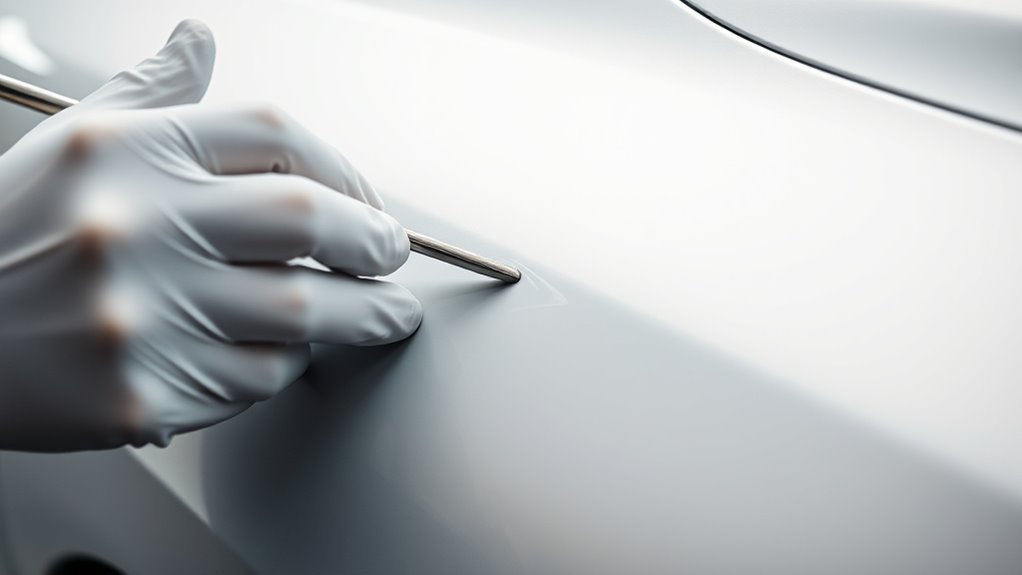
Paintless Dent Repair (PDR) tech is a specialized skill that allows you to fix dents and dings on a vehicle’s body without damaging the paint. When you become proficient in this craft, you’re fundamentally restoring the auto body to its original condition without the need for traditional bodywork or repainting. This skill hinges on your ability to work with a vehicle’s existing structure, using precise dent removal techniques that focus on manipulating the metal from behind the panel. Your expertise lies in understanding how to access the dent’s backside and carefully apply pressure to push the metal back into its proper shape. This process is delicate, requiring a keen eye for detail and a steady hand, but it’s remarkably effective at preserving the vehicle’s factory finish.
As a PDR technician, your knowledge of auto body composition is vital. You’ll need to identify the type of metal used and how it responds to different pressure points. Your dent removal techniques involve various tools like specialized rods, glue pulls, and reflection boards to see the impact of your work in real time. Unlike traditional auto body repairs, which often involve sanding, filling, and repainting, your approach saves time and money for both you and the vehicle owner. This makes PDR a popular choice among insurance companies and customers seeking a quick, affordable fix. Your skill set allows you to evaluate each dent’s specific characteristics, such as size, depth, and location, to decide the best method for correction.
You’ll also learn how to work with different types of dents—whether they’re caused by hail, door dings, or minor collisions. Each situation requires a tailored set of dent removal techniques to guarantee the panel’s integrity remains intact. Over time, you’ll develop the ability to work on various auto body panels, from doors and hoods to bumpers and quarter panels. Your precision and finesse will determine how seamlessly the repair blends with the surrounding paint, making the damage virtually invisible once you’re done. Mastering these skills means you’re not just fixing dents—you’re restoring the vehicle’s aesthetic and value with craftsmanship that emphasizes quality and efficiency. Additionally, understanding auto body composition is essential for selecting the appropriate tools and techniques to ensure a successful repair.
Frequently Asked Questions
What Tools Do Paintless Dent Repair Techs Use?
You’ll use a variety of tools in paintless dent repair, including a tool overview of pry bars, reflection boards, and specialized metal rods. These tools help you access and gently massage the dent from behind the panel. Your technician training covers how to select and use each tool effectively, ensuring the repair is seamless. Precision and patience are key, allowing you to restore your vehicle’s appearance without damaging the paint.
How Long Does Paintless Dent Repair Typically Take?
You’ll be pleased to know that paintless dent repair usually takes about 1 to 2 hours, making it a quick solution for most dents. In fact, 80% of repairs are completed within an hour, so you won’t have to wait long. The exact time estimation depends on the size and location of the dent, but generally, the repair duration is much faster than traditional methods.
Can Paintless Dent Repair Fix All Types of Dents?
Paintless dent repair can fix many types of dents, but it has limitations. You should know that not all dents are repairable with this method, especially if they are severely stretched or have sharp creases. For different types of dents repair, a skilled tech assesses the damage to determine if paintless dent repair is suitable. If the damage exceeds these limitations, traditional repair methods may be necessary for proper restoration.
What Are the Costs Associated With Paintless Dent Repair?
The cost of paintless dent repair typically ranges from $50 to $150 per dent, depending on size and location. You’ll find it more affordable than traditional repairs, making it a smart choice in a cost comparison. Many insurance policies cover PDR if it’s a collision or covered event, so check your coverage. This way, you could save money and get your car looking great without hefty expenses.
Is Paintless Dent Repair a Permanent Solution?
You might worry that paintless dent repair isn’t permanent, but it often is when done correctly. It’s a reliable option for auto body repairs because it preserves the original paint, ensuring paint matching remains seamless. While minor dents can be permanently fixed, severe damage may need traditional repairs. Overall, if your dent qualifies, paintless repair offers a long-lasting, cost-effective solution that keeps your vehicle looking great.
Conclusion
As a paintless dent repair tech, you skillfully restore vehicles, preserve their paint, and save your clients time and money. You master the art of precision, patience, and problem-solving, transforming dents into smooth surfaces. You blend expertise with dedication, turning challenges into opportunities. In this role, you don’t just fix cars—you restore confidence, pride, and quality. Embrace the craft, hone your skills, and take pride in making each vehicle look as good as new.