After completing repairs, you need to conduct thorough quality control to guarantee everything works correctly and meets safety standards. This involves systematically checking each component, performing visual inspections, and running functional tests. Proper documentation of your findings helps track issues and supports future maintenance. Using checklists and recording details ensures consistency and accountability. Continuing with this process will help you master best practices to maintain high standards and reliability in your repairs.

Get business pricing on garage and car supplies
- Business-only prices and quantity discounts
- Tax-exempt purchasing
- Multiple users, one account, clear invoices
Key Takeaways
- Conduct systematic inspections including visual assessments and functional tests to verify all repaired components operate correctly.
- Document inspection procedures, findings, and any issues thoroughly to ensure traceability and accountability.
- Perform safety checks tailored to the specific repair or machinery to confirm compliance with safety standards.
- Take corrective actions promptly when defects or discrepancies are identified during the inspection process.
- Maintain detailed records of the QC process for future reference, regulatory compliance, and continuous improvement.
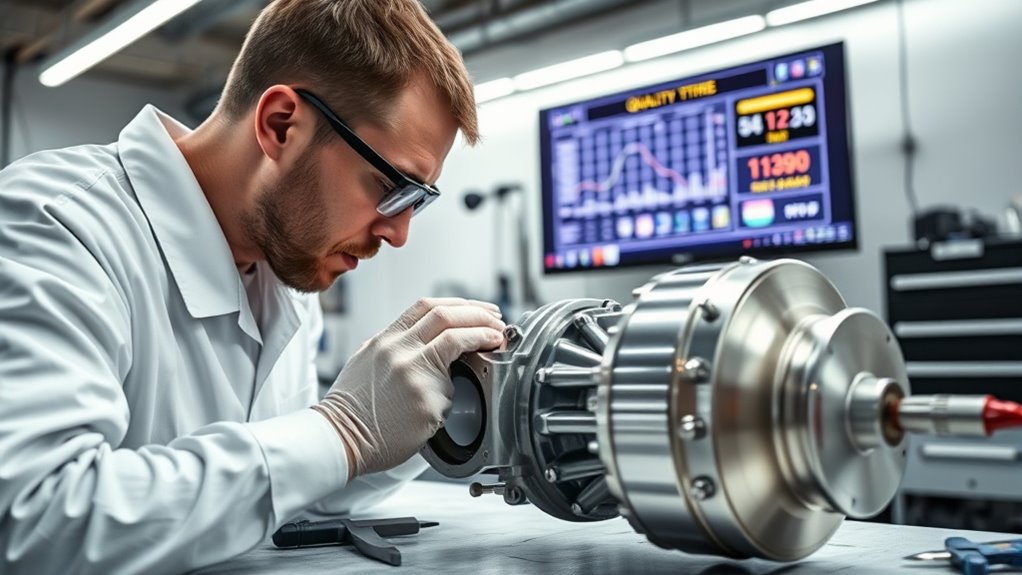
After repairs are completed, conducting a thorough quality control check is crucial to guarantee everything functions properly and meets standards. You need to follow precise inspection procedures to ensure no issues are overlooked. Begin by systematically reviewing each repaired component, verifying that all parts are correctly installed and operate smoothly. Inspection procedures should include visual assessments, functional tests, and safety checks, depending on the nature of the repair. For example, if you’re working on machinery, you might run it through its full range of operations to confirm consistent performance. If it’s a structural repair, you’ll want to inspect for stability, alignment, and compliance with safety standards. Adhering to established inspection procedures helps you catch defects early and prevents potential failures down the line. Proper supermarket hours knowledge can also be essential when scheduling inspections at retail locations to minimize disruption.
Conduct thorough inspections to ensure repairs meet standards and prevent future issues.
Alongside thorough inspections, maintaining proper documentation standards is essential. As you verify each aspect of the repair, document your findings meticulously. This documentation becomes a record of quality assurance, providing proof that the repair meets all necessary requirements. Accurate records should include details such as the date of inspection, the specific procedures performed, and any issues identified along with corrective actions taken. Clear documentation standards also involve capturing photographs or videos of critical inspection points, especially when dealing with complex repairs or regulatory compliance. Keeping detailed records streamlines communication with clients, regulatory bodies, and future maintenance teams, making sure everyone is aligned on the repair’s status.
Furthermore, documentation standards help establish accountability. When your records are complete and precise, you can trace back any problems to their source, facilitating timely resolutions. They also serve as a reference for future repairs or inspections, ensuring consistency over time. As you perform inspections, use checklists aligned with industry standards or manufacturer guidelines. These checklists serve as a systematic approach to ensure no step is missed and all inspection points are covered thoroughly. Be diligent in noting discrepancies, even minor ones, so they can be addressed before they escalate into bigger issues.
In addition, communicate your findings clearly and promptly. If you detect a defect or deviation from standards, take immediate corrective action and update your documentation accordingly. This proactive approach helps maintain the integrity of the repair process and guarantees that the final outcome meets quality expectations. In summary, by rigorously following inspection procedures and adhering to documentation standards, you guarantee that your repairs are reliable, compliant, and durable, ultimately delivering a successful, high-quality result.
As an affiliate, we earn on qualifying purchases.
Frequently Asked Questions
How Often Should Ongoing Repairs Be Inspected for Quality?
You should inspect ongoing repairs regularly, ideally setting inspection frequency based on repair review intervals. For critical repairs, conduct inspections more frequently—perhaps weekly or biweekly—while less urgent fixes may only need monthly checks. Consistent inspections ensure quality remains high, catch issues early, and prevent future problems. Adjust your inspection schedule according to the repair complexity, past performance, and safety considerations to maintain ideal standards throughout the repair process.
What Tools Are Best for Detecting Hidden Post-Repair Issues?
Like a modern Sherlock Holmes, you should use advanced inspection tools and non-destructive testing to detect hidden post-repair issues. Ultrasonic testers, radiography, and magnetic particle inspection are your best options. These tools help you identify flaws without damaging the repaired item. Regularly employing these methods guarantees quality, catching issues early before they become costly problems, and keeping your repairs reliable and safe for the long haul.
Who Is Responsible for Conducting Quality Checks After Repairs?
You are responsible for conducting quality checks after repairs, ensuring manufacturer oversight and technician accountability. You should verify that repairs meet all safety and quality standards before returning the item to use. By thoroughly inspecting the work, you help catch hidden issues early, reduce future problems, and maintain trust. Remember, your diligence in quality control reflects your commitment to safety and excellence, making sure repairs are complete and reliable.
How Can Customers Verify Repair Quality Before Accepting the Work?
You can verify repair quality by reviewing an inspection checklist provided by the technician, ensuring all work meets standards. Request a customer walkthrough to see the repairs firsthand and ask questions about any concerns. Make sure the checklist covers key areas, and don’t hesitate to test the repaired items yourself. This active involvement helps confirm the work’s quality before you accept the repairs, giving you peace of mind.
What Are Common Signs of Poor Quality Repairs?
You can spot poor quality repairs if you notice issues like paint mismatch, where the color doesn’t match the original, and signs of poor repair durability, such as paint peeling or cracks. Look for uneven surfaces, visible seams, or leftover debris. These signs indicate that the repair might not last or look right. Always inspect carefully before accepting repairs to guarantee they meet quality standards and will hold up over time.
Conclusion
After repairs, always perform a thorough quality check to guarantee everything functions correctly. For example, imagine you fix a leaking pipe in your home; testing the water flow and inspecting for leaks prevents future damage. Skipping this step could mean facing costly repairs later. By taking a few extra minutes to verify your work, you guarantee safety and longevity. Remember, quality control isn’t optional—it’s the key to a job well done and peace of mind.
Halloween Picks
halloween
As an affiliate, we earn on qualifying purchases.