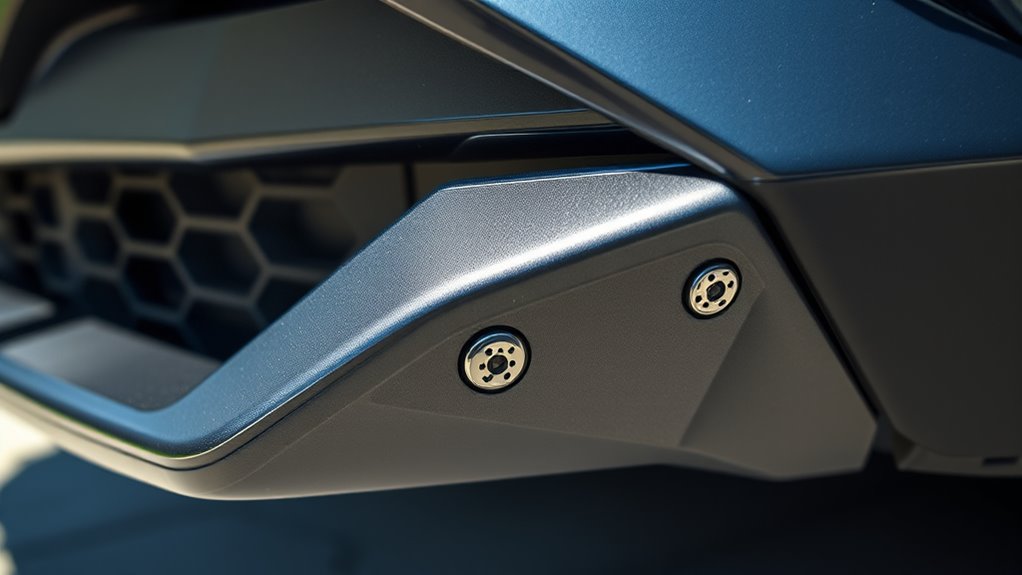

Bumper reinforcements are key safety components hidden behind the outer bumper cover that protect your vehicle during collisions. They absorb and spread impact forces, preventing damage to the core structure and reducing injury risk. Made from durable materials like steel or aluminum, they are engineered to withstand repeated impacts and remain effective over time. If you want to learn more about how these reinforcements improve vehicle safety, keep exploring the details below.
Key Takeaways
- Bumper reinforcements act as a sturdy barrier behind the outer bumper cover, absorbing impact forces during collisions.
- Made from durable materials like steel or aluminum to withstand repeated stress and protect the vehicle.
- They help distribute impact energy over a broader area, reducing damage to the vehicle’s core structure.
- Engineered to deform slightly upon impact, absorbing energy while maintaining structural integrity.
- Advances in materials technology continually improve their safety performance and durability over the vehicle’s lifespan.
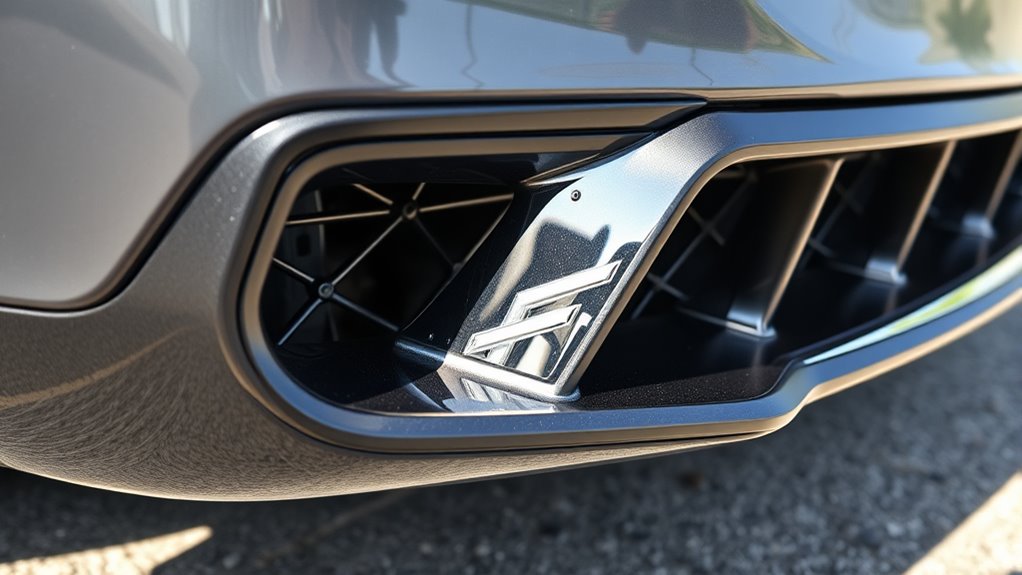
Have you ever wondered how vehicles protect themselves during a collision? It’s a fascinating blend of engineering and materials working together to absorb impact and keep you safe. One essential component in this process is the bumper reinforcement, which plays a critical role in collision safety. When a crash occurs, the bumper reinforcement acts as a sturdy barrier behind the outer bumper cover, absorbing and distributing impact forces across a broader area. This minimizes damage to the vehicle’s core structure and reduces the risk of injury to occupants. The key to its effectiveness lies in the careful selection of materials that prioritize durability and resilience. High-quality metal alloys, such as steel or aluminum, are commonly used because they provide excellent material durability, which is indispensable during sudden, forceful impacts. These materials are engineered to withstand repeated stress and deformation without failing, ensuring that the reinforcement can serve its purpose over the vehicle’s lifespan.
Material durability is at the heart of bumper reinforcement design. When a collision occurs, the reinforcement must absorb energy efficiently to prevent more serious damage. If the materials weren’t durable enough, they might crack, bend, or break, leaving the vehicle vulnerable to further damage and compromising collision safety. This is why manufacturers invest heavily in testing different alloys and composites to find the right balance between strength, weight, and flexibility. The goal is to create a reinforcement that can deform slightly under impact, absorbing energy like a shock absorber, but still return to its original shape or at least prevent catastrophic failure. This durability also guarantees that the reinforcement can handle minor bumps and scrapes regularly, maintaining its protective qualities over time. Additionally, advancements in materials technology have further enhanced the performance and safety of bumper reinforcements. When you think about your car’s safety features, remember that behind the scenes, durable materials and precise engineering work together to make sure that, in the event of a crash, your vehicle can protect you and minimize damage effectively.
Frequently Asked Questions
How Often Should Bumper Reinforcements Be Inspected or Replaced?
You should inspect your bumper reinforcements at least once a year or during regular vehicle maintenance. Replacement intervals depend on damage, corrosion, or signs of wear, which may require sooner action. If you notice cracks, rust, or compromised structural integrity, replace them immediately. Regular inspections help guarantee safety and peak performance, preventing more severe damage or accidents. Always follow manufacturer guidelines for specific inspection frequency and replacement intervals.
Are Bumper Reinforcements Compatible With All Vehicle Makes and Models?
Bumper reinforcements aren’t compatible with all vehicle makes and models due to material compatibility and installation challenges. You need to check the specific requirements for your vehicle, as different models may use varying materials or mounting points. Fitting a reinforcement designed for one vehicle onto another could cause installation issues or compromise safety, so always verify compatibility before purchasing or attempting to install a bumper reinforcement.
What Are the Signs of a Damaged Bumper Reinforcement?
Did you know that nearly 75% of vehicle accidents involve front or rear impacts? When your bumper reinforcement is damaged, you might notice cracks, dents, or misalignment, which indicate compromised impact absorption. Over time, material durability decreases, making your bumper less effective at absorbing shocks. If you experience unusual noises or visible deformation, it’s a sign you should have it inspected and replaced to maintain safety and protection.
Can Bumper Reinforcements Be Installed DIY?
Yes, you can attempt DIY installation of a bumper reinforcement, but it’s essential to verify bumper reinforcement compatibility with your vehicle. Before starting, gather the right tools and follow a detailed guide or manufacturer instructions. Keep in mind that some vehicles may require special skills or tools, so if you’re unsure, consulting a professional might be the safer choice to avoid damage or improper installation.
How Do Bumper Reinforcements Impact Vehicle Safety Ratings?
Think of bumper reinforcements as the shield of a knight, directly impacting your vehicle’s safety ratings. They enhance collision protection by absorbing impact energy and bolster structural integrity, making your car safer in accidents. When properly installed, they can improve crash test scores and reduce injury risks. Skimping on quality or installation, however, might weaken your vehicle’s safety, so choose wisely to keep yourself and passengers protected.
Conclusion
Now that you know how bumper reinforcements work, you can appreciate their crucial role in protecting you during a crash. Think of them as your vehicle’s trusty knight, standing guard behind the scenes—much like a secret compartment in a vintage car. Understanding these parts helps you see your car as more than just a machine, but a carefully crafted protector. So, next time you hop in, remember: your bumper reinforcement is always ready to have your back, even in a pinch.