
If your door sags or hinges are wearing out, it’s often caused by gradual hinge weakening, frame shifting, or regular use that wears down hinges over time. You might notice difficulty opening, sticking at certain points, or uneven alignment. To fix this, tighten hinges, add shims, or adjust the door’s position. Staying proactive with maintenance can prevent more serious problems. Keep exploring to discover effective solutions to restore your door’s function and appearance.
Key Takeaways
- Door sag results from hinge weakening, frame shifting, or foundation settling over time.
- Symptoms include sticking, uneven gaps, and difficulty opening or closing the door.
- Regular hinge lubrication and tightening screws help prevent wear and sagging.
- Adjusting hinges or using shims can realign misaligned doors and reduce sag.
- Addressing underlying issues early prolongs door lifespan and reduces costly repairs.
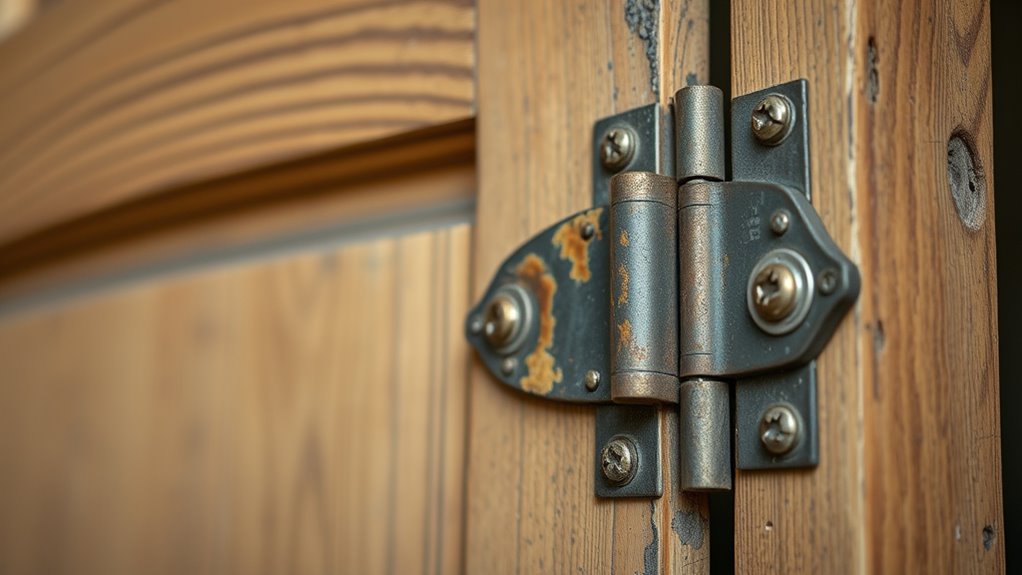
Over time, door sag and hinge wear can cause your door to become misaligned and difficult to open or close smoothly. You might notice that the door sticks at the top or drags on the floor, making everyday use frustrating. This issue usually stems from the gradual weakening of hinges or shifting of the door frame itself. When hinges are not properly maintained, they can loosen or become damaged, leading to uneven door hanging. Addressing these problems early on can save you from more costly repairs down the line. Regular hinge maintenance, such as lubricating hinges with a silicone spray or oil, helps prevent squeaking and reduces the risk of hinges seizing up. Well-maintained hinges not only keep your door functioning smoothly but also extend their lifespan. As you work on maintaining your hinges, consider checking the door’s overall alignment. If tightening hinges doesn’t solve the problem, you might need to adjust the door’s position on the hinges or re-hang it altogether. Sometimes, the door frame itself can shift due to settling or foundation movement, so you should evaluate whether the issue is with the hinges or the frame. Using shims or adjusting the hinge placement can help realign the door without replacing hardware. Remember, consistent hinge maintenance, including tightening screws and lubricating moving parts, is essential for preventing future sag and ensuring smooth operation. Proper hinge design and installation are crucial for long-term durability and performance. If you notice that your door continues to sag despite these efforts, it could indicate a deeper problem, such as a warped door or a compromised frame. In such cases, professional help might be needed to assess the underlying cause and provide a lasting solution. Performing regular hinge maintenance and keeping an eye on door alignment can considerably prolong the life of your door and keep it functioning properly for years to come. Staying proactive in these small tasks prevents bigger headaches down the road, ensuring your door remains secure, functional, and aesthetically pleasing.
Frequently Asked Questions
How Can I Prevent Door Sag Over Time?
To prevent door sag over time, you should regularly inspect and reinforce the door with sturdy hinges and door reinforcement plates. Keep hinges well-lubricated to reduce friction and wear, which helps maintain proper alignment. Additionally, avoid hanging heavy objects on the door and ensure the frame stays in good condition. These steps will extend your door’s lifespan and keep it functioning smoothly without sagging.
What Are Signs My Hinges Need Replacement?
If your door starts sticking, sagging, or making squeaky noises, your hinges might need replacing. Check for loose or rusted hinges, and see if the door isn’t aligning properly. Regular hinge lubrication can help, but if issues persist, it’s time to substitute them. Proper door alignment also plays a role; misaligned hinges can cause uneven wear. Replacing hinges ensures smooth operation and prevents further damage.
Can Door Sag Affect Energy Efficiency?
Think of a door with sag like a leaky boat, letting energy slip away. When your door sags, it compromises door insulation, creating gaps that lead to thermal leakage. This makes your heating and cooling less effective, increasing energy bills. So, yes, door sag can markedly affect energy efficiency by allowing drafts and heat loss, turning your home into a less cozy, more expensive place to stay.
Are There DIY Fixes for Hinge Wear?
Yes, you can fix hinge wear yourself. Start by applying hinge lubrication to reduce stiffness and noise. If the hinges are still loose or damaged, consider replacing them. To do this, remove the old hinges, and install new ones with nails or screws. Regularly lubricating hinges helps prevent future wear and keeps your door swinging smoothly, saving you money on professional repairs.
When Should I Call a Professional for Hinge Issues?
When hinge hassles become hazardous or hard to fix, it’s time to call a professional. If lubricating hinges and adjusting door frame alignment don’t solve squeaks, sticking, or sagging, expert help guarantees safety and stability. Don’t delay when DIY efforts fall flat—professionals can precisely diagnose and deliver durable solutions. Trust a pro to prevent further problems, protect your property, and preserve perfect door performance.
Conclusion
Don’t delay or dismiss door sag and hinge wear. Address issues early to avoid escalating expenses and embarrassing embarrassments. By inspecting, tightening, and treating hinges in time, you prevent persistent problems and preserve your door’s perfect position. Stay vigilant, swiftly solve sagging struggles, and safeguard your space with simple solutions. Secure your sanctuary, save yourself stress, and stay strong against deterioration. Because when you’re proactive, you protect peace, prevent problems, and preserve perfection.