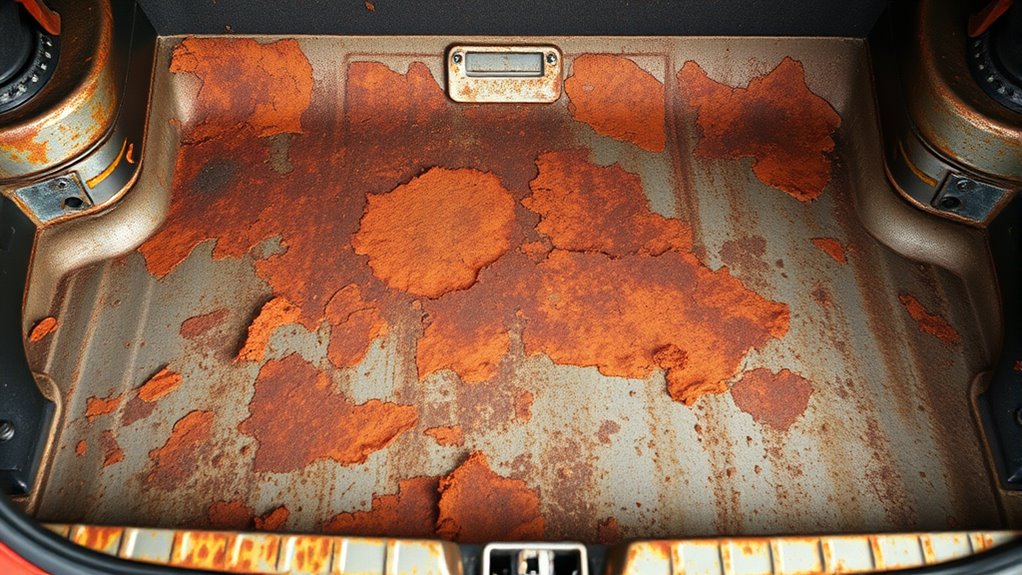

If you notice rust in your trunk or on the floor pan, it’s often caused by moisture buildup that leads to corrosion over time. Surface rust can usually be cleaned and treated before it worsens, but deep rust might require cutting out damaged metal and welding in new panels. Regular inspections and protective coatings can prevent further damage. Keep learning how to spot and handle rust before it compromises your vehicle’s safety.
Key Takeaways
- Early detection of trunk and floor pan rust prevents extensive damage and costly repairs.
- Remove rust debris and apply rust converter to neutralize and stabilize affected areas.
- Repair small rust holes with patch kits; larger areas may require cutting and welding.
- Regularly inspect and clean these areas, especially after winter or salt exposure.
- Use protective coatings and moisture barriers to prevent future rust development.

Have you noticed rust developing in your car’s trunk or on the floor pan? If so, you’re not alone. Rust can quickly become a serious problem if left unchecked, compromising your vehicle’s structural integrity and value. The good news is that addressing rust early can save you time and money, especially if you understand rust prevention and repair techniques. First, it’s crucial to identify the extent of the rust damage. Surface rust appears as a light, flaky coating, while deeper rust eats through the metal, creating holes. If caught early, surface rust can often be removed with simple cleaning and protective measures, but more severe rust might require more involved repair techniques.
Early rust detection saves time and money; identify surface versus deep rust to choose proper repair methods.
To prevent further rust development, start by thoroughly cleaning the affected area. Remove all loose debris, dirt, and rust flakes using a wire brush or sandpaper. Once clean, applying a rust converter can help neutralize residual rust and prevent it from spreading. Rust converters chemically transform rust into a stable, paintable surface, making them an important part of rust prevention. After treatment, prime and paint the area to seal the metal from moisture, which is the primary cause of rust. Regularly inspecting your trunk and floor pan helps catch rust early before it worsens. Using moisture barriers, such as rubber mats or trunk liners, can also prevent water from accumulating and causing corrosion. Additionally, choosing appropriate protective coatings can significantly extend the life of your vehicle’s vulnerable areas.
When rust has already caused significant damage, repair techniques come into play. Small holes or pitting can be fixed with metal patching kits, which usually include weldable patches, filler, and primer. For larger, more compromised areas, cutting out the rusted section and welding in new metal might be necessary. If you’re not confident doing this yourself, professional repair services are worth considering. They can ensure the structural stability of your vehicle and proper rust treatment. After repairs, applying a rust-proof coating or undercoat helps prevent future issues. Using a high-quality sealant on seams and joints also creates an extra barrier against moisture.
Ultimately, the key to managing trunk and floor pan rust is a combination of vigilance and prompt action. Regularly wash and inspect your car’s underside and trunk area, especially after winter or driving through salted roads. When you spot early signs of rust, take immediate steps with rust prevention and repair techniques to stop it in its tracks. Doing so extends your vehicle’s lifespan and maintains its safety and appearance. Remember, catching rust early is your best defense, so stay proactive and address issues before they escalate into costly repairs.
Frequently Asked Questions
How Can I Prevent Trunk and Floor Pan Rust?
To prevent trunk and floor pan rust, you should apply undercoating protection regularly to create a barrier against moisture. Keep drainage points clear to prevent water buildup that causes rust. Inspect these areas often, especially after winter or heavy rain, and address any damage promptly. Proper undercoating and drainage maintenance are key to keeping your vehicle’s trunk and floor pans rust-free and in good condition long-term.
What Are the Signs of Advanced Rust Damage?
You’ll notice bubbling paint, soft spots, or holes—signs that rust has taken over. When corrosion gets advanced, it’s like a slow leak turning into a flood. To spot it early, look for flaky rust or discoloration. If you see these signs, it’s time for rust removal and corrosion prevention. Ignoring them only invites more damage, turning your car into a rusty relic rather than a reliable ride.
Is Rust Repair DIY or Professional?
You can attempt rust repair yourself if the damage is minor, focusing on rust removal and applying rust prevention treatments. However, for extensive or deep rust, it’s best to seek professional help to guarantee thorough rust removal and proper restoration. DIY rust repair saves money but risks missing hidden damage. Professionals provide expert rust removal and prevention techniques, ensuring your vehicle’s integrity and longevity.
How Much Does Rust Repair Typically Cost?
Rust repair costs vary depending on the extent of damage, but you can expect to spend between $200 and $1,500. If you do it yourself, investing in a rust converter and applying rust prevention coatings can save money and prolong the repair’s lifespan. For extensive rust, professional repairs might be necessary, often including sanding, patching, and coating, which can increase costs but guarantee a durable fix.
Can Rust Spread to Other Vehicle Parts?
Rust can spread like wildfire if you don’t act fast. It often moves from one part to another, especially if left untreated. To prevent this, you should focus on rust prevention and get corrosion treatment early. Regular inspections, applying protective coatings, and addressing small spots quickly can stop rust from sneaking into other vehicle parts, saving you money and keeping your car safe and reliable.
Conclusion
Dealing with trunk and floor pan rust can seem intimidating, but catching it early saves you money and headaches down the road. Regular inspections and prompt repairs are your best defense against rust spreading further. Remember, a stitch in time saves nine—don’t wait until it’s too late to tackle rust issues. Keep your vehicle in top shape by staying vigilant, and you’ll extend its life far beyond what you might expect.