
A quarter panel spans from your rear door to the trunk and provides vital structural support, protecting rear components and maintaining vehicle integrity. In contrast, a fender is positioned directly above your wheels, mainly shielding the wheel well from debris and minor impacts. While quarter panels often require extensive repairs or replacement due to damage, fenders are easier and quicker to fix. To understand how these parts differ in function and repair, keep exploring the details that follow.
Key Takeaways
- Quarter panels extend from the rear door to trunk, wrapping around the back of the vehicle, while fenders are positioned over the wheels.
- Quarter panels are major structural components supporting the rear window, taillights, and trunk, unlike fenders which mainly protect wheel wells.
- Repairing quarter panels typically involves extensive work and higher costs; fenders are easier and quicker to repair or replace.
- Both parts are made from steel or aluminum, but material choices influence repair techniques and expenses.
- Damage to quarter panels affects vehicle safety and alignment more significantly than damage to fenders.
When it comes to car body parts, understanding the difference between a quarter panel and a fender is vital for proper repairs and customization. If you’ve ever needed collision repair or wanted to modify your vehicle’s look, knowing these parts can save you time and money. The quarter panel and fender serve distinct roles, and their material differences influence how they’re repaired or replaced. Recognizing these distinctions helps you make informed decisions, whether you’re dealing with minor dents or major bodywork.
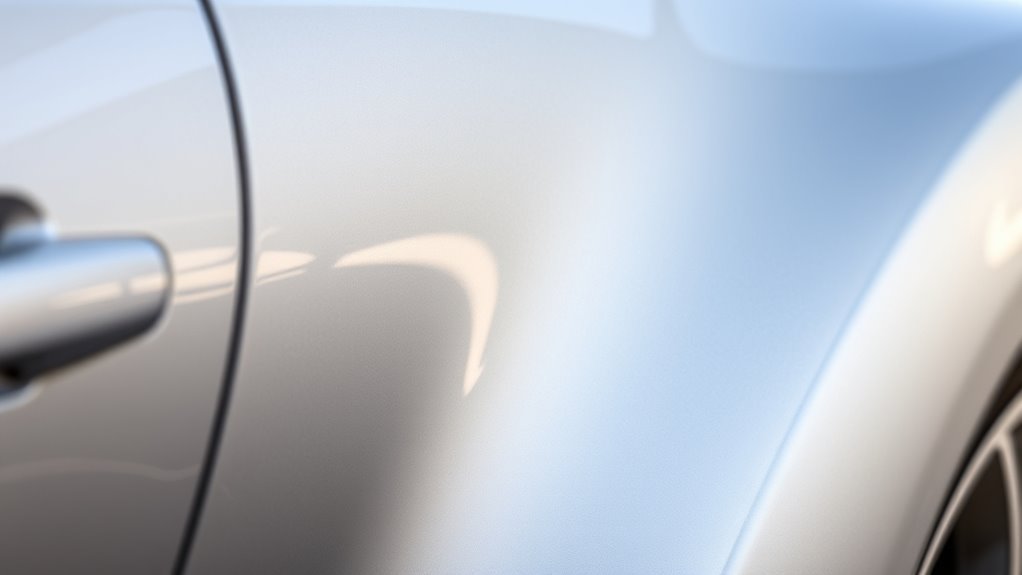
A quarter panel is a large body component that extends from the rear door to the trunk and wraps around the back of your car. It’s an indispensable part of the vehicle’s structure, providing support for the rear window, taillights, and trunk lid. Because of its size and position, a damaged quarter panel often requires extensive repairs or full replacement. During collision repair, technicians focus on restoring the quarter panel’s integrity to guarantee safety and proper alignment. The material differences between quarter panels and other body parts are significant; they’re typically made from stamped steel, aluminum, or sometimes composite materials. Steel versions are common due to their durability, but aluminum is increasingly popular for its lightweight properties and corrosion resistance. These material choices impact how repairs are performed—steel can be patched and welded, while aluminum requires special techniques to prevent damage and maintain strength. Additionally, the choice of material can influence the cost and repair time needed for each part.
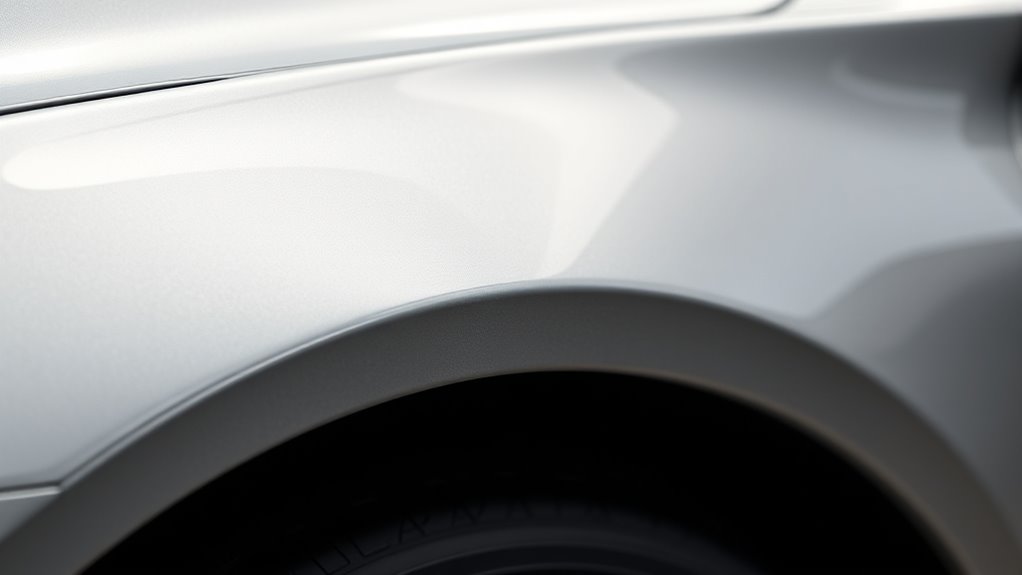
Fenders, on the other hand, are smaller body parts located over the wheels, protecting the vehicle from debris, mud, and minor impacts. They are usually mounted directly above the wheel wells and are more accessible for repairs or replacements. When a fender gets dented or scratched, you can often fix it with simple collision repair techniques like pulling dents or applying filler, especially if the damage is minor. Fenders are generally made from steel or aluminum, similar to quarter panels, but because they’re smaller and less structural, replacing them is often quicker and less expensive. The material differences become noticeable here because the choice of metal influences repair methods. Steel fenders can be welded and patched easily, while aluminum needs careful handling to prevent warping or cracking. Understanding the material composition of these parts helps determine the most effective repair approach and longevity of the repair.
Frequently Asked Questions
Can Quarter Panels Be Repaired Without Replacing Them Entirely?
Yes, you can repair quarter panels without replacing them entirely. Skilled technicians can smooth out dents, rust, and minor damage through welding, sanding, and filling. They also focus on paint matching to guarantee the repair blends seamlessly with your vehicle’s color. Additionally, proper rust prevention treatments are applied to protect the panel from future corrosion, helping you save money while maintaining your car’s appearance and structural integrity.
What Materials Are Commonly Used for Fenders and Quarter Panels?
Like a scene straight out of a sci-fi flick, you’ll find steel and aluminum are the go-to materials for fenders and quarter panels. These materials excel in material durability and are shaped through advanced manufacturing processes, ensuring strength and longevity. Steel offers affordability and robustness, while aluminum keeps weight down for better performance. Both are essential in vehicle repair and manufacturing, providing the perfect balance of resilience and efficiency.
How Do Replacement Costs Compare Between Quarter Panels and Fenders?
The cost comparison shows that replacing a quarter panel is generally more expensive than a fender, mainly due to repair complexity. Quarter panels are larger and often require more extensive labor, bodywork, and paint matching. Fenders are smaller, simpler to replace, and typically cost less overall. If you’re budgeting, expect higher costs for quarter panels, but keep in mind that repair complexity influences both parts’ overall expenses.
Are There Differences in Insurance Coverage for Repairs?
You’ll find that insurance policies often have coverage differences when it comes to repairs. Generally, repairs to quarter panels might be more costly and could involve higher deductibles or special coverage, while fenders are usually simpler and less expensive to fix. Always review your policy details to understand what’s covered, especially for collision repairs. Contact your insurer if you’re unsure about specific coverage differences for these parts.
Which Part Affects Vehicle Aerodynamics More, the Quarter Panel or the Fender?
Surprisingly, your fender has the bigger impact on vehicle aerodynamics and performance. Its shape and position guide airflow around your car, reducing drag and boosting efficiency. The quarter panel, while important for structural integrity and aesthetics, doesn’t really influence aerodynamic performance much. So, if you’re chasing better fuel economy or speed, focusing on the fender’s design matters more, even if it seems like a small detail.
Conclusion
Knowing the difference between a quarter panel and a fender helps you communicate better with body shops and understand repairs. For example, if your car’s side gets dented after a minor accident, you’ll know whether they’re replacing the fender or the quarter panel. This clarity guarantees you get the right repair, saving time and money. So, next time you see damage, you’ll confidently describe what needs fixing and understand the process better.