
Worn subframe bushings can cause your vehicle to feel unstable, handle poorly, and become unsafe. Over time, exposure to moisture, dirt, and road salt deteriorates the rubber or polyurethane, reducing their ability to absorb shocks and maintain proper alignment. This allows excess movement, leading to uneven tire wear and compromised steering. Neglecting these symptoms can result in costly repairs and safety risks. Stay tuned for more details on how to identify and address worn subframe bushings effectively.
Key Takeaways
- Worn subframe bushings cause increased movement, leading to vehicle instability and compromised handling.
- Material degradation from moisture and dirt reduces bushing resilience, affecting ride comfort.
- Deteriorated bushings can result in misalignment, causing uneven tire wear and decreased safety.
- Ignoring worn bushings stresses other suspension parts, increasing repair costs and risking suspension failure.
- Regular inspection and replacement of bushings maintain vehicle stability, safety, and overall suspension performance.
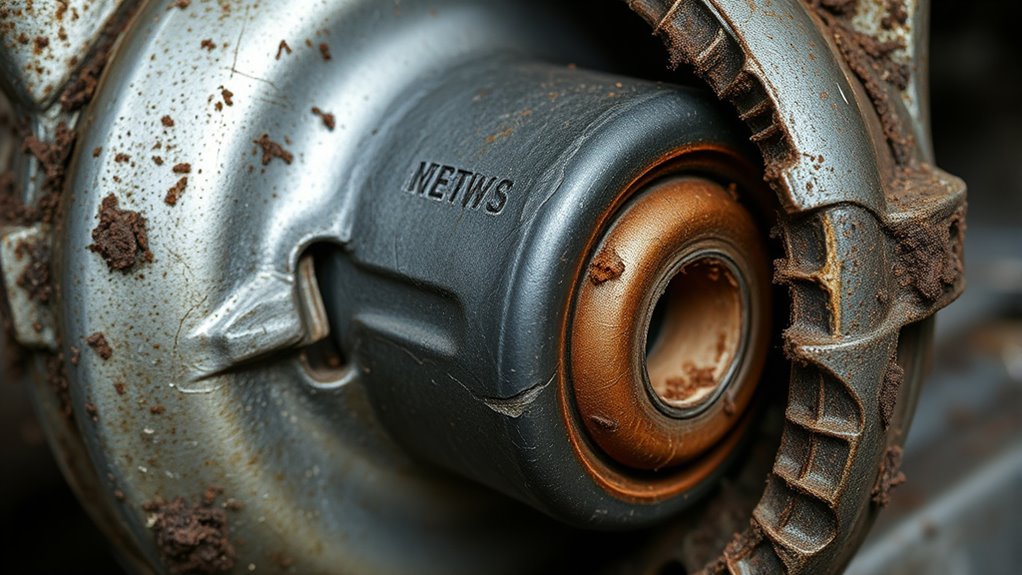
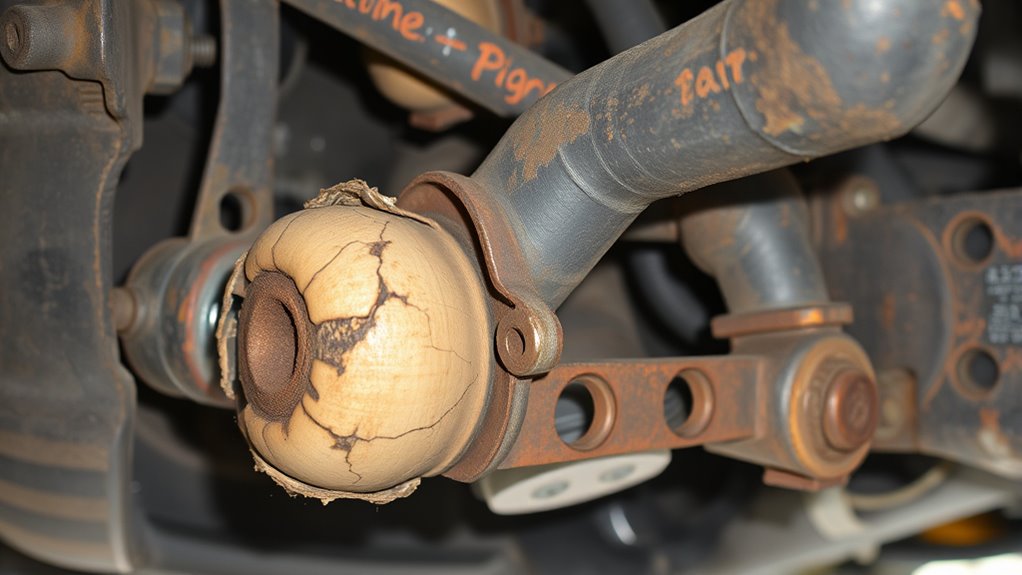
Subframe bushings are vital components that help maintain your vehicle’s stability and smooth handling. Over time, however, these bushings can wear out, leading to a range of performance issues. One of the primary problems associated with worn subframe bushings is material degradation. As your vehicle ages, exposure to elements like moisture, dirt, and road salt causes the rubber or polyurethane material of the bushings to break down. This deterioration makes the bushings less effective at absorbing vibrations and shocks, which can result in a rougher ride and increased noise inside the cabin. When these materials degrade, they also become less resilient, leading to increased movement between the subframe and the chassis. This excess movement can cause instability, especially when driving over uneven surfaces or during high-speed maneuvers. The importance of proper maintenance is crucial in preventing further damage to your suspension system. Material degradation doesn’t just impact ride quality; it also has a direct effect on your vehicle’s alignment. As the bushings weaken, they lose their ability to keep the subframe securely anchored in its proper position. This can cause subtle shifts in the alignment angles, such as camber and toe, which may go unnoticed at first but will eventually lead to uneven tire wear and compromised handling. Misaligned wheels not only reduce your vehicle’s efficiency but also increase the risk of accidents, especially in emergency situations. If you notice your steering feels off or your tires show uneven wear, worn subframe bushings could be the culprit. Addressing these issues early by inspecting and replacing degraded bushings can save you money and prevent further damage to other suspension components. Ignoring worn subframe bushings can lead to more serious problems down the line. As the bushings continue to deteriorate, the increased movement and misalignment put extra stress on other suspension parts like control arms, tie rods, and shocks. Over time, this can cause these components to wear out faster, potentially leading to costly repairs. Additionally, a compromised subframe can affect your vehicle’s handling, making it more difficult to steer accurately and increasing your risk of losing control during sharp turns or sudden stops. Maintaining your subframe bushings and replacing them when necessary is vital for preserving your vehicle’s safety, comfort, and performance. Regular inspections, especially if you notice any unusual noises, vibrations, or changes in handling, can help you catch bushing wear early. By doing so, you guarantee your vehicle remains stable, responsive, and safe to drive.
Frequently Asked Questions
How Long Do Subframe Bushings Typically Last?
Subframe bushings typically last between 60,000 to 100,000 miles, but their lifespan depends on bushing material and vehicle weight. Rubber bushings tend to wear faster, especially under heavy loads or rough driving conditions. If your vehicle is heavier or driven frequently on rough terrain, expect the bushings to wear sooner. Regular inspections can help you catch wear early, ensuring your suspension remains safe and smooth.
Can Worn Bushings Cause Poor Handling?
Worn bushings can definitely cause poor handling because they affect your suspension alignment and overall stability. When bushing material deteriorates, it creates excessive play in the subframe, leading to loose steering and reduced responsiveness. This wear can also cause uneven tire wear and vibrations. Regularly inspecting and replacing worn bushings helps maintain proper suspension alignment, ensuring your vehicle handles predictably and safely, especially during sharp turns or high-speed driving.
Are Aftermarket Bushings Better Than OEM?
Aftermarket bushings often offer advantages like improved performance, better material quality, and customizable options, making them appealing choices. However, OEM bushings excel in durability and reliability, ensuring your vehicle maintains its factory standards. You might prefer aftermarket parts for enhanced handling or comfort, but if longevity and consistent performance matter most, sticking with OEM bushings is a smarter move. Ultimately, weigh your driving needs to choose what’s best for you.
How Much Does It Cost to Replace Subframe Bushings?
Replacing subframe bushings typically costs between $300 and $700, depending on your vehicle and labor rates. You’ll need to budget for bushing maintenance, as worn bushings can affect suspension alignment and handling. The process involves removing and replacing the bushings, which can be labor-intensive. Proper suspension alignment afterward ensures peak performance. Always get a detailed quote from a trusted mechanic to understand the total cost for your specific vehicle.
Can Driving Style Affect Bushing Wear?
Think of your driving habits like steering a ship through rough waters. Aggressive driving or frequent harsh cornering can accelerate bushing wear, especially on uneven road conditions. When you accelerate quickly or hit potholes often, you’re putting extra stress on the subframe bushings. Over time, this added strain causes them to degrade faster, ultimately leading to more frequent replacements. So, smoother driving on good roads helps extend their lifespan.
Conclusion
If you ignore worn subframe bushings, you’re risking more than just a rough ride—you could be compromising your vehicle’s safety. Some say replacing them is unnecessary or too costly, but that’s a false economy. Think about it: ignoring wear might save a little now, but it could lead to costly repairs or accidents later. Don’t wait until it’s too late—trust your instincts, and prioritize safety by maintaining those bushings. Your car—and your life—depend on it.