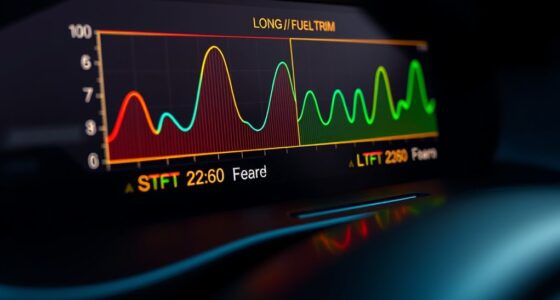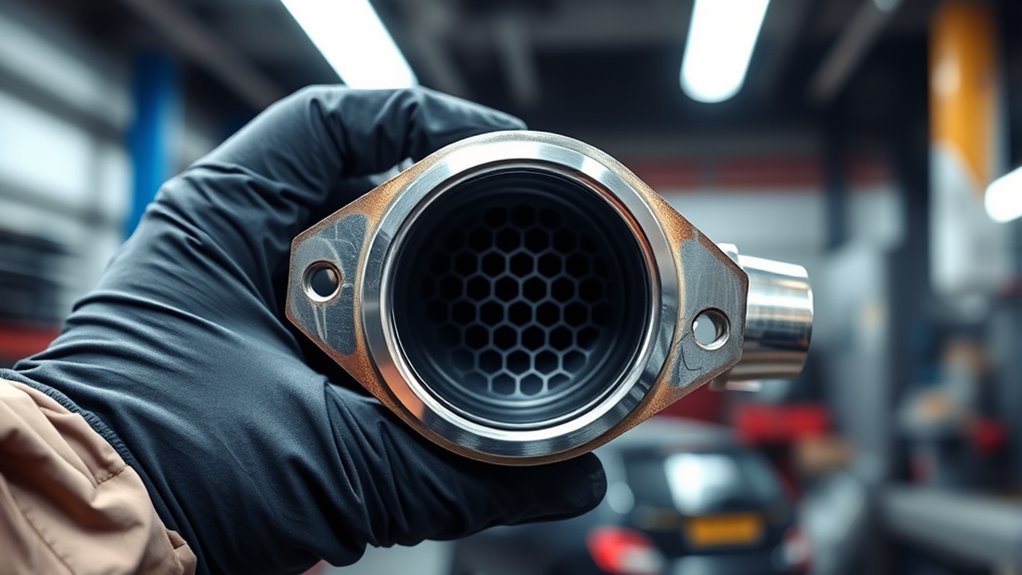

To assess your catalytic converter’s efficiency, start by checking your vehicle’s onboard diagnostics (OBD) system with an scanner. Look for trouble codes like P0420, which indicate converter issues. Monitor live sensor data from oxygen sensors before and after the converter; significant differences suggest proper function. Regularly analyzing these signals helps make certain your vehicle stays emission compliant. Keep in mind, understanding these details can reveal important insights—continue to explore this topic for more essential tips.
Key Takeaways
- Use an OBD-II scanner to retrieve trouble codes like P0420 indicating catalyst efficiency issues.
- Monitor live oxygen sensor data before and after the converter for abnormal readings.
- Compare sensor voltage fluctuations; consistent or flat signals suggest converter or sensor faults.
- Check catalyst efficiency through diagnostic tools that analyze sensor response times and signal ratios.
- Regularly interpret sensor data and trouble codes to assess whether the catalytic converter is functioning properly.
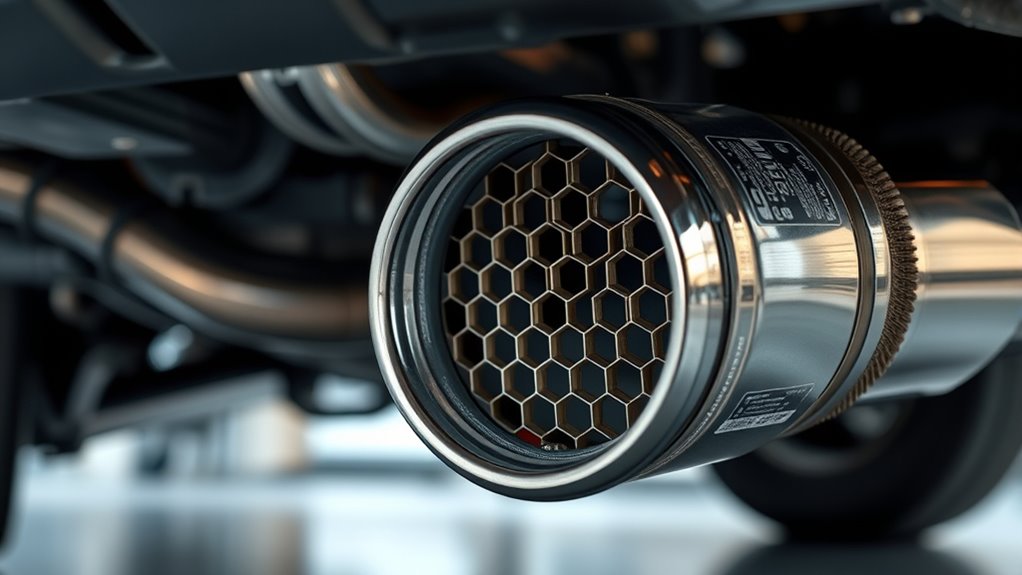
Have you ever wondered how to determine if your catalytic converter is working efficiently? The key lies in understanding emission standards and sensor diagnostics. Modern vehicles are equipped with various sensors that constantly monitor the performance of your catalytic converter, helping you identify potential issues before they become costly repairs. By paying attention to these signals, you can better assess whether your converter is meeting the required emission standards and functioning as it should.
Monitoring emission standards and sensor signals helps you evaluate your catalytic converter’s efficiency.
Emission standards are regulations set by government agencies to limit the amount of pollutants released by vehicles. Your vehicle’s onboard diagnostics (OBD) system plays a fundamental role in ensuring these standards are met. When your catalytic converter is working properly, it effectively reduces harmful emissions like carbon monoxide, hydrocarbons, and nitrogen oxides. If it starts to fail, emissions increase, and your vehicle may no longer comply with legal standards. Modern cars come with sensors, such as oxygen sensors, that constantly monitor the exhaust gases and provide real-time data to the vehicle’s computer. These sensors are essential for sensor diagnostics, which help detect inefficiencies in the catalytic converter.
To read your catalytic converter’s efficiency, you’ll want to pay attention to these sensors. The oxygen sensors, located before and after the catalytic converter, measure the amount of oxygen in the exhaust gases. When functioning correctly, they help your car’s engine control unit (ECU) maintain ideal air-fuel ratios, ensuring the converter operates effectively. If there’s a problem, the sensors send signals indicating that emissions are not being properly reduced. In many cases, you might see the Check Engine Light turn on, signaling that the system has detected an issue. Using an OBD-II scanner, you can access trouble codes related to sensor diagnostics, such as P0420, which indicates a catalyst system efficiency below the threshold.
Interpreting these codes allows you to understand whether the catalytic converter is failing or if there’s an issue with the sensors themselves. A consistent pattern of codes related to sensor performance suggests that your converter isn’t meeting emission standards. Regularly checking these sensor readings helps you catch problems early, saving you money and preventing excessive emissions. Keep in mind that sensor diagnostics aren’t just about reading trouble codes; they also involve analyzing live data from the sensors, which can be done with specialized tools. Additionally, understanding AI vulnerabilities in sensor data interpretation can help improve diagnostic accuracy and vehicle safety. By doing so, you gain a clearer picture of your converter’s health and guarantee it’s doing its job to keep your vehicle compliant with emission standards.
OBD-II scanner for catalytic converter
As an affiliate, we earn on qualifying purchases.
As an affiliate, we earn on qualifying purchases.
Frequently Asked Questions
How Often Should I Check My Catalytic Converter’s Efficiency?
You should check your catalytic converter’s efficiency during your vehicle’s regular inspection schedule, typically every 12,000 to 15,000 miles or annually, depending on your vehicle and local regulations. Testing procedures involve using a professional emissions test or a backpressure test to make sure it’s functioning properly. Regular inspections help catch issues early, preventing costly repairs and ensuring your vehicle stays compliant with emissions standards.
Can a Faulty Catalytic Converter Affect My Vehicle’s Fuel Economy?
A faulty catalytic converter can drain your vehicle’s fuel economy faster than a leaky faucet. When it malfunctions, it hampers exhaust flow, causing your engine to work harder and burn more fuel. This shortens its lifespan and might fail emissions testing, leading to costly repairs. Keep an eye on performance signs so you can address issues early, ensuring your catalytic converter stays healthy and your vehicle runs efficiently.
What Are the Signs of a Failing Catalytic Converter?
You might notice your vehicle’s exhaust emissions increase, which is a sign of a failing catalytic converter. Poor engine performance, such as sluggish acceleration or misfires, also indicates trouble. You could experience reduced fuel efficiency and a rotten egg smell from the exhaust. Additionally, your check engine light may come on. These signs suggest the converter isn’t effectively reducing emissions, and addressing these issues promptly helps maintain vehicle health.
Are There Any DIY Methods to Improve Catalytic Converter Efficiency?
Think of your catalytic converter like a coffee filter—over time, it clogs and slows down. You can try DIY maintenance by using converter cleaning products or fuel additives designed to burn off carbon deposits. Regularly using high-quality fuel and ensuring your engine runs smoothly also help improve converter efficiency. Just remember, if it’s severely clogged, professional cleaning or replacement might be your best bet for peak performance.
How Does Temperature Impact Catalytic Converter Performance?
Heat impact plays a vital role in catalytic converter performance. When the converter reaches the ideal temperature, it efficiently converts harmful emissions into less harmful gases, reducing emission levels. If the temperature drops too low, its efficiency drops, leading to higher emissions. Conversely, excessive heat can damage the converter. Maintaining proper temperature guarantees the converter works effectively, minimizing emissions and guaranteeing your vehicle runs cleaner and more efficiently.
Conclusion
Remember, keeping an eye on your catalytic converter’s efficiency helps your vehicle run smoothly and keeps emissions in check. Regular checks can catch problems early, saving you money and preventing bigger issues down the road. Don’t wait until it’s too late—”A stitch in time saves nine.” Staying proactive ensures your car stays efficient and environmentally friendly, so stay vigilant and maintain your converter for ideal performance.