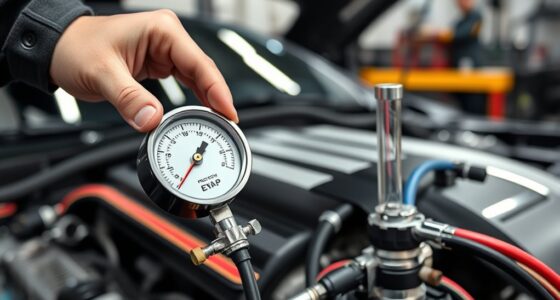
Compression testing measures the pressure in each cylinder during compression strokes to quickly identify sealing issues and overall engine health, while leak-down testing pressurizes cylinders to pinpoint specific leaks from valves, piston rings, or gaskets. Compression tests are fast and offer a broad snapshot, but leak-down tests provide detailed insights into leak sources. Understanding both can help you diagnose engine problems accurately—if you’re curious about how these tests work together, keep exploring.
Key Takeaways
- Compression testing measures cylinder pressure during compression stroke to assess sealing and power output quickly.
- Leak-down testing pressurizes cylinders and identifies specific leak sources like valves or piston rings.
- Compression tests are faster and suitable for initial engine health assessment; leak-down tests provide detailed leak diagnostics.
- Low compression indicates worn components, while leak-down testing pinpoints exact leakage points for targeted repairs.
- Using both tests together offers a comprehensive evaluation of engine sealing, efficiency, and longevity.
When diagnosing engine problems, understanding the differences between compression testing and leak-down testing is essential. Both methods help identify issues within your engine, but they serve different purposes and provide different insights. Knowing how each test works can help you determine the health of your engine more accurately, which ultimately impacts your vehicle’s fuel efficiency and engine longevity. For example, understanding the role of arcade games in entertainment can give insights into how diagnostic tools like these tests are essential for maintaining the ‘performance’ and longevity of your engine in the same way that classic arcade machines require proper maintenance to keep functioning well. Compression testing measures the pressure generated in each cylinder during the compression stroke. You’ll need a compression gauge, which you thread into the spark plug hole, then crank the engine to observe the pressure reading. This test gives you a quick snapshot of how well each cylinder is sealing and generating power. Low compression in one or more cylinders can indicate worn piston rings, damaged valves, or head gasket issues. When compression drops, not only does your engine struggle to produce power efficiently, but its fuel efficiency also suffers because the engine has to work harder to compensate for the loss of power. Over time, neglecting these issues can reduce engine longevity, leading to costly repairs or even engine failure.
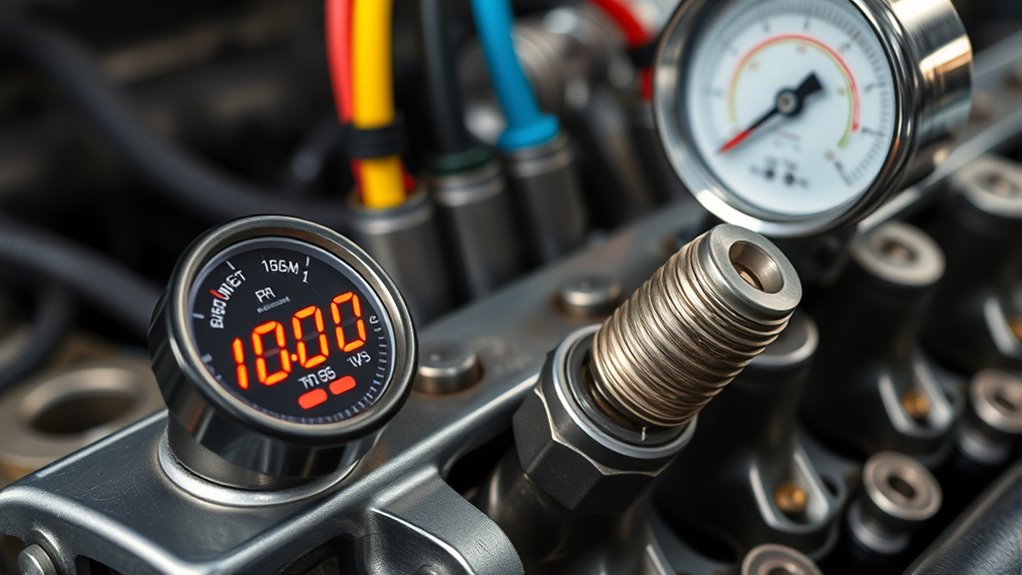
Leak-down testing, on the other hand, offers a more detailed analysis of the engine’s sealing integrity. Instead of just measuring pressure, it involves pressurizing each cylinder with compressed air while observing the amount of air escaping through valves, piston rings, or head gasket. You’ll connect a leak-down tester to each cylinder and listen for escaping air or look for escaping bubbles in the radiator or oil fill cap. This test pinpoints the exact source of any leaks, making it easier to diagnose specific problems. Because leak-down testing can detect leaks that cause minor inefficiencies, it allows you to address issues before they worsen, helping maintain ideal fuel economy and preventing premature wear that shortens engine lifespan.
While both tests are valuable, they complement each other best when used together. Compression testing is quick and useful for initial assessments, but leak-down testing provides a more detailed diagnosis. If your engine is consuming more fuel than usual or exhibiting rough running, performing these tests can identify underlying causes early. This early detection allows you to perform necessary repairs, ensuring your engine continues to run smoothly for years to come. Proper maintenance based on these tests can extend engine longevity and keep fuel consumption in check, saving you money on fuel and repairs in the long run. Ultimately, understanding and utilizing both tests helps you keep your engine healthy, efficient, and reliable.
Frequently Asked Questions
Which Testing Method Is More Cost-Effective for Routine Maintenance?
For routine maintenance, compression testing is usually more cost-effective because it requires less equipment and is quicker to perform, making it ideal for frequent checks. Its cost comparison with leak-down testing shows lower expenses, especially when maintenance frequency is high. You can efficiently identify engine issues early, saving money over time. While leak-down tests offer more detailed insights, their higher cost makes them less suitable for regular maintenance.
Can Both Tests Be Performed on All Engine Types?
You can perform both tests on most engine types, but engine compatibility and test limitations vary. Some engines, like certain diesel or rotary models, may not respond accurately to standard compression or leak-down tests. Always check your engine’s specifications first. While these tests are versatile, they may have limitations with unique or heavily modified engines. Knowing these factors helps you choose the right approach for accurate diagnostics.
How Long Does Each Testing Process Typically Take?
You can anticipate each testing process to take around 30 minutes to an hour, depending on your engine’s complexity. Testing accuracy depends on proper technique and equipment compatibility; using the right tools guarantees reliable results. Leak-down testing may take a bit longer due to additional steps, but both methods are quick when performed correctly. Make sure your equipment matches your engine type for precise, trustworthy diagnostics.
Are Special Tools Required for Leak-Down Testing?
Special tools are essential for leak-down testing, and you’ll need specific testing equipment to get accurate results. These tools include a leak-down tester, air compressor, and pressure gauges, which work together to detect leaks and diagnose engine issues. Without proper testing equipment, you won’t be able to precisely pinpoint problems. So, guarantee you have the right special tools to perform effective leak-down testing and keep your engine running smoothly.
What Are the Signs Indicating the Need for These Tests?
You should consider engine diagnostics and check cylinder health if you notice sluggish acceleration, misfires, or rough idling. Other signs include excessive oil consumption, loss of power, or unusual exhaust smoke. These symptoms often indicate potential compression or leak-down issues, so performing these tests helps identify internal engine problems early. Detecting cylinder issues through these tests guarantees accurate diagnosis, saving you time and costly repairs down the road.
Conclusion
So, now you see the difference between compression and leak-down testing. Both methods help you diagnose engine health, but they serve different purposes. Compression testing is quick and straightforward, while leak-down provides more detailed insights. Which test will you trust when it’s time to troubleshoot? Remember, understanding your engine’s condition keeps it running smoothly and saves you money in the long run. So, are you ready to take control of your engine’s health?