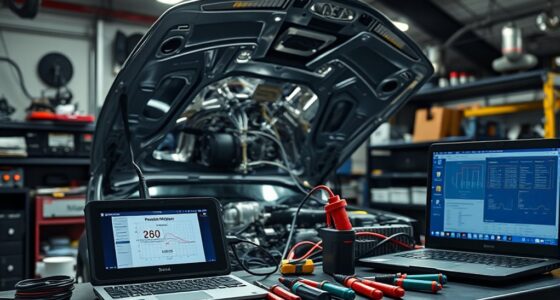
Fuel trim readings, including STFT and LTFT, show how your engine’s control module adjusts the air-fuel mixture to keep performance and emissions ideal. High positive trims mean the engine needs more fuel, indicating a lean condition, while negative trims point to a rich mixture. Persistent or extreme values suggest underlying issues like leaks or sensor faults. Understanding these signals helps you diagnose problems early—continue to explore how these trims reveal your engine’s true condition.
Key Takeaways
- Fuel trim readings show how the engine adjusts air-fuel mixture to maintain optimal performance.
- High positive STFT indicates a lean condition; negative STFT suggests a rich mixture.
- Long-term fuel trim reflects accumulated adjustments, revealing persistent engine or sensor issues.
- Proper sensor calibration ensures accurate fuel trim readings, supporting efficient engine operation.
- Monitoring fuel trims helps diagnose air leaks, sensor faults, and optimize maintenance procedures.
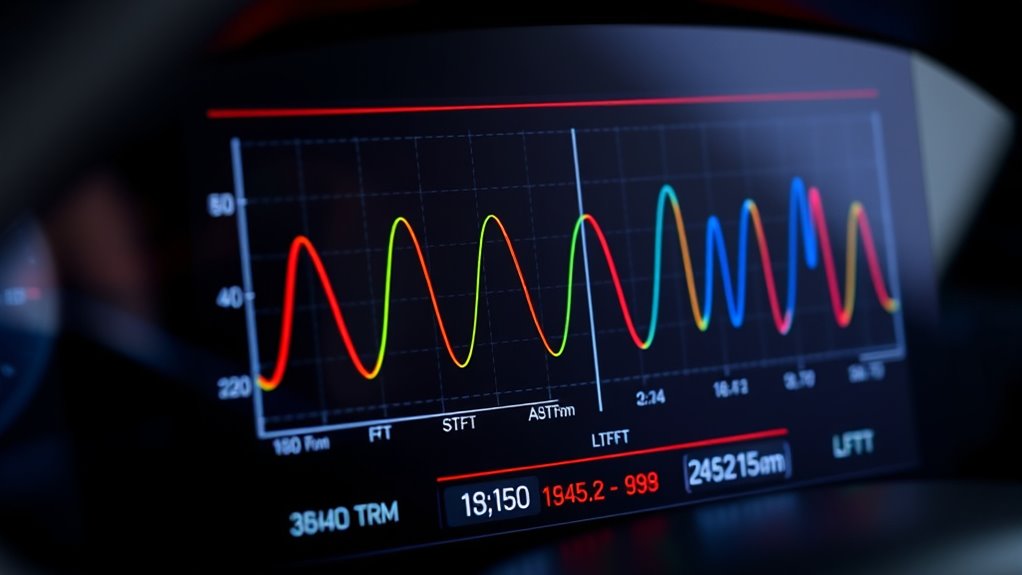
Have you ever wondered what your car’s fuel trim readings reveal about its engine health? Understanding short-term fuel trim (STFT) and long-term fuel trim (LTFT) is vital for diagnosing how well your engine is running and whether it’s getting the right air-fuel mixture. These readings reflect how your engine’s control system adjusts fuel delivery to maintain ideal performance. When you check these trims, you’re essentially seeing the car’s response to changes in the air-fuel ratio, which is critical for efficient combustion and emissions control.
Fuel trims are influenced heavily by sensor calibration, especially of the oxygen sensors, or O2 sensors. These sensors measure the exhaust gases’ oxygen content and help the engine control module (ECM) determine if the mixture is too rich or too lean. If the sensors aren’t calibrated correctly, the readings can be misleading, causing the ECM to make improper adjustments. Proper sensor calibration guarantees accurate data, allowing the fuel trims to reflect real engine conditions rather than sensor errors. When the sensors are calibrated correctly, the fuel trims should hover near zero, indicating that the system is maintaining a balanced air-fuel ratio.
Proper sensor calibration ensures accurate fuel trim readings and optimal engine performance.
If you notice that your short-term fuel trim is frequently high or low, it signals that the engine is constantly adjusting fuel delivery to compensate for an imbalance. A high positive STFT indicates the engine is running lean and needs more fuel, while a negative value suggests it’s running rich. Over time, persistent trims outside the normal range—typically plus or minus 10%—can point to underlying issues such as vacuum leaks, faulty sensors, or fuel delivery problems. Long-term fuel trim reflects these adjustments over time, showing how the engine has adapted to ongoing issues. Significant long-term trim deviations usually point to more persistent problems that might require detailed diagnostics.
Monitoring these fuel trim readings can give you a window into your engine’s health, especially if you’ve recently performed repairs or replaced sensors. Proper sensor calibration is crucial because inaccurate readings can lead to improper fuel adjustments, affecting fuel economy and emissions. If you suspect your fuel trims are off, it’s wise to have your vehicle’s sensors checked and calibrated if needed. By keeping an eye on these readings, you can catch potential issues early, ensuring your engine runs smoothly and efficiently. Ultimately, understanding how the air-fuel ratio and sensor calibration influence fuel trims empowers you to maintain your vehicle better and avoid costly repairs down the line.
Additionally, advancements in AI technology such as sensor calibration algorithms can further improve the accuracy of fuel trim readings, enhancing engine diagnostics and performance.
Frequently Asked Questions
How Do Ambient Temperature Changes Affect Fuel Trim Readings?
Ambient temperature changes directly impact your fuel trim readings because they influence sensor calibration and engine performance. When it gets colder or warmer, sensors may need recalibration to maintain accuracy, affecting your short-term and long-term fuel trims. You should monitor these temperature shifts closely, as they can cause your engine control unit to adjust fuel delivery unexpectedly, potentially leading to drivability issues or fuel economy fluctuations.
Can Fuel Trim Issues Cause Engine Hesitation or Stalling?
Fuel trim issues are like a clogged artery, causing your engine to hesitate or stall. When the air intake isn’t balanced or sensor calibration is off, the engine struggles to get the right mix of air and fuel. This imbalance can lead to poor performance, hesitation, or stalling. Fixing these issues restores proper airflow and fuel mixture, helping your engine run smoothly and reliably again.
What Role Does Fuel Quality Play in Fuel Trim Fluctuations?
Fuel quality markedly impacts fuel trim fluctuations because fuel adulteration can introduce contaminants that disrupt combustion. Additive effects in poor-quality fuel may cause the engine to run lean or rich, prompting the ECU to adjust fuel trims constantly. When you use contaminated or subpar fuel, expect more erratic fuel trim behavior, which can lead to poor performance, increased emissions, and potential engine damage over time.
How Often Should Fuel Trim Be Checked During Vehicle Maintenance?
You should check fuel trim regularly during vehicle maintenance, especially when performing sensor calibration or addressing emission control issues. Frequent monitoring helps catch fluctuations early, ensuring ideal engine performance. For most vehicles, a monthly check suffices, but more often is better if you notice rough idling or poor fuel economy. Regular inspections keep your fuel system running smoothly, preventing costly repairs and maintaining emissions compliance.
Are There Specific Driving Conditions That Influence Fuel Trim Readings?
Yes, driving conditions like frequent use of alternate fuel sources or abrupt acceleration can influence fuel trim readings. When you switch fuels or experience sensor calibration issues, your vehicle’s sensors may struggle to accurately adjust fuel delivery. This can lead to fluctuating STFT and LTFT values. Keep an eye on these readings during different conditions to ensure your vehicle runs efficiently, especially if you notice inconsistent performance or emissions.
Conclusion
Understanding fuel trim is like tuning a delicate instrument—small adjustments can restore harmony to your engine’s performance. By interpreting STFT and LTFT readings, you become the conductor of your vehicle’s efficiency, ensuring smooth operation and ideal fuel economy. When you pay attention to these signals, you’re guiding your car through the symphony of daily drives, turning potential discord into a seamless, powerful performance that keeps you moving forward with confidence.