To effectively graph scanner data, organize your information by product, location, or time to reveal patterns. Choose chart types suited to your data, like bar or line graphs, and customize axes, labels, and colors for clarity. Emphasize key metrics and outliers using contrasting colors, and avoid clutter to keep visual insights clear. Ensuring accurate color use and proper scaling helps build trust in your analysis—if you keep exploring, you’ll uncover even more useful tips.
Key Takeaways
- Select appropriate chart types (bar, line, scatter) based on data patterns for clearer insights.
- Customize axes, labels, and colors to enhance visual clarity and emphasize key trends or outliers.
- Organize scanner data by product, location, or time frame to reveal meaningful patterns.
- Highlight significant data points or anomalies with contrasting colors for quick identification.
- Avoid overcrowding visuals; focus on impactful insights and maintain simple, readable graphs.
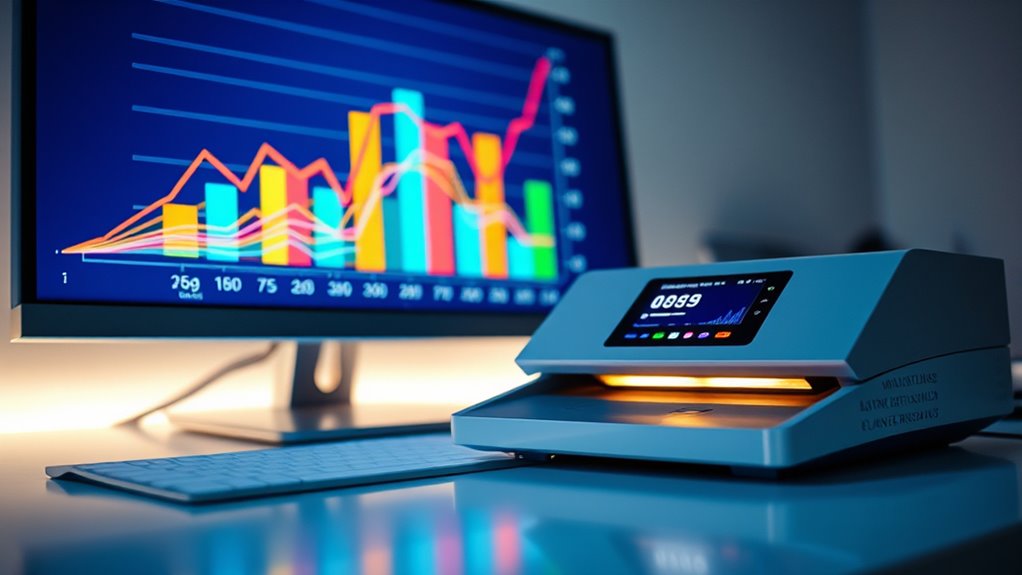
Are you struggling to make sense of your scanner data? If so, you’re not alone. Many people find interpreting large amounts of data overwhelming, especially when it comes to visualizing trends or pinpointing issues. The key to mastering this lies in effective barcode analysis and smart graph customization. When you focus on these aspects, you’ll turn raw data into clear insights that drive better decisions.
Barcode analysis is the foundation of understanding what your scanner data reveals. By examining barcode scans, you can identify patterns, pinpoint which products sell best, and detect potential inventory issues. To get the most out of your barcode analysis, start by organizing your data to highlight key metrics. For example, categorize data by product, location, or time frame. This helps you see the bigger picture rather than getting lost in individual scans. Additionally, look for anomalies or spikes in your barcode data—these often reveal trends or problems that need addressing. The goal is to extract meaningful insights from what might initially seem like a jumble of numbers, and focusing on barcode analysis makes that possible. Incorporating color accuracy into your visualizations can also help ensure your data representations are true to real-world conditions, making your insights even more reliable.
Once you’ve analyzed your barcode data, the next step is graph customization. Creating the right visual representation is vital for clarity. When customizing your graphs, choose formats that suit your data and the story you want to tell. Bar graphs work well for comparing sales across different products, while line charts are better for tracking trends over time. Don’t just settle for default templates—adjust axes, labels, colors, and data points to improve readability and emphasis. For example, use contrasting colors to highlight outliers or significant changes. Make sure your axes are scaled appropriately so your data isn’t misleading or cluttered. Effective graph customization also means keeping your visuals simple but informative. Avoid overcrowding your charts with too many data points or labels, which can make interpretation difficult. Instead, focus on highlighting the most impactful insights, making it easier for anyone viewing the data to grasp the key takeaways quickly.
Frequently Asked Questions
How Can I Improve Data Accuracy in Scanner Graphing?
To improve data accuracy in scanner graphing, you should focus on calibration techniques and data validation. Regularly calibrate your scanner to guarantee measurements are precise, and double-check your data entries for errors. Use validation methods like cross-referencing with manual counts or alternative data sources. This proactive approach helps catch discrepancies early, ensuring your graphs reflect true data, and ultimately enhances the reliability of your analysis.
What Are Common Errors to Avoid When Graphing Scanner Data?
Did you know that 65% of errors in scanner data graphing stem from improper axis scaling? To avoid common mistakes, guarantee your data is normalized, so comparisons are accurate. Always double-check axis scaling—uneven scales can mislead viewers. Avoid cherry-picking data points, and verify your labels for clarity. Proper normalization and consistent axes help prevent misinterpretation, making your graphs more reliable and insightful for decision-making.
Which Software Tools Are Best for Real-Time Scanner Data Visualization?
You should consider software tools like Power BI, Tableau, or Grafana for real-time scanner data visualization. These tools excel at handling live data streams and offer robust features for dynamic graphing. Guarantee the software you choose is compatible with your scanner system to avoid integration issues. By using these tools, you can monitor data in real-time, identify trends quickly, and make informed decisions on the fly.
How Do I Interpret Outliers in Scanner Data Graphs?
Outliers stand out like sore thumbs, signaling you to investigate further. When interpreting them, focus on outlier identification and consider data normalization to guarantee consistency. These anomalies could indicate errors, rare events, or new trends. Don’t dismiss them—analyze their context, check for measurement errors, or assess if normalization clarifies their significance. Recognizing the reason behind outliers helps you make smarter decisions based on your scanner data.
What Are Best Practices for Sharing Scanner Data Insights Securely?
To share scanner data insights securely, you should use secure sharing methods like encrypted emails or private cloud platforms, ensuring data privacy. Limit access to only those who need it, and consider anonymizing sensitive information to protect individual privacy. Always verify your recipients’ credentials and regularly update permissions. By following these best practices, you safeguard your data while enabling effective collaboration and maintaining trust with stakeholders.
Conclusion
By blending bold bars, balanced labels, and beautiful colors, you’ll boost your barcode brilliance. Remember, clear charts captivate customers, convey clarity, and create confidence. With these scanner data graphing tips, you’ll turn tedious data into tempting, top-tier visuals. So, stay sharp, stay simple, and showcase your scanner skills with style. Success is just a few savvy, smile-worthy graphs away—so start shaping spectacular charts today!