
Standard warranties usually don’t cover damage caused by accidents, such as impacts or collisions. However, if you have an extended warranty, it might offer extra protection for accident-related damage if it’s explicitly included. Be sure to review your warranty details carefully, as coverage varies and may have specific limits, deductibles, or exclusions. Understanding your warranty’s scope helps you know if repairs after an incident are covered—continue to explore to learn how to maximize your protections.
Key Takeaways
- Standard warranties typically exclude damage caused by accidents or external impacts.
- Extended warranties may offer coverage for accidental damage, depending on specific policy terms.
- Always review warranty fine print to confirm if accident-related damages are included or excluded.
- Deductibles and claim limits vary; understanding these details helps anticipate repair coverage.
- Clarify warranty coverage before an incident to ensure appropriate protection and avoid surprises.
Have you ever wondered what your warranty actually covers? It’s a common question, especially after an accident or unexpected damage. When you buy a product, whether it’s a vehicle or an appliance, understanding the scope of your warranty can save you time, money, and frustration. Many people don’t realize that warranties can vary considerably, and in some cases, extended warranties might be available to provide additional coverage beyond the manufacturer’s standard obligations. These extended warranties often come with their own terms and conditions, but they can give you peace of mind in the event of accidents or repairs needed outside the original coverage period.
Understanding your warranty coverage helps avoid surprises after accidents or damage.
When an accident occurs, your primary concern is whether the damage is covered by your warranty. Typically, manufacturer obligations are outlined in the warranty policy, specifying what is covered and what isn’t. Standard warranties usually cover manufacturing defects, faulty parts, or issues that arise under normal use within a specific time frame or mileage limit. However, damage caused by accidents, misuse, or neglect often falls outside these obligations. That’s where extended warranties can come into play. They might include coverage for accidental damage, impacts, or other unforeseen issues that aren’t covered under the original manufacturer’s warranty. It’s essential to read the fine print of any extended warranty to understand exactly what is included.
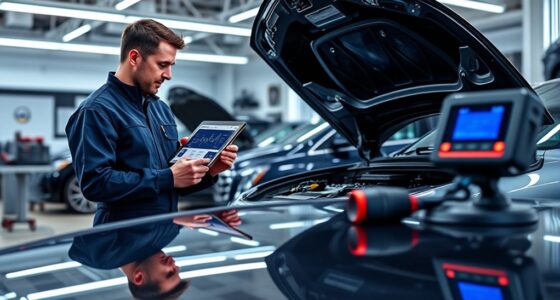
In the case of vehicle warranties, manufacturer obligations often extend to repairs or replacements for defective components, but they typically exclude damage from accidents or collisions. If your vehicle is involved in an accident, repairs might not be covered unless you have purchased an extended warranty that explicitly covers such scenarios. Some extended warranties offer add-on protection for accidental damage, which can be particularly valuable if you’re worried about repairs following an incident. Keep in mind, though, that even with extended warranties, there may be deductibles, claim limits, or specific conditions you need to meet for coverage to kick in. Additionally, some predictive analytics tools could help you assess the likelihood of future repairs based on vehicle usage and history.
Ultimately, knowing your warranty’s scope after an accident requires careful review of the policy details. Manufacturer obligations are generally clear about what’s included, but accidents often complicate things. Extended warranties can fill in some gaps, providing coverage for accidental damage or repairs that the original warranty doesn’t cover. Always ask questions and clarify what is and isn’t protected before purchasing extra coverage. That way, you’ll know exactly what to expect if the unexpected happens, ensuring you’re not caught off guard when it comes to repairs after an accident.
Frequently Asked Questions
Does Warranty Coverage Vary by Accident Type?
Yes, warranty coverage varies by accident classification. Some accidents, like minor fender-benders, might not be covered due to warranty exclusions related to collision damage. More severe accidents, such as those caused by manufacturing defects or certain types of collisions, may still be covered if they meet the warranty terms. Always check your warranty’s specific exclusions and classifications to understand what damage is covered after an accident.
Are There Specific Incidents That Void Warranty Coverage?
Certain incidents, like intentional damage, racing, or unauthorized repairs, void warranty coverage. These accident exclusions clearly specify what actions or events exclude you from warranty exceptions. You might lose coverage if you neglect regular maintenance, ignore safety guidelines, or cause damage through negligence. Recognizing these specific incidents helps you protect your warranty rights, ensuring you understand what actions could jeopardize your coverage and avoid costly repairs or surprises later.
How Does the Warranty Process Work After an Accident?
After an accident, you should contact your extended warranty provider to start the claim process. They’ll typically require documentation of the accident and the repair, and then evaluate if the damage is covered. Once approved, you can proceed with accident repair at an authorized shop. Your warranty may cover certain repairs, but be aware that damages caused by accidents might be limited or excluded, depending on your policy.
Can Third-Party Repairs Affect Warranty Validity?
Third-party repairs can affect your warranty validity if the repair shop isn’t authorized or doesn’t follow manufacturer guidelines. If you have extended coverage, check your policy to see if repairs by an authorized repair shop are required. Unauthorized repairs might void parts of your warranty, so always choose a reputable repair shop that complies with the manufacturer’s standards to keep your warranty intact.
What Documentation Is Needed for Warranty Claims Post-Accident?
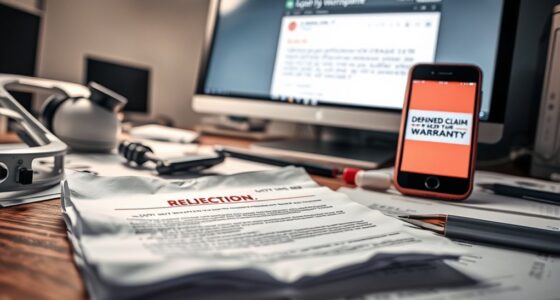
Think of your warranty claim as a treasure map; clear documentation guides you through the stormy seas. You’ll need insurance claims, repair estimates, and detailed receipts to prove your case. Gather photographs of the damage, a police report if applicable, and any correspondence with repair shops. This documentation acts like a sturdy compass, ensuring your warranty remains valid even after an accident, helping you navigate smoothly to your rightful repair coverage.
Conclusion
So, next time you think a warranty will save the day after an accident, remember—it often doesn’t cover the real mess. You might find yourself happily surprised, or just happily stuck with the bill. Irony’s sweet spot is telling you that what seems covered isn’t always, and sometimes, the best warranty is just good old-fashioned caution. After all, a little prevention might save you from the warranty’s wild ride.