
A warranty covers repairs for specific issues within a set time or mileage, often free if the problem is included. A recall is law-mandated and addresses safety risks, providing free fixes for affected vehicles. A TSB is an internal notice from the manufacturer about known issues; repairs may be free or paid, depending on warranty status. Understanding these differences helps you know when repairs are free and when costs may apply—learn more to better navigate your vehicle issues.
Key Takeaways
- Warranties cover repairs for a set period, while recalls address safety issues mandated by law, both often free of charge.
- TSBs are internal manufacturer notices about known non-safety issues; repairs may be paid or free depending on warranty status.
- Recall repairs are legally required and publicly announced; TSBs are internal and not necessarily mandated by law.
- Out-of-warranty vehicles typically require payment for TSB-related repairs, unlike warranty-covered or recall repairs.
- Understanding these differences helps determine if a repair is free, paid, or potentially covered by warranty or recall.
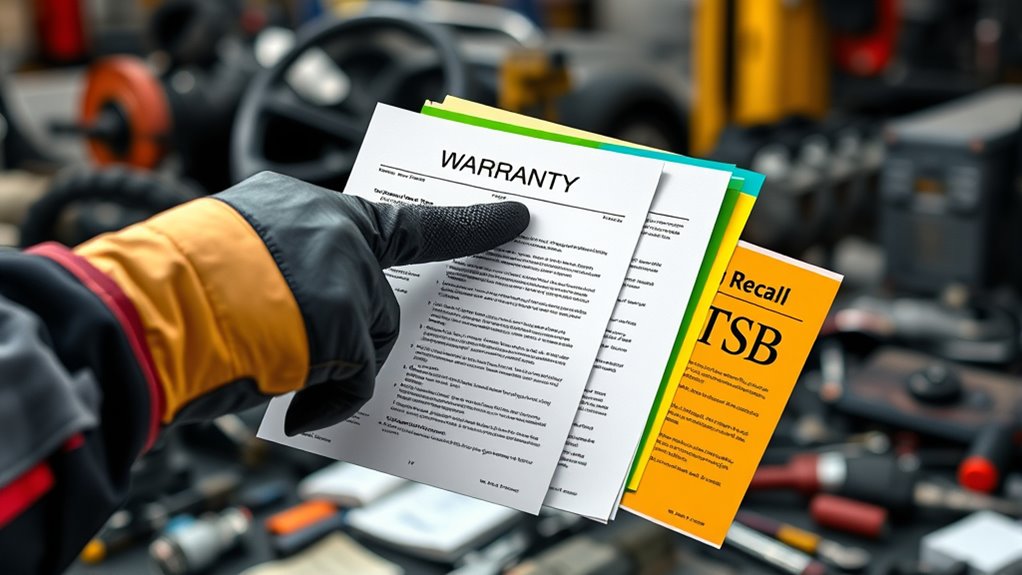
A Technical Service Bulletin (TSB) is different because it’s an internal communication from the manufacturer to dealerships, highlighting known issues that might not be safety-related but still affect vehicle performance or reliability. TSBs often address manufacturing defects or design flaws that cause problems like engine stalling or transmission slipping. Unlike recalls, TSB repairs aren’t mandated by law, and coverage varies depending on your vehicle’s warranty status or the manufacturer’s policies. Sometimes, dealerships might repair issues addressed by a TSB free of charge, especially if the vehicle is still under warranty. However, if your vehicle is out of warranty, you may have to pay for the repairs, and your customer liability depends on the specific circumstances and whether the problem is covered under the original warranty terms. Additionally, understanding resources and tools available can help determine whether a TSB repair is covered or if other options exist.
Frequently Asked Questions
How Long Does a Typical Warranty Last?
A typical warranty lasts between 3 to 5 years or up to 36,000 to 60,000 miles, whichever comes first. During this period, you benefit from extended coverage that protects against repairs. Once the warranty expiration date passes, you’re responsible for maintenance costs. It’s important to keep track of your warranty’s duration so you can take advantage of coverage and understand when it’s time to contemplate other options.
Can a Vehicle Be Both Recalled and Have a TSB?
Imagine your car suddenly stalls on the highway—that’s a recall addressing a safety concern. Yes, your vehicle can be both recalled and have a TSB; recalls fix safety issues, while TSBs provide repair guidance. Both highlight manufacturer liability and aim to guarantee vehicle safety. You should act quickly, as recalls often require free repairs, and TSBs help mechanics resolve ongoing issues efficiently.
Are TSBS Legally Binding Like Recalls?
No, TSBs aren’t legally binding like recalls. When you receive an official documentation of a recall, it means the manufacturer is legally required to fix the issue at no cost. TSBs, however, are simply technical suggestions or instructions for dealers and mechanics to address common problems. You aren’t legally compelled to abide by a TSB, but it can help ensure proper repairs and maintenance.
What Costs Are Covered Under a Warranty?
Like a knight in shining armor, your warranty shields you from unexpected costs. It typically covers repairs or replacements due to defects in materials or workmanship. Extended coverage can offer extra peace of mind, but watch out for warranty exclusions that might limit what’s covered. Usually, repairs related to normal wear and tear, accidents, or aftermarket modifications aren’t included. Always read the fine print to know exactly what costs are protected.
How Can I Check if My Car Has an Open TSB?
You can check if your car has an open TSB by visiting your vehicle manufacturer’s website or contacting your dealer directly. Keep your maintenance schedules handy, as they often include TSB updates. While TSBs aren’t typically covered by insurance, staying current with recommended maintenance helps prevent issues. Regularly reviewing your vehicle’s service history ensures you’re aware of any open TSBs and necessary repairs.
Conclusion
So, next time your car acts up, remember that a warranty might keep you covered, a recall could save your day, and a TSB is just a technician’s secret weapon. Ironically, what seems straightforward often turns into a game of paperwork and patience. Just don’t be surprised if your “simple fix” turns into a saga—after all, the automotive world keeps you guessing, even when you think you’re in the driver’s seat.