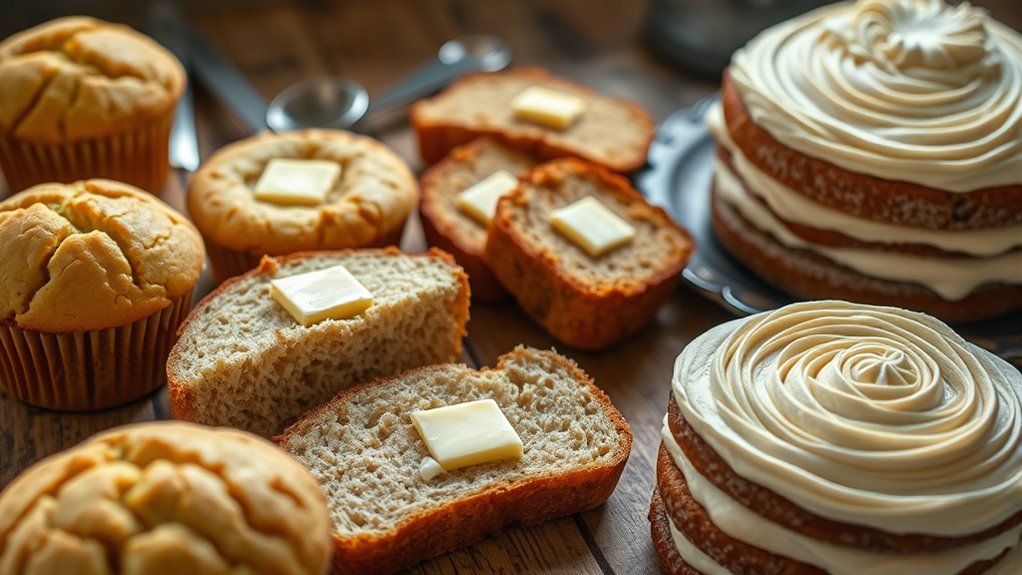

Understanding baking ratios for cakes, muffins, and quick breads helps you achieve consistent results with perfect texture and structure. Typically, these baked goods follow specific ratios, like 1 part fat, 2 parts sugar, 3 parts eggs, and 4 parts flour. Adjusting these ratios allows you to tweak moisture, sweetness, and density to suit your preferences. If you want to know how to customize your recipes while maintaining their quality, there’s more to discover ahead.
Key Takeaways
- Baking ratios, such as the classic 1:2:3:4 for cake recipes, provide a foundation for consistent texture and structure.
- Understanding gluten development through ingredient ratios helps achieve desired chewiness or tenderness in baked goods.
- Adjusting ratios when substituting ingredients (e.g., gluten-free flours or oils) ensures proper crumb and stability.
- Maintaining specific ratios allows for recipe modifications to suit different oven types, altitudes, or dietary needs.
- Knowledge of ratios aids in troubleshooting issues like dense texture or inadequate rise in cakes, muffins, and quick breads.
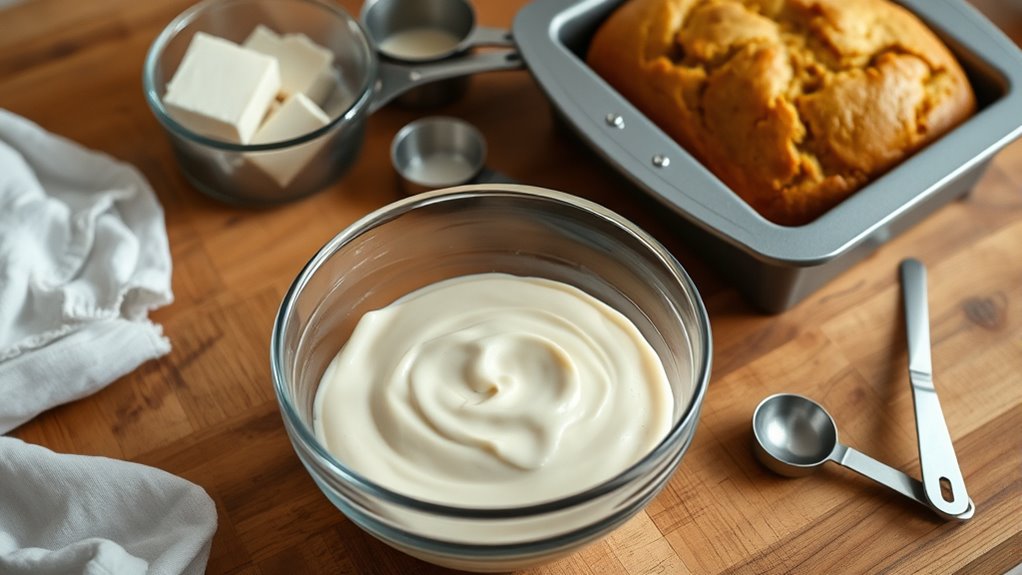
Have you ever wondered how bakers consistently create perfect recipes? The secret often lies in understanding baking ratios, especially when making cakes, muffins, and quick breads. These ratios act as a foundation, guiding you to achieve consistent results. When you stick to the right proportions, you guarantee proper gluten development, which is vital for the texture and structure of baked goods. Gluten development helps give cakes and breads their chewy or tender qualities, depending on how much gluten forms during mixing. If you overmix, gluten can become too strong, leading to dense or tough baked items. Conversely, gentle mixing encourages a tender crumb. Knowing these ratios allows you to predict how ingredients will interact, giving you confidence to experiment with ingredient substitutions without compromising the final product.
Ingredient substitutions are a common part of baking, and understanding ratios helps you make smart swaps. For example, if you prefer a gluten-free cake, you can replace wheat flour with almond or rice flour, but you’ll want to adjust the ratio slightly. Since gluten-free flours often lack the elasticity of wheat, using binders like xanthan gum or increasing the egg content can compensate, maintaining the right gluten development and structure. Similarly, if you’re out of butter, substituting with applesauce or oil can work, but keeping the ratio consistent guarantees the texture and moisture stay balanced. The key is to understand the role each ingredient plays and how altering quantities influences gluten formation and overall consistency.
When you follow baking ratios, you’re fundamentally creating a blueprint that simplifies ingredient substitutions. For instance, a typical cake ratio might be 1 part fat, 2 parts sugar, 3 parts eggs, and 4 parts flour. If you want a richer cake, you can increase the butter slightly while maintaining the overall ratio, ensuring the gluten develops just enough to support the structure without becoming dense. If you’re aiming for a lighter muffin, decreasing sugar or adjusting the liquid content while respecting the ratio keeps the batter tender and moist. By understanding these foundational ratios, you can troubleshoot issues more effectively—if your batter is too dense, maybe it’s a gluten development issue or an ingredient imbalance. Recognizing how each component interacts allows you to tweak recipes confidently, guaranteeing delicious baked goods every time. Additionally, understanding baking ratios can help you adapt recipes to different oven types and altitudes for optimal results.
Frequently Asked Questions
How Do Altitude Changes Affect Baking Ratios?
Altitude baking affects your baking ratios because higher elevations cause quicker evaporation and leavening expansion. You should adjust your ratios by decreasing sugar and leavening agents while increasing liquids to prevent over-rising and collapsing. These ratio adjustments help you maintain the right texture and structure in your baked goods. So, when baking at altitude, remember to tweak your ratios accordingly to get perfect cakes, muffins, or quick breads.
Can I Substitute Gluten-Free Flours in Standard Ratios?
While gluten-free flours can be substituted in standard ratios, it’s best to approach with a gentle touch. Gluten-free flours often require ratio adjustments and extra moisture or binding agents to achieve the same texture. You might need to experiment a bit, adding a bit more liquid or binder like xanthan gum. With patience, you’ll find the perfect balance for delicious gluten-free baked goods.
What Are the Signs of Incorrect Baking Ratios?
You know your baking ratios are off when your baked goods have texture issues like being too dense, crumbly, or overly moist. You might also notice flavor imbalances, such as a bland or overly salty taste. These signs suggest you should double-check your measurements. Precise ratios help guarantee your muffins, cakes, or quick breads turn out light, flavorful, and with the right texture every time.
How Do Aging Ingredients Impact Ratios and Baking Results?
Aging ingredients can considerably impact your baking results because their freshness affects batter consistency. When ingredients like flour or baking powder age, they may lose potency, causing your batter to become too thick or too runny. This imbalance can lead to uneven baking and poor texture. To avoid this, always use fresh ingredients, and adjust your ratios if you notice a change in batter consistency, ensuring your baked goods turn out perfect.
Are There Ratios Specific to Vegan or Dairy-Free Recipes?
You’ll find that vegan and dairy-free recipes often use specific ratios to achieve the perfect texture. For example, vegan egg replacements like flax or chia seeds are added in precise amounts, while dairy-free milk ratios typically match traditional recipes to maintain moisture and structure. These ratios guarantee your baked goods stay moist and fluffy, even without eggs or dairy, creating a balanced, delicious result every time.
Conclusion
Now that you know the baking ratios, you’re all set to whip up cakes, muffins, and quick breads with confidence. Remember, once you understand the basics, you can tweak recipes to suit your taste. Think of baking like a well-oiled machine—you just need to keep everything in balance. So go ahead, get your hands floury, and don’t be afraid to experiment; after all, practice makes perfect in the kitchen!