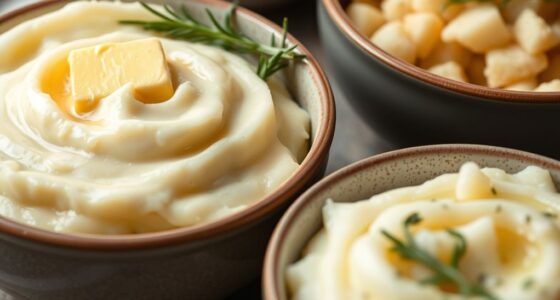
If you want dairy-free swaps that actually work, you’ll find plenty of options like almond, soy, oat, and coconut milks that taste great and work well in recipes. Vegan cheeses and yogurts now melt and smooth out almost like traditional dairy, making your favorite dishes possible without compromise. Using plant-based butter or oils in baking can give you similar textures with a healthier twist. Keep exploring, and you’ll discover how easy it is to enjoy your favorites dairy-free.
Key Takeaways
- Use almond, soy, or oat milk as effective dairy milk substitutes in beverages, cereals, and recipes.
- Replace butter with plant-based margarine or oils for baking and cooking without sacrificing richness.
- Choose vegan cheeses and yogurts that melt and taste similar to traditional dairy products.
- Incorporate coconut or almond yogurt and milk to add moisture and flavor in baked goods.
- Experiment with plant-based creams and spreads to achieve similar textures and flavors in desserts and savory dishes.

Switching to dairy-free alternatives can be a simple way to accommodate lactose intolerance, dairy allergies, or ethical choices. When exploring dairy-free swaps, plant-based alternatives are your best friends, offering a wide range of options that mimic traditional dairy products. From plant-based milks like almond, soy, oat, or coconut to vegan cheeses and yogurts, these alternatives can seamlessly replace dairy in most recipes and meals. They’re designed to deliver similar textures and flavors, making your transition smoother and more enjoyable. Whether you’re pouring a glass of milk, spreading some cheese, or stirring yogurt into your breakfast, plant-based options are readily available, versatile, and often fortified with vitamins to guarantee you get essential nutrients.
If you’re into baking, dairy-free baking opens up a whole world of possibilities. Replacing traditional dairy ingredients in recipes doesn’t mean sacrificing taste or texture. For cakes, muffins, or cookies, you can swap butter with plant-based margarine or oils, and milk with any of the dairy-free milks mentioned earlier. Many recipes even adapt well with dairy-free yogurt or applesauce to add moisture. The key is understanding how these substitutes behave in baking; for example, coconut milk provides richness, while almond milk keeps things light. Dairy-free baking not only caters to dietary restrictions but also often results in baked goods with unique flavors and textures that can elevate your recipes. Additionally, modern plant-based products are increasingly crafted to closely resemble their dairy counterparts, making the transition even easier.
You might worry about the impact on taste, but the truth is, many plant-based alternatives are crafted to closely resemble their dairy counterparts. You’ll find vegan cheeses that melt just like traditional cheese, and plant-based creams that whip up fluffy for topping desserts. The more you experiment, the better you’ll understand which substitutes work best for different recipes. Plus, switching to these alternatives can be healthier, as many are lower in saturated fat and free of hormones and antibiotics typically found in conventional dairy. Incorporating plant-based technologies into your diet can also enhance the nutritional value of your meals, making your dairy-free journey more beneficial overall.
Adopting dairy-free swaps isn’t just about replacing ingredients; it’s about discovering new flavors and textures that suit your lifestyle and values. With the growing popularity of plant-based alternatives, you gain access to a variety of products that make dairy-free living both practical and satisfying. So, whether you’re baking a cake or pouring cereal in the morning, these dairy-free options help you enjoy your favorite foods without compromise. Over time, you’ll find that dairy-free baking and using plant-based alternatives become second nature, opening up creative culinary possibilities while supporting your health and ethical choices.
dairy-free almond milk
As an affiliate, we earn on qualifying purchases.
As an affiliate, we earn on qualifying purchases.
Frequently Asked Questions
Are Dairy-Free Alternatives Suitable for Children’s Nutrition?
Yes, dairy-free alternatives can be suitable for children’s nutrition if you choose the right options. Look for children’s milk alternatives fortified with dairy-free calcium, ensuring they get essential nutrients like calcium and vitamin D. Always check labels to confirm nutrient content and avoid added sugars. Incorporate these healthy substitutes into your child’s diet to support their growth, making sure they receive balanced nutrition without dairy.
How Do Dairy-Free Substitutes Affect Baking Textures?
Think of baking without dairy as steering through a new world—plant-based milks like almond or soy can alter your usual results. They tend to affect texture modification, making baked goods slightly more tender or moist. To keep your recipes consistent, you might need to tweak quantities or add a little extra binding agent. With some experimentation, you’ll master dairy-free baking and enjoy delicious, dairy-free treats with the perfect texture.
Can Dairy-Free Swaps Help With Lactose Intolerance Symptoms?
Yes, dairy-free swaps can help with lactose intolerance symptoms because they eliminate lactose, easing your digestion. When you choose plant-based alternatives like almond or soy milk, you support better lactose digestion and reduce discomfort. These swaps also aid dairy allergy management, preventing allergic reactions. By making these simple switches, you can enjoy your favorite recipes without the worry of lactose intolerance or dairy allergies impacting your health.
Are Dairy-Free Products More Expensive Than Traditional Dairy?
Dairy-free products can feel like they cost a fortune, but it’s not always the case. The cost comparison varies depending on the brand and ingredient variety, with some options being more affordable than traditional dairy. While specialty items might seem pricey, many stores now offer budget-friendly choices. You’ll find that the right dairy-free swap can fit your wallet just as well as regular dairy, especially when you shop smart and compare prices.
Do Dairy-Free Options Contain Added Sugars or Preservatives?
Dairy-free options often contain added sugars and preservatives to enhance flavor and extend shelf life. You should check labels carefully, as some products include unnecessary sugars that can impact your health. Preservatives are commonly added to prevent spoilage, especially in plant-based milks and cheeses. By reading ingredients, you can choose dairy-free options that align with your health goals and avoid excessive added sugars or preservatives.
vegan cheese that melts
As an affiliate, we earn on qualifying purchases.
As an affiliate, we earn on qualifying purchases.
Conclusion
Switching to dairy-free options is like finding a hidden gem—you’ll discover tasty alternatives that fit seamlessly into your life. Whether it’s plant-based milks or creamy spreads, these swaps make your meals just as satisfying without dairy. Don’t be afraid to experiment and find what works best for you. With a little curiosity and an open mind, you’ll enjoy a dairy-free lifestyle that’s as smooth as silk and just as delicious.
plant-based butter for baking
As an affiliate, we earn on qualifying purchases.
As an affiliate, we earn on qualifying purchases.
dairy-free yogurt alternatives
As an affiliate, we earn on qualifying purchases.
As an affiliate, we earn on qualifying purchases.