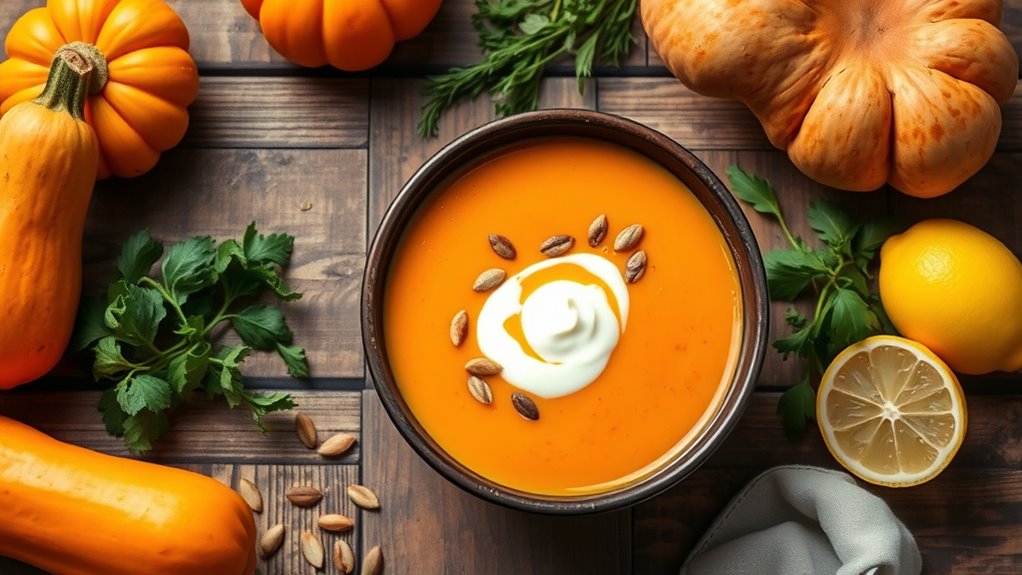

To build flavor from scratch for fall soups, start by selecting seasonal ingredients like squash, pumpkins, or root vegetables and roast or sauté them to develop sweetness and depth. Use gentle simmering to meld flavors, and layer in herbs such as sage or thyme, along with spices like cinnamon or nutmeg, at different stages. Tasting and adjusting seasonings as you go guarantees a rich, balanced result. If you continue, you’ll discover more tips to enhance your soup’s flavor even further.
Key Takeaways
- Select fresh, seasonal ingredients like pumpkin, squash, and root vegetables for vibrant flavor.
- Roast vegetables and sauté aromatics to deepen sweetness and develop a rich foundation.
- Use herbs and spices strategically, adding gradually to build warmth and complexity.
- Simmer gently to meld flavors without overcooking delicate ingredients.
- Adjust seasoning and texture throughout cooking for a balanced, flavorful final soup.
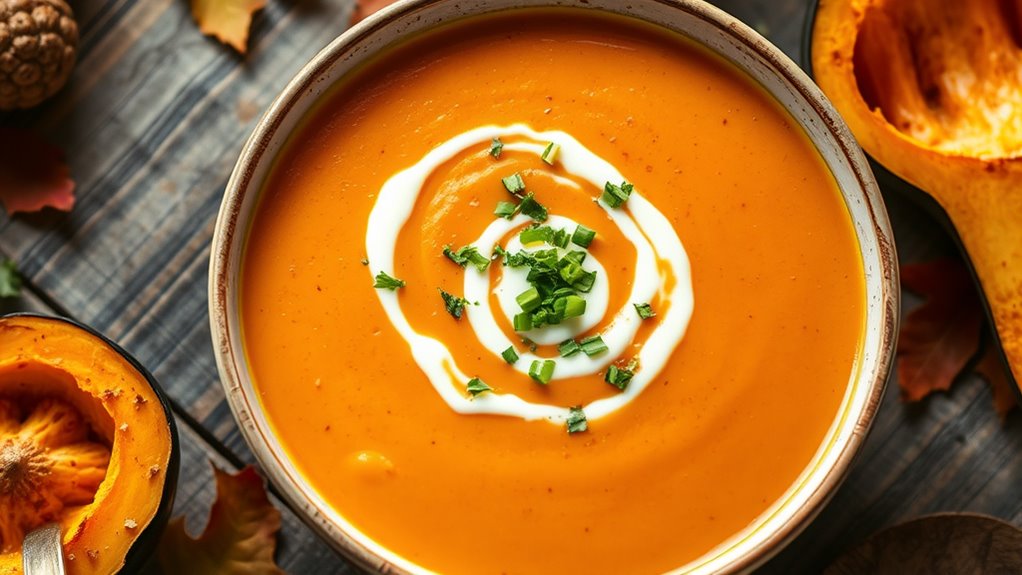
As the leaves turn and temperatures drop, there’s no better way to warm up than with a hearty bowl of fall soup. The key to creating a rich, flavorful soup from scratch lies in selecting the right seasonal ingredients and mastering simple but effective cooking techniques. Fall is the perfect time to incorporate ingredients like pumpkin, squash, sweet potatoes, apples, and root vegetables—each bringing their own depth of flavor and natural sweetness. When choosing these ingredients, opt for ones that are fresh and in season; they tend to be more vibrant and flavorful, giving your soup a robust base.
Start by preparing your seasonal ingredients properly. Roasting vegetables like butternut squash or carrots before adding them to your soup enhances their natural sweetness and adds a layer of complexity. Roasting is a prime example of a cooking technique that brings out depth in flavors, giving your soup a richer taste right from the start. If you prefer a lighter broth, sautéing onions and garlic in a little oil until golden brown is another technique that forms a flavorful foundation. This method releases natural sugars and aromatic compounds, which serve as the backbone of your soup’s flavor profile.
Roasting vegetables like squash and carrots enhances their natural sweetness and deepens flavor.
Building flavor from scratch also involves balancing different cooking techniques. For example, simmering ingredients gently allows flavors to meld without overcooking delicate vegetables. Using a combination of sautéing and simmering helps develop a nuanced taste, as each step contributes unique elements. Incorporate herbs and spices like sage, thyme, cinnamon, or nutmeg at strategic points during cooking to add warmth and complexity. These seasonings should be added gradually, allowing their flavors to infuse the broth and ingredients evenly. Additionally, using fresh ingredients can significantly improve the overall flavor profile of your soup.
To elevate your fall soup even further, consider blending some ingredients for a smooth texture or leaving others chunky for added heartiness. Using an immersion blender directly in the pot allows you to achieve a creamy consistency quickly, while still controlling the texture. Taste your soup throughout the process and adjust seasoning as needed—sometimes a pinch of salt or a splash of acidity from vinegar or lemon juice can completely transform the dish.
Frequently Asked Questions
What Are Some Common Fall Soup Ingredients I Should Try?
You should try ingredients like butternut squash, pumpkin, and sweet potatoes, which are perfect for fall soups. Add seasonal vegetable pairings like carrots, parsnips, and kale for extra flavor. Incorporate seasonal spice blends such as cinnamon, nutmeg, and sage to enhance taste. These ingredients create rich, warming flavors that capture the essence of fall, making your soups hearty and delicious.
How Can I Make My Soup More Hearty Without Cream?
Power up your soup with hearty vegetables like sweet potatoes, carrots, and squash, which add substantial substance without cream. Boost its bulk by tossing in protein enhancements such as beans, lentils, or shredded chicken. These additions create a satisfying, savory stew that feels full and fulfilling. Focus on flavor-building techniques like sautéing aromatics and seasoning well to guarantee each spoonful delivers depth and richness, making your soup both hearty and wholesome.
Are There Vegetarian Options for Fall Soups?
Absolutely, you can make delicious vegetarian fall soups. Use vegetarian substitutes like lentils, beans, or hearty vegetables to add texture and protein. To enhance flavor, incorporate roasted garlic, caramelized onions, and herbs like thyme or sage. Broth choices matter too—opt for vegetable broth with a splash of balsamic vinegar or soy sauce for depth. These techniques create rich, satisfying soups without needing meat or dairy.
How Do I Store Leftover Fall Soup Safely?
To store leftover fall soup safely, use proper storage methods like transferring it to airtight containers. Let the soup cool slightly before refrigerating to prevent bacteria growth. Keep it in the fridge for up to 3-4 days. When reheating, do so evenly on the stove or microwave, stirring frequently, and heat to an internal temperature of 165°F to guarantee safety and flavor retention.
Can I Freeze Fall Soups for Later Use?
Yes, you can freeze fall soups for later use. Use proper storage techniques like letting the soup cool completely before transferring it to airtight containers or heavy-duty freezer bags. Leave some space at the top for expansion. Label with date, and freeze for up to 3 months. Freezing tips include removing excess air and avoiding repeated thawing and refreezing, which can affect flavor and texture.
Conclusion
As you ladle your homemade fall soup, imagine wrapping yourself in a warm, comforting quilt of flavors. Each spoonful melts away the chill outside, filling your senses with earthy goodness and aromatic spices. From humble ingredients, you’ve crafted a symphony of taste that beckons cozy evenings and hearty conversations. So, keep experimenting and building layers—your kitchen is the garden, and flavor is the harvest waiting to be uncovered. Enjoy every warm, spoonful of your delicious creation.