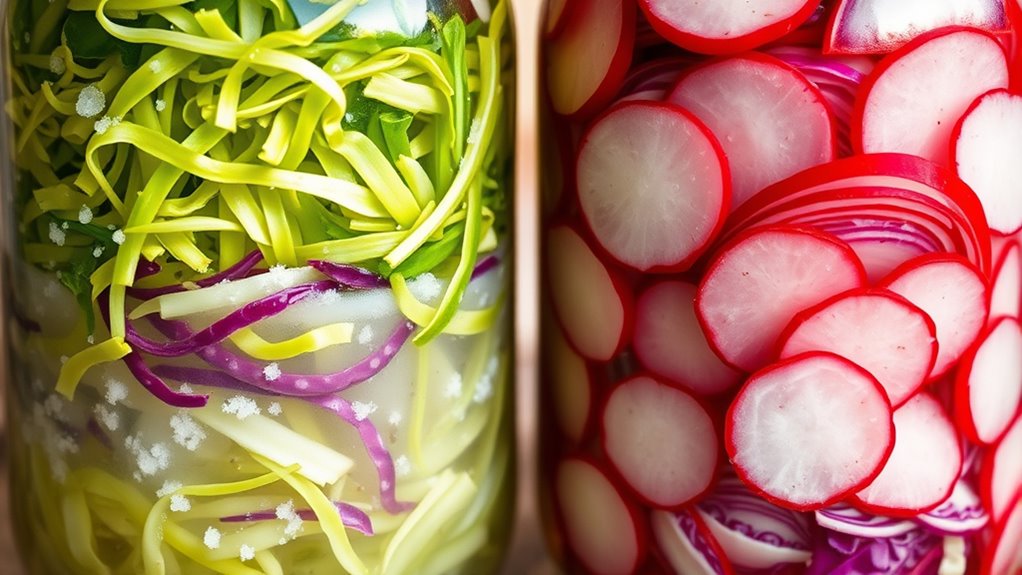

To start fermenting sauerkraut or kimchi, choose fresh vegetables and chop or shred them. Add about 2% salt to draw out moisture, then pack everything tightly into a jar, ensuring the vegetables stay submerged in brine. During fermentation, beneficial bacteria produce lactic acid, which preserves and flavors the vegetables. Signs of fermentation include bubbling and a sour smell. Keeping everything sealed and monitored helps create delicious, probiotic-rich foods—learn more about the process to perfect your batch.
Key Takeaways
- Fermentation transforms vegetables into probiotic-rich foods like sauerkraut and kimchi through natural bacterial activity.
- Properly preparing involves chopping vegetables, adding salt, and tightly packing them to promote beneficial bacteria growth.
- Fermentation signs include bubbling and sour smell, typically lasting 3-7 days for initial benefits.
- Ensuring vegetables stay submerged in brine prevents spoilage and supports healthy fermentation.
- Longer fermentation enhances flavor and probiotic levels, with proper sealing and monitoring being essential for success.
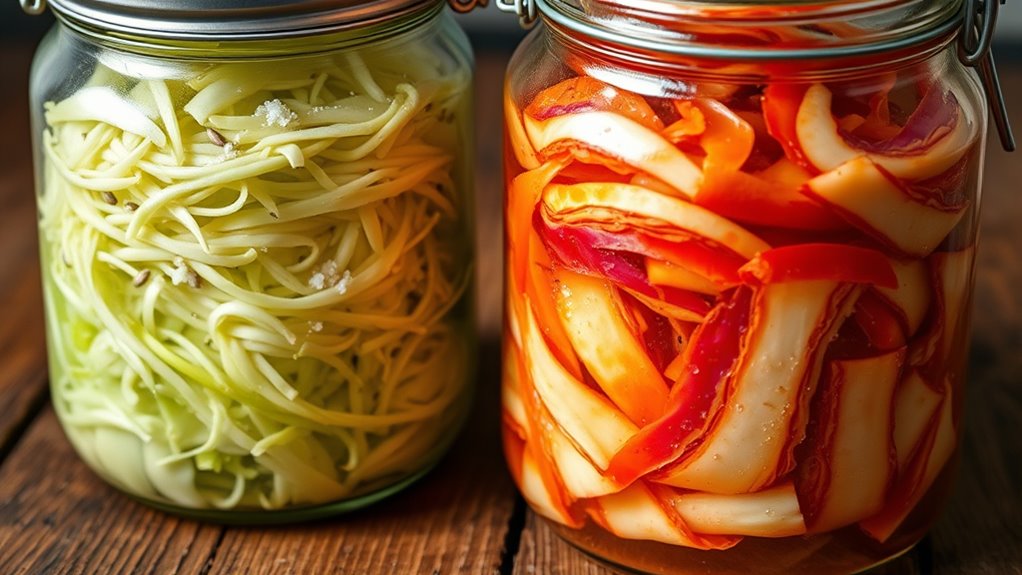
Have you ever wondered how simple ingredients transform into flavorful, probiotic-rich foods? The magic lies in fermentation, a natural process that harnesses beneficial bacteria to turn humble vegetables like cabbage into delicious sauerkraut or kimchi. When you start this process, you’re not just creating tasty condiments; you’re also opening probiotic benefits that support your gut health. These live microorganisms improve digestion, boost immunity, and even influence your mood. Understanding the fermentation timeline helps you know what to expect and guarantees your fermented foods turn out perfectly.
The process begins with selecting fresh cabbage or other vegetables, which you chop or shred into manageable pieces. You then add salt, typically about 2% of the weight of the vegetables, to draw out moisture and create an environment conducive to fermentation. This mixture is packed tightly into a jar, making certain no air pockets remain, as oxygen can hinder the growth of beneficial bacteria. Once sealed, the fermentation timeline kicks in. During the first few days, naturally occurring bacteria on the vegetables start to multiply, producing lactic acid. This acid acts as a preservative and gives sauerkraut and kimchi their signature tang.
In the initial stage, you’ll notice bubbling and a sour smell developing—these are signs that fermentation is underway. As days pass, usually between 3 to 7 days, the probiotic benefits intensify, and the flavors deepen. The longer you allow the vegetables to ferment—up to 2 or 3 weeks—the stronger and more complex the taste becomes. During this period, it’s essential to monitor the fermentation process, guaranteeing the vegetables stay submerged in their brine to prevent mold or spoilage. You might need to skim off any scum or bubbles that form on the surface, but this doesn’t affect the health benefits.
Frequently Asked Questions
How Long Does It Take for Sauerkraut to Fully Ferment?
You can expect sauerkraut to fully ferment in about 1 to 4 weeks, depending on your fermentation timeline and desired flavor development. During this period, you’ll notice the tanginess intensify as beneficial bacteria work, creating the classic sour taste. Keep an eye on the temperature and taste it periodically; the longer it ferments, the more complex the flavor becomes. Once it reaches your preferred flavor, store it in the fridge to slow fermentation.
Can I Use Non-Traditional Vegetables for Fermentation?
Yes, you can use exotic vegetables for fermentation. They add unique textures and flavors, making your fermentations more creative. Just guarantee the vegetables are fresh and properly prepared—cleaned, sliced, and salted if needed. Experimenting with different vegetables allows you to develop distinct, flavorful ferments. Keep in mind that some vegetables may ferment faster or slower, so monitor your ferments to achieve the best results and enjoy a variety of tasty, fermented creations.
What Are Signs of a Successful Fermentation?
Did you know that over 1,000 years ago, fermentation was essential for preserving food? When you ferment, look for visual cues like bubbles or a slight haze, and taste indicators such as a tangy, sour flavor. These signs show your fermentation is successful. If the vegetables stay firm and don’t develop off-odors, you’re on the right track. Trust these clues to guarantee your fermenting process is thriving!
How Do I Prevent Mold During Fermentation?
To prevent mold during fermentation, you should maintain a clean fermentation environment and guarantee your vegetables stay submerged. Use a proper fermentation vessel with an airlock or weight to keep out oxygen, which mold needs to grow. Regularly check the mixture, wipe away any visible mold, and keep the temperature steady. These steps help create an ideal environment, reducing mold risk and ensuring successful fermentation.
Is It Safe to Eat Fermented Foods Past the Expiration Date?
You can usually eat fermented foods past the expiration date if they show no spoilage indicators. Check for signs like off smells, mold, or discoloration, which suggest it’s unsafe. While fermentation extends shelf life, expiration safety depends on proper storage and your senses. If everything looks, smells, and tastes normal, it’s likely safe, but always trust your judgment. When in doubt, discard to avoid any health risks.
Conclusion
Now that you’ve learned the basics of fermenting sauerkraut and kimchi, you’re just one step away from revealing their full potential. Imagine the flavors waiting to burst with each batch, revealing surprises you never expected. Will your next project turn out perfectly? The secret lies in your hands, and the journey is just beginning. Stay curious and watch as your fermentation skills deepen—something extraordinary might just be fermenting right around the corner.