
To cook perfect rice every time, start by knowing your rice type and rinsing it well to remove excess starch. For stovetop, use the right water ratio, simmer gently, and let it rest before flaking with a fork. In a rice cooker, follow the settings and water levels. For pilafs, sauté aromatics first and add hot broth. Keep these tips in mind, and you’ll reveal foolproof methods—keep going to master each technique seamlessly.
Key Takeaways
- Rinse rice thoroughly to remove surface starch, ensuring fluffy, non-clumpy grains in all cooking methods.
- Use appropriate water-to-rice ratios: 1:1.5 for white rice, 1:2 for brown rice, based on rice variety.
- For stovetop, bring water to a boil, then simmer covered without lifting the lid; let rest before fluffing.
- In rice cookers, follow model-specific instructions, rinsing rice first for consistent, perfect results.
- For pilafs, sauté aromatics and toasted rinsed rice before simmering in hot broth, then fluff gently for flavor and separation.
Cooking rice perfectly can seem tricky, but with the right techniques, you’ll get fluffy, evenly cooked grains every time. The key is understanding the different grain varieties and applying suitable cooking techniques for each. Whether you’re using a stovetop, rice cooker, or making a pilaf, knowing how to handle each type of rice ensures consistent results.
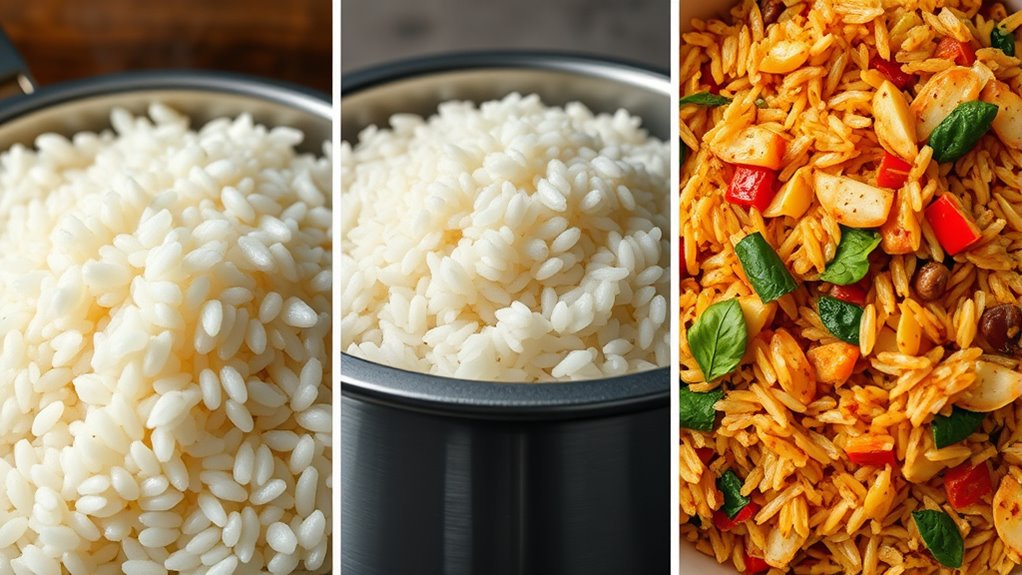
Different grain varieties, like long-grain basmati, short-grain sushi rice, or brown rice, each have unique characteristics. Long-grain rice tends to stay separate and fluffy, making it ideal for pilafs and side dishes. Short-grain rice, which is stickier, works well in sushi or rice bowls. Brown rice has a tougher outer bran layer, requiring longer cooking times and more water. Recognizing these differences helps you choose the right cooking method and adjust ratios accordingly. For example, brown rice often needs more water and a longer simmer than white rice.
Understanding rice varieties helps tailor cooking methods and water ratios for perfect results.
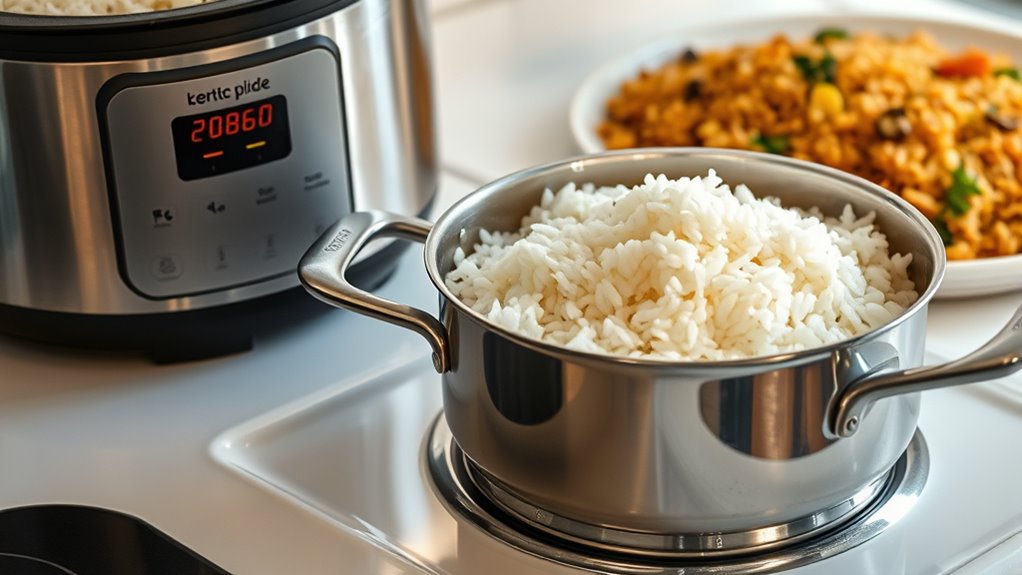
When it comes to cooking techniques, the approach varies based on the equipment and rice type. On the stovetop, start by rinsing the rice to remove excess surface starch, which prevents clumping. Use the appropriate water-to-rice ratio—typically 1:1.5 for white rice and 1:2 for brown rice. Bring the water to a boil, then reduce the heat to a low simmer and cover tightly. Avoid lifting the lid during cooking, as steam is essential for even heat distribution. Once the water is absorbed and the rice is tender, let it rest for 5-10 minutes before fluffing with a fork to achieve light, separated grains.
A rice cooker simplifies the process further, especially if you cook rice frequently. Most models have specific settings for different grain varieties, automatically adjusting cooking time and temperature. Just rinse the rice, add the correct amount of water, select the appropriate setting, and let the machine do the work. The consistent heat and steam retention in rice cookers often produce flawless rice without much supervision.
For pilafs, you start by sautéing aromatics like onions or garlic in oil, then adding the rinsed rice to toast lightly. Add hot broth or water, cover, and simmer until the rice absorbs the liquid. Fluff gently to keep the grains separate, resulting in a flavorful, evenly cooked dish. No matter which method you choose, mastering these techniques and understanding grain varieties guarantees perfect rice every time.
Frequently Asked Questions
How Do I Store Leftover Cooked Rice Safely?
To store leftover cooked rice safely, transfer it to an airtight container and refrigerate within two hours of cooking. Proper rice storage prevents bacteria growth and guarantees food safety. Consume the stored rice within 1-3 days, reheating it thoroughly before eating. Avoid leaving rice out at room temperature, as bacteria thrive in warm environments. Following these steps helps you enjoy leftovers safely and reduces the risk of foodborne illness.
Can I Cook Different Types of Rice Together?
Cooking different types of rice together is like blending diverse colors into a painting—you can create a unique dish, but it takes skill. You can blend rice types, but focus on flavor balancing and cooking times. Use similar grains, like long-grain and jasmine, to guarantee even cooking. Keep in mind, some rice varieties might turn out softer or firmer, so adjust water and timing accordingly for the best result.
What Adjustments Are Needed for High-Altitude Cooking?
When cooking rice at high altitude, you need to make an altitude adjustment by increasing the cooking time and possibly adding a little more water. The lower air pressure causes water to boil faster, so extend your cooking time to guarantee the rice is fully cooked and fluffy. Keep an eye on the process, and test for doneness, adjusting as needed to get perfect rice every time.
How Do I Prevent Rice From Sticking to the Pot?
To prevent rice from sticking to the pot, make sure you use enough water so it’s fully absorbed during cooking. Rinse the rice thoroughly before cooking to remove excess starch, which causes sticking. Use a non-stick pot or add a little oil or butter to create a barrier, reducing pot contact. Cover the pot tightly, and don’t lift the lid until the rice is fully cooked, ensuring even absorption and less sticking.
Is It Necessary to Rinse Rice Before Cooking?
Yes, rinsing rice before cooking is beneficial. It helps remove excess surface starch, which reduces stickiness and clumping. Rinsing also improves water absorption, leading to fluffier, more evenly cooked rice. Plus, it washes away any debris or impurities. Simply rinse until the water runs clear, then drain thoroughly before cooking. This simple step makes a noticeable difference in achieving perfectly cooked rice every time.
Conclusion
Mastering perfect rice isn’t just about taste—it’s about efficiency. Did you know that rice is a staple for over half the world’s population? Whether you use the stovetop, rice cooker, or make a pilaf, your efforts can guarantee every grain is fluffy and delicious. With these simple tips, you’ll save time and avoid waste. Now, enjoy perfectly cooked rice every single time and impress your family and friends with your culinary skills!