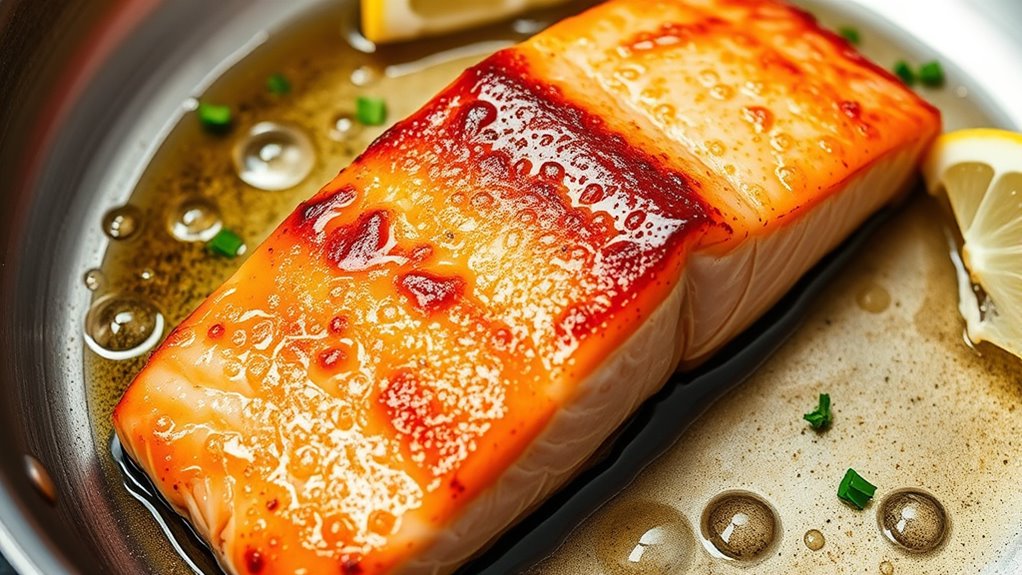

To prevent your pan-seared salmon from sticking, start with fresh, firm fish and pat it dry to remove surface moisture. Lightly oil the salmon and preheat your pan over medium-high heat until hot. Place the fish in the pan and avoid moving it immediately—let a crust form, about 3-4 minutes. Flip carefully once it releases naturally and cook until flaky. Continuing with these tips will help you achieve perfect, non-stick salmon every time.
Key Takeaways
- Choose fresh, firm salmon with vibrant color and a clean scent for optimal cooking.
- Pat the salmon dry and lightly oil it to prevent sticking and promote a crispy crust.
- Preheat the pan over medium-high heat until hot enough to sizzle upon contact.
- Allow the crust to develop naturally for 3-4 minutes before flipping; avoid moving the fish prematurely.
- Cook until opaque and flaky, then let the salmon rest briefly before serving.

Have you ever wondered what makes seafood a versatile and nutritious addition to your diet? The key lies in understanding basic cooking techniques and making smart seafood selections. When it comes to pan-seared salmon, mastering these elements ensures you get a perfectly cooked piece every time, without sticking or tearing. The first step is choosing the right seafood. Look for fresh salmon with firm flesh, vibrant color, and a clean scent. Fresh seafood not only tastes better but also reduces the risk of sticking and ensures even cooking. When selecting salmon, decide whether you prefer wild or farmed, but always prioritize quality and freshness over price. High-quality salmon will have a firm texture, moist appearance, and minimal bloodlines, making it easier to cook evenly. Proper preparation, including drying and oiling the fish, is crucial for preventing sticking. Once you’ve selected your seafood, the next step involves proper preparation and employing the right cooking techniques. Before cooking, pat the salmon dry with paper towels; moisture is often the culprit behind sticking. Lightly oil the fish or the pan—using a high smoke point oil like canola or grapeseed prevents sticking and helps develop a crisp, golden crust. Preheat your pan over medium-high heat until it’s hot enough to sizzle when the fish touches it. This ensures a quick sear that locks in moisture and prevents the fish from sticking. When placing the salmon in the pan, lay it away from you to avoid splatters, and don’t move it immediately. Let it develop a crust, which naturally releases it from the pan, usually in about 3-4 minutes per side depending on thickness. The key to avoiding sticking lies in your cooking technique. Use a gentle but firm touch when flipping the fish, and avoid overcrowding the pan, as this lowers the temperature and increases sticking risk. If you notice the salmon resisting movement, give it a little more time; patience pays off. After flipping, cook for a few more minutes until the flesh is opaque and flakes easily with a fork. Rest the fish briefly before serving to let the juices redistribute. Additionally, understanding the importance of proper air circulation in the kitchen can help maintain consistent heat and improve your overall cooking results.
Frequently Asked Questions
What Is the Best Type of Pan for Searing Salmon?
You should use a cast iron skillet or a high-quality non-stick pan for searing salmon. Cast iron provides excellent heat retention and creates a beautiful sear, while non-stick pans prevent sticking and make flipping easier. Both options work well, but cast iron is preferred for a crisp, caramelized crust. Just make certain your pan is hot before adding the salmon, and you’ll get perfectly seared, non-sticking results.
How Can I Tell When Salmon Is Perfectly Cooked?
You’ll know your salmon’s perfectly cooked when it’s just opaque and flakes easily with a fork—like the ocean’s secret revealed. Keep an eye on visual cues: the edges turn golden and firm up. For precision, use a meat thermometer to check that the internal temperature hits 125°F to 130°F. Trust these signs, and you’ll consistently serve salmon that’s tender, juicy, and cooked to perfection every time.
Should I Season Salmon Before or After Cooking?
You should season salmon before cooking to enhance its flavor and allow the seasoning to penetrate the fish. If you prefer marinade timing, apply a marinade ahead of time, but keep it short to avoid overpowering the salmon. For seasoning varieties, use salt, pepper, or herbs before cooking for a savory crust. After cooking, you can add fresh herbs or a squeeze of lemon for extra flavor.
Can I Use Frozen Salmon for Pan-Searing?
Yes, you can use frozen salmon for pan-searing, but treat it like a delicate jewel that needs gentle handling. Thaw your frozen salmon with thawing tips like placing it in the fridge overnight or sealing it in cold water. Once thawed, pat it dry to prevent sticking and achieve that perfect sear. With patience and care, frozen salmon can turn into a beautifully cooked, flavorful masterpiece on your plate.
What Are Common Mistakes That Cause Salmon to Stick?
You might find your salmon sticking if you don’t use high-quality oil or if the pan isn’t at the right temperature. Using oil with a high smoke point helps prevent sticking, and preheating your pan ensures the salmon sears properly without adhering to the surface. Avoid overcrowding the pan and don’t move the fish too early; patience allows a crust to form, making it easier to flip without sticking.
Conclusion
Now that you’ve mastered pan-seared salmon without sticking, you can enjoy a restaurant-quality dish at home. Imagine the sizzling sound as the fish hits the hot pan, a contrast to the tender, flaky texture inside. With simple steps and a little patience, you turn a basic ingredient into a stunning meal. It’s a harmony of heat and patience, creating a perfect balance between crispy skin and juicy flesh—deliciousness in every bite.