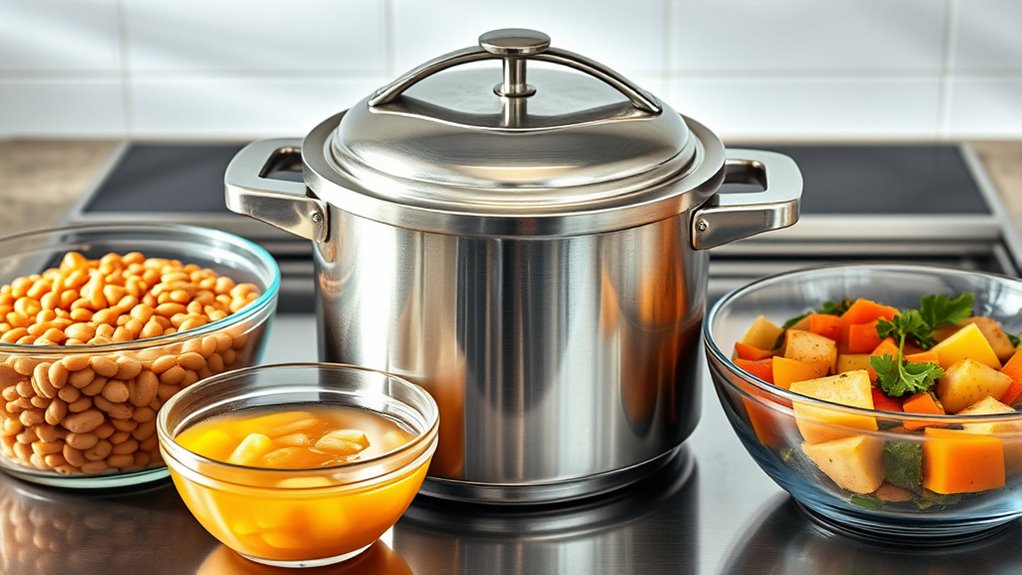

Before cooking beans, stocks, or stews in a pressure cooker, check that the gasket and pressure release valves are clean and in good condition to prevent leaks and guarantee safety. Don’t overfill—stick to two-thirds capacity—and follow your manufacturer’s instructions for pressure levels and cooking times. Release pressure carefully using the proper method to avoid burns, and regularly inspect and clean your cooker to keep it functioning smoothly. Continue exploring these tips to master your pressure cooking skills effortlessly.
Key Takeaways
- Follow manufacturer guidelines for cooking times and pressure levels when preparing beans, stocks, and stews.
- Use proper release methods (natural or quick release) to safely open the pressure cooker after cooking.
- Avoid overfilling the cooker; limit ingredients to two-thirds capacity to ensure proper pressure buildup.
- Regularly inspect and clean gasket and pressure valves to maintain safety and optimal performance.
- Add ingredients like beans or stocks with enough liquid and avoid overfilling to prevent spills or pressure issues.
Have you ever wondered how a pressure cooker can considerably cut down cooking time while preserving flavors? It’s a game-changer in the kitchen, especially when preparing beans, stocks, and stews. But to get the most out of your pressure cooker and guarantee safe, reliable use, you need to understand some essential safety precautions and maintenance tips.
First and foremost, safety precautions are crucial. Always check the gasket and pressure release valves before each use to assure they’re clean and in good condition. A damaged or worn gasket can cause steam leaks or prevent the cooker from reaching proper pressure, which compromises both safety and cooking efficiency. Never overfill your pressure cooker. Most manufacturers recommend filling it no more than two-thirds full, and even less for foods that expand or foam, like beans or grains. This prevents clogging the vent or creating dangerous pressure buildup. When cooking beans, stocks, or stews, release pressure properly—either by natural release or quick release—depending on the recipe. Always follow the manufacturer’s instructions regarding pressure levels and cooking times. Remember, a sudden release of pressure can cause hot steam or liquids to spurt out, so use the designated method carefully. Additionally, never attempt to force open the lid while there’s still pressure inside; wait for the pressure to fully release before opening.
Maintenance tips go hand-in-hand with safety. Regularly inspect and replace parts like the gasket and pressure valves to maintain your cooker functioning properly. Clean the lid and pot thoroughly after each use, paying close attention to the vent and sealing areas—residue buildup can interfere with creating an airtight seal or cause malfunctions. Use gentle scrubbing tools to avoid damaging the surfaces. Always follow the manufacturer’s cleaning guidelines, and avoid using abrasive cleaners that can deteriorate the components. Keep the pressure release valve clear of debris, as blockages can lead to dangerous pressure build-up. Storing the pressure cooker with the lid off allows the gasket to breathe and prevents mold or unpleasant odors. Also, periodically check for any signs of corrosion or damage, especially if you notice leaks or difficulty building pressure.
Frequently Asked Questions
How Do I Prevent My Pressure Cooker From Over-Pressurizing?
To prevent your pressure cooker from over-pressurizing, make sure you don’t fill it more than two-thirds full, especially with liquids and foods that expand. Regularly check that the safety valves are clean and functioning properly, as they release excess pressure. Never block the vents, and ensure the lid is securely sealed. These steps help control pressure buildup and keep you safe during cooking.
Can I Cook Frozen Beans Directly in a Pressure Cooker?
Yes, you can cook frozen beans directly in a pressure cooker, but safety comes first—pressure cooker safety is paramount. Just add a little extra water to prevent burning and ensure the beans aren’t packed too tightly. Remember, frozen beans release more moisture, so adjust your cooking time accordingly. Always follow your pressure cooker’s instructions to avoid over-pressurizing and keep your kitchen safe while enjoying perfectly cooked beans.
What Is the Safest Way to Release Pressure Quickly?
To release pressure quickly and safely, use the quick release method by carefully turning the pressure release valve or pressing the quick release button, depending on your model. Always follow safety precautions by keeping your hands and face away from the steam vent, and make certain the valve is fully open to prevent steam buildup. Stay attentive throughout the process, and never force the lid open until pressure has fully subsided.
Are There Specific Pressure Settings for Different Types of Stocks?
You should adjust pressure settings based on stock types to guarantee ideal results. For delicate stocks like fish or vegetable, use a lower pressure setting to prevent overcooking. For richer, meat-based stocks, a higher pressure helps extract flavors efficiently. Always check your pressure cooker’s manual for recommended settings, and remember that different models may have specific guidelines to keep your stocks flavorful and perfectly cooked.
How Do I Adjust Cooking Times for Altitude Variations?
To adjust for altitude variations, you should increase your pressure cooker’s cooking time because water boils at lower temperatures at higher altitudes. Typically, add about 5% more cooking time for every 1,000 feet above sea level. Check your pressure cooker’s manual for specific altitude adjustments, and always monitor your dishes closely, since altitude changes can affect how long it takes for foods like beans, stocks, and stews to cook properly.
Conclusion
With a pressure cooker, you’ll cook beans to perfection, craft rich stocks effortlessly, and create hearty stews in no time. You’ll save energy, reduce cooking time, and enjoy flavorful results every time. You’ll master the art of quick, nutritious meals, embrace the versatility of this kitchen tool, and transform simple ingredients into culinary delights. With confidence, you’ll explore new recipes, experiment freely, and enjoy the satisfying process of cooking with your pressure cooker.