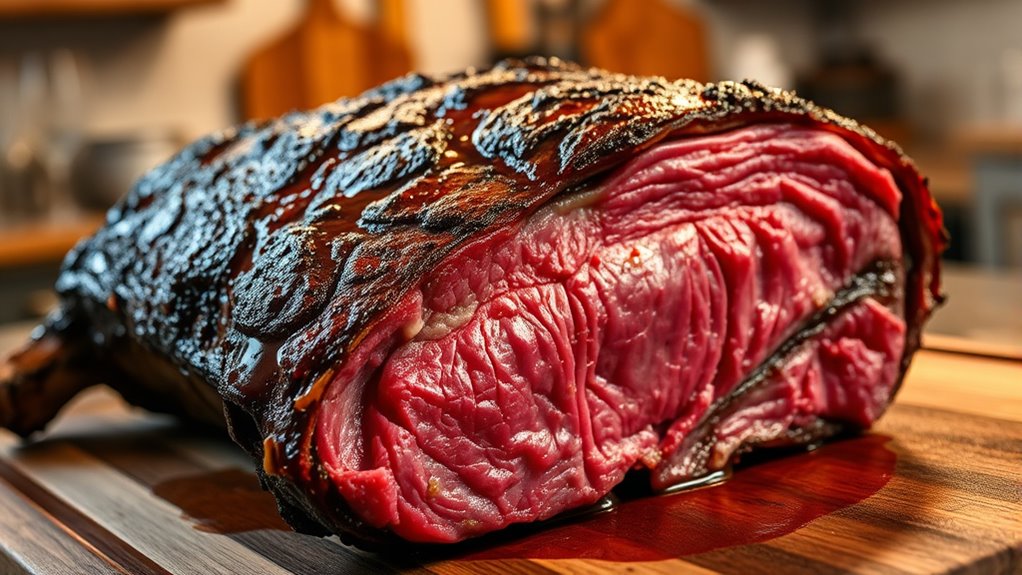

For perfect holiday prime rib, start by seasoning the beef at least an hour before roasting and searing it in a hot oven at 450°F for 15-20 minutes to develop a flavorful crust. Then, reduce the temperature to around 325°F and cook until your desired doneness, monitoring internal temperature accurately. Rest the meat for at least 20 minutes before carving. Mastering timing and searing techniques guarantees a tender, juicy, and beautifully crusted roast—continue to discover how to perfect your approach.
Key Takeaways
- Season the beef at least 1 hour before roasting; overnight seasoning enhances flavor and crust development.
- Start roasting at 450°F for 15-20 minutes to sear, then lower to 325°F for even cooking.
- Estimate 15-20 minutes per pound at 325°F; use a thermometer to reach desired internal temperature.
- Sear each side for 1-2 minutes on stovetop or during initial oven searing to develop a caramelized crust.
- Rest the beef for at least 20 minutes under foil before carving to ensure juiciness and flavor.

During the holiday season, a perfectly roasted beef becomes the centerpiece of your celebration table. Achieving that ideal roast requires attention to detail, especially when it comes to beef seasoning and roasting temperature. Before you start, make sure your beef is well-seasoned. A good beef seasoning involves a blend of salt, pepper, garlic powder, and herbs like rosemary or thyme. Rub the seasoning mixture generously all over the meat at least an hour before roasting, or even better, overnight in the fridge. This allows the flavors to penetrate deeply and helps develop a savory crust during searing. When considering roasting temperature, aim for a high initial heat—around 450°F (232°C)—to sear the exterior and lock in juices. Once you’ve achieved a lovely brown crust, lower the oven temperature to around 325°F (163°C) to ensure slow, even cooking. This combination of high heat and moderate roasting temperature results in a beautifully cooked, tender roast with a tempting crust.
For a perfect roast, sear at 450°F then slow cook at 325°F for tender, flavorful beef.
Timing is equally important. For prime rib or a similar cut, plan for roughly 15-20 minutes per pound at 325°F, but always rely on a reliable meat thermometer for accuracy. The goal is to reach an internal temperature of about 120-125°F (49-52°C) for rare, 130-135°F (54-57°C) for medium-rare, or 140°F (60°C) for medium. Remember, carryover heat will continue cooking the meat once you remove it from the oven, so take it out slightly before reaching your target temperature. Resting the beef for at least 20 minutes under tented foil is essential; it allows juices to redistribute and results in a moist, flavorful roast.
When searing, you can do it in the oven or on the stovetop. If you choose to sear on the stovetop, heat a heavy skillet with oil over high heat. Sear each side for 1-2 minutes until a deep, caramelized crust forms. This quick sear enhances flavor and texture, creating a beautiful contrast with the tender interior. If you prefer to sear in the oven, keep the roast at the high roasting temperature for the first 15-20 minutes, then reduce heat. Either method accentuates the beef’s natural richness.
A good understanding of beef seasoning can significantly elevate the overall flavor profile of your roast. In the end, mastering the right beef seasoning, roasting temperature, and searing technique will elevate your holiday roast beef from good to unforgettable. Pay attention during each step, trust your thermometer, and you’ll serve a stunning, perfectly cooked centerpiece that everyone will remember.
Frequently Asked Questions
What Is the Best Way to Rest the Roast After Cooking?
You should rest your roast by tenting it loosely with aluminum foil for about 15 to 20 minutes. This resting technique allows the juices to redistribute, ensuring every bite stays moist and flavorful. Keep the roast at an ideal temperature during this time, around 130°F to 135°F for medium-rare. Resting helps achieve perfect tenderness and enhances overall flavor, making your holiday roast beef truly impressive.
How Do I Prevent the Roast From Drying Out?
Think of your roast as a treasure chest; sealing in moisture retention is key. To prevent it from drying out, use proper seasoning techniques, like a generous rub of salt and herbs, then sear it to lock in juices. Rest the meat after cooking, covered loosely, to allow juices to redistribute. Baste with pan juices if needed, keeping the meat moist and flavorful until served.
Can I Cook Prime Rib in a Slow Cooker?
Yes, you can cook prime rib in a slow cooker. Set it to low temperature to guarantee even cooking and prevent overcooking. Place your seasoned roast in the slow cooker with some broth or wine for moisture. Cover and cook for several hours until the meat reaches your desired doneness. This method keeps the meat tender and juicy, making it a convenient alternative to traditional roasting.
What Are Alternative Seasoning Options for Holiday Roast Beef?
Don’t worry if traditional seasonings feel too common; you can elevate your holiday roast beef with herb blends and citrus zest. Herb blends like rosemary, thyme, and sage add earthy depth, while citrus zest, such as lemon or orange, provide a bright, fresh flavor. Mix them into your rub or marinade for a unique, vibrant taste that complements the richness of the beef. Experimenting with these alternatives makes your dish memorable and flavorful.
How Do I Adjust Cooking Times for Different Roast Sizes?
When adjusting cooking times for different roast sizes, consider size adjustments and cooking duration. For larger roasts, increase the cooking time proportionally, roughly 15-20 minutes per pound for prime rib at your desired doneness. Smaller roasts need less time, so reduce accordingly. Always use a meat thermometer to check for doneness, as oven variations and roast shapes can affect cooking times. This guarantees your roast is perfectly cooked every time.
Conclusion
Now that you’ve mastered the timing and searing, your holiday roast beef will turn out beautifully tender and flavorful. Think of it like a perfectly choreographed dance—every step, from sear to rest, comes together seamlessly. Just remember to let it rest before carving, so those juices stay in, making every bite juicy and delicious. With these tips, your prime rib will be the star of the feast, shining brighter than a holiday star.