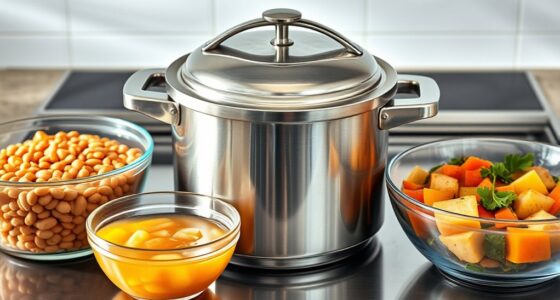

To make smooth pumpkin puree, start by choosing small, sweet pumpkin varieties like sugar or pie pumpkins. Wash, cut in halves or smaller pieces, then roast at 375°F until tender or boil until soft. Cool the pumpkin, scoop out the flesh, and blend until smooth. Press through a sieve for extra creaminess if needed, then store in airtight containers in the fridge or freezer. Keep these tips in mind to craft perfect puree and discover more techniques ahead.
Key Takeaways
- Select small, sweet pumpkins like sugar or pie varieties, then wash, cut, and remove seeds before cooking.
- Roast pumpkin at 375°F until tender or boil peeled, cubed pumpkin until soft for optimal flavor.
- Let cooked pumpkin cool slightly, then scoop out flesh and puree until smooth using a blender or food processor.
- Store pumpkin puree in airtight containers or freezer bags, leaving headspace, and label for freshness; refrigerate or freeze accordingly.
- For ultra-smooth texture, press the puree through a fine sieve or food mill before using in recipes.
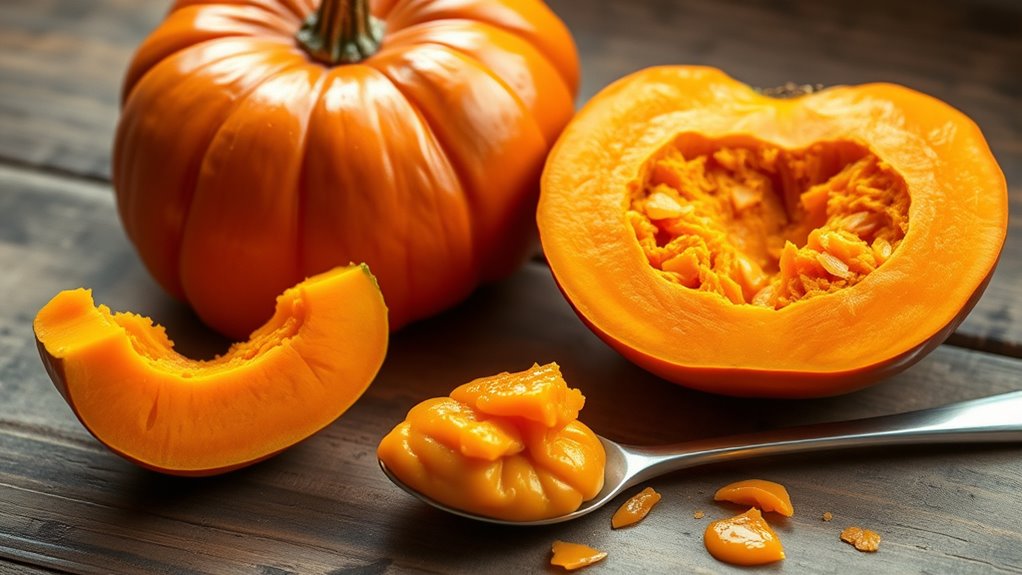
Have you ever wondered how to make smooth, flavorful pumpkin puree at home? It’s simpler than you might think and a great way to elevate your seasonal recipes. Fresh pumpkin puree offers a richer taste and better texture than store-bought options, making it a versatile ingredient for pies, soups, muffins, and more. To get started, choose a small to medium pumpkin, preferably sugar or pie pumpkin, since they have a sweeter flavor and less stringy flesh. Wash the pumpkin thoroughly, then cut it in half or into manageable pieces to make handling easier. Removing the stem helps, but it’s not essential. Use a sturdy spoon or ice cream scoop to scrape out the seeds and stringy pulp. Don’t toss the seeds; they can be roasted separately for a tasty snack.
Homemade pumpkin puree is easy, richer, and perfect for seasonal recipes—start with a small sugar or pie pumpkin.
Next, cut the pumpkin into smaller chunks. You can roast or boil it, but roasting enhances the flavor and caramelizes some sugars, giving your puree a richer taste. To roast, place the pumpkin pieces on a baking sheet lined with parchment paper, skin side down, and sprinkle with a little salt if you like. Roast in a preheated oven at 375°F (190°C) until the flesh is tender and easily pierced with a fork, usually about 45-60 minutes. Allow the pumpkin to cool slightly. If you prefer boiling, peel and cube the pumpkin, then place the pieces in boiling water. Cook until soft, about 15-20 minutes, then drain well.
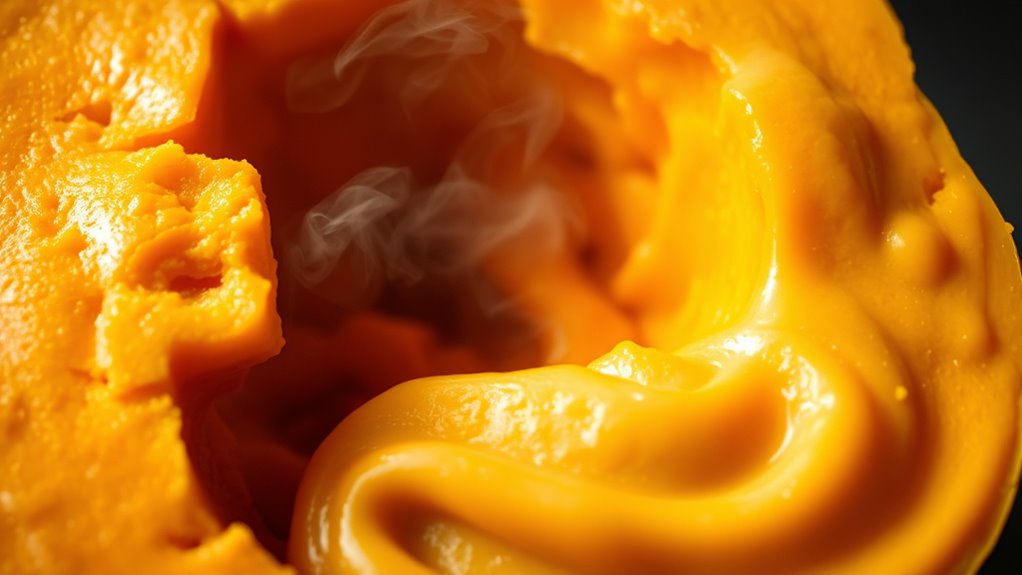
Once cooled, scoop out the flesh, discarding the skin. Pureeing is next—use a blender, food processor, or an immersion blender to process the pumpkin until it’s smooth and creamy. If you want an ultra-smooth puree, press it through a fine sieve or food mill. This step guarantees your puree is velvety, perfect for all your seasonal recipes. For storage, transfer the puree into airtight containers or freezer bags. Label them with the date to keep track of freshness. Pumpkin puree can be stored in the refrigerator for up to five days or frozen for up to three months. When freezing, leave some headspace in containers or bags to accommodate expansion.
To make your pumpkin last longer, consider portioning it into small servings before freezing. This way, you can thaw only what you need for each recipe without defrosting the entire batch. Proper storage tips are essential to preserve the flavor and texture of your homemade puree. Using freshly made pumpkin puree in your seasonal recipes guarantees a vibrant, authentic pumpkin flavor that’s hard to match with canned varieties. Plus, knowing you made it yourself makes every dish all the more special. Additionally, understanding projector technology can help you choose the best equipment for your home theater setup, ensuring your kitchen projects are just as impressive as your cinematic experiences.
Frequently Asked Questions
How Long Does Homemade Pumpkin Puree Last in the Fridge?
You can store homemade pumpkin puree in the fridge for up to 3 to 5 days. Keep it in an airtight container to prevent spoilage. Be sure to check for spoilage signs like an off smell, mold, or a slimy texture before using. If you don’t plan to use it within that time, consider freezing it for longer storage, which extends its shelf life considerably.
Can I Use Canned Pumpkin Instead of Fresh Pumpkin?
Did you know canned pumpkins make up about 95% of pumpkin products sold in the U.S.? You can definitely use canned pumpkin instead of fresh for your recipes. Canned pumpkin offers convenience and consistent texture, making it a popular canned pumpkin substitution. While fresh pumpkin can have a richer flavor, canned pumpkin is a reliable, time-saving alternative, especially if you’re short on time or seasonal produce.
What Is the Best Type of Pumpkin for Puree?
The best pumpkin for puree is a sugar or pie pumpkin, thanks to its sweeter flavor and smooth texture. When selecting pumpkins, focus on varieties like sugar pumpkins or small carving pumpkins, as they have dense, tender flesh ideal for pureeing. Avoid large, watery pumpkins meant for carving, which won’t give you the same richness. Your pumpkin selection should prioritize these varieties for the best, creamy puree.
How Do I Prevent Pumpkin Puree From Becoming Watery?
Did you know that watery pumpkin puree is a common issue, affecting over 60% of homemade batches? To prevent this, you should drain excess moisture after cooking by pressing the puree through a fine sieve or cheesecloth. This technique enhances texture improvement and moisture control, resulting in a thicker, creamier puree. Keep a close eye on your pumpkin as it cooks, and avoid over-pumping to maintain the perfect consistency.
Can I Freeze Pumpkin Puree for Long-Term Storage?
Yes, you can freeze pumpkin puree for long-term storage. Use proper freezing techniques by portioning the puree into airtight storage containers or freezer bags, leaving some space for expansion. Label them with the date to keep track of freshness. Be sure to remove excess air to prevent freezer burn. When you’re ready to use it, thaw in the fridge overnight for best results.
Conclusion
Now that you know how to make pumpkin puree from scratch, you’re all set to create delicious fall treats. Remember, practice makes perfect, so don’t be discouraged if your first batch isn’t flawless. With patience and a little TLC, you’ll master the art of smooth, flavorful puree. As they say, “A journey of a thousand miles begins with a single step,” so keep experimenting and enjoy every delicious step along the way!