When cooking sous vide at home, safety depends on precise temperature control and vacuum sealing to prevent bacteria and preserve flavor. Always set your water bath to the recommended temperature, and make sure your bags are tightly sealed before submerging. To add flavor and texture, quickly sear your food after cooking with high heat—just long enough to develop a crust. Keep these tips in mind, and you’ll master safe, delicious results with ease. If you keep exploring, you’ll discover even more expert techniques.
Key Takeaways
- Always vacuum seal food properly to prevent water entry and ensure even cooking.
- Set the water bath to the correct, safe temperature for the specific ingredient.
- Use an accurate immersion circulator and monitor it regularly for consistent results.
- Pat food dry before searing to promote browning and prevent steaming.
- Sear quickly at high heat after sous vide to develop flavor and texture without overcooking.

Have you ever wondered how professional chefs achieve perfectly cooked, tender dishes every time? It all comes down to precise temperature control and proper techniques like vacuum sealing. When you’re cooking sous vide at home, these elements are your best friends, guaranteeing consistent results and food safety. Temperature control is the cornerstone of sous vide cooking because it allows you to set a specific temperature that stays constant throughout the process. Unlike traditional methods, where heat can fluctuate and overcook or undercook your food, sous vide immerses your ingredients in water maintained at a precise temperature. This guarantees your meats, vegetables, or fish come out tender and cooked evenly, every single time. To make this work, you’ll need a reliable immersion circulator or water bath that keeps the water at your desired temperature, often within a fraction of a degree. This level of control means you don’t have to worry about constantly checking or adjusting the heat — simply set it and forget it.
Vacuum sealing plays a vital role in maintaining food quality and safety during sous vide cooking. When you vacuum seal your ingredients, you remove air from the bag, which allows for better heat transfer and faster, more uniform cooking. Plus, vacuum sealing prevents water from seeping into the bag and contaminating your food, reducing the risk of spoilage or bacterial growth. It also helps your food retain its juices, flavors, and nutrients, resulting in a more flavorful and moist dish. If you don’t have a vacuum sealer, you can use the water displacement method with resealable freezer bags, but vacuum sealing is generally more effective and consistent. The key is to guarantee your bags are tightly sealed and free of leaks before submerging them in the water bath.
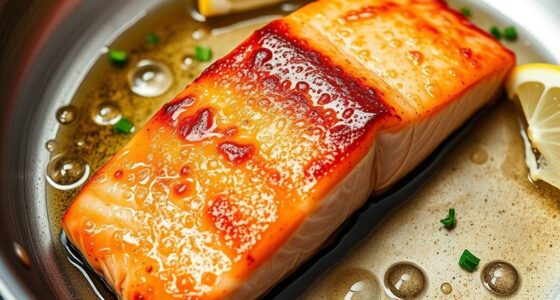
Once your food is cooked to the right temperature, searing is the next step to add flavor and texture. While sous vide ensures perfect doneness, it doesn’t create the appealing crust or caramelization many dishes need. To achieve this, you’ll want to preheat a skillet, grill, or torch. Pat your cooked food dry to promote browning, then quickly sear it over high heat. This final step adds that savory crust and enhances flavors through the Maillard reaction. Just be careful not to overdo it — the goal is a quick, hot sear that complements your sous vide-cooked interior. With proper temperature control, vacuum sealing, and a good sear, you can enjoy restaurant-quality dishes right in your own kitchen, all while enjoying the safety and precision that sous vide offers.
Frequently Asked Questions
Can I Use My Regular Oven Instead of Sous Vide Equipment?
You can use your regular oven as an alternative equipment, but it’s not ideal for precise temperature control like a sous vide. Ovens tend to have hot spots and less accurate temperature settings, which can affect your results. To get close to sous vide quality, set your oven to the desired temperature, use a thermometer to monitor, and cook slowly. Keep in mind, it’s harder to maintain consistent results without specialized equipment.
How Do I Prevent Water Evaporation During Long Sous Vide Sessions?
Think of your sous vide as a magic potion that needs careful tending. To prevent water evaporation during long sessions, regularly check the water level and add hot water as needed, just like filling a cauldron. Use a lid or plastic wrap over the container to minimize evaporation. These steps ensure water level maintenance, keeping your food perfectly cooked without losing heat or water, much like a wizard preserving magical ingredients.
Is It Safe to Cook Seafood Sous Vide at Home?
Yes, it’s safe to cook seafood sous vide at home when you follow proper seafood safety guidelines. Make sure you cook seafood to the recommended temperature, typically between 125°F and 140°F, for the right amount of time to eliminate harmful bacteria. Since sous vide allows precise temperature control, it’s a safe way to prepare seafood for raw consumption or lightly cooked dishes, as long as you handle and store it properly.
What Are the Best Techniques for Searing After Sous Vide?
Imagine the perfect crust forming just as you finish your sous vide. To achieve this, use quick, high-heat techniques like a hot cast iron skillet or a propane torch for searing. Try technique variations such as oil brushing or butter basting. Always preheat your searing tools to prevent sticking, and sear for about 1-2 minutes per side. This ensures a flavorful, caramelized finish that elevates your dish effortlessly.
How Do I Store Cooked Sous Vide Food Safely?
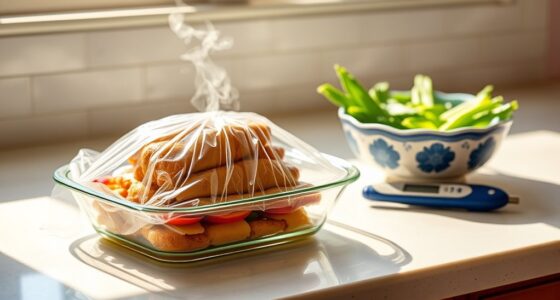
To store cooked sous vide food safely, you should first quickly cool it in an ice bath to prevent bacteria growth. Use airtight containers for food storage, and refrigerate at 40°F (4°C) or below within two hours of cooking. When reheating, guarantee the food reaches a safe temperature. Proper food storage and reheating help maintain quality and prevent foodborne illnesses.
Conclusion
By following safety tips, mastering searing techniques, and respecting cooking times, you guarantee every sous vide meal is safe, flavorful, and perfectly cooked. Prioritize safety, embrace the process, and enjoy the results. Whether you’re searing for color, seasoning for flavor, or timing for texture, remember that attention to detail makes all the difference. Keep learning, stay cautious, and savor the satisfaction of cooking sous vide at home, where safety and excellence go hand in hand.