To build your own spice mixes, start by understanding basic herb and spice pairings to create balanced flavors. Experiment with combining complementary ingredients, aiming for blends that reflect your taste, whether smoky, spicy, or herbal. Store your mixes in airtight containers in a cool, dark place to maintain freshness and potency. Proper organization and regular use help keep your spices vibrant. Keep exploring these fundamentals, and you’ll unseal endless flavor possibilities.
Key Takeaways
- Understand complementary herbs and spices to create balanced flavor profiles.
- Experiment with different ratios to customize spice mixes to your taste.
- Use high-quality, fresh spices and store them properly to maintain potency.
- Start with simple blends, like herb and spice pairs, before advancing to complex mixes.
- Label and organize your blends for easy access and to monitor freshness over time.
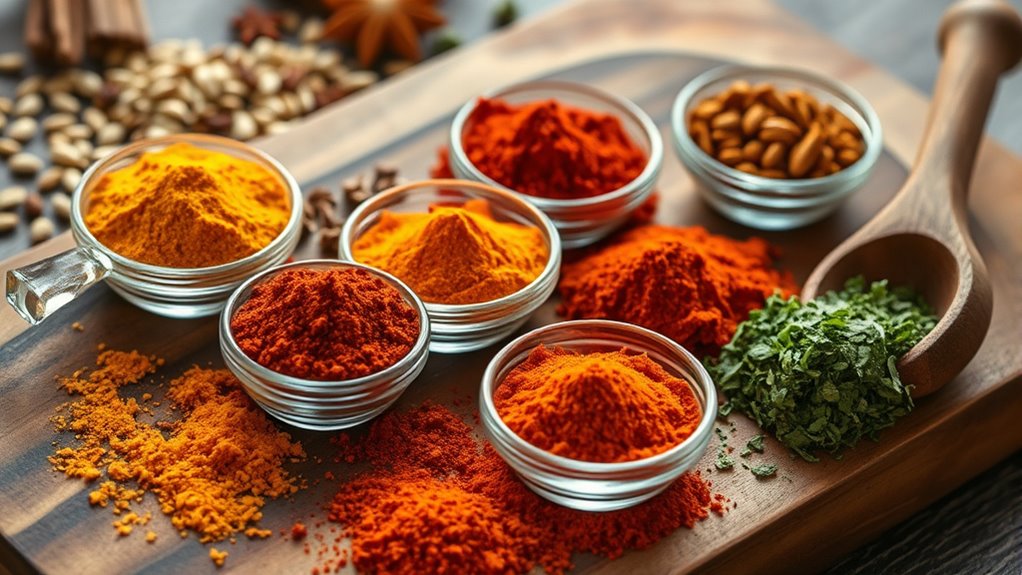
Spice blending is an art that transforms simple ingredients into complex, flavorful combinations, and mastering it can elevate your cooking to new heights. When you start creating your own spice mixes, understanding how herbs and spices work together is essential. Herb pairing plays a crucial role, as certain herbs complement specific spices, enhancing flavors without overpowering each other. For example, basil pairs beautifully with oregano and thyme, creating a fresh, aromatic mix perfect for Italian dishes. Conversely, cumin and coriander form a warm, earthy foundation for many Middle Eastern and Indian recipes. Experimenting with herb pairing allows you to craft unique blends that reflect your taste preferences, whether you prefer smoky, spicy, or herbal notes.
Once you’ve chosen your herbs and spices, proper storage techniques are vital to maintaining their potency and flavor. Keep your spice blends in airtight containers, ideally glass jars with tight-fitting lids, to prevent air exposure that can degrade their aroma over time. Store these containers in a cool, dark place away from direct sunlight, heat, and humidity, which can accelerate the loss of flavor. Avoid storing spices near the stove or dishwasher, as heat and moisture can cause clumping or spoilage. When you’re not actively using your blends, ensure they’re tightly sealed and kept in consistent conditions. Labeling your containers with the date of blending helps you keep track of freshness—most spice mixes retain optimal flavor for about six months to a year, but they often remain usable beyond that, albeit with diminished potency. Incorporating storage best practices ensures your blends stay flavorful for as long as possible.
In addition to herb pairing and storage techniques, it’s helpful to keep your spices and herbs organized. Use clear containers so you can quickly identify your blends, and consider arranging them alphabetically or by cuisine type for easy access. This organization encourages regular use, preventing your spices from sitting unused and losing their flavor. As you become more experienced, you’ll notice that fresh herbs like cilantro, parsley, or dill can be added to your blends to bring brightness, while dried herbs can deepen the flavor profile. Consistent storage and thoughtful herb pairing allow you to develop a well-rounded spice collection, giving you the flexibility to craft personalized mixes that elevate your dishes and satisfy your palate.
Frequently Asked Questions
How Long Do Homemade Spice Blends Stay Fresh?
Homemade spice blends typically stay fresh for about 6 months to a year if stored properly. To maximize spice shelf life and homemade blend preservation, keep your mixes in airtight containers away from direct sunlight, heat, and moisture. Regularly check for aroma and flavor loss, and replace your blends when they no longer smell vibrant. Proper storage guarantees your spice blends maintain their potency and flavor longer.
Can I Substitute Dried Herbs for Fresh in Blends?
Think of dried herbs as quiet echoes of fresh ones, offering a different kind of magic. Yes, you can substitute dried herbs for fresh in blends, but keep in mind their herb potency is less intense. To preserve flavor, use about one-third the amount of dried herbs compared to fresh. This way, your blend maintains its vibrant essence, even if the dried herbs whisper their flavors more softly.
What Are Common Mistakes to Avoid When Blending Spices?
When blending spices, avoid common mistakes like measuring inaccuracies, which can throw off your flavor balance. Be careful not to overuse salt, as it can overpower other spices. Always measure precisely, taste as you go, and start with small amounts—it’s easier to add more than to fix an overly salty or mismatched blend. Keep notes on your ratios to refine your blends over time.
How Do I Adjust Spice Levels for Different Tastes?
Think of spice levels like a symphony—adjusting spice heat and balancing flavor intensity creates harmony. To cater to different tastes, start small when adjusting spice heat, tasting as you go. If a mix’s too intense, mellow it with acidity or sweetness. For stronger preferences, increase spices gradually, ensuring each addition enhances without overpowering. Remember, the key is to taste often, so you strike the perfect balance every time.
Are There Specific Storage Containers Best for Spice Blends?
You should store your spice blends in airtight containers to keep them fresh and flavorful. Glass jars are ideal because they prevent light from deteriorating the spices and are easy to seal tightly. Look for containers with a secure lid to avoid moisture and air exposure, which can cause spices to lose potency. Proper storage ensures your blends stay vibrant and aromatic for longer periods.
Conclusion
Think of spice blending as painting a vibrant canvas—you hold the brush and choose your colors. Each pinch adds depth, and every mix creates a masterpiece unique to your taste. With practice, you’ll become an artist of flavor, crafting bold, harmonious blends that turn ordinary dishes into extraordinary experiences. Remember, the magic lies in your hands—so don’t be afraid to experiment and let your culinary creativity flourish.