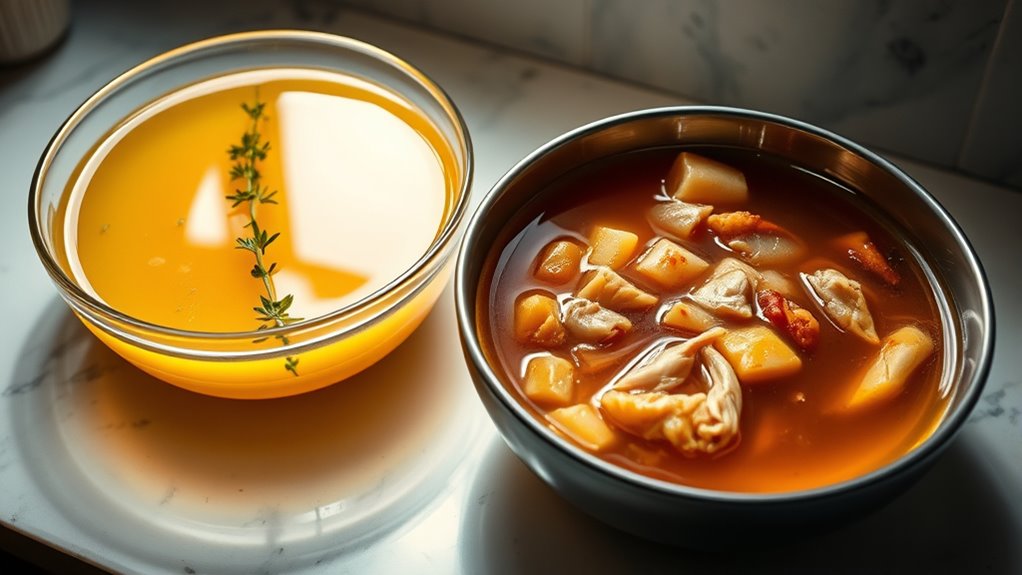

Use stock when you need a rich, deep flavor for hearty dishes like sauces, gravies, or stews, as it’s made from bones and simmered longer to extract nutrients. Opt for broth when you want a lighter, quick addition to soups, sipping, or cooking grains and vegetables. Knowing these differences helps you choose the right liquid to enhance your recipes, so continue exploring to master their best uses and make your dishes taste even better.

Get garage and car supplies delivered free — and shop member deals
- Fast, free delivery on millions of items
- Access to Prime Big Deal Days deals on October 6–7
- Prime Video, Amazon Music and more included
Key Takeaways
- Use stock for hearty, nutrient-rich dishes like stews and sauces due to its deep flavor and gelatin content.
- Opt for broth in light soups, sipping, or quick meals because of its lighter taste and shorter cooking time.
- Choose stock when a thicker, more concentrated base is needed for complex recipes; use broth for subtle, quick additions.
- Store-bought stock is more shelf-stable and convenient, ideal for longer-term use; broth is better for immediate, simple recipes.
- Select stock for dishes requiring rich flavor and nutrition; choose broth for lighter, faster, or more delicate preparations.
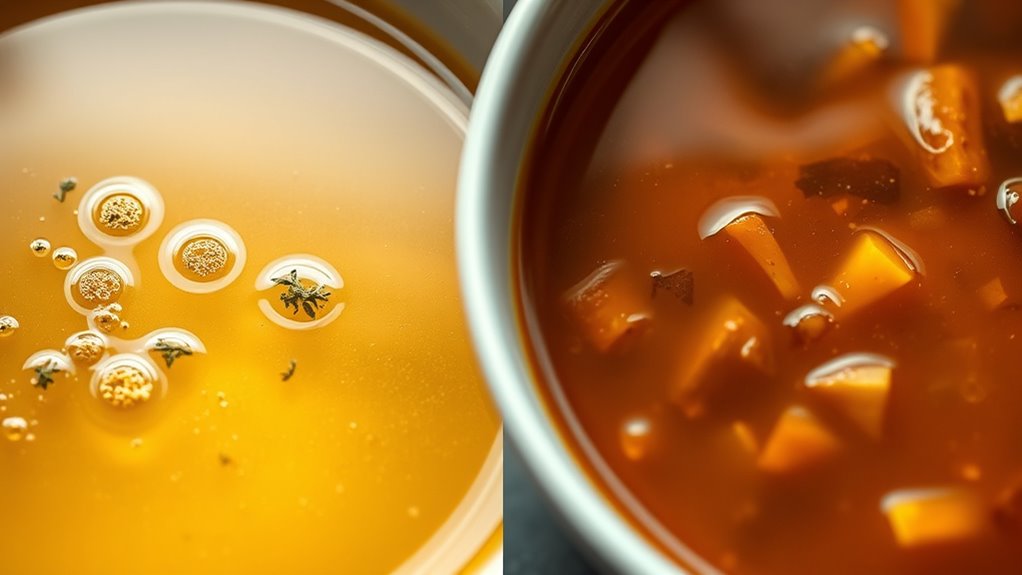
Ever wondered what sets stock apart from broth? While they’re often used interchangeably, understanding their differences helps you choose the right one for your cooking. One key factor is shelf stability. Stock, especially when homemade, typically has a shorter shelf life because it contains fewer preservatives and is often stored in the refrigerator and used within a few days. Store-bought stock, however, often comes in cartons or cans with added preservatives, giving it a longer shelf life. Broth, especially commercial varieties, tends to be more shelf-stable due to preservatives and packaging that keeps it safe at room temperature until opened. Knowing this can influence your choice based on how long you need to store it and the convenience you desire.
Stock has a shorter shelf life than broth due to fewer preservatives and storage in the refrigerator.
Nutritional differences also play a role. Stock is usually made by simmering bones, meat scraps, and vegetables, which means it contains gelatin, collagen, and minerals that can be beneficial for joint health and digestion. Because it’s often simmered for longer periods, stock tends to be richer in these nutrients. Broth, on the other hand, is generally made from meat and vegetables cooked for a shorter time, resulting in a lighter, more fluid liquid with fewer nutrients and less gelatin. If you’re after a nutrient boost or a richer texture, stock is your go-to. Conversely, broth is more suitable if you want a lighter, less intense flavor or a quick, easy base for soups.
Taste is another differentiator. Stock usually has a deeper, more concentrated flavor because of the bones and longer cooking process, making it ideal for hearty stews or gravy. Broth, being lighter and often seasoned more simply, works well when you need a subtle base or a quick addition to recipes. The choice between the two depends on what you’re making and your flavor preferences.
In terms of culinary use, stock is often the foundation for sauces, gravies, and dishes that benefit from a robust, savory base. Broth is perfect for sipping on its own, using in light soups, or as a cooking liquid for grains and vegetables. Additionally, water retention and moisture control in planters can influence the flavor absorption of these liquids, making the right choice even more important for specific recipes. Ultimately, understanding these differences helps you decide when to reach for stock or broth, ensuring your dishes turn out just right. Whether prioritizing shelf stability, nutritional content, or flavor, knowing the distinctions lets you cook with purpose, making your meals more flavorful and nutritious.
beef or chicken stock for cooking
As an affiliate, we earn on qualifying purchases.
As an affiliate, we earn on qualifying purchases.
Frequently Asked Questions
Can I Substitute Broth for Stock in Recipes?
Yes, you can substitute broth for stock in recipes. While stock has a richer, more concentrated flavor profile due to simmered bones, broth offers a lighter, more seasoned taste. Use broth in cooking applications where a subtle flavor is desired, like soups or stews. Keep in mind, the flavor profile might be slightly different, but it generally works well as a substitute without compromising the dish’s overall quality.
How Long Can I Store Homemade Stock and Broth?
You can store homemade stock and broth in the refrigerator for up to 4 to 5 days. To maximize freshness, let it cool completely, then transfer it to airtight containers. Use refrigeration tips like dividing it into smaller portions for quick cooling and labeling with the date. For longer storage, consider freezing it for up to 3 months. Always reheat thoroughly before using, and discard if you notice any off smells or signs of spoilage.
Are There Health Differences Between Stock and Broth?
You might think one is healthier, but both stock and broth offer similar nutritional benefits—just with different flavor profiles. Ironically, their health differences are minimal; broth tends to be lower in calories and fat, making it slightly better for digestion. Stock, rich in gelatin, supports joint health. So, whether you choose flavorful stock or light broth, you’re fueling your body with wholesome goodness—no secret health risks involved.
Which Is More Suitable for Vegetarian Dishes?
For vegetarian dishes, broth is more suitable because you can easily make vegetarian alternatives using vegetables, herbs, and spices. Broth provides a flavorful base for soups, stews, and sauces without animal products. It enhances flavor naturally and allows you to customize it to your taste. Use vegetable broth for better flavor enhancement, ensuring your vegetarian dishes are delicious and satisfying without compromising your dietary choices.
How Do I Make Vegan-Friendly Stock or Broth?
To make vegan-friendly stock or broth, you should use vegetarian ingredients like mushrooms, seaweed, and root vegetables. Roast or simmer these with herbs and spices to build rich flavor. You can enhance the taste by adding nutritional yeast or soy sauce for depth. This plant-based approach provides a savory base perfect for soups, stews, and sauces, ensuring your dish is both flavorful and entirely vegan.
Conclusion
Now that you know the difference, imagine your kitchen transforming into a culinary battleground—stock ready to conquer hearty stews with its richness, while broth gracefully elevates delicate soups with its lightness. Choosing the wrong one feels like bringing a sword to a pillow fight! So, pick wisely, and let your dishes shine brighter than a superhero in a spotlight. Mastering this secret weapon will turn you into a kitchen legend overnight!
Fall Picks
fall essentials
As an affiliate, we earn on qualifying purchases.