TL;DR

Get business pricing on garage and car supplies
- Business-only prices and quantity discounts
- Tax-exempt purchasing
- Multiple users, one account, clear invoices
American Battery Solutions has introduced Aventor, an 800 V battery platform aimed at high-utilization commercial, industrial and specialty applications. The company lists 113 kWh of capacity and 358 kW of peak discharge power; customer samples are planned for 2027, with production targeted for early 2028.
American Battery Solutions (ABS) has introduced Aventor, an 800 V battery platform for high-utilization commercial, industrial and specialty applications. The Komatsu-owned battery maker says the platform stores 113 kWh and delivers up to 358 kW of peak discharge power, with customer samples planned for 2027 and production targeted to begin in the first quarter of 2028.
ABS says Aventor is assembled in the United States using domestically sourced cells and is designed to support original equipment manufacturer programs seeking to meet Build America, Buy America requirements. The company lists energy density of 300 Wh/L and specific energy of up to 200 Wh/kg. These are manufacturer-provided specifications; the announcement does not identify independent test results.
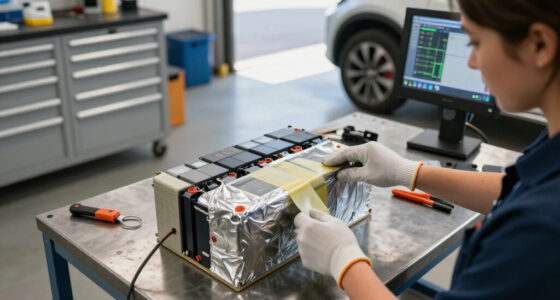
The shared architecture comes in two forms. The Chassis-Integrated Pack measures 2,090 by 634 by 285 millimeters and can be fitted between vehicle frame rails or in other constrained horizontal spaces, including a roof. The Hyper-Rugged Cube Pack is designed for demanding mechanical conditions, including high vibration and shock, and supports multiple installation orientations.
ABS describes the battery management system as wire-free, with voltage and temperature measurements at every series element and a microprocessor and onboard data storage at each cell group. Listed features include active isolation monitoring, vent-gas detection, cybersecurity protections, over-the-air updates and anti-propagation technology. The company says the platform is designed to align with requirements including ASIL-C under ISO 26262, FMVSS 305a, UL 2580 and ECE R100. ABS also says it is built and validated for up to 10 years of heavy-duty design life.
A Battery Platform for Hard-Working Fleets
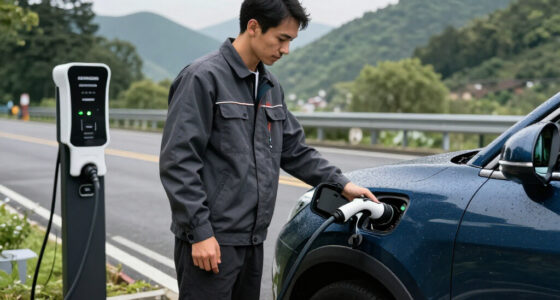
Aventor is aimed at vehicles and equipment that may operate for long hours, where charging downtime can affect utilization. ABS says the platform can charge from 10% to 80% in 42 minutes or less. The claim may matter to fleet operators weighing electric equipment against work schedules, but the announcement does not specify the charging conditions, charger power, or temperature used to reach that time.
The two pack formats could give OEMs options for different chassis layouts and operating environments while using a common architecture. Domestic assembly and cell sourcing may also be relevant to manufacturers planning products around Build America, Buy America rules. Whether Aventor meets a particular program’s sourcing and compliance requirements will depend on the applicable rules and the details of that program.
Planned capacity is another measure of the launch’s scope: ABS says initial production is expected to reach 6,000 packs a year, or about 0.7 GWh. That is a stated production plan, not evidence that orders, customer programs or output at that level have been secured.
heavy-duty electric vehicle battery pack
As an affiliate, we earn on qualifying purchases.
As an affiliate, we earn on qualifying purchases.
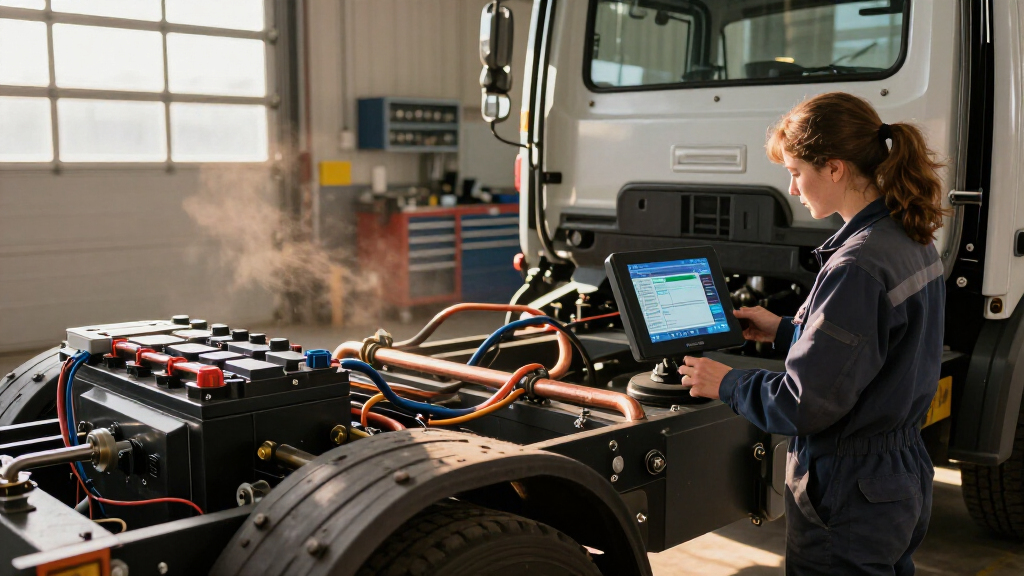
ABS is a battery supplier owned by Komatsu, the heavy-equipment manufacturer. Aventor is presented as a platform for OEMs serving commercial, industrial and specialty markets rather than as a battery for passenger cars. Its ruggedized pack option and stated design life reflect those intended operating conditions, though final suitability will depend on vehicle integration and use.
The company says the standard enclosure is dust-tight and certified to IP67 for immersion and IP69K for high-pressure washdown. These ratings address enclosure protection; they do not, by themselves, establish how a complete vehicle will perform in every environment. ABS has also named safety and regulatory standards with which the platform is designed to align, but the announcement does not provide certification documents or identify specific completed approvals.
The launch timeline places samples before planned production: customer samples in 2027, followed by a target start in the first quarter of 2028. The announcement does not name customers or vehicle programs.
“We set out to develop a battery platform that leads on energy density without any compromises in the safety, durability or performance these applications demand.”
— Subhash Dhar, founder and CEO of American Battery Solutions
Specifications Await Customer Validation
ABS’s release does not name prospective customers, confirmed vehicle integrations, orders or commercial agreements. It also does not explain the test procedures behind the energy, power and charging figures, or provide operating conditions for the stated 10%-to-80% charging time. Those details will be relevant to OEMs comparing the platform with alternatives.
The announcement says Aventor is designed to align with named standards and that it has been built and validated for up to 10 years of heavy-duty design life. It does not specify which certifications have already been granted, what validation testing was completed, or how service life varies by operating conditions. The timing and scale of planned production could also change; the stated 6,000-pack annual capacity is a target for initial production, not confirmed output.
Samples Set the Next Milestone
ABS plans to provide customer samples in 2027, giving OEMs a chance to assess the packs and integrate them into vehicle or equipment programs. The next public indicators to watch are named customer applications, detailed test and certification information, and whether the planned production schedule holds.
The company’s stated target is to start production in the first quarter of 2028, initially at an annual capacity of 6,000 packs, or approximately 0.7 GWh. ABS has not announced a production site, customer commitments or a schedule for ramping beyond that initial capacity.
Key Questions
What is the Aventor battery platform?
Aventor is American Battery Solutions’ 800 V battery platform for high-utilization commercial, industrial and specialty applications. ABS lists 113 kWh of stored energy and 358 kW of peak discharge power.
When will Aventor be available to customers?
ABS says it plans to provide customer samples in 2027 and begin production in the first quarter of 2028. The company has not named customers or confirmed vehicle programs.
How quickly can Aventor charge?
ABS says the platform supports charging from 10% to 80% in 42 minutes or less. The announcement does not state the charging power or test conditions behind that figure.
What pack options will be offered?
The platform has a Chassis-Integrated Pack for constrained horizontal installations and a Hyper-Rugged Cube Pack designed for harsher mechanical conditions and multiple mounting orientations.
Has Aventor received the certifications it references?
ABS says Aventor is designed to align with requirements including ASIL-C under ISO 26262, FMVSS 305a, UL 2580 and ECE R100. The announcement does not say which certifications, if any, have been completed or granted.
Source: rss
Evergreen bestsellers Picks
bestsellers
As an affiliate, we earn on qualifying purchases.