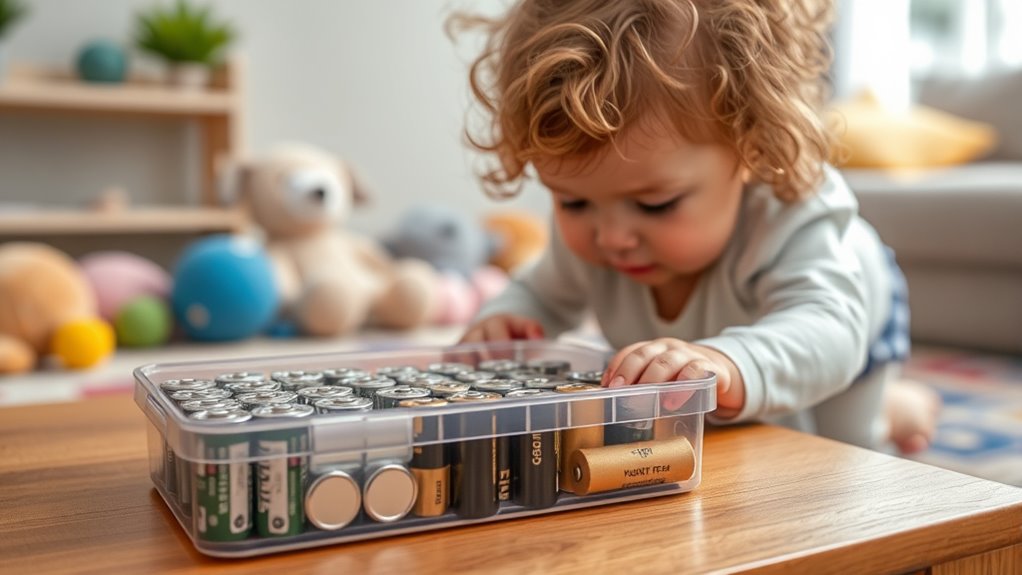

To keep children safe around batteries, always store them out of reach in high or locked cabinets, and never leave loose batteries unattended. Make certain battery compartments are secure and child-proof, and teach kids not to open or handle batteries or devices containing them. Supervise your children around gadgets, and act quickly if a battery is suspected to be ingested or exposed. Stay vigilant—there’s more vital safety advice waiting for you.
Key Takeaways
- Store batteries securely out of children’s reach and sight, using high cabinets or locked drawers.
- Educate children about the dangers of batteries and never allow them to open or remove batteries from devices.
- Use child-proof battery compartments and regularly check household items for proper battery installation.
- Supervise children around devices with batteries and prevent access to loose or exposed batteries.
- In case of suspected ingestion or exposure, seek emergency help immediately and avoid inducing vomiting or giving food/drinks.

Have you ever considered how dangerous batteries can be if not handled properly around children? Batteries, especially small button or coin cell types, pose serious risks if they are accessible to curious kids. A single swallow or insertion of a battery into the nose or ears can cause severe internal burns or other injuries. That’s why hazard prevention is essential. You need to make sure batteries are stored securely, out of reach and sight of children. Keep devices that contain batteries in high cabinets or locked drawers, and never leave loose batteries lying around where a child could find them. Regularly check household items like remote controls, toys, and gadgets to guarantee batteries are properly installed and that battery compartments are secure. Educating your children about the dangers of batteries is also indispensable, especially for older kids who might come across them independently. Teach them never to open or try to remove batteries from devices, and stress the importance of telling an adult if they find a loose battery. Additionally, using child-proof battery compartments can significantly reduce accidental access. In case of accidental ingestion or exposure, knowing how to respond quickly can make a life-saving difference. Immediate emergency response is critical because batteries can cause internal chemical burns and tissue damage within just a couple of hours. If a child swallows a battery or if you suspect they have, do not attempt to induce vomiting or give them anything to eat or drink. Instead, call emergency services right away or contact poison control for specific guidance. While waiting for help, keep the child calm and prevent them from eating or drinking anything unless instructed by professionals. Do not try to retrieve the battery yourself, as this can cause further injury. Being prepared with knowledge about hazard prevention and the appropriate emergency response guarantees you’re ready to act swiftly to protect your child’s health.
Frequently Asked Questions
What Are the Signs of Battery Poisoning in Children?
If you suspect battery poisoning in a child, look for signs like difficulty swallowing, drooling, vomiting, abdominal pain, or chest discomfort. Child ingestion signs include coughing, gagging, or refusal to eat. Battery poisoning symptoms can also cause irritability, fever, or lethargy. If you notice any of these, seek emergency medical help immediately. Prompt action is essential to prevent serious injury or complications from battery ingestion.
How to Safely Dispose of Damaged Batteries?
When you find a damaged battery, don’t just toss it in the trash—think of it as a tiny bomb waiting to explode! Instead, practice safe handling by wearing gloves and eye protection. Take it to a designated battery recycling center right away. This guarantees proper disposal and prevents leaks or fires. Always follow local regulations for battery recycling and never attempt to dismantle or puncture the battery yourself.
Are Certain Battery Types More Dangerous for Children?
Certain battery types pose greater risks to child safety, especially button and lithium-ion batteries. These small, powerful batteries can be easily swallowed, causing choking or chemical burns. You should keep all battery types, particularly button and lithium-ion batteries, out of children’s reach. Always store batteries safely, and make sure devices are secured. Being vigilant about battery safety helps protect children from accidental ingestion and potential injuries, keeping your home safer.
Can Batteries Cause Long-Term Health Issues if Ingested?
Yes, batteries can cause long-term health issues if ingested. When a battery corrodes inside the body, it can release harmful substances that lead to tissue damage or chemical burns. Lithium toxicity is a serious risk if a lithium battery is swallowed, potentially causing neurological and organ damage. Prompt medical attention is vital to prevent these long-term health problems, so always seek help immediately if ingestion occurs.
What Emergency Steps Should I Take if a Child Swallows a Battery?
Did you know that over 3,500 children are treated annually for battery ingestions? If a child swallows a battery, act quickly: don’t induce vomiting, and seek immediate medical help. Call emergency contacts or go straight to the nearest emergency room. Do not attempt to remove the battery yourself; trained professionals will handle battery removal safely. Prompt action can prevent serious internal damage and long-term health issues.
Conclusion
Think of battery safety like tending a delicate garden. You’re the gardener, guiding each plant away from harm’s reach, nurturing growth without letting dangers sprout. Keep batteries out of children’s hands, just as you’d protect fragile blossoms from harsh winds. With care and vigilance, you create a safe space where curiosity blooms without risk. Remember, a vigilant gardener guarantees your little one’s world stays bright, safe, and free from unexpected storms.