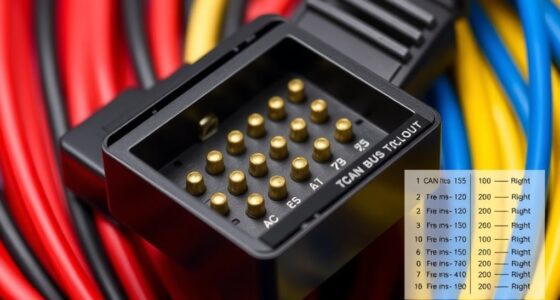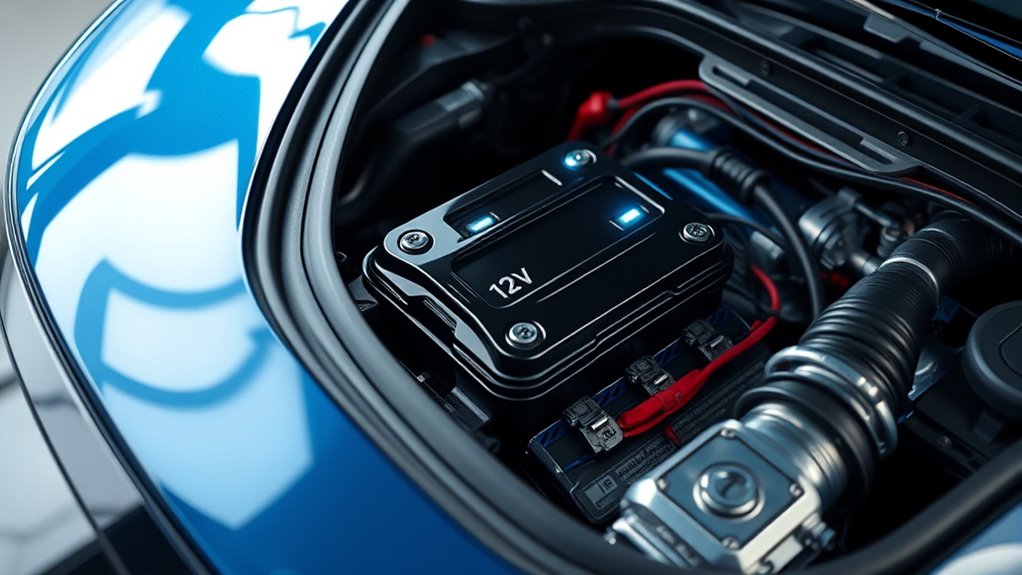

The 12V battery in an EV powers essential systems like lighting, safety features, and infotainment, ensuring your vehicle runs smoothly every day. It supports safety features such as airbags and backup cameras, and helps keep electrical stability even when the main high-voltage battery isn’t active. If it starts to fail, you might see dim lights or system glitches. Keep an eye on it, as proper maintenance can help prevent larger issues—more details await if you continue exploring.
Key Takeaways
- The 12V battery powers essential systems like lighting, safety features, and infotainment in electric vehicles.
- It supports vehicle startup and overall electrical stability, ensuring reliable operation.
- Proper maintenance prevents system malfunctions and safety issues caused by a deteriorating 12V battery.
- The 12V battery is charged via the high-voltage pack, making its health dependent on the vehicle’s charging infrastructure.
- Regular checks and timely replacement extend the lifespan of the 12V battery, maintaining vehicle safety and performance.
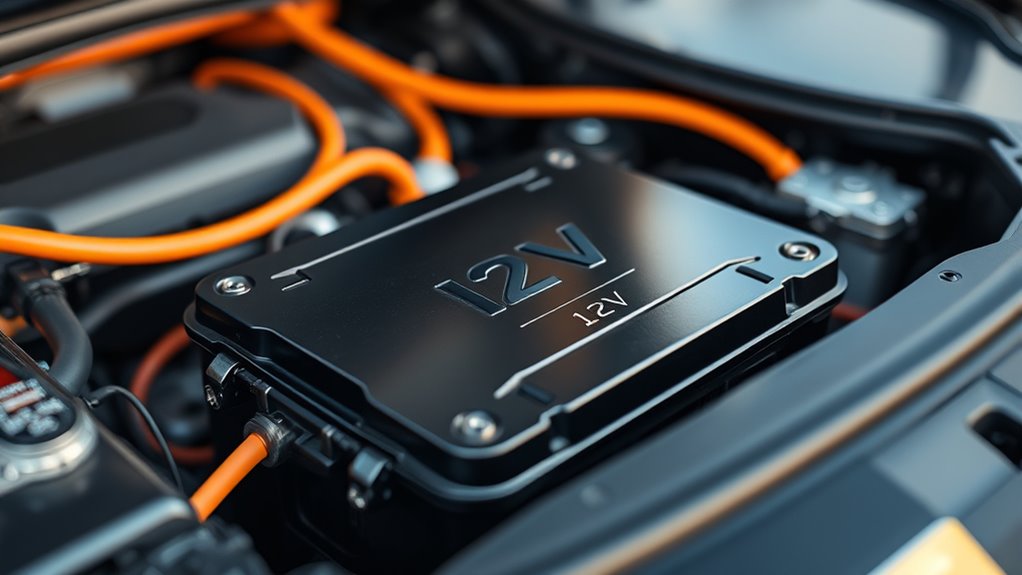
Although electric vehicles (EVs) run primarily on high-voltage batteries, the 12V battery plays an essential role in powering critical systems like lighting, infotainment, and safety features. This smaller battery is indispensable for the vehicle’s day-to-day operations and overall safety, guaranteeing that vital systems remain functional even when the main battery isn’t actively supplying power. Its capacity may seem modest compared to the high-voltage pack, but its importance is undeniable. A well-maintained 12V battery guarantees that your vehicle’s electrical systems operate smoothly, preventing issues that could compromise safety or convenience. Proper attention to the 12V battery also supports the overall home and vehicle environment, ensuring seamless electrical performance. Understanding the relationship between battery capacity and the 12V battery is key. While the high-voltage battery handles propulsion and longer driving ranges, the 12V battery supports the vehicle’s auxiliary systems. If the 12V battery’s capacity diminishes over time, you might notice problems like dimming lights, malfunctioning infotainment, or issues with safety features such as airbags or backup cameras. These signs indicate that the battery can’t supply the necessary power, and replacing or maintaining it can prevent more significant problems down the line. Proper attention to the 12V battery guarantees your EV remains reliable, especially in situations requiring quick starts or frequent system use.
Charging infrastructure also impacts the health of your 12V battery. Many EV owners rely on public charging stations or home chargers linked to the main high-voltage pack, but the 12V battery often charges through a DC-DC converter from this main source. If the charging infrastructure isn’t consistent or reliable, the 12V battery may not receive adequate charge, leading to reduced capacity over time. That’s why some manufacturers recommend periodic checks or even direct charging of the 12V battery, particularly in areas with limited charging options. Ensuring your vehicle’s charging ecosystem is robust helps maintain the 12V battery’s longevity, supporting the vehicle’s entire electrical system.
Frequently Asked Questions
How Long Does a 12V Battery Typically Last in an EV?
The 12V battery in your EV typically lasts around 3 to 5 years, depending on usage and maintenance. To extend its lifespan, you should regularly check for corrosion, keep it clean, and ensure all connections are secure. Follow maintenance tips like avoiding deep discharges and testing it periodically. Proper care helps prevent unexpected failures and keeps your EV running smoothly for longer.
Can a 12V Battery Be Replaced Separately From the Main Battery?
Sure, you can replace the 12V battery separately from the main one, but don’t expect it to be a breeze. Battery maintenance and replacement procedures vary, often requiring some technical know-how. You’ll need to disconnect, remove, and install the new battery carefully. Unless you’re a DIY pro, it’s best to let a professional handle it so you don’t accidentally turn your EV into a fancy paperweight.
What Are Signs of a Failing 12V Battery in an EV?
You’ll notice signs of a failing 12V battery in your EV if your electrical system becomes unreliable, with issues like dim lights or frequent system resets. Battery maintenance is essential—if your vehicle struggles to start or shows warning lights, the 12V battery may need replacement. Pay attention to these symptoms to keep your EV’s electrical system running smoothly and avoid unexpected breakdowns.
Does Cold Weather Affect the 12V Battery’s Performance?
Cold weather definitely impacts your 12V battery’s performance. When temperatures drop, cold temperature reduces your battery’s capacity, making it less efficient at delivering power. You might notice slower startup times or electrical issues in your EV. To keep it working smoothly, consider parking in a warmer spot or using a battery warmer if available. Regular maintenance and checks can help guarantee your battery stays reliable during cold months.
Are 12V Batteries in EVS More Prone to Failure Than in Traditional Cars?
Like a fragile flower in a storm, your EV’s 12V battery faces unique risks. It’s more prone to failure due to factors like battery corrosion and charger compatibility issues. Unlike traditional cars, EV 12V batteries often have limited access and may not be as resilient against environmental stress. Regular checks and proper charging help prevent failures, ensuring your EV’s electrical system stays healthy and reliable.
Conclusion
Think of the 12V battery as the heart of your EV’s home, quietly powering all the little rooms that keep everything running smoothly. Without it, your car’s essential functions stumble, like a house without power. Just as a home needs a steady heartbeat to stay alive, your EV relies on this small but mighty battery to keep your journey going. Keep it healthy, and your drive remains smooth and reliable, like a well-tuned home.