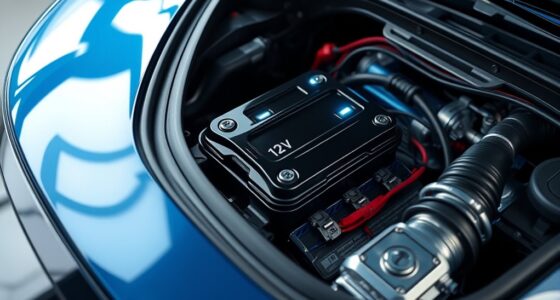
Your vehicle’s stop-start system depends heavily on your battery’s health to work smoothly. When the engine switches off at stops, your battery supplies power to restart it quickly, so a strong, well-maintained battery is essential. If your battery is weak or aging, you might notice slow starts or system failures, especially in cold weather. Keeping your battery in good shape ensures this eco-friendly feature operates reliably, and there’s more to learn about maintaining peak battery performance.
Key Takeaways
- Stop-start systems rely on a healthy battery to quickly restart the engine during idle periods.
- Weak batteries can cause system malfunctions, including failed engine restarts and reduced efficiency.
- Regular battery testing and maintenance are essential to ensure reliable stop-start system performance.
- Extreme temperatures can shorten battery lifespan, impacting system reliability, especially in cold weather.
- Using the correct battery type and maintaining clean terminals support optimal system operation and longevity.
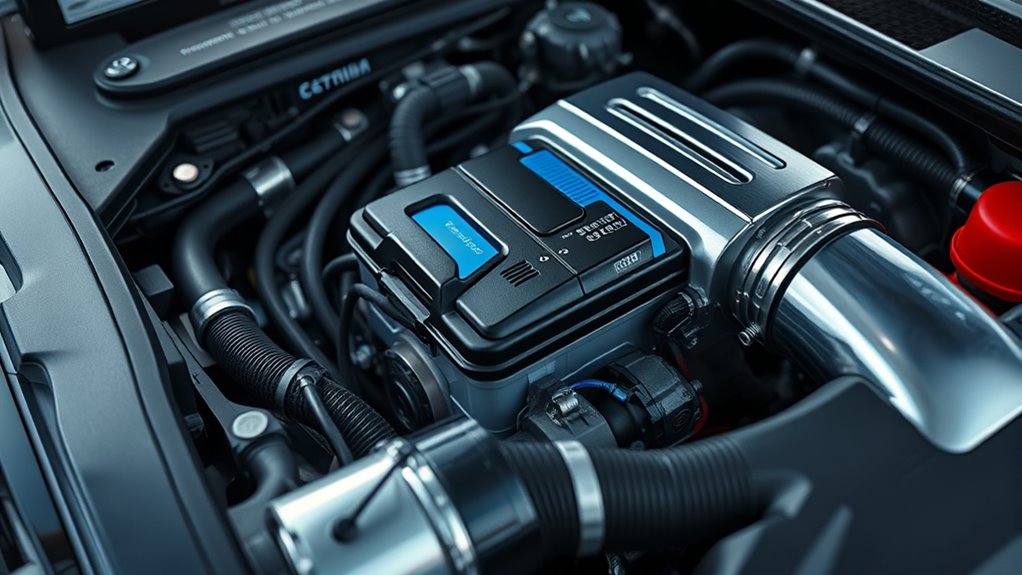
Stop-start systems are designed to improve fuel efficiency by shutting off your engine during idle moments, such as at traffic lights, and restarting it when you’re ready to move again. These systems help save fuel and reduce emissions, but they also place additional demands on your vehicle’s battery. Because the battery is responsible for restarting the engine multiple times during typical driving, its lifespan can be affected if it isn’t in good condition or if the system isn’t functioning properly. You need to pay close attention to your battery’s health to make certain your stop-start system works efficiently and reliably. A healthy battery maintains its capacity longer, which helps preserve the system’s overall efficiency and prevents unexpected breakdowns. If your battery is weak or aging, the system may struggle to restart the engine promptly, leading to increased wear on the starter motor and other components. This can decrease the system’s efficiency over time and potentially cause you inconvenience, especially during cold weather when batteries are more prone to losing charge.
To keep your stop-start system operating at peak efficiency, regular battery maintenance is essential. You should have your battery tested periodically, especially if your vehicle is several years old. Modern vehicles often have sensors that monitor battery health and alert you if replacements or maintenance are needed. When replacing your battery, it’s vital to choose one that meets the specifications recommended by your vehicle manufacturer, particularly in regards to cold cranking amps and overall capacity. Using the right battery ensures that the system can restart the engine quickly and reliably, which directly impacts the system’s efficiency and your driving experience. Additionally, the quality of your battery impacts the overall system efficiency because a high-quality, well-maintained battery can handle the frequent starting cycles better. This reduces the risk of premature failure and minimizes the strain on your vehicle’s electrical system. You should also be mindful of other factors that affect your battery’s lifespan, such as extreme temperatures, electrical drain from accessories, and leaving lights or electronics on when parked. Proper maintenance, including keeping terminals clean and ensuring your charging system is functioning correctly, helps extend your battery’s life and keeps your stop-start system running smoothly. Furthermore, understanding the role of positive thinking in maintaining a proactive mindset can help vehicle owners stay attentive to their vehicle’s needs and take timely actions to ensure optimal performance.
Frequently Asked Questions
How Do Stop-Start Systems Impact Overall Vehicle Fuel Efficiency?
You’ll notice that engine start-stop systems boost your vehicle’s fuel efficiency by reducing unnecessary idling. When you stop at a traffic light, the system automatically switches off the engine, saving fuel during idle periods. As soon as you release the brake, the engine restarts smoothly. This process results in significant fuel savings over time, helping you cut costs and reduce emissions without sacrificing vehicle performance.
Are There Specific Battery Types Recommended for Stop-Start Systems?
You should use absorptive glass mat (AGM) or enhanced flooded batteries for stop-start systems. These batteries have specialized chemistry that handles frequent cycling better. They also follow specific charging protocols to maintain peak performance and longevity. Regular lead-acid batteries may not withstand the demands of stop-start technology, leading to quicker degradation. Ensuring you select the right battery chemistry and adhere to proper charging protocols keeps your system running smoothly.
Can Stop-Start Systems Cause Increased Wear on Other Vehicle Components?
You might notice that stop-start systems can lead to increased wear on your vehicle’s components, like the starter motor and alternator, because they activate more frequently. This constant cycling accelerates battery degradation and puts extra strain on parts designed to withstand the load. Over time, this wear can cause early failures, so keeping an eye on your system’s health and performing regular maintenance helps protect your vehicle’s longevity.
What Are the Signs of a Failing Stop-Start Battery?
If your stop-start battery is failing, you’ll notice the engine struggles to restart smoothly, and the battery’s lifespan shortens. You might see warning lights on your dashboard or experience dimming headlights. During electrical diagnostics, technicians may find low voltage or weak charging. These signs indicate your battery isn’t holding a charge properly, so keep an eye out and get it checked promptly to avoid breakdowns or further electrical issues.
How Does Climate Affect the Performance of Stop-Start Batteries?
Climate critically impacts your stop-start battery’s performance and climate resilience. In cold weather, batteries struggle to deliver enough power, reducing their lifespan, while extreme heat accelerates internal chemical reactions, causing faster wear. You should expect shorter battery life in harsh climates, so regular checks are essential. Proper maintenance and choosing batteries designed for your climate can help extend lifespan and ensure reliable vehicle start-ups regardless of weather conditions.
Conclusion
If you ignore your car’s stop-start system and neglect your battery, you’re risking an epic breakdown that could leave you stranded in the middle of nowhere! Without a properly functioning battery, your car’s entire life force shuts down faster than a superhero losing their powers. So, take care of your battery, keep that stop-start system in check, and you’ll avoid the disaster of being stranded like a lost traveler in the wilderness—trust me, it’s worth it!