

Fixed-rate mortgages keep your interest rate and monthly payments steady for the entire loan term, providing predictability and stability. Adjustable-rate mortgages (ARMs) start with lower initial rates, but they can change periodically based on market conditions, potentially increasing your payments later. Your choice depends on how long you plan to stay in the home and your comfort with payment fluctuations. Continue exploring to understand which option suits your financial goals best.
Key Takeaways
- Fixed-rate mortgages maintain a constant interest rate and payment throughout the loan term, providing stability.
- Adjustable-rate mortgages start with lower initial rates but adjust periodically, potentially increasing payments over time.
- Fixed-rate loans are generally easier to qualify for and offer predictability, while ARMs may require less initial qualification effort.
- ARMs are suitable for short-term homeowners who plan to sell or refinance before rate adjustments occur.
- Choosing between them depends on financial goals, risk tolerance, and the expected length of homeownership.
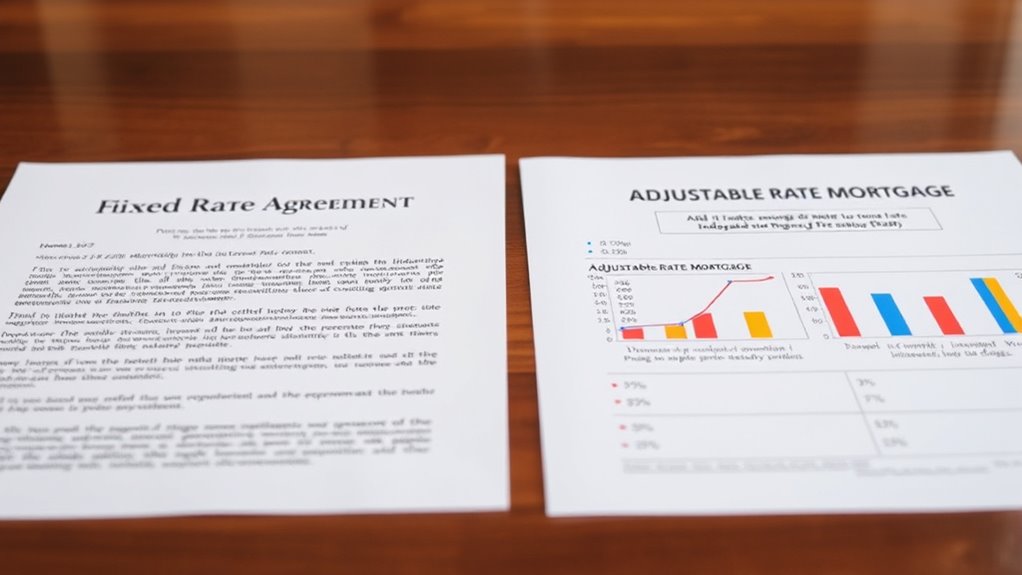
Are you trying to decide between a fixed-rate and an adjustable-rate mortgage? This is a common dilemma, and understanding the key differences can help you make an informed choice. Your decision impacts your monthly payments, how easily you can qualify for the loan, and your options down the line, especially if you consider refinancing later on.
A fixed-rate mortgage offers stability because your interest rate stays the same throughout the loan term. This means your monthly payments remain consistent, making it easier to plan your budget. If you prefer predictability and want to avoid surprises, a fixed-rate is often the better choice. However, because lenders see it as less risky, qualifying for a fixed-rate mortgage might be slightly more straightforward, especially if you have a stable income and good credit. That said, fixed-rate loans tend to have higher initial interest rates compared to adjustable-rate mortgages, which can influence your loan qualification process.
Adjustable-rate mortgages (ARMs), on the other hand, start with lower interest rates that adjust periodically based on market conditions. These rates can be appealing if you anticipate your income will increase or if you plan to sell or refinance before the adjustable period kicks in. The initial lower payments can make qualifying easier for some borrowers, especially if your debt-to-income ratio is tight. However, once the adjustment period begins, your payments could increase markedly, which might make long-term budgeting more challenging. If you’re considering an ARM, it’s wise to explore your refinancing options down the line. Refinancing can help you convert an adjustable-rate loan into a fixed-rate one, locking in your payments and providing peace of mind.
Your choice also depends on how long you plan to stay in your home. If you see yourself living there for many years, a fixed-rate mortgage provides stability over the long haul. But if you’re planning to move within a few years, an ARM’s lower initial rate could save you money, and refinancing options might not even be necessary. Keep in mind that market fluctuations can impact ARMs, so it’s essential to understand how often rates might adjust and what caps are in place to limit increases.
Ultimately, your decision should align with your financial situation, risk tolerance, and future plans. Being aware of the interest rate structures can help you better evaluate your options and plan accordingly. Speaking with a mortgage professional can help clarify how each option impacts your loan qualification and whether refinancing might be advantageous down the road. Being well-informed allows you to choose the mortgage that best fits your goals and provides the flexibility you need for your financial future.
Frequently Asked Questions
How Do I Determine Which Mortgage Type Suits My Financial Situation?
To decide which mortgage suits your financial situation, consider your credit score and down payment. If you have a high credit score and plan to stay in your home long-term, a fixed-rate mortgage offers stability with consistent payments. If your credit score is lower or you expect to move or refinance soon, an adjustable-rate mortgage might save you money initially. Assess your budget and future plans to pick the best fit.
What Are the Long-Term Cost Differences Between Fixed and Adjustable Mortgages?
You face a trade-off: fixed-rate mortgages offer interest rate stability and predictable payments, often costing more upfront but saving you money if rates rise. Adjustable-rate mortgages start lower, but long-term costs can increase if rates climb, leading to less payment predictability. Over the long term, fixed mortgages tend to be more expensive initially but provide peace of mind, while adjustable rates might save you money early but could cost more if rates fluctuate.
How Often Can Adjustable-Rate Mortgage Rates Change After the Initial Fixed Period?
After the initial fixed period, your adjustable-rate mortgage rates can change periodically, typically every 6 or 12 months, depending on your loan terms. These payment adjustments are guided by interest rate caps, which limit how much your rate can increase at each adjustment and over the life of the loan. This helps protect you from sudden, large increases, but it’s important to stay aware of potential future adjustments.
Are There Any Penalties for Switching From an Adjustable to a Fixed-Rate Mortgage?
Ever wondered if switching from an adjustable to a fixed-rate mortgage costs you? Generally, you can switch without penalty fees, but some lenders impose refinancing restrictions or prepayment penalties. It’s smart to review your loan agreement because certain terms might limit or charge fees for refinancing. Do the benefits of stability outweigh potential costs? Always compare options and consult with your lender to avoid surprises during the switch.
Which Mortgage Type Is Better for First-Time Homebuyers?
As a first-time homebuyer, a fixed-rate mortgage is often better because it offers stability, making it easier to plan your budget and manage home affordability. You won’t worry about rising interest rates, providing peace of mind. While adjustable-rate mortgages may start with lower rates, they can increase over time. So, if you want predictable payments and steady financial planning, a fixed-rate mortgage is generally your best choice.
Conclusion
Choosing between a fixed and adjustable-rate mortgage depends on your financial goals and comfort with risk. Did you know that about 90% of homeowners opt for fixed-rate loans because of their stability? If you value predictable payments and plan to stay long-term, a fixed-rate might be best. But if you prefer potentially lower initial rates and flexibility, an adjustable-rate mortgage could work. Weigh your options carefully to find the best fit for your future.