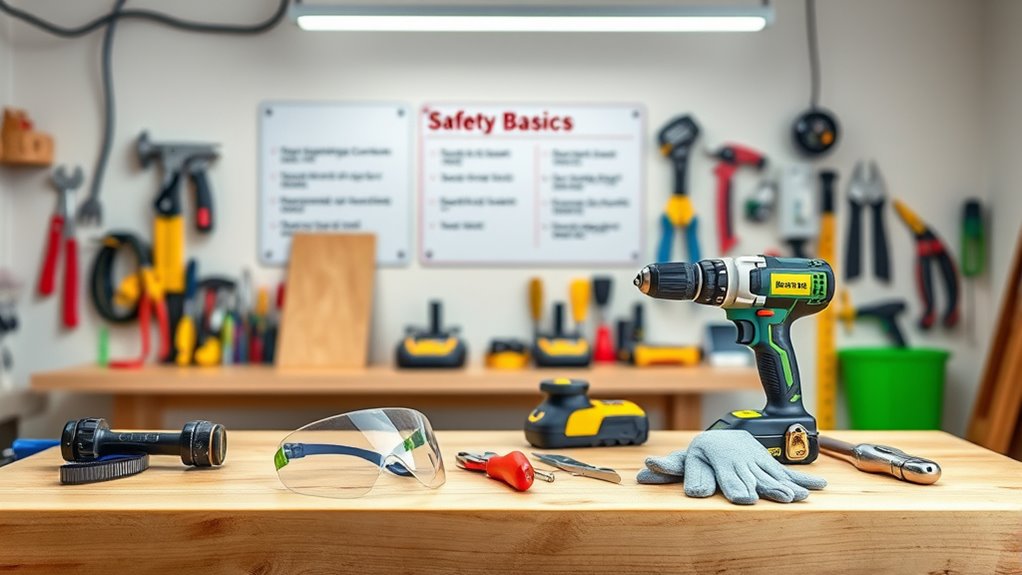

When starting in DIY, focus on simple, versatile tools like a basic drill, saw, and multi-tool that are easy to operate and reliable. Always wear safety gear such as goggles, masks, and ear protection to stay safe. Keep your workspace tidy and follow the instructions for each tool to prevent accidents. Building habits around safety and skill gradually boosts your confidence. Continue exploring to discover practical tips that can make your projects easier and safer.
Key Takeaways
- Choose simple, versatile power tools like a basic drill, saw, and multi-tool from trusted brands for ease of use.
- Always wear safety gear such as goggles, dust masks, and ear protection to prevent injuries.
- Read manuals and keep your workspace clean, well-lit, and cords organized to ensure safe tool operation.
- Develop safety habits like habitual gear use and cautious tool handling to build confidence and reduce risks.
- Use local resources and community insights to improve safety practices and adapt tools to your environment.

Starting your DIY journey can be exciting and rewarding, especially if you’re new to hands-on projects. One of the first steps is understanding how to choose the right tools and stay safe while working. When it comes to power tool selection, focus on simplicity and versatility. Start with a basic drill, a saw, and perhaps a multi-tool that can handle various tasks. These tools cover many common projects and are easy to learn. Look for models with straightforward controls and good safety features, like blade guards and lock buttons. Avoid complex or specialized tools until you gain more experience. Picking reliable brands with positive reviews helps guarantee your tools last and perform well, saving you money and frustration later.
Safety gear essentials are just as important as your tools. Protecting yourself from potential injuries should be your top priority. Always wear safety glasses or goggles to shield your eyes from flying debris and dust. A dust mask or respirator is crucial when working with materials that produce fine particles, like sanding or cutting wood. Ear protection, such as earplugs or earmuffs, helps prevent hearing damage from loud power tools. Gloves can protect your hands, but be cautious—avoid loose-fitting gloves that could get caught in rotating parts. A sturdy, well-fitting apron or long sleeves can also shield your skin from splinters, sparks, or chemicals. Remember, safety gear isn’t just about protection; it also helps you work more confidently, knowing you’re reducing the risk of injury.
Before you start any project, take time to read the user manuals for your tools. Learning about safety features and proper operation can prevent accidents. When handling power tools, always keep your workspace clean and well-lit. Keep cords out of the way to avoid tripping or accidental unplugging. Never force a tool to do something it’s not designed for; instead, use the right tool for each task. If you’re unsure about how to operate a specific tool safely, seek tutorials or ask someone experienced. Wearing safety gear should become second nature—don’t skip it, even if you feel rushed. Proper selection of power tools combined with essential safety gear forms the foundation of a successful, safe DIY experience. As you gain confidence and skills, you’ll find it easier to take on more complex projects, always prioritizing safety and efficiency.
Additionally, understanding city dynamics and local resources can help you adapt more quickly as you start your DIY projects in a new environment.
Frequently Asked Questions
What Are the Essential Safety Gear Items for DIY Projects?
When tackling DIY projects, you need essential safety gear like protective eyewear to shield your eyes from debris, gloves to protect your hands from cuts and chemicals, and masks to prevent inhaling dust or fumes. Always wear these items to stay safe. They’re simple but vital. Proper safety gear helps you avoid injuries and makes your DIY experience more enjoyable and secure, so never skip them even on small projects.
How Do I Choose the Right Tools for Specific Tasks?
When choosing tools for specific tasks, focus on tool selection by matching the tool to the job. Use task-specific tools designed for precision and safety, like a screwdriver for screws or a saw for cutting wood. Consider the quality, size, and ease of use to guarantee efficiency. Research or ask for advice if you’re unsure, and always prioritize safety and proper technique for the best results.
What Should I Do if I Encounter a Tool Malfunction?
If you encounter a tool malfunction, stop using it immediately to prevent injury. Perform basic tool troubleshooting by inspecting for damage or loose parts. Follow your emergency procedures, like unplugging the tool or turning off power sources. If you’re unsure or the issue persists, seek professional repair or replacement. Always prioritize safety, and never force a malfunctioning tool, as it could cause accidents or further damage.
Are There Safety Certifications to Look for in Tools?
Sure, because who doesn’t want their tools to come with a fancy badge of honor? When shopping, look for tools with safety certifications like UL, CSA, or CE marks. These indicate they meet strict safety standards, reducing risks of malfunctions or accidents. It’s like getting a gold star for safety — so you can focus on your project, not the emergency room. Remember, certified tools are your best safety net.
How Can I Prevent Common Injuries During DIY Activities?
To prevent common DIY injuries, always wear personal protective equipment like gloves, goggles, and ear protection. Use proper tool storage to keep tools organized and prevent accidents. Follow safety instructions carefully, and stay alert while working. Keep your workspace clean and free of clutter. Taking these precautions reduces risks and keeps you safe during DIY projects. Remember, safety always comes first for successful and injury-free DIY activities.
Conclusion
Now that you know the essential tools and safety tips, you’re ready to start your DIY journey. But remember, the real challenge isn’t just knowing what to do—it’s staying safe while you do it. As you gain confidence, you’ll encounter projects that push your skills further. Are you prepared for those surprises? Keep learning, stay cautious, and you’ll open new possibilities. The next project might just change everything—are you ready to see what’s possible?