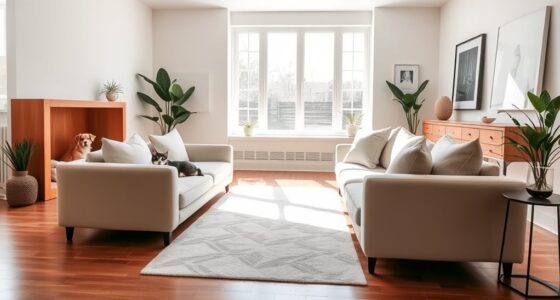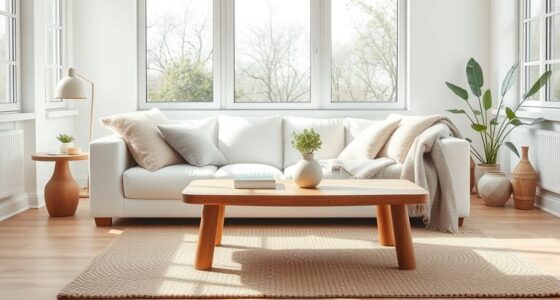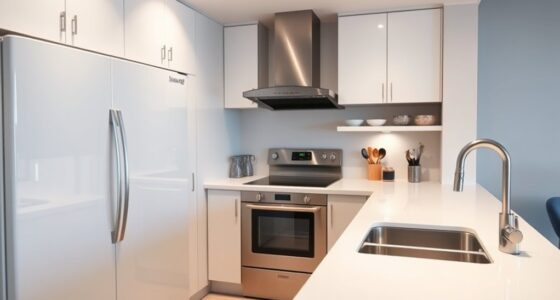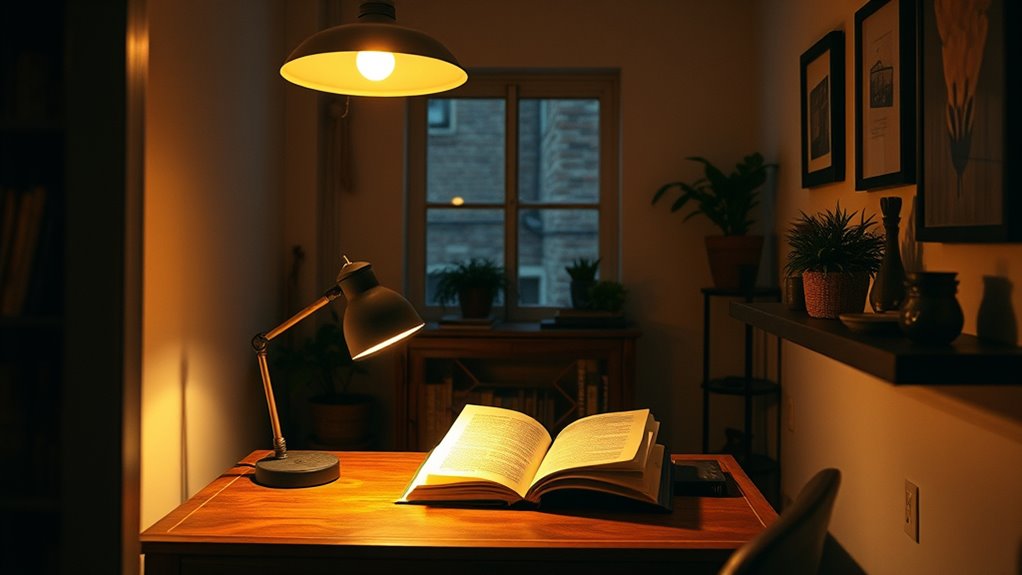

Lighting 101 involves layering ambient, task, and accent lights to create a balanced and inviting space. Ambient light provides overall illumination, while task lighting focuses on specific areas like your desk or kitchen countertop. Accent lighting highlights design features or artwork, adding depth. Proper placement of each layer enhances mood, functionality, and energy efficiency. Mastering these layers makes your space both beautiful and practical—continue exploring to learn how to optimize each lighting type effectively.
Key Takeaways
- Ambient lighting provides overall illumination, creating a comfortable base layer in the space.
- Task lighting focuses on specific areas for activities like reading or cooking, enhancing functionality.
- Accent lighting highlights design features, artwork, or architectural details to add visual interest.
- Layering these lighting types allows for control over mood, ambiance, and space perception.
- Proper placement and selection of fixtures optimize energy efficiency and ensure balanced light distribution.
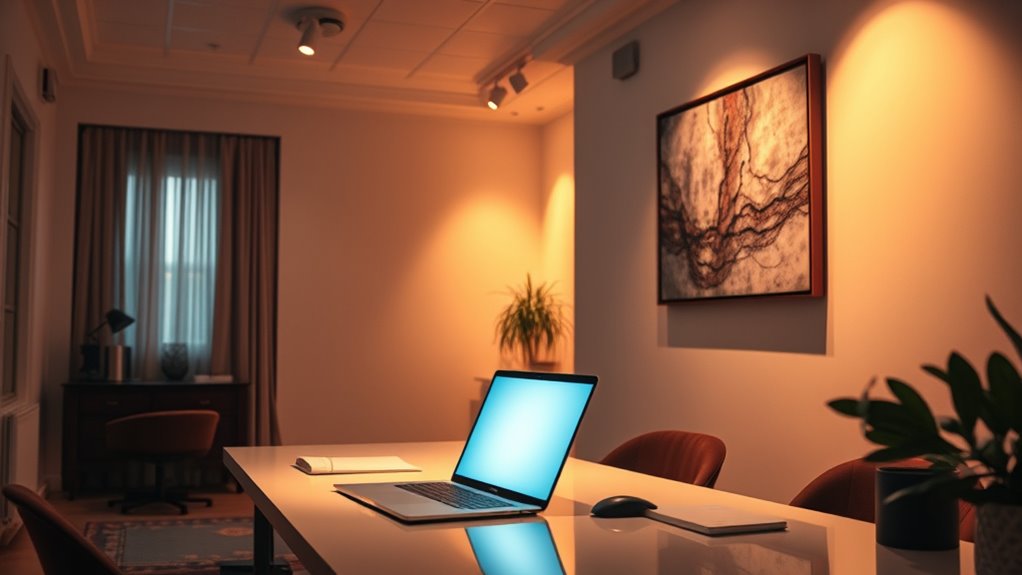
Have you ever wondered how lighting can transform a space? It’s not just about turning on a switch; it’s about creating an environment that feels inviting, functional, and visually appealing. One of the key elements in achieving this is understanding how to layer lighting effectively. When you start thinking about ambient, task, and accent lighting, you’re taking control of how your space feels and functions. The foundation of this layering process is proper lamp placement, which directly impacts both the mood and energy efficiency of your space. Strategic lamp placement ensures that light is distributed evenly, avoiding dark corners and overly bright spots, while also helping you conserve energy. For example, placing lamps near work areas or reading nooks allows you to use less overall lighting without sacrificing visibility. This focused placement reduces unnecessary wattage, which means you’re saving energy and lowering your utility bills. Choosing the right lamps, with adjustable brightness or dimming features, can further enhance energy efficiency. Instead of relying on harsh overhead lighting all the time, you can dial down the light levels when full brightness isn’t needed, creating a cozy atmosphere while conserving power. Additionally, incorporating energy-efficient bulbs like LEDs into your lamps is a smart move. They consume less energy, last longer, and produce less heat, making your lighting setup more sustainable. When you consider lamp placement, think about how different areas of your space are used and where natural light enters during the day. Positioning lamps to complement daylight can reduce your reliance on artificial lighting, adding to your energy savings. For instance, placing a reading lamp near your favorite chair allows you to turn on just that light instead of illuminating the entire room. This targeted approach not only saves energy but also creates a more personalized and comfortable environment. Furthermore, good lamp placement can influence the overall aesthetic, highlighting design features or artwork and adding depth to your space. It’s about balancing function with style—ensuring your lamps are positioned where they’re most effective and visually pleasing. Proper lamp placement is also crucial for ensuring safety by preventing tripping hazards or accidental knocking over of lamps. When you prioritize thoughtful lamp placement, you’re making smarter choices about how much light you use, which directly benefits your energy efficiency. It’s a simple yet powerful way to enhance your home’s ambiance and reduce your carbon footprint. So, next time you consider your lighting setup, think about where your lamps sit and how they work together to create a well-lit, energy-efficient space that feels just right for you.
Frequently Asked Questions
How Do I Balance Different Lighting Layers for a Cohesive Look?
You balance different lighting layers by using layering techniques that create lighting harmony. Start with a strong ambient light to set the overall mood, then add task lighting for functionality, and finally incorporate accent lighting to highlight features. Adjust each layer’s brightness and color temperature to guarantee they complement each other. This approach helps you achieve a cohesive look, making your space feel well-designed and visually appealing.
What Are the Best Bulbs for Energy-Efficient Ambient Lighting?
Did you know LED bulbs use up to 75% less energy than incandescent ones? For energy-efficient ambient lighting, choose LED options like soft white or warm white bulbs. They offer excellent brightness and color warmth, perfect for cozy atmospheres. Plus, LED bulbs have a longer lifespan—often 25,000 hours or more—meaning you save on replacements and energy costs over time. Switch to LEDs for eco-friendly, long-lasting ambient lighting.
Can I Combine Multiple Lighting Layers in Small Spaces?
Yes, you can combine multiple lighting layers in small spaces to create a layered lighting design. Using space-saving solutions like compact fixtures or multi-function lights helps maximize your area. Layering ambient, task, and accent lighting adds depth and flexibility without cluttering. Focus on strategic placement to enhance functionality and ambiance, ensuring your small space feels bright, welcoming, and well-balanced while maintaining a clean, organized look.
How Do I Control Lighting Layers With Smart Home Technology?
Smart home technology simplifies controlling lighting layers with seamless, smart systems. You can activate automated dimming, adjusting ambient, task, and accent lights effortlessly. Voice control allows you to command your lights hands-free, switching layers on or off, dimming, or brightening with simple commands. This integration makes managing multiple lighting layers smooth and stylish, turning your space into a smart, synchronized sanctuary with just a few spoken words or taps.
What Are Common Mistakes to Avoid When Layering Lighting?
You should avoid mismatched lighting colors and poor fixture placement. Keep lighting color consistent to create a cohesive atmosphere, and plan fixture placement carefully to prevent shadows or uneven lighting. Don’t over-illuminate or under-illuminate areas; balance is key. Also, steer clear of placing fixtures where they cause glare or discomfort. Thoughtful layering enhances ambiance and functionality, so take your time to select the right fixtures and color tones.
Conclusion
Now that you’ve mastered the basics of lighting layers—ambient, task, and accent—you’re ready to create a charming, cheerful space. By balancing brightness and shadows, you bring beauty and functionality together. Remember, thoughtful lighting transforms your home into a haven of harmony and happiness. So, experiment, explore, and enjoy illuminating your environment with confidence. With a little creativity and care, your space will shine bright, showcasing your style and making every moment more magical.