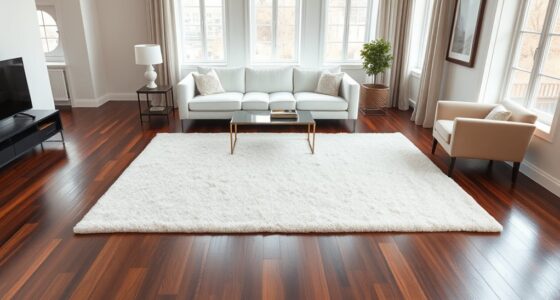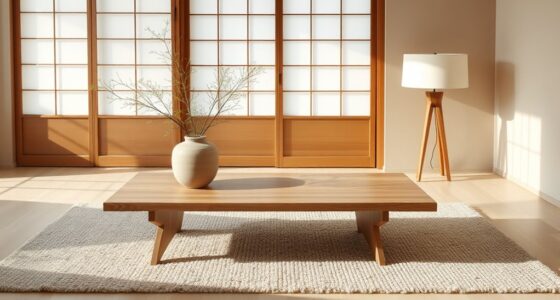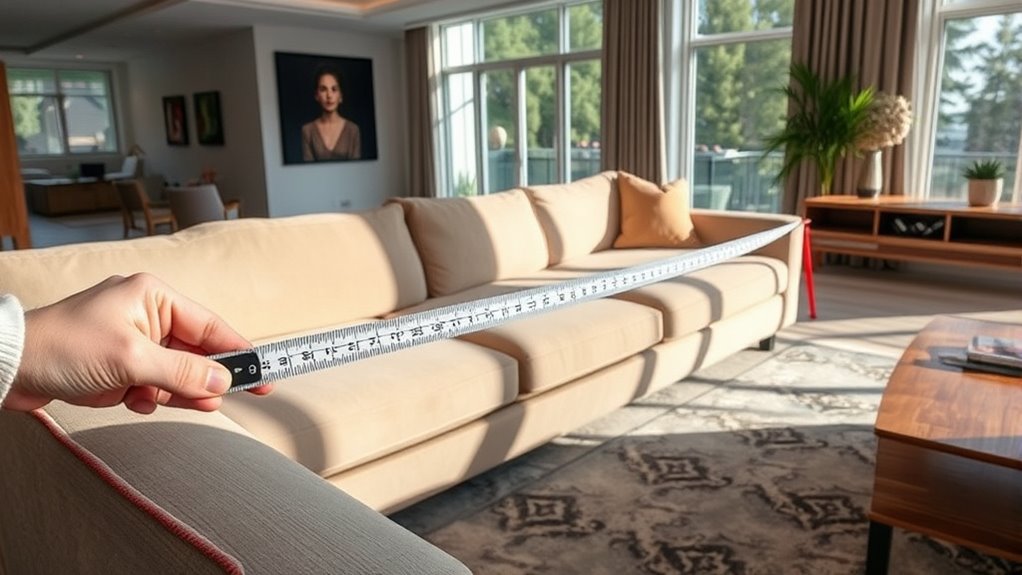

To measure furniture before buying, start by evaluating your space with a tape measure or laser device, noting the length, width, and height, including any obstructions like doors or windows. Visualize how the piece will fit using painter’s tape to outline dimensions on the floor. Double-check measurements against the furniture specifications and confirm they match your plan. Keep in mind proper scale and clearance to make certain a perfect fit—continue exploring for detailed tips to make the process easier.
Key Takeaways
- Measure the intended furniture’s length, width, and height using a tape measure or laser measurer for accuracy.
- Outline furniture dimensions on the floor with painter’s tape to visualize fit and ensure proper placement.
- Double-check measurements against product specifications before purchasing to avoid size mismatches.
- Account for clearance space (18-24 inches) around furniture to maintain accessibility and comfort.
- Verify that furniture dimensions complement the room’s scale and won’t obstruct pathways or views.
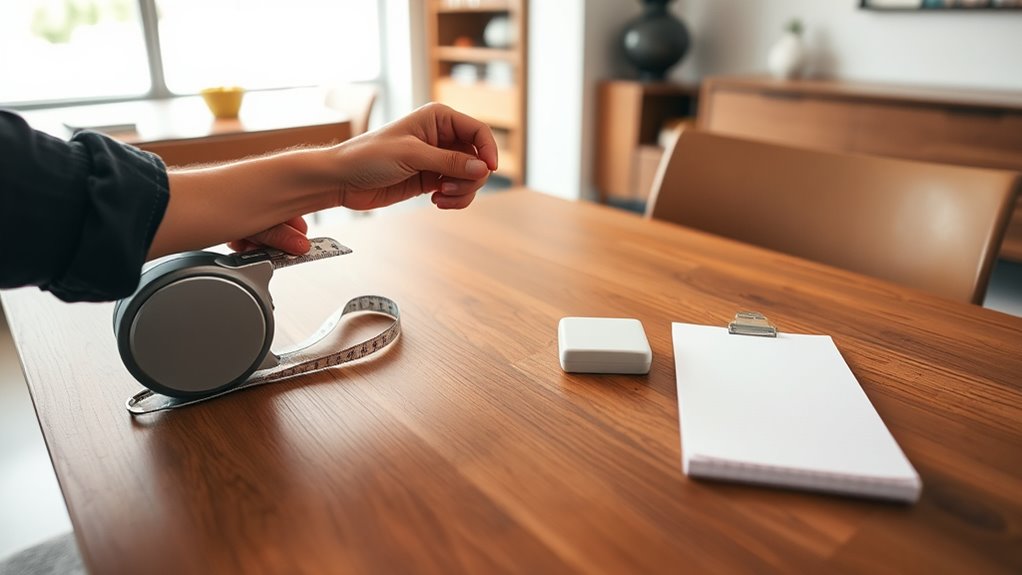
Have you ever bought furniture only to find it doesn’t fit your space? It’s frustrating and often costly. To avoid this, you need to master the art of measuring furniture before you buy. The key is proper space planning combined with the right measurement tools. Taking accurate measurements is your first step toward creating a functional, well-proportioned room that meets your needs.
Start by evaluating the space where you want to place new furniture. Use a tape measure or a laser distance measurer—these measurement tools are straightforward and highly accurate. Measure the length, width, and height of the area, including any obstructions like doorways, windows, or built-in features that could interfere with furniture placement. Don’t forget to take into account clearance space around the furniture for movement and accessibility. A good rule of thumb is to leave at least 18-24 inches of space for walking paths, but this can vary depending on your room’s size and furniture type.
Once you have your room measurements, it’s time to analyze the furniture dimensions. Always check the product specifications before purchasing. Most retailers list the exact measurements, but don’t assume they’ll fit without double-checking. Use your measurement tools to verify these dimensions against your space plan. For example, if a sofa is listed as 84 inches long, ensure your wall or corner can accommodate that length comfortably, leaving room for other furniture or decor. Also, pay attention to the height of the furniture, especially if you’re placing it near windows or shelves, to avoid obstructing views or access.
A vital part of space planning involves visualizing how the furniture will fit together. Use painter’s tape or masking tape to outline the dimensions of the new pieces directly on your floor. This simple trick helps you see how everything will look and fit without making costly mistakes. Measure multiple times to confirm the fit, especially if you’re shopping online. Remember, your measurement tools are your best allies in avoiding surprises. Double-check all dimensions, including depth, to ensure the furniture won’t stick out awkwardly or block pathways.
Finally, consider the scale and proportion of furniture relative to your room size. Proper space planning isn’t just about fitting pieces in; it’s about creating harmony and functionality. By carefully measuring with reliable tools and planning your space thoughtfully, you’ll make smarter choices and enjoy your new furniture in a space that feels just right. Additionally, understanding the essential measurement techniques can greatly improve your accuracy and confidence during this process.
Frequently Asked Questions
What Tools Are Best for Measuring Furniture?
You should use a measuring tape for quick, straightforward measurements of furniture dimensions. For more precise and long-distance measurements, a laser measure is ideal. Both tools are easy to handle and provide accurate results. The measuring tape is perfect for smaller pieces, while the laser measure works well for larger furniture or hard-to-reach spots. Keep these tools handy to guarantee your furniture fits perfectly in your space.
How Do I Measure Irregularly Shaped Furniture?
Measuring irregularly shaped furniture might seem like a puzzle, but it’s simpler than you think. Use a flexible tape measure to trace the outline, capturing every bump and curve. For complex pieces, break them into manageable sections, measure each, and then add up the dimensions. Remember, these furniture dimension tips turn chaos into clarity—making sure your unique piece fits perfectly in your space, no matter its shape.
Should I Consider Space for Movement Around Furniture?
Yes, you should consider space for movement around furniture to guarantee effective space planning and flow optimization. When arranging your furniture, leave enough room for easy navigation and daily activities. Measure carefully to avoid overcrowding, and think about how people will move through the space. Proper spacing makes your room more functional and comfortable, creating a seamless flow that enhances the overall aesthetic and usability of your space.
How Do I Account for Furniture Protrusions or Handles?
Handle protrusions and door clearance are essential when measuring furniture. You should add the length of any protruding handles to your measurements to guarantee they won’t hit walls or other furniture. For door clearance, consider how much space doors need to fully open without obstruction. Always include extra space for handle protrusions and door swings, so your furniture fits comfortably and doesn’t block pathways or access points in your space.
What Are Common Mistakes to Avoid When Measuring Furniture?
When doing a DIY measurement, avoid rushing or assuming your initial estimates are accurate. Always double-check your measurements, especially for width, height, and depth, to prevent costly mistakes. Don’t rely solely on your judgment; consider a professional assessment if you’re unsure. Common mistakes include not accounting for protrusions or handles and forgetting to measure in multiple spots for irregular furniture, which can lead to incorrect sizing and fitting issues.
Conclusion
Knowing how to measure furniture before buying can save you from costly mistakes and guarantee everything fits perfectly. Did you know that over 60% of furniture returns are due to improper sizing? By taking accurate measurements, you can avoid this common problem and make confident, informed decisions. So, grab your tape measure, double-check those dimensions, and shop smarter—your ideal furniture is just a few measurements away!