The best EV battery testers in this roundup are chiefly tools for testing 12V and other low-voltage batteries—not the high-voltage traction packs that power an EV. My best overall pick is the TOPDON BT600 for its broad 12V/24V support, large screen, and built-in printer; the TOPDON BT300P is a strong alternative for printed test reports, while the ANCEL BM200 suits drivers who want ongoing Bluetooth monitoring. The main tradeoff is between quick handheld checks, recorded reports, and ongoing monitoring, with battery voltage and chemistry compatibility shaping which readings are useful. No model here should be treated as a substitute for EV-specific high-voltage pack diagnostics. Read on for the full breakdown and guidance on choosing the right tester for your battery.

Get business pricing on garage and car supplies
- Business-only prices and quantity discounts
- Tax-exempt purchasing
- Multiple users, one account, clear invoices
Complete the kit


Key Takeaways
- The BT600 leads for broad low-voltage shop use: its 12V/24V support, 3.5-inch display, and built-in printer make it better suited to documenting tests than simpler handheld options.
- Printer-equipped models serve a different purpose than basic testers: the BT300P and FOXWELL BT780 prioritize hard-copy results, while the BT200 and BT100 focus on more direct checks.
- Monitoring is not the same as a diagnostic session: the ANCEL BM200 and KONNWEI BK400 offer Bluetooth monitoring, which can help track voltage over time but does not replace a proper battery test.
- Voltage range alone does not prove EV traction-pack compatibility: products listing 6V–48V or 12V/24V are aimed at low-voltage battery systems, not high-voltage propulsion batteries.
- The right pick depends on the test workflow: choose an analyzer for repeated service checks, a compact tester for occasional troubleshooting, or a monitor when observing battery voltage between visits matters most.
| BT90 PRO Battery Tester, 6V/12V/24V, 30–3800 CCA, 2–360Ah |  | Best Overall for Broad Compatibility | Supported voltage: 6V, 12V, and 24V | CCA range: 30–3800 CCA | Battery capacity range: 2–360Ah | VIEW LATEST PRICE | See Our Full Breakdown |
| TOPDON BT600 12V/24V Automotive Battery Tester with 3.5-Inch Screen and Built-In Printer |  | Best for Printed Shop Records | Battery voltage: 12V and 24V | CCA range: 100–2000A | Battery types: Regular flooded, AGM flat, AGM spiral, GEL, and EFB | VIEW LATEST PRICE | See Our Full Breakdown |
| ANCEL BA101 12V Car Battery Tester and Charging System Analyzer |  | Best for Straightforward 12V Checks | Battery voltage: 12V | CCA range: 100–2000 CCA | Battery capacity limitation: Over 30Ah | VIEW LATEST PRICE | See Our Full Breakdown |
| TOPDON BT300P 12V/24V Automotive Battery Tester with Built-In Printer | 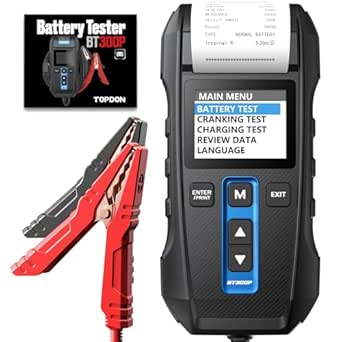 | Best Compact Printer Option | Battery compatibility: 12V lead-acid batteries | CCA range: 100–2000 CCA | Battery types: Flooded, AGM flat plate, AGM spiral, GEL, and EFB | VIEW LATEST PRICE | See Our Full Breakdown |
| AILITRON VT8 Battery Capacity Tester and DC Voltage Meter | 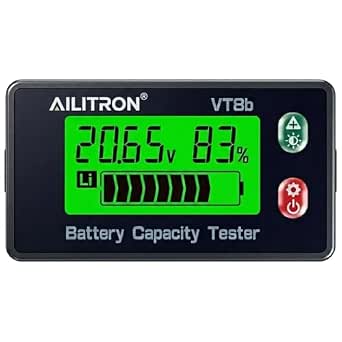 | Best for Installed Battery Monitoring | Operating voltage: 12–108V | Compatible batteries: Lead-acid, ternary lithium (2–28S), and LiFePO4 (3–32S) | Measurements: Battery capacity, battery percentage, and voltage | VIEW LATEST PRICE | See Our Full Breakdown |
| ANCEL BM200 Bluetooth 12V Automotive Battery Monitor |  | Best for Long-Term 12V Monitoring | Battery voltage: 12V | Compatible battery types: Flooded, AGM, EFB, GEL, and LiFePO4 | Power draw: 1.5mA | VIEW LATEST PRICE | See Our Full Breakdown |
| TOPDON BT200 12V/24V Car Battery Tester, 100–2000 CCA | 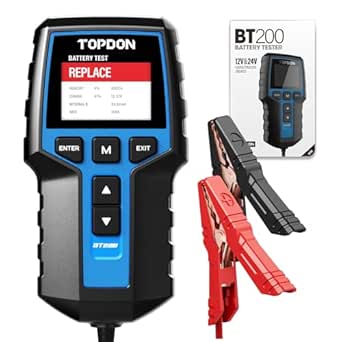 | Best for Clear 12V/24V Diagnostics | Battery voltage: 12V and 24V | Test range: 100–2000 CCA | Compatible battery types: Flooded, AGM, GEL, and deep-cycle | VIEW LATEST PRICE | See Our Full Breakdown |
| KONNWEI BK400 Bluetooth Battery Monitor and Tester, 6V–48V |  | Best for Broad-Voltage Bluetooth Monitoring | Supported battery systems: 6V, 12V, 24V, and 48V | Supported battery types: Flooded, AGM Flat, AGM Spiral, EFB, VRLA, GEL, and lithium | Connectivity: Bluetooth 5.2 | VIEW LATEST PRICE | See Our Full Breakdown |
| TOPDON BT100 12V Car Battery Tester |  | Best Compact Handheld Pick | Minimum operating voltage: 12V | Compatible batteries: 100–2000 CCA; flooded, AGM, EFB, and GEL | Diagnostic tests: Battery, cranking, and charging system | VIEW LATEST PRICE | See Our Full Breakdown |
| FOXWELL BT780 12V/24V Battery Tester and Alternator Analyzer with Printer |  | Best for Printed Diagnostic Reports | Supported systems: 12V and 24V | Battery capacity range: 100–2000 CCA | Supported battery types: Flooded, AGM flat plate, AGM spiral, EFB, GEL, and compatible start-stop batteries | VIEW LATEST PRICE | See Our Full Breakdown |
| FOXWELL BT705 12V/24V Car Battery, Alternator, and Load Tester |  | Best for Guided Lead-Acid Testing | System voltage: 12V and 24V | CCA range: 100–2000 CCA | Compatible battery types: Flooded, AGM, GEL, and EFB lead-acid | VIEW LATEST PRICE | See Our Full Breakdown |
| EV battery tester | Display |
|---|---|
| BT90 PRO Battery Tester | — |
| TOPDON BT600 12V/24V Automotiv | 3.5-inch color screen |
| ANCEL BA101 12V Car Battery Te | Black-and-white screen with adjustable contrast and white backlight |
| TOPDON BT300P 12V/24V Automoti | 2.4-inch color screen |
| AILITRON VT8 Battery Capacity | LCD with capacity bar icons |
| ANCEL BM200 Bluetooth 12V Auto | — |
| TOPDON BT200 12V/24V Car Batte | 2.4-inch color LCD |
| KONNWEI BK400 Bluetooth Batter | — |
| TOPDON BT100 12V Car Battery T | — |
| FOXWELL BT780 12V/24V Battery | 3.2-inch LCD |
| FOXWELL BT705 12V/24V Car Batt | 2.8-inch LCD |
More Details on Our Top Picks
BT90 PRO Battery Tester, 6V/12V/24V, 30–3800 CCA, 2–360Ah
The BT90 PRO is the most versatile choice here for buyers who need more than a quick 12V car-battery check. It covers 6V, 12V, and 24V systems, a wide capacity and CCA range, and flooded, AGM, EFB, GEL, and lithium batteries. Its workflow also checks cranking, charging, and ripple, giving a mechanic more context than a voltage or capacity reading alone. Compared with the ANCEL BA101, it suits more battery chemistries and system voltages; compared with the TOPDON BT600, it adds lithium support and QR-linked cloud history rather than a built-in printer. That breadth has tradeoffs: it needs a corded electrical connection, and sharing reports depends on the cloud service. I’d choose it for varied shop work, not for someone who wants a simple, self-contained handheld check.
Pros:- Tests 6V, 12V, and 24V batteries across a broad CCA and capacity range.
- Supports flooded, AGM, EFB, GEL, and lithium chemistries.
- Checks battery condition, cranking, charging, and ripple in one workflow.
- QR-linked reports save test history and notes for comparisons.
Cons:- Requires a corded electrical connection rather than operating as a fully self-contained battery-powered tester.
- Cloud report access depends on scanning a QR code and the report service.
Best for: Independent mechanics and technically confident owners who diagnose different vehicle types, battery chemistries, and 6V, 12V, or 24V systems.
Not ideal for: Drivers who want a fully cordless tester or paper printouts; this model needs a corded connection and uses QR-linked cloud reports.
- Supported voltage:6V, 12V, and 24V
- CCA range:30–3800 CCA
- Battery capacity range:2–360Ah
- Battery chemistries:Flooded, AGM, EFB, GEL, and lithium
- Test functions:Battery health and charge, voltage, resistance, cranking, charging, and ripple
- Vehicle modes:Car, motorcycle, and truck
- Reporting:QR-linked cloud reports with saved history and notes
- Power source:Corded electric
Our verdict“Choose the BT90 PRO if broad battery compatibility and system diagnostics matter more than cordless operation or printed reports.”
TOPDON BT600 12V/24V Automotive Battery Tester with 3.5-Inch Screen and Built-In Printer
The TOPDON BT600 is the clearest fit for workshops that want a physical record of a battery check without relying on a phone or cloud report. It tests 12V and 24V lead-acid batteries, checks cranking and charging, and can print or replay test data from its 3.5-inch color screen. That makes it more convenient for documenting service than the BT90 PRO, which emphasizes QR-linked cloud reports and broader chemistry support. The BT600’s boundary is its lead-acid focus: unlike the BT90 PRO, it does not list lithium compatibility, and its 100–2000A CCA range is narrower. Printed records also mean keeping thermal-sensitive paper on hand. Buyers who update its software need access to a Windows computer, a limitation that matters less for routine testing than for maintaining the device.
Pros:- Tests battery, cranking, and charging systems on 12V and 24V lead-acid setups.
- Built-in thermal printer creates physical records without a separate printer.
- Test-data playback helps revisit earlier results.
- Large 3.5-inch color screen supports on-device reading.
Cons:- Does not list lithium battery compatibility.
- Printing requires thermal-sensitive paper.
- Software updates require a Windows computer.
Best for: Automotive technicians and service writers who test 12V or 24V lead-acid batteries and want printed results for customer records.
Not ideal for: Owners testing lithium batteries or seeking the broadest voltage and CCA coverage; the BT90 PRO supports more chemistries and a wider range.
- Battery voltage:12V and 24V
- CCA range:100–2000A
- Battery types:Regular flooded, AGM flat, AGM spiral, GEL, and EFB
- Tests:Battery, cranking, and charging
- Display:3.5-inch color screen
- Printer:Built-in thermal printer
- Compatible vehicles:Cars, motorcycles, pickup trucks, heavy-duty trucks, and boats
- Software compatibility:Windows
Our verdict“Pick the BT600 when on-site printed records matter more than lithium support or the BT90 PRO’s wider diagnostic range.”
ANCEL BA101 12V Car Battery Tester and Charging System Analyzer
The ANCEL BA101 is a practical pick for owners who need battery, cranking, and charging checks on conventional 12V vehicles without paying for broader system coverage they won’t use. It handles flooded, AGM, GEL, and EFB batteries above 30Ah, and its backlit, adjustable-contrast display is useful when checking a battery in a dim garage. The tester also includes reverse-polarity, short-circuit, overcurrent, and overvoltage protection. Compared with the BT90 PRO, it gives up 6V and 24V support, lithium compatibility, and cloud reporting; compared with the TOPDON BT600, it lacks a built-in printer. Those limits make it a narrower choice, but also keep its job clear: routine testing of supported 12V batteries. Skip it for small motorcycle batteries under 30Ah or mixed-chemistry work.
Pros:- Checks battery health, charge, cranking, and charging systems.
- Supports common flooded, AGM, GEL, and EFB 12V batteries.
- Backlit screen has adjustable contrast for dim work areas.
- Includes reverse-polarity, short-circuit, overcurrent, and overvoltage protection.
Cons:- Works only with 12V batteries and does not support lithium.
- Battery capacity must be over 30Ah, ruling out many small motorcycle batteries.
- Does not provide the built-in printing of the TOPDON BT600 or BT300P.
Best for: DIY car owners and small repair shops that need battery and charging-system checks for common 12V flooded, AGM, GEL, or EFB batteries over 30Ah.
Not ideal for: Motorcycle owners with batteries below 30Ah, lithium-battery users, or technicians who need 6V and 24V coverage.
- Battery voltage:12V
- CCA range:100–2000 CCA
- Battery capacity limitation:Over 30Ah
- Compatible battery types:Flooded, AGM, GEL, and EFB
- Supported standards:JIS, EN, DIN, SAE, BCI, GB, CA, MCA, and IEC
- Test readings:Battery health, charge, voltage, current, and CCA
- Display:Black-and-white screen with adjustable contrast and white backlight
- Protection:Reverse polarity, short circuit, overcurrent, and overvoltage
Our verdict“Choose the BA101 for routine supported 12V lead-acid testing, but move to the BT90 PRO for wider chemistry and voltage coverage.”
TOPDON BT300P 12V/24V Automotive Battery Tester with Built-In Printer
The TOPDON BT300P pairs a built-in thermal printer with checks for battery condition, cranking, and charging, making it a straightforward way to leave customers with a paper result. It tests 12V lead-acid batteries while covering cranking and charging systems in 12V and 24V vehicles, a useful distinction for technicians working across vehicle classes. Compared with the larger-screen BT600, the BT300P has a smaller 2.4-inch display and a more limited listed CCA range; its appeal is the integrated print function and compact 16-ounce weight. It also has reverse-polarity protection, insulated components, and spark-free copper clamps. This is not the flexible option for mixed chemistries: lithium support is not specified, and printing still depends on thermal paper. I’d pick it for paper-based lead-acid workflows, not broad battery diagnostics.
Pros:- Prints test results using a built-in thermal printer.
- Checks battery, cranking, and charging systems.
- Supports cranking and charging checks on 12V and 24V vehicles.
- Includes reverse-polarity protection, insulated wiring, and spark-free copper clamps.
Cons:- Battery compatibility is listed for 12V lead-acid batteries only; other chemistries are not specified.
- The 2.4-inch display is smaller than the BT600’s 3.5-inch screen.
- Printing requires thermal paper.
Best for: Mobile technicians and small repair shops that test 12V lead-acid batteries and want a built-in printer in a relatively light unit.
Not ideal for: Buyers needing lithium compatibility, a larger display, or the wider battery coverage and CCA range listed for the BT90 PRO.
- Battery compatibility:12V lead-acid batteries
- CCA range:100–2000 CCA
- Battery types:Flooded, AGM flat plate, AGM spiral, GEL, and EFB
- System tests:Battery, cranking, and charging
- Supported vehicle systems:12V and 24V
- Display:2.4-inch color screen
- Printer:Built-in thermal printer
- Weight:16 ounces
Our verdict“Choose the BT300P if you need portable, paper-based reports for supported lead-acid batteries and can work with its smaller screen.”
AILITRON VT8 Battery Capacity Tester and DC Voltage Meter
The AILITRON VT8 serves a different purpose from the handheld analyzers here: it is a panel-mounted monitor for tracking voltage and estimated remaining capacity, not a tester for cranking or charging-system diagnosis. Its support for lead-acid, ternary lithium, and LiFePO4 systems across a stated 12–108V operating range makes it a fit for installed battery banks in vehicles, boats, or off-grid setups. Configurable voltage and low-capacity alarms can alert owners to discharge before it becomes a surprise. Compared with the BT90 PRO, it stays installed and monitors battery status, but does not offer its resistance, cranking, ripple, or saved-test reporting. The compact flush-mount format also requires cutting a panel opening, and the listed maximum is 108V even though the product description mentions up to 120V. Check system voltage against the specification before buying.
Pros:- Monitors voltage and battery percentage across lead-acid, ternary lithium, and LiFePO4 systems.
- Configurable voltage and low-capacity alarms help flag battery conditions.
- Flush-mount design and included two-wire cable suit permanent installation.
- Adjustable brightness and sleep modes can reduce display use and power draw.
Cons:- Monitors voltage and estimated capacity but does not test cranking or charging systems.
- Flush mounting requires a panel cutout.
- The listed operating maximum is 108V, while the description also cites compatibility up to 120V.
Best for: RV, marine, and off-grid system owners who want a permanently installed readout for battery voltage and estimated capacity across supported chemistries.
Not ideal for: Automotive technicians or drivers seeking a diagnostic battery tester with cranking, alternator, or charging-system tests; the BT90 PRO is built for those checks.
- Operating voltage:12–108V
- Compatible batteries:Lead-acid, ternary lithium (2–28S), and LiFePO4 (3–32S)
- Measurements:Battery capacity, battery percentage, and voltage
- Voltage acquisition accuracy:1.0%
- Surge protection:200V
- Display:LCD with capacity bar icons
- Dimensions:2.42 × 0.55 × 1.31 inches
- Maximum operating temperature:60°C
Our verdict“Pick the VT8 for continuous panel monitoring of a compatible battery bank, not for the diagnostic checks offered by the BT90 PRO or TOPDON testers.”
ANCEL BM200 Bluetooth 12V Automotive Battery Monitor
The ANCEL BM200 is a monitor rather than a standalone battery-health tester: it tracks voltage, charge level, and temperature, then records readings every two minutes for up to 72 days. That history can help owners spot gradual changes between service visits, while its 1.5mA draw suits a battery-connected installation. Compared with the handheld TOPDON BT100, the BM200 adds ongoing app-based tracking and can manage up to four vehicles, but it does not provide the same direct battery, cranking, and charging test workflow. It is limited to 12V auxiliary batteries; it is not for an EV’s high-voltage traction pack or a substitute for professional CCA or internal-resistance testing. Trip features also depend on a connected phone and location services.
Pros:- Tracks voltage, charge level, and temperature continuously.
- Records data every two minutes and stores readings locally for up to 72 days.
- Low 1.5mA power draw, with IP67 housing and reverse-polarity and short-circuit protection.
- One app can manage up to four monitors.
Cons:- Designed for 12V batteries, not high-voltage EV traction batteries.
- Does not replace professional CCA or internal-resistance testing.
- Trip analysis and location features require Bluetooth and phone location services.
Best for: EV owners who want ongoing app-based tracking of a compatible 12V auxiliary battery across one or more vehicles.
Not ideal for: Anyone seeking a tester for a high-voltage EV traction battery or a handheld diagnostic tool with professional CCA or internal-resistance testing.
- Battery voltage:12V
- Compatible battery types:Flooded, AGM, EFB, GEL, and LiFePO4
- Power draw:1.5mA
- Data recording interval:Every 2 minutes
- Local data storage:Up to 72 days
- Vehicle pairing:Up to 4 monitors
- App compatibility:iOS and Android
- Protection:Reverse-polarity and short-circuit protection
Our verdict“Choose the BM200 for extended tracking of a 12V auxiliary battery, not for diagnosing an EV’s traction pack or replacing a dedicated tester.”
TOPDON BT200 12V/24V Car Battery Tester, 100–2000 CCA
The TOPDON BT200 suits buyers who want a direct readout for battery, cranking, and charging-system checks across 12V and 24V systems. Its 2.4-inch color screen and Good/Replace prompts make results easier to interpret than a monitor that sends readings to a phone, such as the KONNWEI BK400. Conductance testing covers several lead-acid types, including deep-cycle batteries, and the tester supports a broad set of rating standards. That versatility comes with a defined boundary: the supported range is 100–2000 CCA, so batteries outside it fall beyond the listed coverage. The BT200 also recalls only the last test, rather than offering the longer app-based history of the BK400 or BM200.
Pros:- Tests 12V and 24V systems and several battery types, including deep-cycle.
- Combines battery, cranking, and charging-system diagnostics.
- Color LCD and Good/Replace prompts present results directly on the unit.
- Copper clamps, rugged housing, and last-test memory support practical garage use.
Cons:- Supports a limited 100–2000 CCA range.
- Stores only the last test rather than providing an extended monitoring history.
Best for: DIY owners and small-fleet operators who need on-screen battery, cranking, and charging checks for compatible 12V or 24V lead-acid systems.
Not ideal for: Buyers who want ongoing phone-based monitoring, or who need testing outside the stated 100–2000 CCA range.
- Battery voltage:12V and 24V
- Test range:100–2000 CCA
- Compatible battery types:Flooded, AGM, GEL, and deep-cycle
- Diagnostic tests:Battery, cranking, and charging system
- Technology:Conductance
- Display:2.4-inch color LCD
- Operating temperature:-4°F to 140°F (-20°C to 60°C)
- Supported standards:CCA, DIN, JIS, EN, IEC, GB, SAE, MCA, BCI, and CA
Our verdict“Pick the BT200 for straightforward screen-based diagnostics across compatible 12V and 24V batteries, but check the CCA range before buying.”
KONNWEI BK400 Bluetooth Battery Monitor and Tester, 6V–48V
The KONNWEI BK400 is the broadest-voltage monitor in this group, supporting 6V, 12V, 24V, and 48V systems alongside several lead-acid types and lithium batteries. Its app shows live voltage, waveform, and temperature, with cranking and charging tests available as well. This makes it more adaptable across different auxiliary-battery setups than the 12V-only ANCEL BM200, and its app can manage up to six monitors rather than four. The tradeoff is dependence on a smartphone and Bluetooth range: it is built for nearby, ongoing monitoring, not an independent handheld readout. Although the voltage coverage reaches 48V, the product is not a tester for high-voltage EV traction packs. The stated specifications also do not define a longer-range wireless connection.
Pros:- Supports 6V, 12V, 24V, and 48V battery systems.
- Compatible with multiple lead-acid types and lithium batteries.
- App displays live voltage, waveform, and temperature, with cranking and charging tests.
- One app can manage up to six monitors, with low-power sleep mode and circuit protection.
Cons:- Live readings and alerts depend on a compatible smartphone and Bluetooth connection within range.
- The listed information does not specify monitoring beyond Bluetooth range.
- Its 48V support does not make it suitable for high-voltage EV traction packs.
Best for: Owners or technicians managing several compatible 6V–48V auxiliary battery systems who want live app readings and basic cranking and charging tests.
Not ideal for: Buyers who need a standalone screen, monitoring beyond Bluetooth range, or a tool for high-voltage EV traction batteries.
- Supported battery systems:6V, 12V, 24V, and 48V
- Supported battery types:Flooded, AGM Flat, AGM Spiral, EFB, VRLA, GEL, and lithium
- Connectivity:Bluetooth 5.2
- App compatibility:iOS and Android
- Maximum monitors per app:6
- Sleep-mode power consumption:Approximately 1.5mA
- Operating voltage range:3V DC minimum to 60V DC maximum
- Dimensions:2.16 × 1.34 × 0.63 inches
Our verdict“Choose the BK400 when flexible auxiliary-battery voltage support and multi-device app monitoring matter more than standalone operation.”
TOPDON BT100 12V Car Battery Tester
The TOPDON BT100 is a compact, direct-connect tester for common 12V lead-acid batteries. It checks battery health, charge, and voltage, then adds cranking and charging-system tests—useful when a slow start prompts a quick check of both the battery and vehicle charging. At 9 ounces and 5.3 inches long, it is easier to keep in a glove box than the larger TOPDON BT200, which adds 24V support, a color screen, and deep-cycle compatibility. The BT100’s narrower scope is the tradeoff: it handles 100–2000 CCA and 12V only, and it must be connected to a battery to power on. Unlike the ANCEL BM200, it does not provide ongoing monitoring or stored history.
Pros:- Combines battery-health, cranking, and charging-system checks.
- Supports flooded, AGM, EFB, and GEL batteries rated from 100–2000 CCA.
- Compact 9-ounce design fits easily in a vehicle storage compartment.
- Copper clamps include reverse-polarity prevention and spark protection.
Cons:- Limited to 12V batteries.
- Must be connected to a battery to power on.
- Does not provide ongoing monitoring or recorded history like the ANCEL BM200.
Best for: Drivers who want a compact glove-box tester for occasional checks of a compatible 12V car, motorcycle, truck, boat, or ATV battery.
Not ideal for: Owners of 24V systems, those seeking continuous app monitoring, or anyone needing a tester that runs independently of the battery being checked.
- Minimum operating voltage:12V
- Compatible batteries:100–2000 CCA; flooded, AGM, EFB, and GEL
- Diagnostic tests:Battery, cranking, and charging system
- Measurement type:Voltmeter
- Power source:Battery powered
- Weight:9 ounces
- Dimensions:5.3 × 3 × 1 inches
- Compatible vehicles:Cars, trucks, motorcycles, boats, ATVs, SUVs, and golf carts
Our verdict“Choose the BT100 for occasional, portable 12V checks; select the BT200 if you also need 24V and deep-cycle coverage.”
FOXWELL BT780 12V/24V Battery Tester and Alternator Analyzer with Printer
The FOXWELL BT780 is the report-focused choice here: it measures CCA, voltage, internal resistance, state of charge, and state of health, then prints results on built-in thermal paper. That suits a repair bay or fleet operator who wants a paper record without app pairing. Compared with the TOPDON BT200, the BT780 adds internal-resistance readings and printed reports, while its internal battery lets the operator power and navigate the unit before connecting it to the battery under test. It supports 12V and 24V systems, but only within a 100–2000 CCA range, and deep-cycle batteries are excluded. The printer and extra reporting capability also make this a more specialized pick than the compact BT100; buyers who only need occasional basic checks may not need those features.
Pros:- Reports CCA, voltage, internal resistance, state of charge, and state of health.
- Built-in thermal printer produces paper reports without an app or subscription.
- Internal battery supports powering and navigating the tester before connection.
- Long cable, heavy-duty clamps, hard case, and included thermal paper support field work.
Cons:- Does not support deep-cycle batteries.
- Compatibility is limited by battery type, rating, and electrical system.
- The 100–2000 CCA range excludes batteries outside that stated span.
Best for: Technicians and fleet operators who need printed records and detailed readings for compatible 12V or 24V starting batteries.
Not ideal for: Owners testing deep-cycle batteries, batteries outside the 100–2000 CCA range, or anyone who only needs a small, basic tester.
- Supported systems:12V and 24V
- Battery capacity range:100–2000 CCA
- Supported battery types:Flooded, AGM flat plate, AGM spiral, EFB, GEL, and compatible start-stop batteries
- Measurements:CCA, voltage, internal resistance, state of charge, and state of health
- Display:3.2-inch LCD
- Test cable length:6.5 feet
- Minimum operating voltage:5V
- Included accessories:Hard carrying case and 3 rolls of thermal paper
Our verdict“Pick the BT780 for printed, detailed diagnostics on supported starting batteries, but skip it if your primary need is deep-cycle testing.”
FOXWELL BT705 12V/24V Car Battery, Alternator, and Load Tester
The FOXWELL BT705 suits owners and shops that want one handheld tool for checking battery health, cranking performance, and charging output on 12V and 24V lead-acid systems. Its guided prompts and clear GOOD, RECHARGE, or REPLACE summaries make results easier to act on than a basic voltage reading. The 5.9-foot cable also lets one person run a test from the driver’s seat, a practical advantage when checking a vehicle alone.
Compared with the TOPDON BT600, the BT705 has a smaller screen and no built-in printer, so it is less suited to producing shop paperwork. Its strength is simpler, guided diagnosis, backed by a hard case and broad lead-acid compatibility. The tradeoff is firm: it does not test lithium batteries, and it requires a 12V or 24V vehicle system.
Pros:- Checks battery health, cranking performance, and charging output
- Guided prompts and GOOD, RECHARGE, or REPLACE result summaries simplify interpretation
- 5.9-foot cable supports one-person testing from the driver’s seat
- Hard carrying case helps protect and store the tester
Cons:- Works with flooded, AGM, GEL, and EFB lead-acid batteries only
- Limited to 12V and 24V vehicle systems
- No built-in printer for keeping or sharing paper test reports
Best for: DIY owners and independent mechanics who want guided battery, starting, and charging checks across 12V or 24V lead-acid vehicles.
Not ideal for: Owners of EVs with high-voltage traction batteries or 12V lithium batteries, and shops that need printed test reports.
- System voltage:12V and 24V
- CCA range:100–2000 CCA
- Compatible battery types:Flooded, AGM, GEL, and EFB lead-acid
- Measurement type:Multimeter
- Display:2.8-inch LCD
- Cable length:5.9 ft
- Weight:325 g
- Included accessory:Hard carrying case
Our verdict“Choose the BT705 for guided checks on 12V or 24V lead-acid vehicles, but skip it if you need lithium-battery support or printed reports.”
How We Picked
I compared these 11 products by the jobs their stated capabilities support: checking low-voltage battery condition, evaluating charging systems, monitoring voltage over time, and recording results. I gave more weight to useful fit—supported voltage, battery range or CCA coverage where listed, display clarity, printer or Bluetooth features, and whether the tool suits occasional ownership or repeated shop work—than to feature count alone. A broad range is only helpful when it matches the battery being tested, and a printer matters most when someone needs a take-away record.
The ranking favors tools with a clear role and a practical combination of coverage and usability, while keeping monitoring devices and basic testers in distinct lanes. The BT600 ranks first for its screen, printer, and 12V/24V coverage; the BT300P and BT780 follow for buyers who value printed reports. Compact and simpler options rank lower for broader diagnostic workflows, not because they are poor fits for basic checks. Since the listed models are low-voltage testers, none is ranked as a high-voltage EV traction-battery analyzer.
Factors to Consider When Choosing Best EV Battery Testers
Before choosing a tester, match the tool to the battery and the decision you need to make. EV owners can easily confuse a 12V accessory battery test with a diagnosis of the high-voltage traction pack; these are separate systems and require different equipment and procedures.
Separate the 12V Battery From the Traction Pack
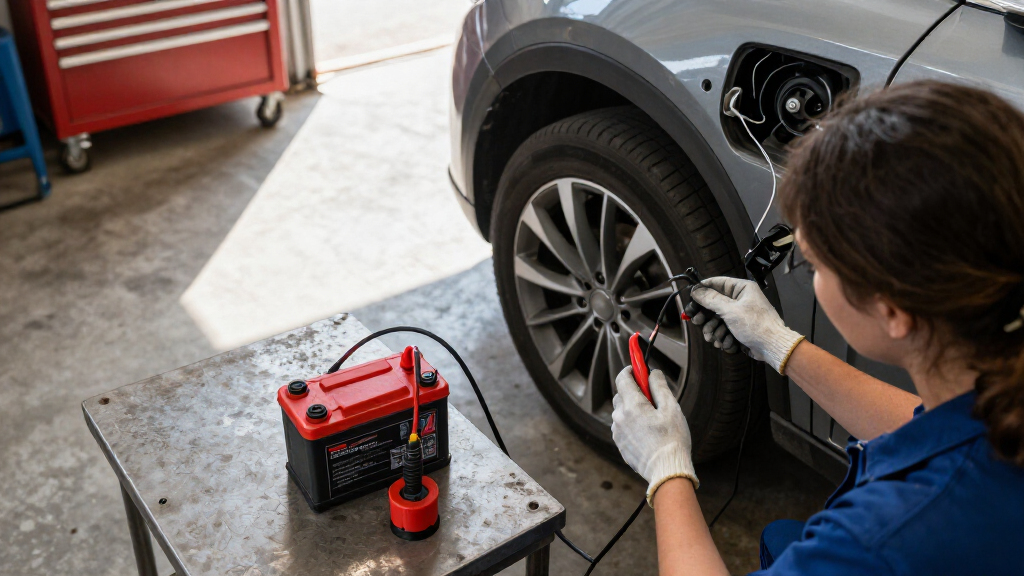
Most consumer battery testers in this roundup are designed for low-voltage batteries, which may supply accessories and vehicle control systems. They do not diagnose the high-voltage pack that stores driving energy. Check your vehicle manual or service information to identify the system and battery voltage before connecting any tool. Never probe high-voltage wiring or pack terminals with a tester intended for 12V or 24V batteries. A dashboard warning related to charging or starting can involve the low-voltage system, but that does not prove the traction battery is healthy. If you need pack-level state-of-health data, use a compatible EV diagnostic process through a qualified technician or approved equipment.
Match the Tester to Battery Chemistry and Ratings
Voltage compatibility is only one part of a correct test. Battery chemistry, rated capacity, and the testing method also affect whether a result is meaningful, so check the tester’s supported battery types and the battery label or vehicle specifications. CCA ratings are relevant to starting batteries, but they are not a universal measure of EV battery health. Entering an incorrect rating can make a reading misleading even if the clamps fit. For auxiliary batteries with less familiar chemistries, verify the tester’s instructions rather than assuming a lead-acid setting applies. When a tool does not clearly support your battery type, choose a suitable alternative or ask a service professional.
Choose Between a Snapshot, a Record, and Ongoing Monitoring
A handheld tester provides a test result at a particular moment, while a Bluetooth monitor can help show voltage trends between checks. A built-in printer adds a record that can be shared or stored, which may help a repair shop or fleet compare results over time. These functions answer different questions: a monitor can flag a changing pattern, but it may not perform the same analysis as a dedicated tester. Decide whether you need a quick home check, documentation for service, or visibility while the vehicle is parked. Avoid paying for a printer if you will never use paper reports, and do not rely on a monitor alone to diagnose a fault.
Treat Charging-System Tests as One Part of Diagnosis
Some analyzers also check the vehicle’s charging system, which can help distinguish a weak battery from a charging issue. That feature does not guarantee the tool can evaluate every EV’s charging architecture or diagnose its onboard charger. Follow the model’s instructions for supported vehicles and test conditions, including whether the vehicle should be on or off. A result can also be affected by a recently charged battery, temperature, or electrical loads. If a reading conflicts with vehicle warnings or symptoms, repeat the check under the specified conditions and seek vehicle-specific diagnostics rather than replacing parts based on one number.
Balance Convenience Against Range and Reporting Features
A compact, simple tester can be a sensible choice for occasional low-voltage checks, while a larger screen and printer may earn their space in a busy workshop. Broad voltage or CCA ranges are useful only when they cover batteries you actually service. Bluetooth adds convenience for checking readings on a phone, but it also depends on app support, pairing, and a compatible device. Consider where the tool will be used, whether you need to keep results, and how often multiple battery types appear in your work. The best fit is the least complicated tester that covers your battery and gives you the information you will act on.
Frequently Asked Questions
Can any of these testers check an EV’s high-voltage traction battery?
No product in this list is presented as a high-voltage EV traction-pack analyzer. The listed voltage ranges and functions point to low-voltage batteries, such as 12V or 24V systems. Traction-pack testing requires equipment and procedures designed for that vehicle’s high-voltage system. Do not connect a low-voltage tester to traction-battery terminals or cabling. For pack health data, consult the vehicle’s service information or a qualified EV technician.
Should I choose a printer-equipped tester or a Bluetooth monitor?
Choose a printer-equipped tester if you need a report at the time of testing, such as for workshop records or customer handoffs. A Bluetooth monitor is more useful when you want to observe voltage over time through a phone. These are different workflows: printed results document a test, while monitoring can reveal changes between checks. Neither feature alone guarantees a more accurate diagnosis. Base the decision on whether you need a one-time record or ongoing visibility.
Is a 12V battery tester useful for an EV owner?
It can be useful for checking an EV’s low-voltage battery, which is separate from the traction pack and supports vehicle electronics. A weak low-voltage battery can cause starting or electrical symptoms even when the main pack has charge. Confirm the vehicle’s battery type and the tester’s compatibility before testing. A 12V tester cannot report the high-voltage pack’s state of health. If symptoms persist or warnings point to the propulsion system, arrange EV-specific diagnostics.
Do I need a tester that supports 24V if I only own a passenger EV?
Usually not, if you only plan to test a compatible 12V auxiliary battery. The BT600, BT300P, BT200, and several other models support 12V/24V use, but that wider range is more relevant to users who also service 24V equipment or vehicles. A wider range does not make a tester suitable for high-voltage EV packs. Check your vehicle manual and battery label first. Paying for extra voltage coverage makes sense only if you expect to use it.
Can a battery tester tell me whether I need to replace the battery?
A tester can provide evidence about battery condition, but its result should be read alongside the vehicle’s symptoms and the manufacturer’s guidance. An incorrect battery type or rating can distort the test, and a recent charge or unusual temperature may affect readings. If the result is borderline, repeat the test under the conditions specified by the tester rather than deciding from a single number. A charging-system fault can also make a healthy battery appear to be the problem. Seek professional diagnosis when results and vehicle behavior do not agree.
Conclusion
For a flexible low-voltage analyzer with a clear display and printed reports, I would start with the TOPDON BT600 as the best overall pick. The TOPDON BT200 is the best value for buyers who want straightforward 12V/24V testing without prioritizing a printer, while the TOPDON BT300P is the best premium-style choice here for users who want printed results in a more focused tester. Beginners seeking a simple 12V check can look to the TOPDON BT100 or ANCEL BA101; the ANCEL BM200 is a better fit for ongoing Bluetooth monitoring, and the KONNWEI BK400 stands out for a wider low-voltage range. If your goal is traction-pack health rather than an auxiliary-battery check, skip this category and seek an EV-specific diagnostic tool.