Among these car battery chargers, I’d choose the Schumacher Electric SC1281 as the best overall for its 6V/12V support and 100A engine-start function. The NOCO GENIUS5 is a more compact, straightforward pick for routine maintenance, while the Schumacher SC1445 suits buyers who need a wheeled unit and a higher-output starting feature. The main tradeoff is between portable, lower-current chargers for upkeep and larger, higher-current models that can recharge faster or help start an engine. Voltage compatibility, battery type, and the difference between charging and jump-starting matter as much as amperage. Read on for the full comparison and guidance on matching a charger to your vehicle and use.

Get business pricing on garage and car supplies
- Business-only prices and quantity discounts
- Tax-exempt purchasing
- Multiple users, one account, clear invoices
Complete the kit


Key Takeaways
- The Schumacher SC1281 is the most balanced choice in this group: it supports 6V and 12V batteries and adds a 100A engine-start function without moving to the lineup’s largest wheeled format.
- The NOCO GENIUS5 and GENIUS1 prioritize maintenance over speed. Their lower output makes them better suited to keeping batteries charged than quickly recovering a deeply discharged battery.
- Higher amperage and 24V support change the intended use. The PLXX, Yourheey, NEXPEAK, and E-FAST models target buyers with compatible 24V batteries or a need for more charging output, not every passenger-car owner.
- Engine-start features are not interchangeable with jump starters. The Schumacher SC1445, SC1281, and TowerTop include starting functions, but buyers should check each unit’s operating instructions and their battery condition rather than expect a charger to solve every no-start problem.
- Feature-heavy models require closer compatibility checks. Repair modes, winter modes, and pulse functions can add useful options, but the charger must match the battery’s voltage, chemistry, and condition.
| Schumacher Electric SC1281 6V/12V Battery Charger and Maintainer with 100A Engine Starter |  | Best for Emergency Starting | Model: SC1281 | Supported voltage: 6V and 12V | Charging rate: 2A–6A | VIEW LATEST PRICE | See Our Full Breakdown |
| CRAFTSMAN CMXCESM258 12A 6V/12V Battery Charger and Maintainer |  | Best for Clear, Straightforward Operation | Model: CMXCESM258 | Supported voltage: 6V and 12V | Maximum charging rate: 12A | VIEW LATEST PRICE | See Our Full Breakdown |
| PLXX 12V/24V 15A Smart Battery Charger and Maintainer |  | Best for 24V Lead-Acid Batteries | Model: BC-603 | Output voltage: 12V and 24V | Maximum current: 15A | VIEW LATEST PRICE | See Our Full Breakdown |
| Yourheey 12V/24V 20A Battery Charger and Maintainer with Auto Shutoff, Repair Mode, and Winter Mode |  | Best for Higher-Output Lead-Acid Charging | Output voltage: 12V and 24V | Maximum current: 20A | Input voltage: 110V | VIEW LATEST PRICE | See Our Full Breakdown |
| NOCO GENIUS5 5A 6V/12V Smart Battery Charger and Maintainer |  | Best Compact Pick for Mixed Battery Chemistries | Output voltage: 12V output; supports 6V and 12V batteries | Amperage: 5A | Battery compatibility: Lead-acid AGM, gel, flooded, deep-cycle, and LiFePO4 | VIEW LATEST PRICE | See Our Full Breakdown |
| E-FAST 25A Smart 12V/24V Battery Charger and Maintainer with Booster Mode |  | Best for High-Output 12V Charging | Output voltage: 12V and 24V | Maximum output current: 25A at 12V; 15A at 24V | Current settings: 2A, 8A, 20A, 25A, and Auto | VIEW LATEST PRICE | See Our Full Breakdown |
| NEXPEAK 15A 12V/24V Smart Battery Charger and Maintainer |  | Best for Readable Charging Feedback | Output voltage: 12V and 24V | Charging current: 15A at 12V; 8A at 24V | Trickle charging current: 1.75A | VIEW LATEST PRICE | See Our Full Breakdown |
| Schumacher Electric SC1445 6V/12V Wheeled Battery Charger and 250A Engine Starter |  | Best for Garage Starting Power | Battery voltage: 6V and 12V | Engine start: 250A | Boost charge: 25A and 50A | VIEW LATEST PRICE | See Our Full Breakdown |
| NOCO GENIUS1 1A 6V/12V Smart Battery Charger and Maintainer |  | Best Compact Maintainer for Small Batteries | Output voltage: 6V and 12V batteries | Charging current: 1A | Compatible batteries: Lead-acid (AGM, gel, flooded, deep-cycle) and LiFePO4 | VIEW LATEST PRICE | See Our Full Breakdown |
| TowerTop 12V Smart Car Battery Charger, 2A/10A/25A, with Engine Start and Battery Repair |  | Best for 12V Lead-Acid Versatility | Output voltage: 12V | Charging current settings: 2A, 10A, 25A, and Auto | Maximum charging current: 25A | VIEW LATEST PRICE | See Our Full Breakdown |
| 10-Amp 12V/24V Smart Battery Charger and Maintainer |  | Best for Broad Battery Compatibility | Supported systems: 12V and 24V | Charging current: 10A | Compatible batteries: AGM, GEL, SLA, flooded lead-acid, and 12.8V–14.6V LiFePO4 | VIEW LATEST PRICE | See Our Full Breakdown |
| Schumacher Electric SC1280 15A Fully Automatic 6V/12V Battery Charger and Maintainer |  | Best for Battery Testing and Restoration | Model: SC1280 | Voltage: 6V and 12V | 12V charge rate: 15A | VIEW LATEST PRICE | See Our Full Breakdown |
| E-FAST 12V/24V Smart Battery Charger, 20A/10A, with Trickle Charging and Pulse Repair |  | Best for Faster 12V Charging | Model: TK-1200 | Output voltage: 12V and 24V | Output current: 20A at 12V; 10A at 24V | VIEW LATEST PRICE | See Our Full Breakdown |
| car battery charger | Output voltage |
|---|---|
| Schumacher Electric SC1281 6V/ | — |
| CRAFTSMAN CMXCESM258 12A 6V/12 | — |
| PLXX 12V/24V 15A Smart Battery | 12V and 24V |
| Yourheey 12V/24V 20A Battery C | 12V and 24V |
| NOCO GENIUS5 5A 6V/12V Smart B | 12V output; supports 6V and 12V batteries |
| E-FAST 25A Smart 12V/24V Batte | 12V and 24V |
| NEXPEAK 15A 12V/24V Smart Batt | 12V and 24V |
| Schumacher Electric SC1445 6V/ | — |
| NOCO GENIUS1 1A 6V/12V Smart B | 6V and 12V batteries |
| TowerTop 12V Smart Car Battery | 12V |
| 10-Amp 12V/24V Smart Battery C | — |
| Schumacher Electric SC1280 15A | — |
| E-FAST 12V/24V Smart Battery C | 12V and 24V |
More Details on Our Top Picks
Schumacher Electric SC1281 6V/12V Battery Charger and Maintainer with 100A Engine Starter
The SC1281 is the most capable choice here when a charger also needs to help get a vehicle running: its 100A engine-start function goes beyond the charging and maintenance focus of the CRAFTSMAN CMXCESM258. It also handles 6V and 12V batteries and combines charging, testing, desulfation, and automatic maintenance, making it useful for owners managing more than one battery type or an infrequently driven vehicle. Support for 12V LiFePO4 adds flexibility the lead-acid-only PLXX does not offer. The tradeoff is that its regular charging rate tops out at 6A, so it is not the fastest option for routine charging. Buyers should also note that the listed package includes only the charger and manual, not extra connection accessories.
Pros:- 100A engine-start function adds emergency starting capability beyond the other listed multipurpose chargers
- Supports 6V and 12V batteries, including standard, AGM, deep-cycle, and 12V LiFePO4
- Combines charging, maintenance, testing, and desulfation
- Automatic shutoff and reverse-polarity protection help guard against common connection and charging mistakes
Cons:- Regular charging is limited to 2A–6A, slower than higher-output options such as the Yourheey
- The listed package includes only the charger and user manual
- Compatibility is limited to the listed battery voltages and types
Best for: Drivers who want one 6V/12V unit for battery maintenance, basic testing, and emergency engine starting, including owners of supported LiFePO4 batteries
Not ideal for: People prioritizing faster routine charging or a kit with extra included connection accessories; its regular charging rate is limited to 6A
- Model:SC1281
- Supported voltage:6V and 12V
- Charging rate:2A–6A
- Boost charge:12A–30A
- Engine start:100A
- Battery types:Standard, AGM, deep-cycle, and 12V LiFePO4
- Functions:Charging, maintaining, testing, restoring, and engine starting
- Safety features:Reverse-polarity protection and automatic shutoff
Our verdict“Choose the SC1281 if emergency starting and broad supported battery compatibility matter more than fast everyday charging.”
CRAFTSMAN CMXCESM258 12A 6V/12V Battery Charger and Maintainer
The CMXCESM258 is a balanced pick for owners who want charging, maintenance, testing, and restoration without the SC1281’s engine-start emphasis. Its digital display, push-button controls, and automatic voltage detection make operating status easier to follow, while reverse-connection protection can help prevent a simple clamp mistake from becoming a bigger problem. A 12A maximum charge rate also gives it more routine charging headroom than the NOCO GENIUS5’s 5A output. The CRAFTSMAN’s practical advantage is reach: six-foot power and battery cables provide 12 feet combined, which can make positioning easier near a parked vehicle. Its main limits are no engine-start function and lithium support restricted to 12V LiFePO4; the listed 6V and 12V maintenance rates also differ.
Pros:- Combines charging, maintenance, testing, and restoration in one unit
- Digital display, automatic voltage detection, and push-button controls support clear operation
- 12A maximum charging rate exceeds the NOCO GENIUS5’s 5A output
- Six-foot power cord and six-foot battery cables provide 12 feet of combined reach
Cons:- Does not provide an engine-start function like the Schumacher SC1281
- Lithium compatibility is limited to 12V LiFePO4
- Maintenance rates differ by voltage: 3A for 12V and 2A for 6V
Best for: Car and small-equipment owners who want a readable, multipurpose 6V/12V charger with useful cable reach and simple controls
Not ideal for: Drivers needing an emergency engine starter or support for lithium chemistries beyond 12V LiFePO4
- Model:CMXCESM258
- Supported voltage:6V and 12V
- Maximum charging rate:12A
- Charge/maintain rates:12V: 3A; 6V: 2A
- Battery types:Standard, AGM, deep-cycle, and 12V LiFePO4
- Functions:Charging, maintaining, testing, and restoring
- Combined cable reach:12 ft
- Warranty:2-year limited warranty
Our verdict“Pick the CRAFTSMAN for readable controls and flexible reach when you do not need an engine-start feature.”
PLXX 12V/24V 15A Smart Battery Charger and Maintainer
The PLXX stands apart from the 6V/12V-focused Schumacher SC1281 and CRAFTSMAN CMXCESM258 by supporting 12V and 24V lead-acid batteries, a useful fit for compatible larger vehicles and equipment. Its seven-stage charging, fast and trickle modes, and LCD status readout give owners more visibility into charging progress, while winter mode and repair/desulfation functions add flexibility across seasonal storage needs. The listed 4–300Ah capacity range is broad, but its 15A maximum current does not match the Yourheey’s 20A output when charging speed is the priority. This is also a heavier, larger unit at 12.8 lb and 11.4 inches long, so it is less appealing as a compact glove-box or travel charger. It supports lead-acid chemistries only, not lithium.
Pros:- Supports both 12V and 24V lead-acid batteries
- Seven-stage charging includes fast and slow trickle modes
- LCD displays voltage, current, and charging percentage
- Winter mode, repair, and desulfation functions add options for maintenance
Cons:- Does not list compatibility with lithium batteries
- At 12.8 lb and 11.4 inches long, it is less portable than compact chargers such as the NOCO GENIUS5
- 15A maximum output is lower than the Yourheey’s 20A
Best for: Owners of compatible 12V or 24V lead-acid vehicles and equipment who want a displayed charge status and seasonal charging modes
Not ideal for: Drivers with LiFePO4 batteries or shoppers who want a lightweight charger for frequent transport
- Model:BC-603
- Output voltage:12V and 24V
- Maximum current:15A
- Compatible battery capacity:4–300Ah
- Battery types:AGM, gel, wet/flooded, EFB, calcium, MF, and deep-cycle lead-acid
- Charging stages:7
- Display:LCD showing voltage, current, and charging percentage
- Dimensions and weight:11.4 × 5.8 × 8.5 in; 12.8 lb
- Warranty:3 years
Our verdict“Choose the PLXX when 24V lead-acid support and charge-status information matter more than portability or lithium compatibility.”
Yourheey 12V/24V 20A Battery Charger and Maintainer with Auto Shutoff, Repair Mode, and Winter Mode
With a 20A maximum output, the Yourheey is the strongest routine-charging pick among these five, ahead of the PLXX’s 15A and the CRAFTSMAN’s 12A. Automatic 12V/24V detection and shutoff reduce the need to manage voltage settings manually, while fast, slow, repair, and winter modes give owners several ways to adapt charging to the battery and conditions. Its stated winter operation down to -4°F (-20°C) makes it a more weather-focused option than the NOCO GENIUS5, whose standout feature is temperature-adjusted charging rather than a specified cold-weather operating limit. The key compromise is strict chemistry support: this charger is not compatible with lithium or LiFePO4 batteries. Despite its compact listed dimensions, the 12.5 lb weight may also make it awkward to carry regularly.
Pros:- 20A maximum output is higher than the PLXX and CRAFTSMAN chargers in this group
- Automatically detects 12V or 24V systems and shuts off when charging is complete
- Includes fast, slow, pulse repair, and winter modes
- Rated for winter operation down to -4°F (-20°C)
Cons:- Not compatible with lithium or LiFePO4 batteries
- Listed weight of 12.5 lb makes it less convenient to carry
- One charging port limits simultaneous use on multiple batteries
Best for: Owners of compatible 12V or 24V lead-acid batteries who want higher charging output and a dedicated cold-weather mode
Not ideal for: Drivers with lithium or LiFePO4 batteries, or buyers who need a lightweight charger to move between vehicles
- Output voltage:12V and 24V
- Maximum current:20A
- Input voltage:110V
- Battery types:AGM, GEL, flooded, EFB, calcium, MF, and deep-cycle lead-acid
- Charging modes:Fast, slow, repair, winter, energy-saving, and strong
- Automatic functions:12V/24V voltage detection and automatic shutoff
- Winter operating temperature:Down to -4°F (-20°C)
- Dimensions and weight:3.15 × 7.09 × 2.36 in; 12.5 lb
- Warranty:36 months
Our verdict“Choose the Yourheey for higher-output charging of compatible lead-acid batteries, especially when cold-weather operation matters.”
NOCO GENIUS5 5A 6V/12V Smart Battery Charger and Maintainer
The NOCO GENIUS5 suits buyers who value a compact charger that can maintain both lead-acid and LiFePO4 batteries. Unlike the CRAFTSMAN CMXCESM258, which reaches 12A but has more limited lithium compatibility, the GENIUS5 supports 6V and 12V LiFePO4 alongside common lead-acid types. Its temperature sensor adjusts charging to ambient conditions, and Force Mode can supply a charge to batteries down to zero volts—useful when a deeply discharged battery is not recognized by a standard charger. That flexibility comes with a clear speed tradeoff: its 5A output is lower than every other charger reviewed here, so larger batteries may take longer to charge. The clamps, eyelet terminals, and mounting hardware make it suitable for both occasional charging and a fixed maintenance setup.
Pros:- Supports 6V and 12V lead-acid and LiFePO4 batteries
- Temperature sensor adjusts charging to ambient conditions
- Force Mode supports charging batteries down to zero volts
- Includes clamps, eyelet terminals, mounting hardware, and a three-year warranty
Cons:- 5A maximum output is slower than the CRAFTSMAN, PLXX, and Yourheey
- Listed charging time is 8 hours, so it is not the best fit for quick recovery
- Does not support 24V batteries
Best for: Owners of smaller or moderate-capacity 6V/12V batteries who need one compact charger for lead-acid and LiFePO4 maintenance
Not ideal for: Drivers who need fast charging for larger batteries or 24V compatibility; the GENIUS5 is limited to 5A and 6V/12V systems
- Output voltage:12V output; supports 6V and 12V batteries
- Amperage:5A
- Battery compatibility:Lead-acid AGM, gel, flooded, deep-cycle, and LiFePO4
- Battery capacity:Up to 120Ah
- Charging range:From 1V; Force Mode supports batteries down to 0V
- Cables:72-inch AC cable and 80-inch DC cable
- Included accessories:Battery clamps, eyelet terminals, mounting bracket, and screws
- Warranty:3 years
Our verdict“Pick the GENIUS5 for compact 6V/12V maintenance and LiFePO4 support, not for rapid charging or 24V systems.”
E-FAST 25A Smart 12V/24V Battery Charger and Maintainer with Booster Mode
I’d choose the E-FAST 25A when charging speed and voltage flexibility matter more than a compact, simple setup. Its 25A maximum for 12V batteries is higher than the NEXPEAK 15A, which can shorten charging time for compatible larger batteries; it also supports 24V systems, though output there drops to 15A. Five current settings, automatic mode, and support for both lead-acid and LiFePO4 batteries give it a wider range of jobs than the 12V-only TowerTop. The 200-second booster is a useful extra for 12V batteries, not a substitute for a dedicated engine starter. Repair and temperature-responsive charging add flexibility, but the unit’s fan and multiple modes make it less straightforward than a basic maintainer, and the booster does not work on 24V batteries.
Pros:- Up to 25A output for 12V batteries, with five selectable current settings and automatic mode.
- Supports 12V and 24V lead-acid and LiFePO4 batteries.
- Includes an eight-stage charging process, repair mode, and temperature-responsive charging.
- Aluminum housing, cooling fan, and protections against reverse polarity, sparks, short circuits, and overcharging.
Cons:- 24V charging is limited to 15A, below its maximum 12V output.
- The 200-second booster mode works only with 12V batteries.
Best for: Owners of 12V vehicles and 24V equipment who want a high-current charger with support for lead-acid and LiFePO4 batteries.
Not ideal for: Buyers who need strong 24V output or a booster function for 24V systems, since output is capped at 15A and booster mode is 12V-only.
- Output voltage:12V and 24V
- Maximum output current:25A at 12V; 15A at 24V
- Current settings:2A, 8A, 20A, 25A, and Auto
- Compatible batteries:Lead-acid (AGM, GEL, SLA, flooded, EFB) and LiFePO4
- Charging process:Eight-stage charging; 16-hour repair mode
- Booster mode:200 seconds; 12V batteries only
- Dimensions and weight:8.5 × 4.9 × 7.5 in; 3.7 lb
- Housing and protections:Aluminum alloy; reverse-polarity, spark, short-circuit, and overcharging protection
Our verdict“Choose the E-FAST if you want fast 12V charging plus the flexibility to maintain compatible 24V and LiFePO4 batteries.”
NEXPEAK 15A 12V/24V Smart Battery Charger and Maintainer
The NEXPEAK 15A is the better fit when you want to see what the charger is doing, rather than relying on a basic status light. Its LCD reports charging status, voltage, current, temperature, and charge percentage, giving more feedback than the Schumacher SC1445’s analog ammeter while requiring less hands-on monitoring. It also handles 12V and 24V lead-acid and LiFePO4 batteries, although its 24V output is 8A and its 12V maximum is 15A—less than the 25A E-FAST. A nine-stage process, maintenance mode, and pulse repair broaden its usefulness for stored vehicles and equipment. The limitation is battery condition: it cannot charge below 0.3V or revive a completely dead battery, so its repair feature is for recoverable batteries, not a guaranteed rescue.
Pros:- LCD displays status, voltage, current, temperature, and charge percentage.
- Supports 12V and 24V lead-acid and LiFePO4 batteries.
- Nine-stage charging includes trickle or float maintenance.
- Built-in overcharge, reverse-polarity, and short-circuit protections.
Cons:- Cannot charge batteries below 0.3V or restore a completely dead battery.
- Maximum output is 15A at 12V and 8A at 24V, lower than the E-FAST 25A.
- Pulse repair cannot activate a battery with no usable charge.
Best for: Vehicle and equipment owners who maintain 12V or 24V batteries and want an LCD with detailed charging information.
Not ideal for: Drivers trying to recover a battery with no usable voltage, or buyers who need higher charging current than 15A at 12V.
- Output voltage:12V and 24V
- Charging current:15A at 12V; 8A at 24V
- Trickle charging current:1.75A
- Charging stages:Nine
- Compatible batteries:Lead-acid and LiFePO4; AGM, GEL, SLA, flooded, and deep-cycle
- Display:LCD showing charging status, voltage, current, temperature, and charge percentage
- Cord length and connector:8.9 ft; cable clamp/alligator clip
- Dimensions and weight:8.46 × 7.28 × 4.13 in; 2.4 lb
Our verdict“Pick the NEXPEAK if clear LCD feedback and routine 12V/24V maintenance matter more than high output or dead-battery recovery.”
Schumacher Electric SC1445 6V/12V Wheeled Battery Charger and 250A Engine Starter
Unlike the automatic maintainers in this roundup, the Schumacher SC1445 is a manual, wheeled garage unit built around charging control and engine-start assistance. Its 250A start function and 25A or 50A boost modes serve a different purpose from the TowerTop, whose 100A engine-start function accompanies automatic 12V charging. The SC1445 also works with 6V batteries, making it useful for owners of older vehicles or equipment, and its analog ammeter lets you observe charging activity. That hands-on approach comes with responsibility: the 135-minute timer needs user management, unlike automatic options such as the NEXPEAK. A steel case, wheels, and retractable handle suit a garage or driveway, but the unit is bulkier than the compact smart chargers, and its 10A charging mode is not the choice for quick routine charging.
Pros:- Combines 6V/12V charging with a 250A engine-start function.
- Offers 25A and 50A boost modes alongside a 10A charge mode.
- Analog ammeter and manual timer provide direct monitoring and control.
- Wheels and a retractable handle make the steel unit easier to move around a garage.
Cons:- Manual timer operation requires the user to manage the charging session.
- Heavy-duty steel construction and wheeled design make it bulkier to store than smart maintainers.
- Its 10A charging mode is slower than higher-output options such as the E-FAST 25A.
Best for: Garage owners who work on 6V or 12V vehicles and want a wheeled charger with substantial engine-start and boost capability.
Not ideal for: Drivers seeking unattended maintenance charging or a compact unit for occasional battery top-ups; its manual timer needs attention and the steel chassis takes storage space.
- Battery voltage:6V and 12V
- Engine start:250A
- Boost charge:25A and 50A
- Charge mode:10A
- Battery compatibility:Standard, AGM, gel, and deep-cycle
- Timer and display:Up to 135 minutes; analog ammeter
- Construction and mobility:Heavy-duty steel case; wheels and retractable handle
- Power cord:6 ft
Our verdict“Choose the SC1445 for garage-based 6V/12V work and starting assistance, not for compact or unattended maintenance charging.”
NOCO GENIUS1 1A 6V/12V Smart Battery Charger and Maintainer
The NOCO GENIUS1 prioritizes low-current maintenance and a small footprint over charging speed. At 1A, it suits keeping a small battery topped up or maintaining a vehicle during storage, but it is a very different tool from the E-FAST 25A or NEXPEAK 15A, which can replenish compatible batteries much faster. Its 6V and 12V compatibility, support for lead-acid and LiFePO4 chemistries, and included clamps and eyelet terminals make it adaptable to different connection setups. A temperature sensor adjusts charging to ambient conditions, while Force Mode can work with batteries down to zero volts. That recovery capability does not change the 1A limit: larger batteries can take a long time, and the stated compatibility is for batteries up to 30Ah. I’d choose it for small-battery care, not as a quick-charge solution.
Pros:- Supports 6V and 12V lead-acid batteries as well as LiFePO4.
- Temperature sensor adjusts charging for ambient conditions.
- Force Mode supports charging batteries down to zero volts.
- Includes battery clamps and integrated eyelet terminals for different connection needs.
Cons:- 1A output makes charging larger batteries slow compared with the E-FAST 25A and NEXPEAK 15A.
- Specified for batteries up to 30Ah, limiting its fit for larger automotive batteries.
Best for: Owners maintaining motorcycles, small vehicles, or other batteries up to 30Ah who want a compact 6V/12V charger with flexible terminals.
Not ideal for: Drivers needing fast charging for a larger car battery; 1A output makes that a slow job, and the stated battery capacity compatibility is up to 30Ah.
- Output voltage:6V and 12V batteries
- Charging current:1A
- Compatible batteries:Lead-acid (AGM, gel, flooded, deep-cycle) and LiFePO4
- Battery capacity compatibility:Up to 30Ah
- Minimum charging voltage:1V; Force Mode supports batteries down to 0V
- Temperature adjustment:Thermal sensor adjusts charging for ambient conditions
- Connections:Battery clamps and integrated eyelet terminals
- Cable length and warranty:110 in; 3 years
Our verdict“Pick the GENIUS1 for maintaining small 6V/12V batteries, but choose a higher-output charger for faster car-battery charging.”
TowerTop 12V Smart Car Battery Charger, 2A/10A/25A, with Engine Start and Battery Repair
The TowerTop is a strong match for households with several kinds of 12V lead-acid batteries, but it is not a universal chemistry charger. Its automatic mode and selectable 2A, 10A, and 25A settings cover both slower maintenance and higher-current charging, while the eight-stage process, winter mode, repair features, and LCD provide more operating options than the straightforward Schumacher SC1445. It also includes a 100A engine-start function, though the SC1445’s 250A rating gives it the stronger starting role. The broad support for AGM, GEL, EFB, flooded, calcium, and deep-cycle batteries is useful if your vehicles do not all use the same lead-acid format. The tradeoff is that TowerTop is 12V-only and does not support LiFePO4; its repair mode also cannot bring a completely drained battery back to life.
Pros:- Selectable 2A, 10A, and 25A charging, plus automatic mode.
- Supports a wide range of 12V lead-acid batteries, including AGM, GEL, EFB, calcium, and deep-cycle.
- Eight-stage charging includes desulfation, repair, winter, and pulse-maintenance modes.
- LCD display and 100A engine-start function add useful feedback and capability.
Cons:- Works with 12V lead-acid batteries only; it does not support 6V, 24V, or LiFePO4.
- Repair mode cannot restore a completely drained battery.
- Its 100A engine-start rating is below the Schumacher SC1445’s 250A.
Best for: Owners of multiple 12V vehicles with different lead-acid battery types who want selectable charging rates, automatic maintenance, and a modest starting aid.
Not ideal for: Buyers with 6V or 24V equipment, LiFePO4 batteries, or a completely drained battery they hope to revive.
- Output voltage:12V
- Charging current settings:2A, 10A, 25A, and Auto
- Maximum charging current:25A
- Engine-start current:100A
- Battery compatibility:12V STD, AGM, GEL, wet, MF, EFB, calcium, and deep-cycle lead-acid
- Charging process and display:Eight-stage charging; HD LCD
- Dimensions and weight:7.68 × 10.04 × 4.92 in; 5 lb
- Certifications:ETL and FCC
Our verdict“Choose TowerTop for flexible charging and maintenance across 12V lead-acid batteries, but skip it if you need other voltages, LiFePO4 support, or stronger starting output.”
10-Amp 12V/24V Smart Battery Charger and Maintainer
I’d choose this charger when battery chemistry flexibility matters more than maximum charging speed. It handles 12V and 24V lead-acid batteries plus LiFePO4, while its temperature compensation and seasonal modes adapt charging to changing conditions. The LCD also gives charging information and connection diagnostics, making it more informative than a basic maintainer. Compared with the Schumacher SC1280, which adds 6V support and testing functions, this model covers 24V systems and LiFePO4 instead. Its 10A output is a middle ground: more substantial than a low-current maintainer, but slower than the E-FAST’s 20A 12V output for larger batteries. Recovery modes may help with some sulfated or deeply drained batteries, but it cannot revive a battery at 0V, and the stated four-hour charge time can vary with battery capacity and condition.
Pros:- Supports 12V and 24V systems and several lead-acid chemistries, as well as LiFePO4.
- Temperature compensation and seasonal modes adapt charging to conditions.
- LCD shows charging information and connection diagnostics.
- Includes recovery and maintenance modes with polarity, short-circuit, and overload protection.
Cons:- Cannot revive fully depleted 0V batteries.
- Its 10A output is slower than the E-FAST 20A charger at 12V.
- The listed four-hour charge time varies with battery capacity and condition.
Best for: Owners maintaining a mix of 12V and 24V lead-acid or LiFePO4 batteries who want temperature-aware charging and an LCD.
Not ideal for: Drivers seeking the fastest charging for large batteries or hoping to revive a fully depleted 0V battery.
- Supported systems:12V and 24V
- Charging current:10A
- Compatible batteries:AGM, GEL, SLA, flooded lead-acid, and 12.8V–14.6V LiFePO4
- Charging stages:9-stage
- Display:LCD
- Protection:Polarity, short-circuit, and overload protection; spark-proof design
- Operating temperature:-20°C to 50°C
- Certification:UL listed
Our verdict“Choose this model for varied 12V and 24V battery types and useful charging feedback, but not for the quickest charging or 0V recovery.”
Schumacher Electric SC1280 15A Fully Automatic 6V/12V Battery Charger and Maintainer
The SC1280 is the most service-oriented pick here: it can charge, maintain, test, and restore compatible batteries, so it suits owners who want more than a charger alone. Its automatic voltage detection covers 6V and 12V batteries, including standard, AGM, gel, and deep-cycle types. Compared with the 10A 12V/24V charger in this roundup, it gives up 24V and LiFePO4 support but adds a battery tester and a 6V setting. Its 15A 12V charge rate also exceeds that model’s 10A output. The tradeoff is a limited 2A charge rate in 6V mode, which makes it less suited to faster charging of 6V batteries. It also needs AC power, so it is not a field-charging option away from an outlet.
Pros:- Combines charging, maintaining, testing, and restoring functions.
- Supports 6V and 12V batteries, including deep-cycle types.
- Automatic voltage detection and multi-stage charging simplify routine use.
- Desulfation mode and reverse-clamp protection add useful care and safety functions.
Cons:- Requires an AC power source.
- The 6V charge rate is limited to 2A.
- Does not support 24V or LiFePO4 batteries, unlike the 10A 12V/24V charger in this roundup.
Best for: Garage owners who maintain standard, AGM, gel, or deep-cycle 6V and 12V batteries and want testing and desulfation functions.
Not ideal for: People charging 24V or LiFePO4 batteries, or owners who need a portable charger without access to AC power.
- Model:SC1280
- Voltage:6V and 12V
- 12V charge rate:15A
- 12V maintain rate:3A
- 6V charge rate:2A
- Compatible batteries:Standard, AGM, gel, and deep-cycle
- Functions:Charging, maintaining, testing, and restoring
- Cord lengths:6-foot power cord and 6-foot booster cables
Our verdict“Pick the SC1280 for AC-powered 6V or 12V battery care with testing and restoration features, but skip it if you need 24V support.”
E-FAST 12V/24V Smart Battery Charger, 20A/10A, with Trickle Charging and Pulse Repair
Among these three, the E-FAST is the speed-focused choice: its 20A output at 12V can suit owners who want more charging capacity than the 10A model provides, while its 10A 24V output supports larger-system flexibility. It combines seven-stage charging, trickle maintenance, and pulse repair, with a display for charging status and battery readings. The broad compatibility list includes lead-acid types and LiFePO4, giving it wider chemistry coverage than the Schumacher SC1280, which is limited to 6V and 12V standard, AGM, gel, and deep-cycle batteries. That extra output and range come with an important limit: this is a charger, not an engine starter, and its repair mode cannot activate a dead or damaged battery. The product data also gives differing input-voltage descriptions, so I would verify the unit’s rating before use.
Pros:- Provides 20A at 12V and 10A at 24V for greater charging output than the 10A model.
- Supports lead-acid battery types and LiFePO4.
- Includes seven-stage charging, trickle maintenance, and pulse repair.
- Display reports charging status and battery readings, with multiple electrical and temperature protections.
Cons:- Cannot jump-start a vehicle.
- Cannot activate a dead battery or repair a damaged battery.
- Input voltage is described inconsistently as 110V and 100–240V in the product data.
Best for: Drivers and owners of cars, trucks, boats, motorcycles, or RVs who need higher-output 12V charging plus 24V support and maintenance modes.
Not ideal for: Anyone needing an engine jump-start, recovery of a dead or damaged battery, or a clearly specified input-voltage range without checking the unit details.
- Model:TK-1200
- Output voltage:12V and 24V
- Output current:20A at 12V; 10A at 24V
- Charging modes:7-stage automatic charging, maintenance, trickle charging, and pulse repair
- Compatible batteries:Lead-acid, flooded, gel, AGM, SLA, deep-cycle, and LiFePO4
- Protection:Reverse polarity, overheating, overcurrent, overvoltage, and short-circuit protection
- Dimensions:4.9 × 7.8 × 3.7 in
- Specification listed:UL
Our verdict“Choose the E-FAST for higher-output 12V charging and 24V flexibility, but not as a jump-starter or a fix for dead batteries.”
How We Picked
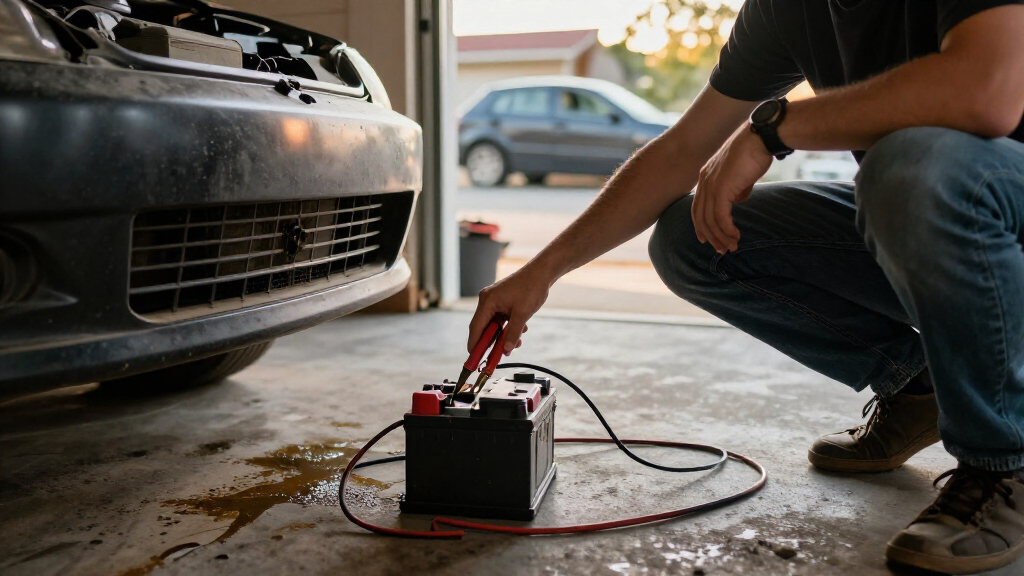
I compared the 13 listed chargers by the factors that shape real ownership: voltage compatibility, charging output, maintenance use, and operating features. I also weighed usability and format, including whether a model is designed for routine connection, carries a repair or winter mode, or adds an engine-start function. A higher amp rating can shorten charging time, but it does not automatically make a charger a better choice for a small battery or unattended maintenance.
The ranking favors useful range and a clear fit for common needs over the longest feature list. The Schumacher SC1281 leads because its 6V/12V support and engine-start capability give it broad utility; compact NOCO models rank as focused maintenance options, while higher-output 12V/24V units suit narrower needs. The wheeled SC1445 is positioned for buyers who can use its larger form and starting output, rather than as a default pick for everyone. Since specifications alone do not confirm battery-chemistry compatibility or real-world charging behavior, I recommend checking the manufacturer’s manual against the battery label before purchase.
Factors to Consider When Choosing Car Battery Chargers
Charger labels can blur together, but the right choice depends on the battery and the job: maintaining a healthy battery, recharging one that has gone flat, or supporting a vehicle during a starting problem. I’d use these checks to narrow the field before comparing extra modes.
Match Voltage Before Comparing Amps
Start with the voltage printed on the battery or specified in the vehicle manual; passenger cars commonly use 12V systems, while some equipment and larger vehicles use other voltages. A charger marked 12V/24V is not automatically a better car choice if you only need 12V, and selecting the wrong setting can damage equipment or leave a battery inadequately charged. The listed Schumacher and NOCO options support 6V/12V, while several PLXX, Yourheey, NEXPEAK, and E-FAST models list 12V/24V. Check whether voltage selection is automatic or manual, since a manual mode adds a step that can be easy to miss. Match the charger to the battery system, not just the vehicle’s general size.
Choose Output for the Job, Not the Biggest Number
Amperage affects how quickly a charger can replenish a battery, but the best output depends on battery capacity and how often you need a recharge. A low-output charger such as the NOCO GENIUS1 is better suited to slow maintenance than recovering a depleted battery on a deadline. Higher-output choices such as the E-FAST 25A or Schumacher SC1281 may make more sense when faster charging or additional functions matter. Avoid treating the highest amp figure as a universal advantage: the battery maker’s guidance and charger settings still matter. If the vehicle sits for long periods, maintaining charge may matter more than rapid recovery.
Separate Charging, Maintenance, and Engine Starting
A charger restores energy over time, a maintainer helps keep a battery charged during storage, and an engine-start feature supplies assistance for a starting attempt. These jobs overlap in product marketing, but they are not the same function, and a charger with a high start rating should not be assumed to work like a portable jump starter. Models such as the Schumacher SC1281, SC1445, and TowerTop list engine-start features; buyers should check the manual for the required connection and duty cycle. If you need emergency roadside starting, verify whether the unit is practical to store and use away from mains power. For seasonal storage, a suitable maintenance mode may be more useful than a start function you rarely need.
Check Battery Chemistry and Charging Compatibility
Battery voltage is only one compatibility check. Lead-acid batteries can have different constructions, and vehicles may use AGM or other battery types that call for a compatible charging profile. Read the charger’s specification and manual for explicit support rather than assuming that a label such as “smart” covers every chemistry. Repair or pulse modes also do not guarantee recovery of a damaged, sulfated, or end-of-life battery. If the battery type is unclear, check its case label or vehicle documentation before connecting a charger. When charging behavior seems abnormal, stop and seek a battery assessment rather than repeatedly running repair cycles.
Think Through Location, Monitoring, and Safety
Where the charger will sit affects which design is practical. A compact maintainer is easier to store and leave connected in a suitable location, while a wheeled charger such as the Schumacher SC1445 is aimed at buyers who can accommodate a larger unit. Check cord reach, display readability, clamp access, and the manual’s instructions for ventilation and connection order. Automatic shutoff and charge monitoring can reduce the need for constant adjustment, but they do not replace safe setup or battery inspection. Do not charge a visibly damaged or leaking battery, and follow the manufacturer’s directions for the vehicle and battery type.
Decide Whether Extra Modes Earn Their Place
Winter, repair, and pulse modes can be useful when they address a real need, but added functions can make controls harder to understand. Buyers in cold climates may value a clearly documented winter mode; occasional users may prefer simpler operation over settings they will rarely use. Before paying for feature variety, check what each mode does, whether it is automatic or user-selected, and which battery types it supports. More modes do not equal broader compatibility unless the manufacturer explicitly lists it. For a basic 12V car used regularly, straightforward charging and dependable maintenance behavior may be more valuable than specialized recovery claims.
Frequently Asked Questions
Can I use a 12V/24V charger on a regular 12V car battery?
Yes, if the charger supports 12V charging and is set to the correct voltage for your battery. A dual-voltage label means the unit can serve more than one system; it does not mean you should connect it in 24V mode to a 12V car. Check whether voltage selection is automatic or manual and confirm the setting before charging. Also verify battery chemistry support and follow the vehicle and charger manuals. If the voltage mode is unclear, do not connect the unit until you have confirmed it.
Should I buy a low-amp maintainer or a higher-amp charger?
Choose based on how you expect to use it. A low-amp model such as the NOCO GENIUS1 is suited to slow upkeep when a vehicle sits, while higher-output chargers are more useful when you want to recharge a depleted battery sooner. A maintainer is not a quick fix for a battery that is deeply discharged, and a high-output charger may be more capability than you need for occasional storage. Check the battery maker’s recommended charging rate before deciding. If you need both maintenance and recovery, look for clearly specified modes rather than relying on the amp number alone.
Will a charger with an engine-start feature jump-start my car?
Not necessarily in the same way as a portable jump starter. Engine-start functions on models such as the Schumacher SC1281, SC1445, and TowerTop are designed to operate according to the unit’s instructions and may require a mains power source or specific connection procedure. A charger also may not help if the battery is damaged, the terminals are poor, or the problem lies elsewhere in the vehicle. Read the manual for start duration, rest periods, and power requirements. For roadside emergencies, check whether a separate jump starter better matches your needs.
Can I leave a smart charger connected while my car is stored?
Some chargers include a maintenance function for keeping a compatible battery charged during storage, but you should confirm that the specific model supports that use. Follow its instructions for battery type, connection, location, and monitoring; “smart” alone is not a promise that every setup can be left unattended. Inspect the battery and leads before connecting, and use a suitable, dry, ventilated area. If the vehicle or battery manual sets limits on charging while installed, follow those instructions. Disconnect the charger if the battery becomes hot, swollen, leaks, or behaves unexpectedly.
Do repair or pulse modes restore a battery that will not hold a charge?
They may be intended to address some battery conditions, but they cannot restore every battery, especially one that is physically damaged or at the end of its service life. Repair features on chargers such as the Yourheey, TowerTop, and E-FAST models should be treated as a possible aid, not a guarantee. Check whether the mode is compatible with the battery type and whether it can be used while the battery remains connected to the vehicle. If the battery repeatedly loses charge, have it tested and check for a vehicle charging-system or parasitic-draw problem. Repeated repair cycles are not a substitute for diagnosis.
Conclusion
For the broadest mix of everyday capability, I’d choose the Schumacher Electric SC1281 as best overall, especially if its 6V/12V support and engine-start function match your needs. The best value-style fit is the CRAFTSMAN CMXCESM258 for buyers who want a 12A charger and maintainer without stepping up to a larger starting unit; compare its stated compatibility with your battery before buying. For a premium-leaning, compact maintenance choice, the NOCO GENIUS5 offers a more focused alternative to the higher-output models, while the GENIUS1 makes sense for slow upkeep when speed is not a priority. Beginners may prefer a straightforward automatic charger such as the Schumacher SC1280, provided its features match the battery. Buyers with 24V systems or a need for more output should compare the PLXX, Yourheey, NEXPEAK, and E-FAST options carefully; those needing a wheeled unit and substantial starting output should look at the SC1445. My final check would be voltage, battery chemistry, and the actual job—maintenance, charging, or starting—before choosing.