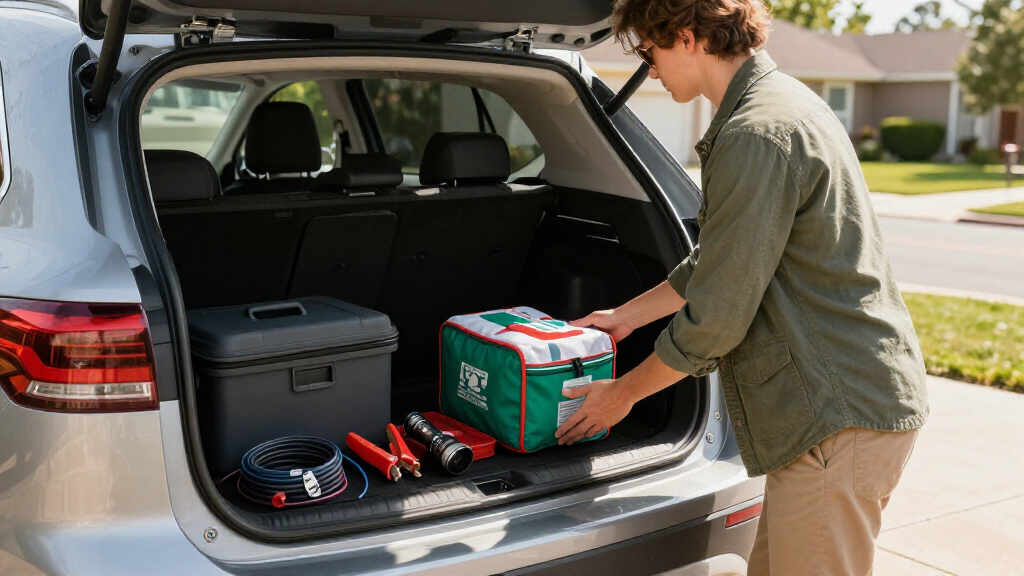

Car emergency kits range from simple roadside tool bags to multi-function jump starters with built-in air compressors, and the right choice depends on how much of the work you want one product to do. For most drivers, the ASMAX T20 7-in-1 Jump Starter stands out as the best overall pick because it combines a 3000A battery booster, a tire inflator, and emergency lighting in a single unit — covering the two most common roadside failures at once. Budget-minded buyers get more total hardware for less money with the 142 PCS Emergency Roadside Kit, while the Featou 5-in-1 makes sense if raw jump-starting power is the priority. The main tradeoff in this category is power tools versus preparedness breadth: powered kits handle dead batteries and flat tires brilliantly but skip first aid entirely, while traditional kits bundle cables, tools, and bandages but can’t actually inflate a tire. I break down all 14 options, including who should skip each one, below.

Get business pricing on garage and car supplies
- Business-only prices and quantity discounts
- Tax-exempt purchasing
- Multiple users, one account, clear invoices
Complete the kit


Key Takeaways
- Powered jump-starter combos (ASMAX T20, FUNAURORE, Featou) dominated the comparison for dead-battery and flat-tire scenarios, but none of them include first aid supplies — you’ll need to add a kit separately.
- Piece-count marketing is the biggest trap in this category: the 142 PCS kit and 408-piece wall kit sound impressive, but much of the count comes from low-value items like bandage wrappers and zip ties.
- Compressor quality separates the premium picks — the Featou’s 150PSI-class digital inflator outperforms the generic inflators bundled in kits 8, 11, and 14, which are better treated as emergency-only backups.
- Kits marketed toward women and teens (kit 11) offer the same core hardware as standard kits at a smaller size, which makes them genuinely good first-car gifts rather than a gimmick.
- Specialist tools like DOT-compliant LED road flares (Marcala) and wall-mounted first aid stations fill gaps the all-in-one kits leave open, making them smart add-ons rather than standalone purchases.
| ASMAX T20 7-in-1 Jump Starter with Air Compressor, 3000A Battery Booster |  | Best Overall Power Tool | Battery Type: Lithium Polymer | Voltage: 12 volts | Peak Amperage: 3000A | VIEW LATEST PRICE | See Our Full Breakdown |
| FUNAURORE 4000A Car Battery Jump Starter with Air Compressor 150PSI |  | Best for Heavy-Duty Use | Peak Amperage: 4000A | Functions: 8-in-1 (jump starter, air compressor, power bank, flashlight) | Max PSI: 150PSI | VIEW LATEST PRICE | See Our Full Breakdown |
| Car Roadside Emergency Kit with Jumper Cables and Safety Tools |  | Best Traditional Toolkit | Jumper Cables: 6 gauge, PVC coated, alligator clamps | Shovel Length: 16.5 inches (foldable) | Tools Included: Hammer, wrench, pliers, tape measure, PVC tape, test pen, screwdrivers, hex keys | VIEW LATEST PRICE | See Our Full Breakdown |
| Car Roadside Emergency Kit, Portable Car Safety Kit for Emergency, Black |  | Best Compact Starter Kit | Exterior Material: PVC | Interior Wiring: Premium copper wire | Color: Black | VIEW LATEST PRICE | See Our Full Breakdown |
| Comprehensive First Aid Kit with Labelled Compartments and Molle System |  | Best First Aid Component | Material: 600D Polyester | Key Supplies: Tactical Israeli dressing, compressed gauze, user guide | Organization: Labelled compartments | VIEW LATEST PRICE | See Our Full Breakdown |
| Car Roadside Emergency Kit with Jumper Cables, Headlamp, Tow Straps, and More |  | Best All-in-One Starter Kit | Jumper Cables: Heavy-duty with alligator clamps | Air Compressor: Fast inflating, explosion-proof | Headlamp: LED, suitable for night use | VIEW LATEST PRICE | See Our Full Breakdown |
| Featou 5-in-1 Jump Starter with Air Compressor, 5500A Peak Power |  | Best Powerhouse Multi-Tool | Peak Power: 5500A | Maximum Tire Pressure: 150 PSI | LED Brightness: 350 lumens | VIEW LATEST PRICE | See Our Full Breakdown |
| Car Emergency Roadside Assistance Kit with Jumper Cables and Tire Inflator |  | Best Compact Trunk Kit | Weight: 5.3 pounds | Package Dimensions: 12.87 x 9.37 x 4.33 inches | Core Tools: Jumper cables, tire inflator | VIEW LATEST PRICE | See Our Full Breakdown |
| Large Wall-Mounted First Aid Kit for Business – 408 Pieces |  | Best for Injury Preparedness | Piece Count: 408 pieces | Dimensions: 13.2″ x 11″ x 5.1″ | Material: Heavy-duty plastic | VIEW LATEST PRICE | See Our Full Breakdown |
| Marcala LED Road Flares 1-Pack | DOT Compliant Emergency Car Flares |  | Best Visibility Upgrade | LEDs: 15 per flare | Flash Modes: 9 | Visibility: 1 mile at night, 0.5 miles by day | VIEW LATEST PRICE | See Our Full Breakdown |
| VCAN ACTIVE 112-Piece Car Emergency Kit with Portable Air Compressor |  | Best Balance of Coverage and Storage | Brand: VCAN ACTIVE | Number of Pieces: 112 | Key Tools: Portable air compressor, jumper cables, first aid kit | VIEW LATEST PRICE | See Our Full Breakdown |
| Everlit Survival Car Emergency Kit with Tire Inflator | 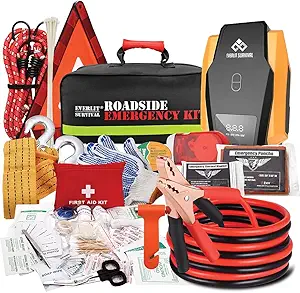 | Best Detailed Safety Features | Tire Inflator: Digital auto air compressor with auto shutoff and LED light | Jumper Cables: 12 feet, 8 gauge, 300 amp, UL listed | First Aid Kit: 108 pieces including bandages, antiseptics, and CPR mask | VIEW LATEST PRICE | See Our Full Breakdown |
| 142-Piece Emergency Roadside Kit with Jumper Cables |  | Best Value Piece Count | Number of Pieces: 142 | Jumper Cable Length: 8.2 feet | Cable Certification: UL certified with insulating rubber sleeves | VIEW LATEST PRICE | See Our Full Breakdown |
| Car Emergency Safety Kit Bag with Air Compressor, 170-Piece First Aid, and Winter Tools |  | Best for Winter-Weather Drivers | Total Items: 170 | Air Compressor: Digital, auto-shutoff, LED light | Jumper Cables: 12 ft, 8 gauge | VIEW LATEST PRICE | See Our Full Breakdown |
More Details on Our Top Picks
ASMAX T20 7-in-1 Jump Starter with Air Compressor, 3000A Battery Booster
Best overall power solution for drivers who want jump-starting and tire inflation in one device. The ASMAX T20 stands out for balancing a serious 3000A output with real portability — at 737 g and roughly the size of a large flashlight, it disappears into a door pocket or glovebox. Compared with the FUNAURORE 4000A, it gives up some peak amperage but gains a cleaner, more compact form factor and real-time pressure monitoring that makes topping off a slow leak genuinely straightforward. It covers everything from motorcycles to RVs, which is broader vehicle compatibility than most kits in this roundup. The tradeoff: 60 starts per charge is plenty for occasional emergencies but falls short for fleet or farm use, and the unit needs to stay above 30% battery to jump reliably — so it demands a charging routine, unlike the passive jumper cables in the Car Roadside Emergency Kit.
Pros:- 3000A output covers cars, vans, RVs, motorcycles, and ATVs
- Combines jump starter, compressor, power bank, and flashlight in one 737 g unit
- Real-time pressure monitoring prevents over-inflation
- Compact enough to store in a glovebox rather than a trunk
Cons:- Capped at 60 starts per charge — insufficient for heavy or repeated use
- Battery must stay above 30% for reliable jumps, requiring regular recharging
- Multi-function controls have a learning curve for first-time users
Best for: Daily commuters and road-trippers who want a single device that handles dead batteries and underinflated tires without waiting for help
Not ideal for: Anyone wanting a zero-maintenance backup — this needs periodic recharging, unlike cable-based kits that never lose charge
- Battery Type:Lithium Polymer
- Voltage:12 volts
- Peak Amperage:3000A
- Functions:7-in-1 (jump starter, air compressor, power bank, flashlight, pressure gauge)
- Compatible Vehicles:ATV, Lawn Mower, Motorcycle, Passenger Car, RV, Sedan, Van
- Starts Per Charge:Up to 60
- Dimensions:1.97″D x 3.93″W x 7.09″H
- Weight:737 g
Our verdict“Buy this if you want the most capable all-in-one emergency device that still fits in a glovebox; skip it if you’d never remember to recharge it.”
FUNAURORE 4000A Car Battery Jump Starter with Air Compressor 150PSI
Where the ASMAX T20 prioritizes portability, the FUNAURORE 4000A goes the other direction: more raw cranking power and an 8-in-1 feature set aimed at bigger engines and tougher situations. The 4000A rating and 150PSI compressor with preset inflation modes make it better suited to trucks, larger SUVs, and full-size tires that would make a smaller unit work harder. The 400-lumen multi-mode flashlight is also brighter than what most rivals offer, which matters during a nighttime roadside stop. The honest tradeoffs: the compressor can overheat if run continuously, so it’s built for topping off tires, not marathon inflation sessions. And unlike the passive Car Roadside Emergency Kit, this device is only as ready as its charge level — it needs regular top-ups to perform when called on.
Pros:- 4000A peak current handles larger engines and multiple consecutive starts
- 150PSI compressor with preset modes for PSI, KPA, BAR, and KG/CM²
- Bright 400-lumen flashlight with multiple emergency modes
- Automatic safety protections guard against reversed connections
Cons:- Compressor cannot run continuously without overheating
- Battery capacity and runtime are not clearly specified by the manufacturer
- Requires a regular charging routine to stay emergency-ready
Best for: Truck and large-SUV owners who need extra cranking power for bigger engines and higher tire pressures
Not ideal for: Drivers of small economy cars — the extra amperage is wasted capacity, and the ASMAX T20 does the same jobs in a smaller package
- Peak Amperage:4000A
- Functions:8-in-1 (jump starter, air compressor, power bank, flashlight)
- Max PSI:150PSI
- Inflation Modes:PSI, KPA, BAR, KG/CM²
- Starts Per Charge:Up to 50
- Flashlight Brightness:400 lumens, multiple modes
- Safety:Automatic protection against incorrect connections
Our verdict“The strongest power pick here for big vehicles — choose it over the ASMAX T20 when engine size, not glovebox space, drives your decision.”
Car Roadside Emergency Kit with Jumper Cables and Safety Tools
For buyers who distrust battery-powered gadgets, this kit takes the opposite approach: no charging, no batteries to die, just physical tools that work every time. The 6-gauge jumper cables with insulated clamps are the anchor here — thicker and safer than the generic cables in most budget bundles — and the surrounding kit (tow rope, reflective triangle, vest, safety hammer, foldable shovel, and a real tool set) covers a wider range of scenarios than either the ASMAX or FUNAURORE units, which solve only battery and tire problems. The catch is weight and bulk: this is a trunk kit, not a glovebox kit, and the hand tools are serviceable rather than professional-grade. Compared with the compact Portable Car Safety Kit, you trade storage convenience for genuine mechanical capability.
Pros:- 6-gauge jumper cables with PVC coating and insulated clamps are safer and more capable than typical bundled cables
- Covers visibility, towing, extraction, and basic repair scenarios, not just batteries
- Everything stays organized in a single compact case
- No batteries or charging required — always ready
Cons:- Heavy and bulky compared with power-station-style kits like the ASMAX T20
- Hand tools are basic quality, not suited to serious repairs
- Long-term durability of individual items is not well documented
Best for: Hands-on drivers and rural commuters who want self-reliant, never-needs-charging tools for breakdowns far from help
Not ideal for: City drivers with small cars and no mechanical inclination — the bulk is wasted if you’d call roadside assistance anyway
- Jumper Cables:6 gauge, PVC coated, alligator clamps
- Shovel Length:16.5 inches (foldable)
- Tools Included:Hammer, wrench, pliers, tape measure, PVC tape, test pen, screwdrivers, hex keys
- Safety Items:Reflective triangle, safety vest, emergency blanket, survival whistle
- Recovery Items:Tow rope, tire pressure gauge, safety hammer
- Storage:Compact organized case
Our verdict“The best choice if you want old-school, always-ready roadside capability over gadget convenience — provided you have trunk space to spare.”
Car Roadside Emergency Kit, Portable Car Safety Kit for Emergency, Black
This is the easiest entry point into car emergency preparedness. Unlike the heavy multi-tool Roadside Emergency Kit with Jumper Cables and Safety Tools, this kit’s whole value proposition is the organizer bag — it slides under a seat or into a door pocket without rearranging your trunk, making it a smart pick for small cars, rideshare drivers, or a teen’s first vehicle. The materials are respectable for the price point, with premium copper wire inside the components and a PVC exterior that resists scuffs. The significant tradeoff is transparency: the listing is vague about exactly what’s inside, so buyers comparing against the clearly itemized 142-piece kits elsewhere in this roundup are buying on faith. It covers basics, not depth — think scraped-knuckle emergencies rather than a full roadside breakdown.
Pros:- Compact organizer bag fits under seats and in small trunks
- Premium copper wiring and durable PVC exterior for the price
- Versatile enough for winter weather, commutes, and road trips
- Well suited as a first kit for new drivers and families
Cons:- Contents are not itemized, making value hard to verify before purchase
- No jump starter, air compressor, or powered capability
- Basic supplies only — limited for serious roadside situations
Best for: New drivers, small-car owners, and gift-buyers who want an affordable, space-saving baseline of emergency supplies
Not ideal for: Preparedness-minded buyers who want a documented, itemized contents list — the vague specifications make it hard to know what you’re actually getting
- Exterior Material:PVC
- Interior Wiring:Premium copper wire
- Color:Black
- Storage:Organizer bag
- Intended Use:Winter weather, commuting, road trips
- Power Source:None (passive tools)
Our verdict“A reasonable low-commitment starter kit for tight spaces and new drivers, as long as you accept the mystery of what’s inside the bag.”
Comprehensive First Aid Kit with Labelled Compartments and Molle System
Every other kit in this roundup treats injuries as an afterthought; this one makes them the entire focus. The labeled compartments are the standout feature — during an actual emergency, fumbling through an unsorted bag wastes time, and this design lets anyone find the Israeli dressing or gauze in seconds. The Molle system and removable velcro panel let you mount it to a seatback or transfer it between car, backpack, and home, which is more mounting flexibility than any trunk-style kit offers. Compared with the comprehensive roadside kits like the Everlit Survival Car Emergency Kit, you give up jumper cables and tire tools entirely — this is a companion piece, not a standalone car kit. It’s also oriented toward trauma and bleeding control rather than everyday cuts, and it assumes the owner knows how to use what’s inside.
Pros:- Labeled compartments enable fast access when seconds matter
- 600D polyester construction holds up to car and outdoor abuse
- Molle system and removable velcro panel allow mounting in car, pack, or home
- Includes serious supplies like a tactical Israeli dressing and compressed gauze
Cons:- Lacks advanced medical equipment for professional-level response
- Limited spare space for adding personal medications or extra supplies
- Effectiveness depends on the owner knowing basic first aid procedures
Best for: Outdoor adventurers and prepared drivers pairing this with a roadside kit who need fast, organized access to trauma supplies
Not ideal for: Buyers seeking a one-bag car solution — this has no jumper cables, tire tools, or visibility gear, so it can’t stand alone
- Material:600D Polyester
- Key Supplies:Tactical Israeli dressing, compressed gauze, user guide
- Organization:Labelled compartments
- Mounting:Molle system, removable velcro panel
- Use Cases:Car, home, hiking, backpacking, camping, traveling, cycling
- Portability:Durable portable pouch design
Our verdict“The best first-aid-specific pick in this roundup — buy it to complement a roadside kit, not to replace one.”
Car Roadside Emergency Kit with Jumper Cables, Headlamp, Tow Straps, and More
This kit earns its spot by covering more bases than most bag-based kits at this price. Where the Car Emergency Kit with Portable Air Compressor focuses on roadside mechanics, this option adds comfort and visibility items like a headlamp, rainwear, and gloves — gear that matters if you’re standing on a shoulder at night in bad weather. The heavy-duty jumper cables with strong-grip alligator clamps are the standout here, and the explosion-proof air compressor handles slow leaks without drama. Compared with the Featou 5-in-1, you trade electronic sophistication for analog reliability: no battery to charge, no chip to fail. The tradeoff is quality variance — some smaller tools feel budget-grade, and the absence of detailed instructions means first-time users will lean on internet tutorials.
Pros:- Broadest tool spread in this price band, including often-skipped items like a headlamp and rainwear
- Heavy-duty jumper cables with secure alligator clamps
- Fast, explosion-proof air compressor for roadside tire fixes
- Compact bag that fits under a seat or in a trunk corner
Cons:- Durability of smaller hand tools is unclear and likely uneven
- No included instructions, which undercuts its appeal to beginners
- Heavier than minimal kits once everything is packed
Best for: New drivers and everyday commuters who want broad physical-tool coverage in one affordable trunk bag
Not ideal for: Drivers of large trucks or diesel engines who need a dedicated high-amperage jump starter rather than basic cables
- Jumper Cables:Heavy-duty with alligator clamps
- Air Compressor:Fast inflating, explosion-proof
- Headlamp:LED, suitable for night use
- First Aid:Bandages and basics included
- Additional Tools:Rainwear, gloves, screwdrivers, tow ropes, PVC tape
- Storage:Compact portable bag
Our verdict“Buy this if you want maximum physical-tool variety in one bag and don’t mind supplementing the cheap small tools later.”
Featou 5-in-1 Jump Starter with Air Compressor, 5500A Peak Power
If most kits in this roundup are toolboxes, the Featou is a single device that replaces half of one. With 5500A peak power it jumps engines up to 9.0L gas or 7.5L diesel — well beyond the ASMAX T20’s 3000A rating — making it the clear pick for large vehicles. The integrated 150 PSI compressor, 350-lumen flashlight, and power-bank function mean fewer separate items to keep charged and stored. The smart chip adds reverse-polarity and overload protection, which matters if you’ve never jump-started a car before. The real tradeoff: it does nothing for non-electrical problems. No first aid, no tow strap, no gloves — unlike the Car Roadside Emergency Kit with Jumper Cables, Headlamp, Tow Straps, you’ll still need a separate bag for physical mishaps, and the interface takes some learning.
Pros:- 5500A output handles engines most jump starters can’t touch
- Five functions in one device reduces trunk clutter
- Smart chip protection makes jump-starting safe for novices
- Comes with a carrying case for organized storage
Cons:- Steeper learning curve than plug-in cables
- Battery capacity isn’t specified, making runtime comparisons hard
- Replaces no physical tools — no first aid or recovery gear included
Best for: Truck, SUV, and diesel owners who want serious jump-starting muscle plus inflation in one charged device
Not ideal for: Drivers who want set-and-forget readiness — this needs periodic recharging or it’s dead weight in an emergency
- Peak Power:5500A
- Maximum Tire Pressure:150 PSI
- LED Brightness:350 lumens
- Supported Engines:9.0L gas / 7.5L diesel
- Functions:Jump starter, power bank, air compressor, flashlight, tire pressure monitor
- Safety:Intelligent chip technology
Our verdict“This makes the most sense for big-engine owners who prioritize electrical emergencies over general roadside coverage.”
Car Emergency Roadside Assistance Kit with Jumper Cables and Tire Inflator
At 5.3 pounds and roughly 13 x 9 x 4 inches, this is the kit for trunks that are already full — a different pitch than the bulkier Car Roadside Emergency Kit with jumper cables and safety tools. The essentials pairing of jumper cables plus a tire inflator covers the two most common roadside failures, and the organized bag keeps everything findable in the dark. It’s pitched equally at winter drivers, campers, and road-trippers, and the weight makes it easy to move between vehicles. The honest drawbacks: the piece count isn’t clearly documented, so it’s hard to verify exactly what you’re getting, and unlike the Everlit Survival kit, there’s no track record on long-term durability. This option stands out for portability, not depth — pair it with a dedicated first aid kit if you want fuller coverage.
Pros:- Genuinely lightweight and compact at 5.3 pounds
- Covers the two most common emergencies: dead battery and flat tire
- Organized bag suited to winter, camping, and road-trip scenarios
- Easy to transfer between household vehicles
Cons:- Tool count and full contents are not clearly specified
- No long-term durability feedback from users yet
- Thinner coverage than larger kits — light on first aid and recovery gear
Best for: Small-car owners and renters who need core roadside coverage without surrendering trunk space
Not ideal for: Preparedness-minded buyers who want a documented, exhaustive tool count and proven long-term durability
- Weight:5.3 pounds
- Package Dimensions:12.87 x 9.37 x 4.33 inches
- Core Tools:Jumper cables, tire inflator
- Use Cases:Winter weather, camping, road trips
- Storage:High-quality carry bag
- Part Number:XY0063-CarKit-69Pcs-Black
Our verdict“A sensible pick if trunk space is tight and you mainly want jump and inflate capability in a small bag.”
Large Wall-Mounted First Aid Kit for Business – 408 Pieces
This is the outlier in the lineup — it solves people problems, not car problems. Where every other kit here assumes a mechanical failure, this 408-piece unit assumes someone got hurt, and frankly, most car kits treat first aid as an afterthought. The high-visibility labeling and organized compartments mean you can find gauze fast instead of dumping a bag onto the road, and the wall-mount-or-carry flexibility lets it live in a garage or shop between trips. Compared with the Comprehensive First Aid Kit with Molle System, this unit’s professional-grade case and business-oriented organization suit stationary or semi-stationary use better than stuffing it under a seat. The catch: at 13.2 x 11 x 5.1 inches it’s bulky for a cabin, and the actual contents list is vague, so you can’t easily verify or plan refills.
Pros:- 408 pieces dwarfs the token first aid pouches in most car kits
- Sturdy plastic shell survives garage and shop environments
- High-visibility labeling speeds up emergency access
- Mounts on a wall or travels as a portable case
Cons:- Bulky footprint for vehicle interiors
- No detailed contents list or refill guidance
- Contains no roadside tools — purely injury response
Best for: Workshop owners, rideshare drivers, and families who want serious injury supplies at a home or vehicle base
Not ideal for: Small-car commuters — the case is too large to keep accessible inside most cabins
- Piece Count:408 pieces
- Dimensions:13.2″ x 11″ x 5.1″
- Material:Heavy-duty plastic
- Mounting:Wall-mountable or portable
- Organization:Organized compartments with high-visibility labels
- Intended Setting:Business and professional environments
Our verdict“Add this alongside a mechanical kit if human safety is your priority; skip it if you only need breakdown gear.”
Marcala LED Road Flares 1-Pack | DOT Compliant Emergency Car Flares
Every kit in this roundup includes a flashlight or headlamp, but none of them make you visible to other drivers — and that’s what actually prevents roadside fatalities. The Marcala flare’s 15 LEDs and 9 flash modes are seen up to a mile at night, and its IP67 waterproof, crush-proof build means it survives being dropped on asphalt or run over, unlike a flare-and-fuse alternative. Compared with the headlamp in the Car Roadside Emergency Kit, this is built to sit on the road and warn traffic, not to light your workspace. The honest downsides: it’s one flare per pack, and scene safety usually wants two or three placed behind your vehicle, and the AAA batteries will need replacing. It’s a supplement, not a kit — pair it with any of the bag-based picks above.
Pros:- Visible up to one mile at night with 9 flash modes
- IP67 waterproof and crush-proof for roadside abuse
- Reusable, flame-free, and safe near fuel spills
- Ships ready to use with batteries installed
Cons:- Single flare per pack — real scene safety needs multiples
- AAA batteries require periodic replacement
- No utility as a work light or general flashlight
Best for: Highway commuters and night drivers who want DOT-compliant warning visibility beyond a triangle or flashlight
Not ideal for: Buyers seeking an all-in-one solution — this is a single-purpose safety light with no tools
- LEDs:15 per flare
- Flash Modes:9
- Visibility:1 mile at night, 0.5 miles by day
- Waterproof Rating:IP67
- Battery:3 AAA, included
- Compliance:DOT compliant
- Quantity:1 flare per pack
Our verdict“A cheap, high-impact add-on for anyone who regularly breaks down on fast roads — just buy two or three.”
VCAN ACTIVE 112-Piece Car Emergency Kit with Portable Air Compressor
Most kits that include an air compressor either balloon in price or skimp on the basics to make room for it. This 112-piece set from VCAN ACTIVE avoids both traps, pairing a portable compressor with jumper cables and a first aid kit in a bag compact enough to slide under most trunk floors. Compared with the 142-piece roadside kit elsewhere in this roundup, this option trades sheer piece count for the ability to actually inflate a tire — a swap most drivers will make gladly. The two-year manufacturer warranty is also unusual at this tier and adds some reassurance that the tools aren’t disposable. The tradeoff is vagueness: the first aid contents aren’t itemized anywhere, so buyers who want a genuinely useful medical kit should weigh it against the Everlit, which details its 108-piece supplies.
Pros:- Air compressor included at a mid-range piece count
- Compact and lightweight for under-seat or spare-tire storage
- Two-year manufacturer warranty backs the tools
- All-season design covers both summer breakdowns and winter incidents
Cons:- First aid supplies are not itemized, so quality is a guess
- No published durability details on the compressor or cables
Best for: Everyday commuters and new drivers who want compressor capability without a bulky trunk-hogging bag
Not ideal for: Buyers who need a detailed, professional-grade first aid kit, since the medical contents here are unspecified
- Brand:VCAN ACTIVE
- Number of Pieces:112
- Key Tools:Portable air compressor, jumper cables, first aid kit
- Model Number:CT20507
- Storage:Compact car safety kit bag
- Warranty:2 Year Manufacturer
Our verdict“A sensible middle-ground pick for drivers who want inflation and jump-start capability in one tidy bag, provided they supplement the vague first aid section.”
Everlit Survival Car Emergency Kit with Tire Inflator
What separates the Everlit from commodity kits like the VCAN ACTIVE 112-piece set is transparency and specification quality. Its jumper cables are 12 feet, 8 gauge, 300 amp, and UL listed — actual numbers you can trust when you’re staring at a dead battery in a parking lot at night. The digital tire inflator with auto shutoff and built-in LED light means you can set a pressure and let it work rather than guess-checking with a gauge, a genuine convenience over basic compressors. It also includes escape tools like a glass breaker and seatbelt cutter, which most kits in this price class omit entirely. The drawbacks are real though: it runs heavier than minimalist kits, and the sheer number of items can overwhelm someone who just wants cables and a flashlight. It’s a repair-and-stabilize kit, not a full repair shop.
Pros:- UL-listed 300-amp jumper cables with published specifications
- Digital inflator with auto shutoff and LED light for nighttime use
- Includes glass breaker and seatbelt cutter for vehicle escape
- 108-piece first aid kit with itemized supplies including a CPR mask
Cons:- Heavier than minimalist alternatives
- Covers basic stabilization only, not real repairs
Best for: Safety-conscious drivers and parents of teen drivers who want documented cable specs and escape tools like a glass breaker
Not ideal for: Drivers wanting a minimal, grab-and-go bag, since the full loadout adds noticeable weight and complexity
- Tire Inflator:Digital auto air compressor with auto shutoff and LED light
- Jumper Cables:12 feet, 8 gauge, 300 amp, UL listed
- First Aid Kit:108 pieces including bandages, antiseptics, and CPR mask
- Escape Tools:Glass breaker, seatbelt cutter
- Additional Items:Tow strap, gloves, reflective triangle, rain poncho, space blanket
- Portability:Compact and lightweight design
Our verdict“The most transparently specified kit in this batch, ideal for anyone who wants to know exactly what their cables and inflator can do before they need them.”
142-Piece Emergency Roadside Kit with Jumper Cables
If maximum contents per dollar is the goal, this 142-piece kit undercuts the feature-focused competition by skipping the air compressor entirely — an expensive component that drives up the price of the Everlit and the VCAN ACTIVE kit. Instead, it spends its budget on breadth: a snow shovel, hand tools like pliers and screwdrivers, warning signs, and UL-certified jumper cables with insulating rubber sleeves. That makes it the better cold-weather value here, since the shovel alone is something most kits in this roundup don’t include. The catch is quality depth — the tools are serviceable but not professional-grade, and some items ship without clear instructions, which matters if a teen driver is the one using them. For experienced drivers who already own a tire gauge, this is the smart bare-knuckles choice.
Pros:- Highest piece count in this batch at 142 items
- Includes a snow shovel — rare at this price point
- UL-certified jumper cables with insulating rubber sleeves
- Hand tools (pliers, screwdrivers, hammer) double as household spares
Cons:- No air compressor or tire inflator included
- Tools are basic consumer grade, not professional quality
- Sparse instructions for some items
Best for: Budget-minded drivers in snowy climates who want a shovel and hand tools more than a compressor
Not ideal for: First-time or teen drivers who need an air compressor and clear instructions for every tool
- Number of Pieces:142
- Jumper Cable Length:8.2 feet
- Cable Certification:UL certified with insulating rubber sleeves
- Hand Tools:Hammer, pliers, utility knife, tape measure, screwdrivers, test pen
- Seasonal Gear:Snow shovel, warning signs, outdoor survival tools
- Hammer Material:High-carbon steel
Our verdict“The most contents-for-the-money pick, best for drivers who already have inflation covered and want cold-weather breadth instead.”
Car Emergency Safety Kit Bag with Air Compressor, 170-Piece First Aid, and Winter Tools
This is the only kit in the batch that treats winter as a primary scenario rather than an afterthought. Alongside the digital auto-shutoff compressor and 12-foot 8-gauge cables — matching the Everlit’s specs on paper — it adds an ice scraper and snow brush, plus a 138-piece first aid kit that’s larger than anything else here, including a tourniquet and emergency blanket. Compared with the 142-piece roadside kit, it covers the same cold-weather mission but swaps some hand tools for the compressor and a much deeper medical kit, which most families will consider the better exchange. The tradeoff is weight and bulk: 170 items plus winter gear makes this the heaviest bag of the four, and small-car owners with shallow trunks may find it a squeeze. Still, for snow-belt households, no other option in this lineup matches its seasonal coverage.
Pros:- Includes ice scraper and snow brush for winter-specific emergencies
- Largest first aid kit in the batch at 138 pieces with tourniquet and blanket
- Digital auto-shutoff compressor with LED light
- 12-foot 8-gauge jumper cables match premium kit specs
Cons:- Heaviest and bulkiest option in this batch
- Redundant for drivers in mild climates who’ll never use the winter tools
Best for: Families in snow-prone regions who want winter tools, a serious first aid kit, and a compressor in one bag
Not ideal for: Small-car drivers with limited trunk space, given the combined weight and bulk of 170 items plus winter gear
- Total Items:170
- Air Compressor:Digital, auto-shutoff, LED light
- Jumper Cables:12 ft, 8 gauge
- First Aid Kit:138 items including tourniquet, blanket, scissors, safety pins
- Winter Tools:Ice scraper and snow brush
- Storage:Durable organized kit bag
Our verdict“The clear choice for snow-belt drivers who want seasonal tools and the deepest first aid coverage in one purchase, if trunk space allows.”
How We Picked
I evaluated these 14 car emergency kits against four practical questions: what roadside problems does this kit actually solve, is the hardware reliable enough to work when needed, does the price reflect real value, and who is this specific kit right for? For the powered units, I weighed peak amperage, compressor pressure ratings, and added functions like emergency lighting and USB charging. For traditional roadside kits, I looked past piece counts to assess the quality of the core items — jumper cable gauge, tool durability, and whether the first aid supplies could handle more than a scraped knee.
The ranking favors versatility and real-world usefulness over marketing bulk. Kits that solve the two most common breakdowns — dead batteries and flat tires — rank highest because that’s where self-rescue actually matters. Traditional kits are ranked by hardware quality and bag organization, while single-purpose products like road flares and wall-mounted first aid stations are positioned as complements rather than full solutions. Every product was assigned a specific buyer profile, and each entry includes who should skip it, because a kit that’s great for a daily commuter may be wrong for an off-road adventurer.
Factors to Consider When Choosing Car Emergency Kits
Before choosing a kit, it helps to understand what actually goes wrong on the road and how different kit designs address those failures. These are the factors that shaped my rankings and the ones I’d weigh before spending money.Power Tools vs. Passive Hardware
The single biggest decision is whether you want a powered jump starter or traditional jumper cables. A lithium jump starter lets you restart a dead battery without a second car — a genuine advantage if you commute alone or park where help is far away. Jumper cables, by contrast, require a willing stranger or a passing driver, but they never lose their charge and last a decade with zero maintenance. The mistake I see most often is buyers assuming one replaces the other: powered units need recharging every few months, and a unit left in a hot trunk for a year may not work when you need it. If you buy a powered starter, set a quarterly calendar reminder to top it off.
Peak Amps and Engine Size
Jump starter marketing leans heavily on peak amps, but that number only matters relative to your engine. A 3000A unit like the ASMAX handles most gas V8s and many diesels, while a 5500A unit like the Featou covers larger trucks and cold-weather starts where batteries struggle most. If you drive a small four-cylinder, paying for extreme amperage is wasted money — a mid-range unit will start your engine dozens of times on one charge. Check the unit’s rated engine-size compatibility in liters rather than chasing the biggest number on the box. Diesel owners and anyone in cold climates should buy well above their minimum requirement, since cold cranking demands spike in freezing temperatures.
Compressor Quality and Tire Repair Reality
Bundled air compressors vary enormously, and this is where cheap kits quietly disappoint. A 150PSI digital inflator can fill a passenger tire from flat in a few minutes with an accurate pressure readout, while the small inflators in budget kits may take ten minutes of continuous running and shut off from overheating. Neither fixes a tire with a sidewall puncture — a compressor buys you distance, not a repair, so a can of sealant or a plug kit is a worthwhile addition. Runners and anyone who tows should treat compressor quality as a primary buying factor rather than a bonus feature. Also check the hose length and valve reach before you buy, since short hoses make rear-wheel inflation genuinely awkward.
First Aid: Separate Beats Bundled
Almost every all-in-one kit includes some first aid supplies, but these are usually token selections — a handful of adhesive bandages and a gauze roll. If you have kids, drive long rural routes, or camp from your vehicle, a dedicated first aid kit like the labelled-compartment Molle kit or the 408-piece wall unit is a smarter buy than counting on the bundled version. Look for organization features: labelled compartments matter more than piece counts because you’ll be searching one-handed in poor light if you ever actually need it. Check expiration dates on any included medications or antiseptic wipes and plan to replace them every couple of years. The wall-mounted option only makes sense for fixed locations like a garage or workplace, not a trunk.
Visibility and Roadside Safety
The most overlooked part of any emergency kit is how visible you’ll be while using it. Breakdowns at night on a shoulder are where accidents happen, yet many kits ship with a single cheap reflective triangle or none at all. DOT-compliant LED road flares like the Marcala are inexpensive, battery-included, and far more visible than a reflective triangle in rain or fog. A headlamp beats a handheld flashlight because it keeps both hands free for jumper cables or tire changes — kits that include one, like kit 6, get a real usability edge here. If your kit lacks visibility gear, adding flares and a headlamp costs less than twenty dollars and addresses the highest-risk moment of any roadside emergency.
Climate, Vehicle Type, and Storage
Your environment should shape the kit more than any advertisement does. Cold-climate drivers need winter additions — the kit with a snow brush and ice scraper only earns its place in regions that actually freeze. Off-road and towing drivers should prioritize heavy-duty tow straps (check the break strength rating) and higher-amperage jump starters. Small-car owners should measure their trunk or under-seat storage before buying, because some kits fill a full-size duffel. Lithium batteries also degrade faster in extreme trunk heat, so drivers in hot climates should store powered units in the cabin or check charge levels more often. The best kit for your neighbor’s pickup may be entirely wrong for your hatchback.
Frequently Asked Questions
Is a jump starter with a built-in compressor better than a traditional roadside kit?
It depends on which problem worries you most. A combo unit like the ASMAX T20 or Featou solves the two most common breakdowns — dead battery and flat tire — without help from another driver, which is a real advantage if you commute alone or travel rural routes. Traditional kits, however, cover a wider spread of smaller problems: they include first aid, tools, tow straps, and visibility gear that powered units skip entirely. The strongest setup for most drivers is a powered unit plus a slim traditional kit, since the two categories barely overlap. If budget only allows one, buy the powered unit if you drive alone often, and the traditional kit if you mostly drive in populated areas with passengers.
How many peak amps do I need in a jump starter?
Match the amperage to your engine, not the biggest number you can afford. As a rule of thumb, a four-cylinder gas engine starts reliably from a 1000A-class unit, six cylinders want 2000A or more, and V8s or diesels call for 3000A to 5500A. Cold weather pushes every engine’s requirement upward, so anyone in freezing climates should buy a full tier above their engine’s baseline need. The 5500A Featou is overkill for a compact car but appropriate for a diesel truck. Also check that the unit lists a real engine-size rating in liters — reputable brands publish this, and it’s a more honest spec than peak amps alone.
Are high piece-count emergency kits worth it?
Often not, and piece count is the most manipulated number in this category. Kits like the 142-piece roadside set and 408-piece first aid station inflate counts with individually wrapped bandages, zip ties, and single-use wipes — useful, but not the equivalent of 142 distinct tools. What actually matters is the quality of ten or so core items: jumper cable gauge, tool durability, inflator strength, and whether the bag keeps things organized. Before buying, scan the contents list and count the items you’d genuinely use in a breakdown. A 60-piece kit with solid hardware serves you better than a 150-piece kit stuffed with filler.
Do I need a dedicated first aid kit if my emergency kit includes one?
If you have children, drive long distances, or use your vehicle for outdoor trips, yes — the first aid components in bundled kits are minimal, usually a dozen bandages and one gauze roll. A dedicated kit like the labelled-compartment Molle system or the larger 408-piece unit covers burns, deeper cuts, and splinting scenarios that bundled kits cannot. The organization features matter more than most buyers expect: labelled compartments let you find supplies fast under stress, while unsorted pouches force you to dump everything on the ground. For city drivers making short trips, the bundled supplies plus a small supplemental pack are usually adequate. Check expiration dates on wipes and medications yearly, since they expire faster than any tool in the kit.
How often do I need to maintain a car emergency kit?
Powered components need the most attention — lithium jump starters should be recharged every two to three months, because a unit drained by trunk heat and standby loss may fail exactly when you need it. Set a recurring reminder rather than trusting memory. Every six months, check the air pressure in your spare tire, test your flashlight batteries, and inspect first aid items for expiration. Once a year, do a quick inventory against the original contents list, since items get borrowed and never returned more often than they wear out. Winter and summer are the natural checkpoints: add or remove seasonal items like the ice scraper and verify the jump starter is charged before extreme weather arrives. Ten minutes of maintenance twice a year is what separates a working kit from a bag of dead electronics.
Conclusion
For most drivers, the ASMAX T20 7-in-1 is the best overall choice: it solves dead batteries and flat tires unassisted, and its 7-in-1 design replaces several separate purchases. Best value goes to the 142 PCS Emergency Roadside Kit, which delivers a broad hardware selection at a price that leaves room to add flares and a headlamp. If money is no object and raw capability is the goal, the Featou 5-in-1 with 5500A peak power is the premium pick, especially for truck and diesel owners, with the FUNAURORE 4000A close behind at a lower price.
Beginners and first-car owners — teens heading to college, new drivers — are best served by the Car Emergency Kit for Women, Men, and Teens, whose compact size and complete basics make it an easy, unintimidating starting point. For specific needs: long-haul and rural drivers should add the Marcala LED road flares for visibility, families and outdoor travelers should pair any powered unit with the Molle first aid kit, and cold-climate drivers will want the kit that includes the snow brush and ice scraper. Whatever you choose, remember that the differences between these kits matter less than the habit of maintaining them — a mid-range kit you check twice a year beats a premium kit with a dead battery.
Halloween Picks
halloween
As an affiliate, we earn on qualifying purchases.