Shopping for the best 48V power monitors comes down to one core decision: whether you need a true shunt-based battery monitor that tracks state of charge over time, or a simple voltage meter that just shows where your battery sits right now. The Victron Energy SmartShunt stands out as the most accurate and connected option, with Bluetooth monitoring and a proven track record in 48V off-grid systems. The ECO-WORTHY ESM100 counters with a 4.3-inch touchscreen that makes full-system data genuinely readable, while the AILI TR16 delivers big-shunt performance at a friendlier price. The main tradeoff in this category is accuracy and connectivity versus cost and installation effort — a 500A shunt monitor takes real wiring work, while clip-in voltmeters install in minutes but tell you far less. Keep reading for the full breakdown of all 15 monitors and which one fits your setup.

Get business pricing on garage and car supplies
- Business-only prices and quantity discounts
- Tax-exempt purchasing
- Multiple users, one account, clear invoices
Complete the kit


Key Takeaways
- Shunt-based monitors (Victron SmartShunt, LiTime, Renogy, AILI TR16, BINTA) dominated the top of this comparison because they measure actual current flow, making them the only reliable way to track state of charge on 48V lithium banks.
- The Victron SmartShunt’s 70V upper limit is the tightest headroom in the lineup — fine for 48V nominal lithium but a poor match for systems that see charging voltages above 60V, where the CGELE (0–200V) is the safer pick.
- Voltage-only meters like the DROK and DR DRACLISS units cost far less and install in minutes, but their state-of-charge readouts on lithium batteries are misleading because lithium voltage stays flat across most of the discharge curve.
- The IPX7-rated waterproof monitor and the DROK waterproof model are the only realistic choices for exposed installations like golf carts, boats, and outdoor enclosures — every touchscreen option here assumes a dry location.
- Smartphone connectivity (Victron via Bluetooth, ECO-WORTHY via its app ecosystem) added meaningful value only for buyers who monitor remotely; for wall-mounted dashboards, the touchscreen ESM100 was easier to live with day to day.
| ECO-WORTHY ESM100 48V Battery Monitor with 4.3-Inch Touchscreen |  | Best for ECO-WORTHY Server Rack Ecosystems | Compatibility: ECO-WORTHY 48V 100Ah Server Rack Series, V3 and newer | Display: 4.3-inch full-color capacitive touchscreen | Interface: RS232 | VIEW LATEST PRICE | See Our Full Breakdown |
| Battery Capacity Indicator with LCD Display | 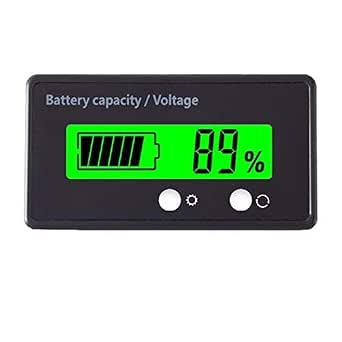 | Best Budget Pick | Input voltage: DC 12–84V | Battery compatibility: Lead-acid and 3S–26S lithium | Display: LCD with green backlight | VIEW LATEST PRICE | See Our Full Breakdown |
| AILI TR16 Shunt Battery Monitor, 8–120V, 500A |  | Best Value Shunt Monitor | Voltage range: 8–120V | Supported systems: 12V, 24V, 36V, 48V | Maximum current: 500A | VIEW LATEST PRICE | See Our Full Breakdown |
| IPX7 Waterproof Battery Monitor, 7–100V, with Mounting Bracket, Temperature Display, and Buzzer Alarm |  | Best for Outdoor and Wet Environments | Voltage range: 7–100V | Compatible batteries: Ternary lithium, lead-acid, AGM, LiFePO4 | Display: Voltage and temperature (Celsius) | VIEW LATEST PRICE | See Our Full Breakdown |
| BINTA Battery Monitor with Shunt, 8–120V, 0–500A |  | Best for Monitoring Charge and Discharge Direction | Operating voltage: 8–120V | Maximum peak current: 500A | Continuous current: 350A | VIEW LATEST PRICE | See Our Full Breakdown |
| DROK Waterproof Battery Monitor, 8–100V |  | Best for Wet Environments | Working voltage: 8–100V | Operating current: ≤15mA | Display: Multicolored LCD | VIEW LATEST PRICE | See Our Full Breakdown |
| LiTime 500A Battery Monitor with Shunt | 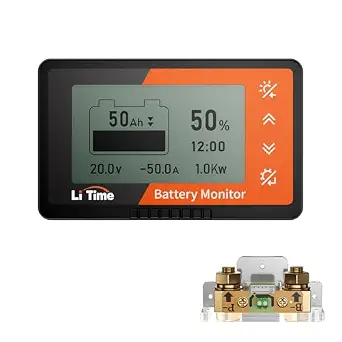 | Best Shunt-Based Value | Maximum current: 500A | Operating voltage: 8–120V | Capacity range: 0–9999Ah | VIEW LATEST PRICE | See Our Full Breakdown |
| DROK 10–100V Digital Battery Monitor with LCD Display and Temperature Gauge |  | Best Budget Pick | Voltage range: 10–100V | Compatible battery types: Lithium, lead-acid, LiFePO4, NiMH | Temperature display: Fahrenheit | VIEW LATEST PRICE | See Our Full Breakdown |
| OBDResource LED Battery Capacity Monitor for 12V–72V Batteries |  | Best for Golf Carts | Compatible voltage: 12V, 24V, 36V, 48V, 60V, 72V | Battery types: Lead-acid, lithium-ion, LiFePO4 | Display: 10-segment LED bar graph | VIEW LATEST PRICE | See Our Full Breakdown |
| Victron Energy SmartShunt Battery Monitor, 6.5–70 V, 500 A |  | Best Smart Ecosystem Pick | Voltage range: 6.5–70 V | Maximum current: 500 A | Connectivity: Bluetooth | VIEW LATEST PRICE | See Our Full Breakdown |
| Renogy 500A Battery Monitor with Shunt |  | Best Overall for Whole-System 48V Monitoring | Maximum current: 500A | Measurement accuracy: 1% | Compatible system voltages: 12V, 24V, 48V | VIEW LATEST PRICE | See Our Full Breakdown |
| QWORK Battery Monitor Voltmeter and Ammeter with 13 ft Cable |  | Best Value Shunt Monitor | Voltage range: 8–80 V | Maximum current: 350 A (per description) | Capacity tracking: Up to 999 Ah | VIEW LATEST PRICE | See Our Full Breakdown |
| DROK Digital Multimeter and Battery Monitor, 8–100V, 100A, Color LCD |  | Best Display Quality | Voltage range: 8–100 V | Current range: 0.05–100 A | Power range: 0–50 kW | VIEW LATEST PRICE | See Our Full Breakdown |
| DR DRACLISS Digital Battery Voltage Meter with Bracket |  | Best Budget Pick for Basic Monitoring | Measurement range: DC 7–100 V | Compatible battery voltages: 12V–84V including 48V | Compatible batteries: Lithium, LiFePO4, lead-acid, solar | VIEW LATEST PRICE | See Our Full Breakdown |
| CGELE DC Multifunction Battery Monitor with Shunt, 0–200V, 0–100A |  | Best for Diagnostics and Data Depth | Measurement functions: 9 (voltage, current, power, impedance, internal resistance, capacity, SOC, energy, runtime) | Voltage range: 0–200 V | Current range: 0–100 A | VIEW LATEST PRICE | See Our Full Breakdown |
| 48V power monitor | Display |
|---|---|
| ECO-WORTHY ESM100 48V Battery | 4.3-inch full-color capacitive touchscreen |
| Battery Capacity Indicator wit | LCD with green backlight |
| AILI TR16 Shunt Battery Monito | Backlit LCD |
| IPX7 Waterproof Battery Monito | Voltage and temperature (Celsius) |
| BINTA Battery Monitor with Shu | Backlit circular display |
| DROK Waterproof Battery Monito | Multicolored LCD |
| LiTime 500A Battery Monitor wi | — |
| DROK 10–100V Digital Battery M | — |
| OBDResource LED Battery Capaci | 10-segment LED bar graph |
| Victron Energy SmartShunt Batt | — |
| Renogy 500A Battery Monitor wi | Backlit high-definition display |
| QWORK Battery Monitor Voltmete | Backlit LCD |
| DROK Digital Multimeter and Ba | 2.4-inch color LCD |
| DR DRACLISS Digital Battery Vo | Backlit LCD showing voltage and remaining capacity |
| CGELE DC Multifunction Battery | Backlit LCD |
More Details on Our Top Picks
ECO-WORTHY ESM100 48V Battery Monitor with 4.3-Inch Touchscreen
Most 48V monitors in this roundup are generic shunt or voltage meters that work with any battery but tell you little about what’s happening inside the pack. The ESM100 takes the opposite approach: it’s a dedicated companion screen for ECO-WORTHY 48V 100Ah Server Rack batteries, and that focus buys you data the others can’t show — per-cell status, four temperature readings, and state of charge straight from the battery management system rather than estimated from a shunt. The 4.3-inch capacitive touchscreen is also a step up in usability compared with button-driven units like the AILI TR16. The tradeoff is hard compatibility walls: it speaks only over RS232, won’t work with V2 batteries, and is useless outside the ECO-WORTHY ecosystem. If you already own matching racks, it’s the most informative option here; everyone else should skip it.
Pros:- Shows cell status, temperature at four points, voltage, current, and true state of charge from the BMS
- Full-color touchscreen is easier to navigate than button-based rivals
- Very low power draw (under 1W operating, under 0.1W standby)
- Can configure inverter parameters and mounts magnetically
Cons:- Locked to ECO-WORTHY 48V 100Ah Server Rack batteries, V3 and newer only
- RS232 interface means no compatibility with generic systems or other brands
Best for: Owners of ECO-WORTHY 48V 100Ah Server Rack batteries (V3 or newer) who want cell-level and temperature data on a wall-mounted touchscreen
Not ideal for: Anyone running other battery brands or older V2 ECO-WORTHY packs — it simply won’t connect
- Compatibility:ECO-WORTHY 48V 100Ah Server Rack Series, V3 and newer
- Display:4.3-inch full-color capacitive touchscreen
- Interface:RS232
- Temperature sensors:4
- Operating temperature:-4°F to 167°F
- Power consumption:<1W operating, <0.1W standby
- Languages:English, Chinese, Ukrainian
- Mounting:Magnetic strip; auto-sleep after 30 seconds
Our verdict“The obvious pick only if you’ve standardized on ECO-WORTHY server rack batteries — its depth of data is unmatched in this lineup but its compatibility is the narrowest.”
Battery Capacity Indicator with LCD Display
If you just need to know roughly where your 48V pack stands without wiring a shunt, this is the cheapest path to an answer in the roundup. It covers DC 12–84V across lead-acid and 3S–26S lithium — the 48V (roughly 15S–16S) range sits comfortably in the middle — and lets you toggle between a battery icon with percentage and a plain voltmeter mode. Compared with the AILI TR16 or BINTA, it lacks true current and amp-hour tracking because it reads voltage only, so its percentage figure is an estimate rather than a measured state of charge. Build-wise, the waterproofing is a surface film, not a sealed housing like the IPX7-rated unit in this guide, so treat it as an indoor or sheltered-mount device. As a low-commitment gauge, though, it’s hard to beat for simplicity.
Pros:- Wide 12–84V input range suits lead-acid and 3S–26S lithium packs
- Two display modes: battery symbol with percentage or voltmeter
- Reverse-polarity protection reduces the risk of a wiring mistake
- Simple two-wire install with no shunt required
Cons:- Percentage is voltage-derived, so it’s less accurate than shunt-based monitors
- Waterproofing is only a surface film, not a rated enclosure
Best for: Hobbyists and DIY builders who want a quick, inexpensive voltage-and-percentage readout on a 48V lithium or lead-acid bank
Not ideal for: Anyone who needs accurate state of charge under load — voltage-based estimates drift, unlike shunt-based monitors
- Input voltage:DC 12–84V
- Battery compatibility:Lead-acid and 3S–26S lithium
- Display:LCD with green backlight
- Display modes:Battery symbol with percentage or voltmeter
- Cable length:30 cm
- Protection:Reverse-polarity protection
- Water resistance:Waterproof surface film
Our verdict“A sensible low-cost gauge for casual monitoring, as long as you accept that it estimates rather than measures state of charge.”
AILI TR16 Shunt Battery Monitor, 8–120V, 500A
This is where measured, shunt-based state of charge becomes affordable for 48V systems. Unlike the voltage-only LCD Capacity Indicator, the TR16 counts actual amp-hours in and out, so its remaining-capacity figure holds up under load, and it handles 12V through 48V systems at up to 500A — enough headroom for an inverter-heavy solar setup. Standby draw sits around 50–60μA, which means it won’t meaningfully drain the bank it’s watching, and settings survive a power cycle. It lacks the app connectivity of the Victron SmartShunt and the temperature display of the IPX7 monitor, so you’re reading everything from the backlit LCD at the unit. The main annoyance: you must break your negative cable to wire in the shunt, and the documentation is vague about whether you get the 350A or 500A shunt, worth confirming before a high-current install.
Pros:- Shunt-based measurement gives accurate state of charge under load
- Broad compatibility: 12/24/36/48V systems and LiFePO4, lithium-ion, AGM, gel, and lead-acid
- Very low 50–60μA standby draw with memory retention
- Complete kit with display, 2m extension cable, shunt, and manual
Cons:- Requires cutting into the main negative lead to install the shunt
- Ambiguity over whether the included shunt is the 350A or 500A unit
Best for: Solar and off-grid builders who want true amp-hour-based state of charge on a 48V bank without paying smart-monitor prices
Not ideal for: Users who want phone-based monitoring or remote logging — this is a local-display-only device
- Voltage range:8–120V
- Supported systems:12V, 24V, 36V, 48V
- Maximum current:500A
- Capacity range:0.1–999Ah
- Compatible battery types:LiFePO4, lithium-ion, AGM, gel, lead-acid
- Standby current:50–60μA
- Display:Backlit LCD
- Included components:Display meter, 2m extension cable, 350A/500A shunt, user manual
Our verdict“The best accuracy-per-dollar choice here for 48V systems, provided you’re comfortable with basic shunt wiring.”
IPX7 Waterproof Battery Monitor, 7–100V, with Mounting Bracket, Temperature Display, and Buzzer Alarm
Every other monitor in this batch assumes a sheltered install; this one is built to live outside. Its IPX7-rated housing genuinely tolerates rain and washdown — a real step beyond the surface-film waterproofing on the budget LCD indicator — and the included bracket, screws, and adhesive give you flexible mounting on a boat, tractor, or RV tongue. The adjustable high/low voltage buzzer alarms are the standout feature: neither the AILI TR16 nor the BINTA will audibly warn you when a 48V pack drifts out of safe range, which matters if the battery sits somewhere you don’t constantly look. The catch is that it’s a voltage-based monitor with no shunt, so like the budget pick it estimates capacity rather than measuring it, and you’ll need to set battery parameters correctly at install or the percentage will mislead you. The Celsius-only temperature readout is a minor irritant for US buyers.
Pros:- True IPX7 waterproof housing suitable for outdoor and marine mounting
- Adjustable high and low voltage buzzer alarms protect the battery audibly
- Works with ternary lithium, lead-acid, AGM, and LiFePO4 from 7–100V
- Retains settings through power loss; bracket and hardware included
Cons:- No shunt, so state-of-charge accuracy trails the AILI TR16 and BINTA
- Temperature displays in Celsius only and setup is required for correct percentage
Best for: Boaters, RV owners, and anyone monitoring a 48V battery exposed to weather who wants an audible low-voltage warning
Not ideal for: Stationary indoor solar setups — you’d give up shunt-level accuracy for weatherproofing you don’t need
- Voltage range:7–100V
- Compatible batteries:Ternary lithium, lead-acid, AGM, LiFePO4
- Display:Voltage and temperature (Celsius)
- Alarms:Adjustable high and low voltage buzzer alarms
- Memory:Retains settings when power is removed
- Wire length:23.62 inches (60 cm)
- Included accessories:Mounting bracket, double-sided adhesive, screws
Our verdict“The pick for wet or outdoor 48V installs where alarms and weather resistance matter more than amp-hour precision.”
BINTA Battery Monitor with Shunt, 8–120V, 0–500A
What separates the BINTA from the otherwise similar AILI TR16 is two-way current detection: it tracks flow in both directions, so a solar-and-inverter 48V system shows accurate net capacity whether the bank is charging or discharging — a genuine advantage when you’re feeding panels and pulling loads through the same shunt. It also retains not just settings but the last recorded data through a shutdown, and the kit’s generous 3m shielded cables give you more placement freedom than the TR16’s 2m lead, which matters if your display lives on a wall away from the battery bay. The honest weakness is current headroom: the rating is 350A continuous against a 500A peak, so sustained high-power inverter loads sit closer to the limit than the headline number suggests. Chemistry support is solid but narrower than AILI’s, skipping AGM and gel as named types.
Pros:- Two-way current detection keeps net capacity accurate while charging and discharging
- Long 3m shielded cables allow remote display placement
- Retains settings and last recorded data through power-off
- Covers lead-acid, LiFePO4, and lithium-ion from 8–120V with auto-sleep
Cons:- 350A continuous rating limits sustained high-draw inverter setups
- Wiring and initial setup are more involved than plug-in voltage gauges
- Fewer explicitly supported chemistries than the AILI TR16
Best for: 48V solar users who want bidirectional tracking of charging and discharging with a long cable run to the display
Not ideal for: Systems with sustained loads above 350A — the continuous rating is well below the advertised peak
- Operating voltage:8–120V
- Maximum peak current:500A
- Continuous current:350A
- Maximum capacity:999Ah
- Compatible battery types:Lead-acid, LiFePO4, lithium-ion
- Display:Backlit circular display
- Auto-sleep current:<50mA
- Included cables:3m/10ft shielded cables, 1m/3.3ft positive wire
- Dimensions / weight:2.31 × 0.78 × 2.31 inches, 450g
Our verdict“A strong choice for bidirectional 48V monitoring with a longer reach than rivals — just size your loads against the 350A continuous limit.”
DROK Waterproof Battery Monitor, 8–100V
Most 48V monitors in this roundup, including the LiTime 500A, demand a dry mounting spot, which rules out golf carts stored outdoors or boats exposed to spray. This DROK takes the opposite approach: its waterproof housing and reverse-polarity protection make it the pick that survives conditions others can’t. The color LCD shows voltage, capacity, and remaining percentage at a glance, and the automatic save on power loss means a dead battery doesn’t wipe your settings. The tradeoff is simplicity — there’s no shunt, so current draw and true state of charge remain a mystery compared to shunt-based rivals. You’ll also need to cut a panel hole, and the meter itself draws up to 15mA continuously.
Pros:- Waterproof build with reverse-polarity protection
- Shows voltage, capacity, and remaining charge percentage
- Supports lithium, lead-acid, ternary lithium, and polymer chemistries across 8–100V
- Low-voltage alarm plus automatic setting save after power loss
Cons:- Requires cutting a 58.5 x 28.5 mm panel hole for installation
- Draws up to 15mA continuously, which matters on stored vehicles
Best for: Boat, golf cart, and motorcycle owners who need a monitor that shrugs off rain and washdowns without a shunt-based system
Not ideal for: Anyone who wants current, power, and time-remaining data — this is a voltage and capacity reader only
- Working voltage:8–100V
- Operating current:≤15mA
- Display:Multicolored LCD
- Protection features:Waterproof, reverse-polarity protection, auto-save, low-voltage alarm
- Compatible battery types:Lithium, lead-acid, ternary lithium, polymer lithium-ion
- Installation dimensions:58.5 × 28.5 mm
- Compatible devices:Motorcycle, golf cart, car, marine, RV, boat, solar generator
Our verdict“This is the monitor to buy when weather exposure, not data depth, is your deciding factor.”
LiTime 500A Battery Monitor with Shunt
Compared with the Victron SmartShunt, the LiTime delivers the same core measurement suite — voltage, current, power, state of charge, and estimated time remaining — at a friendlier price, and it does so with a built-in backlit LCD rather than requiring your phone as a display. The 500A shunt handles big loads, the ±1% accuracy holds its own against pricier rivals like the Renogy 500A, and the 20-foot shielded cable gives real flexibility for RV or off-grid installs where the display lives far from the battery bank. The catch: it’s not waterproof, so it needs a protected mounting location, and there’s no app connectivity or ecosystem integration — this is a standalone display, full stop.
Pros:- Tracks voltage, current, power, capacity, state of charge, and estimated remaining time
- Configurable low-voltage and capacity alarms with audible and visual alerts
- Covers 8–120V systems across Li-ion, LiFePO4, AGM, and Gel batteries
- Backlit display with a generous 20-foot shielded cable
Cons:- Not waterproof — requires a dry installation environment
- No wireless connectivity or smartphone app
Best for: RV and off-grid solar owners who want full shunt-based monitoring with a physical display and configurable alarms
Not ideal for: Anyone wanting app-based monitoring or a meter exposed to the elements — it’s dry-location only
- Maximum current:500A
- Operating voltage:8–120V
- Capacity range:0–9999Ah
- Accuracy:±1%
- Terminals:M8
- Cable length:20 ft shielded
- Warranty:1 year, CE certified
Our verdict“The strongest value among shunt-based picks for buyers who want complete battery data on a physical screen.”
DROK 10–100V Digital Battery Monitor with LCD Display and Temperature Gauge
Where the DROK waterproof model earns its keep in harsh conditions, this sibling wins on price and simplicity for sheltered installs. It reads voltage and capacity across 10–100V, and it ships preconfigured for a 48V lead-acid battery — a genuine convenience for the exact readers of this guide, since no programming is needed out of the box. Lithium, LiFePO4, and NiMH users will need to set a custom voltage-to-percentage curve, which is straightforward but not automatic. The Fahrenheit temperature readout is a nice touch, though be aware it reflects the meter’s internal temperature, not ambient air. Compared to shunt options like the AILI TR16, you give up current and true state-of-charge tracking in exchange for a lower cost and easier wiring.
Pros:- Wide 10–100V range covers 12V through 48V systems
- Defaults to a 48V lead-acid configuration, ready out of the box
- Handles lithium, lead-acid, LiFePO4, and NiMH chemistries
- Built-in Fahrenheit temperature display
Cons:- Temperature reading measures the meter’s internals, not ambient air
- Non-default battery setups require manual voltage-to-percentage programming
Best for: 48V lead-acid system owners who want a plug-and-play voltage and capacity readout without spending shunt money
Not ideal for: Lithium users expecting accurate state of charge without manual programming, or anyone needing current draw data
- Voltage range:10–100V
- Compatible battery types:Lithium, lead-acid, LiFePO4, NiMH
- Temperature display:Fahrenheit
- Default setting:48V lead-acid battery
- Model:AT-A
- Power source:Battery powered
Our verdict“The cheapest sensible way to put a 48V battery readout on your panel, as long as you don’t expect shunt-level accuracy.”
OBDResource LED Battery Capacity Monitor for 12V–72V Batteries
Instead of an LCD packed with numbers, this monitor gives you a 10-segment LED bar graph that reads like a fuel gauge — glanceable from the driver’s seat of a cart in a way that the DROK LCD models simply aren’t at distance. It’s built specifically around golf cart duty: compatibility listings name Yamaha, EZGO, and Club Car, it covers 12V through 72V packs, and the IP65 rating handles dashboard humidity and occasional rain. Two wiring options and no external power requirement keep installation painless. The friction comes in setup — the DIP switch must match your pack voltage exactly, or the capacity reading will be wrong — and the 37 x 25 mm panel cutout needs to be precise for a clean fit.
Pros:- 10-segment LED bar graph readable at a glance while driving
- Covers 12V–72V packs in lead-acid, lithium-ion, and LiFePO4 chemistries
- Two wiring options with no external power supply needed
- IP65 water resistance with reverse-connection protection
Cons:- DIP switch must be set to the correct voltage or readings will be inaccurate
- Panel install requires a precise 37 x 25 mm cutout
Best for: Golf cart and electric vehicle owners who want an instantly readable fuel-gauge-style display
Not ideal for: Anyone who wants detailed numbers like amps, watts, or time remaining — this is a percentage bar only
- Compatible voltage:12V, 24V, 36V, 48V, 60V, 72V
- Battery types:Lead-acid, lithium-ion, LiFePO4
- Display:10-segment LED bar graph
- Water resistance:IP65
- Part number:BM210
- Compatible devices:Yamaha, EZGO, Club Car, motorcycles, electric carts, lawn mowers
Our verdict“Purpose-built for golf cart dashes where a quick visual charge check beats a screen full of data.”
Victron Energy SmartShunt Battery Monitor, 6.5–70 V, 500 A
The SmartShunt skips a screen entirely — your phone is the display via the VictronConnect app, which shows state of charge, voltage, current, amp hours, and discharge history with alarm notifications. That history logging is something no standalone LCD in this lineup, not even the LiTime 500A, can match, and it’s what makes long-term battery health trends actually visible. Data sharing with compatible Victron devices pulls everything into one dashboard if you already run Victron gear. Two caveats shape the buying decision: the 70V ceiling just clears a 48V lithium bank’s charging voltage but leaves no headroom for higher-voltage systems, and temperature monitoring requires an optional external sensor. If you’re not invested in the Victron ecosystem, some of its appeal goes unused.
Pros:- Detailed readings plus long-term discharge history in the VictronConnect app
- Bluetooth alarm notifications straight to your phone
- Shares data wirelessly with compatible Victron devices
- Auxiliary connection supports a second battery, midpoint monitoring, or temperature sensing
Cons:- Some integrations only pay off if you own other Victron equipment
- Temperature monitoring requires an optional separate sensor
- 70V maximum leaves limited headroom above 48V lithium charging voltages
Best for: 48V system owners already running Victron equipment, or anyone who wants discharge history and app-based monitoring
Not ideal for: Buyers who want a standalone always-on display — there’s no screen, and full ecosystem benefits assume other Victron gear
- Voltage range:6.5–70 V
- Maximum current:500 A
- Connectivity:Bluetooth
- App:VictronConnect
- Auxiliary connection:Second battery, midpoint monitoring, or optional temperature sensor
- Additional use:DC energy meter
Our verdict“The clear choice for Victron-equipped 48V systems that prioritize data depth and smartphone control over a built-in display.”
Renogy 500A Battery Monitor with Shunt
For a 48V off-grid or RV setup, this option stands out as the most complete full-system tracking package in the lineup. Unlike the DR DRACLISS, which only estimates capacity from voltage, the Renogy uses a true shunt-based measurement, counting every amp-hour in and out for a genuinely accurate state of charge across lithium and lead-acid chemistries. Compared with the QWORK, it doubles the usable current ceiling to 500A, which matters if an inverter draws heavy loads on a 48V bank. The 1% stated accuracy and battery degradation readout go beyond what most competitors here offer.
The tradeoff is installation effort: the shunt must be wired into the negative path, so this is not a stick-on-and-go solution. Mounting hardware is also not specified in the listing, so plan on sourcing screws or brackets separately.
Pros:- True shunt-based amp-hour counting for accurate state of charge on 48V banks
- 500A capacity handles large inverter loads common in 48V systems
- Broad chemistry support: AGM, GEL, LiFePO4, lithium-ion, and NiMH
- Battery degradation tracking and high/low capacity alarms
Cons:- Requires shunt installation in the negative battery path
- Mounting hardware is not confirmed as included
Best for: 48V off-grid solar and RV owners who need precise state-of-charge tracking across mixed battery chemistries and high inverter loads
Not ideal for: Anyone wanting a quick voltage-only readout without running a shunt into the battery circuit
- Maximum current:500A
- Measurement accuracy:1%
- Compatible system voltages:12V, 24V, 48V
- Compatible battery types:Lead-acid (AGM, GEL), LiFePO4, lithium-ion, NiMH
- Cable length:20 ft shielded
- Display:Backlit high-definition display
- Alarms:High and low battery capacity
Our verdict“If accurate, whole-bank data on a 48V system is the priority, this is the most capable monitor in the roundup and worth the extra wiring work.”
QWORK Battery Monitor Voltmeter and Ammeter with 13 ft Cable
This model makes the most sense for buyers who want shunt-based accuracy without the premium price of the Renogy or Victron SmartShunt. It tracks voltage, current, and state of charge with a 350A shunt included, covering the needs of most mid-size 48V banks. The parameter memory after power loss is a nice touch the DROK color LCD model doesn’t match — your calibration and capacity settings survive a battery disconnect.
Two things hold it back from a higher spot. First, the listing is internally inconsistent on current rating: the title claims 500A while the description specifies 350A, so cautious buyers should assume the lower figure. Second, its 13-foot cable is shorter than Renogy’s 20-foot run, which can complicate placement in a large motorhome where the display and battery bank sit far apart.
Pros:- Shunt-based state-of-charge tracking at a lower cost than premium brands
- Memory retains settings and test parameters after power disconnection
- Backlit LCD readable in dim compartments
- 13 ft cable suits most compact RV installations
Cons:- Conflicting current ratings between title (500A) and description (350A)
- Shorter cable than the Renogy limits flexible display placement
Best for: Budget-conscious RV and motorhome owners adding shunt-based monitoring to a 48V bank without paying premium-brand prices
Not ideal for: High-draw 48V inverter setups, since the verified current rating is only 350A
- Voltage range:8–80 V
- Maximum current:350 A (per description)
- Capacity tracking:Up to 999 Ah
- Cable length:13 ft
- Display:Backlit LCD
- Weight:400 g
Our verdict“A sensible value pick for moderate-load 48V systems, as long as you trust the conservative 350A rating.”
DROK Digital Multimeter and Battery Monitor, 8–100V, 100A, Color LCD
Where this model separates itself is readability: the 2.4-inch color LCD delivers clearer readings in direct sun or at night than the monochrome screens on the QWORK or CGELE. For a 48V system mounted in a bright cabin or engine bay, that difference is practical, not cosmetic. It also refreshes 20 times per second, so transient loads and spikes show up on screen rather than averaging away.
The catch is current capacity. At 100A maximum, it handles far less than the Renogy’s 500A or even the QWORK’s 350A, meaning big inverters will exceed its range. Its alert system is unusually flexible, though — the backlight flashes for low capacity, low voltage, or high charging current, a fault type most rivals here ignore entirely. Voltage accuracy of ±1% plus 2 digits is adequate but slightly less precise than the Renogy’s stated 1%.
Pros:- Color LCD stays readable in daylight and darkness
- 20 measurements per second catch transient loads
- Flashing alerts cover low capacity, low voltage, and high charging current
- Wide 8–100V range covers 48V banks with headroom
Cons:- 100A current ceiling is the lowest among shunt-adjacent picks here
- Voltage accuracy of ±1% + 2 digits trails the Renogy
Best for: Owners of lighter-load 48V setups who value a crisp, glanceable display and fast refresh over massive current capacity
Not ideal for: Systems running large inverters or charging above 100A, which will exceed the measurement range
- Voltage range:8–100 V
- Current range:0.05–100 A
- Power range:0–50 kW
- Capacity range:0.1–99,999 Ah
- Voltage accuracy:±1% + 2 digits
- Display:2.4-inch color LCD
- Measurement speed:20 times/s
- Warranty:1 year
Our verdict“Choose it for display clarity and alert flexibility on modest loads, not for high-current 48V inverter systems.”
DR DRACLISS Digital Battery Voltage Meter with Bracket
This is the simplest entry on the list, and that’s its strength. Unlike the Renogy or QWORK, it needs no shunt at all — just panel-mount it, connect, and read voltage plus estimated remaining capacity. The IP67 waterproof rating is the standout differentiator, matching the DROK waterproof monitor for durability while adding a mounting bracket and hardware the Renogy listing doesn’t confirm. For a 48V golf cart, e-bike, or exposed marine install, that sealed build matters more than precision.
The tradeoff is accuracy: because it infers capacity from voltage rather than counting amp-hours, lithium batteries with flat discharge curves will read optimistically until sudden drops. And the low-voltage alarm fires only below 10%, which leaves almost no reserve margin on a 48V bank that dislikes deep discharge.
Pros:- IP67 waterproof and dustproof rating for exposed installations
- No shunt required — fastest install in the roundup
- Covers 12V through 84V systems including 48V
- Very low power draw under 15 mA operating
Cons:- Voltage-based capacity estimate is unreliable on flat lithium discharge curves
- Low-voltage alarm only triggers below 10% capacity, leaving little warning
Best for: Buyers who want a cheap, weatherproof voltage-and-capacity readout for exposed 48V installs like golf carts, boats, or outdoor solar enclosures
Not ideal for: Anyone who needs dependable state-of-charge data on lithium banks, since voltage-based estimates miss the flat discharge curve
- Measurement range:DC 7–100 V
- Compatible battery voltages:12V–84V including 48V
- Compatible batteries:Lithium, LiFePO4, lead-acid, solar
- Display:Backlit LCD showing voltage and remaining capacity
- Power consumption:<15 mA operating, <1 mA low-power mode
- Dimensions:2.36 x 2.36 x 1.97 inches
Our verdict“A rugged, no-fuss readout for weather-exposed 48V gear — just don’t expect shunt-grade accuracy from it.”
CGELE DC Multifunction Battery Monitor with Shunt, 0–200V, 0–100A
This model carves out a niche none of the others occupy: diagnostic depth. Alongside the usual voltage, current, power, and capacity, it measures internal resistance and impedance — metrics that help judge battery health over time, something the Renogy and QWORK can’t do. It also logs energy in kWh and running time, useful for auditing a 48V solar system’s production and consumption rather than just watching a state-of-charge percentage. The screw-free press-in terminals make installation noticeably less fiddly than traditional screw terminals on comparable shunt monitors.
Its limits mirror the DROK’s: at 100A maximum, it suits monitoring and diagnostic roles rather than high-draw inverter circuits. And with a minimum operating voltage of 9.99V, it depends on the battery itself to stay powered, unlike the DR DRACLISS’s 7V floor.
Pros:- Nine measurement functions including internal resistance and impedance
- Energy tracking in kWh and cumulative running time
- Screw-free press terminals speed up wiring changes
- Wide 0–200V range covers 48V and higher-voltage banks
Cons:- 100A current limit excludes inverter-scale loads
- Requires a 9.99V minimum supply, limiting use on deeply discharged banks
Best for: Solar tinkerers and technicians who want internal resistance, kWh energy totals, and runtime data for diagnosing 48V battery health
Not ideal for: Main monitoring of high-current systems, given the 100A ceiling
- Measurement functions:9 (voltage, current, power, impedance, internal resistance, capacity, SOC, energy, runtime)
- Voltage range:0–200 V
- Current range:0–100 A
- Power range:0–60,000 W
- Capacity range:0–1,000 Ah
- Measurement accuracy:1%
- Display:Backlit LCD
- Weight:171.9 g
Our verdict“The pick for data-hungry users who want battery-health diagnostics, provided their 48V system stays under 100A.”

How We Picked
I evaluated each monitor against the demands of real 48V systems, where charging voltages can push past 58V and current draw from inverters regularly spikes well beyond what 12V users see. Voltage range headroom was the first filter — anything with a 60V ceiling got flagged, since a 48V bank being charged sits dangerously close to that limit. Next came measurement method: shunt-based monitors that count actual amp-hours rank above voltage-only meters because they remain accurate on lithium chemistry, where voltage barely moves through 80% of the discharge curve. I also weighed display usability, build and waterproofing, installation complexity, and whether the unit offers app connectivity or alarm outputs for unattended systems.
The ranking logic follows a clear hierarchy: full-featured shunt monitors with proven accuracy sit at the top, mid-tier shunt units fill the value positions, and voltage-only meters occupy the budget end where their limitations are an acceptable tradeoff for the price and simplicity. Within each tier, extras like temperature sensing, programmable alarms, and backlight quality separated otherwise similar units. Every pick was judged on what a 48V buyer actually needs — not on generic features that look good on a listing page.
Factors to Consider When Choosing Best 48V Power Monitors
A 48V monitor is a small purchase that shapes how well you understand your entire power system, and the wrong choice can leave you guessing about state of charge for years. Before committing to any of the 15 models above, work through these factors in order of importance.Match the Voltage Range to Your Charging Profile
The most common mistake 48V buyers make is checking the nominal voltage and nothing else. A 48V lithium bank charges to 54–58V, and equalization or absorb stages on some chargers push even higher. A monitor rated to 60V is technically compatible but leaves no margin for voltage spikes, and exceeding the ceiling can destroy the unit or corrupt its readings. Look for a rating of at least 100V, or at minimum verify that your charge controller’s maximum output sits comfortably below the monitor’s limit. Buyers running 48V lead-acid with occasional equalization at 60V+ should avoid the tighter-rated smart shunts and lean toward units like the CGELE with its 200V ceiling. This one spec determines whether the monitor survives your system, so check it before anything else.
Shunt Versus Voltage-Only: The Accuracy Question
Voltage-only meters are tempting because they install in minutes and cost a fraction of shunt-based monitors, but their weakness is chemistry-specific. Lithium batteries hold a nearly flat voltage across most of their discharge range, which means a voltage reading can show 13.2V-equivalent health at 30% state of charge — a gap that compounds over a day of use. A shunt measures every amp flowing in and out, so it counts actual energy rather than inferring it, and it stays accurate regardless of chemistry or load spikes. If you run lithium, a shunt monitor is close to mandatory. If you run lead-acid and just want a rough sanity check, a voltage meter is defensible. The mistake to avoid is buying a voltage meter for a lithium bank and trusting its percentage display — it will be confidently wrong exactly when you need it most.
Sizing the Shunt for Your Inverter Loads
A 500A shunt sounds oversized until you do the math on a 48V inverter: a 3000W inverter at full load pulls roughly 65A continuously, but surge loads from compressors, power tools, or microwaves can briefly triple that. Most quality 500A shunts handle these spikes fine, but cheaper 100A units — like the CGELE or the DROK 100A multimeter — will saturate, clip readings, and potentially blow their protection. If your system includes a large inverter or you plan to expand later, buy the bigger shunt now, because retrofitting means rewiring the negative cable run. Also confirm the shunt comes with a properly sized cable and connector; a mismatched harness introduces resistance errors that skew every reading the monitor produces.
Environment and Mounting Realities
Where the monitor lives should drive your shortlist before features do. Golf carts, boats, tractor cabs, and outdoor enclosures expose electronics to moisture and vibration that kill non-sealed displays within a season or two — the IPX7-rated unit and the DROK waterproof model exist precisely for these cases. Indoor wall installations give you freedom to choose touchscreens and app-connected shunts, but check the display’s readability in sunlight; a 4.3-inch LCD that looks crisp indoors can wash out completely in a bright shop or RV window. Also measure your mounting surface: several of these monitors need a standard round panel cutout, while shunt-based units with separate displays let you mount the sensing hardware at the battery and the readout wherever you actually look. Buyers who skip this step end up with a monitor they can’t see or one that fails by winter.
Connectivity: When Smart Features Earn Their Price
Bluetooth and app connectivity sounds like a gimmick until you own it. If your batteries live in a basement, a compartment, or a shed you visit rarely, checking state of charge from your phone changes how you use the system — you notice problems days earlier and stop walking out to read a display. Connectivity also matters for anyone planning a broader ecosystem; the Victron SmartShunt pairs with a whole network of solar and inverter gear sharing one app, which is worth paying for if that’s your direction. But if your monitor mounts at eye level where you already stand every morning, smart features add cost and one more thing to update for little benefit. Buy connectivity for the system you have plus a realistic view of the system you’re building, not for a hypothetical future setup.
Alarms, Temperature, and Data You’ll Actually Use
Programmable low-voltage alarms are the most underrated feature in this category, because a monitor that warns you before a lithium bank dips into damage territory pays for itself in one saved battery. The buzzer-equipped IPX7 monitor and several shunt units support programmable thresholds, while basic voltmeters offer nothing — worth thinking about if your system runs unattended. Temperature display sounds useful but is only genuinely valuable when the sensor sits at the battery rather than at the display, since display-adjacent readings tell you about the room, not the cells. Amp-hour counting, wattage display, and backlit dashboards all add value proportionally to how closely you manage your system. Be honest about your habits: a data-obsessed off-gridder and a set-and-forget cabin owner need very different monitors, and paying for features you’ll never open is its own kind of mistake.
Frequently Asked Questions
Can I use a monitor rated for 12V–72V on my 48V lithium system safely?
Usually yes, but the number to check isn’t the nominal range — it’s the maximum voltage your system reaches during charging. A 48V lithium bank charges to 54–58V, which sits well within a 72V ceiling, but a 48V lead-acid bank undergoing equalization can exceed 60V and creep close to that upper limit. Monitors like the Victron SmartShunt rated to 70V work fine for standard 48V lithium charging profiles but leave little headroom for unusual charge controllers. If your charger’s absorb or equalization voltage comes within a few volts of the monitor’s maximum, choose a unit with a higher rating like the CGELE’s 200V ceiling. When in doubt, look up your charge controller’s output specs before ordering, because a blown input stage usually takes the whole monitor with it.
Why does my voltage meter show full charge when my 48V lithium battery is nearly empty?
This is the fundamental weakness of voltage-only monitoring on lithium chemistry. Lithium cells hold a very flat voltage curve across roughly 20% to 80% state of charge, meaning the voltage barely changes while a large amount of energy leaves the battery. A voltmeter therefore sees a healthy-looking reading long after the battery has substantially discharged, then drops suddenly near the end. Shunt-based monitors like the LiTime or Renogy solve this by counting actual amp-hours in and out rather than inferring charge from voltage. If you’ve already got a voltage meter, treat its percentage display as a rough guide for the middle of the discharge curve only, and plan around a shunt upgrade if accurate state of charge matters to how you run your system.
Where exactly should the shunt be installed in a 48V system?
The shunt must sit in the negative cable path so that every load and every charging source passes through it — nothing should connect directly to the battery’s negative terminal except the shunt’s sensing side. On a 48V system this typically means placing the shunt between the battery negative and the common negative bus bar that feeds your inverter, charge controller, and DC loads. If your charge controller’s negative connects straight to the battery, the monitor will miss all solar input and its state-of-charge math will drift badly within days. Mount the shunt close to the battery to keep the cable run short, and keep it away from moisture unless it’s a sealed design. Getting this placement right is the difference between a monitor you trust and one you constantly recalibrate.
Do I really need a 500A shunt for a typical 48V off-grid setup?
For most residential off-grid systems, a 500A shunt provides comfortable headroom rather than matching your actual loads. A 48V inverter drawing 3000W continuous pulls around 65A, so steady-state usage is modest — but surge events matter. Motor startup on a well pump, refrigerator compressor, or power tool can briefly draw three to five times rated current, and a shunt that saturates during these spikes clips readings and degrades accuracy over time. The 100A options in this lineup suit smaller 48V systems like golf carts or e-bikes with limited accessories, where peak draw stays well under the ceiling. Since replacing a shunt means reworking your main negative cable, buying the larger unit upfront is usually the cheaper decision in the long run.
Is a Bluetooth-capable battery monitor worth the extra cost over a basic display model?
It depends entirely on where your batteries live and how you check them. If your battery bank sits in a compartment, basement, or outbuilding, remote monitoring via phone means you actually look at your data instead of walking to a display — and owners who check frequently catch problems like a failing cell or parasitic drain days earlier. Bluetooth also enables logging, so you can review consumption trends that a static display can’t show you. On the other hand, if your monitor mounts at eye level in a van or cabin where you already stand each morning, connectivity adds cost, an app to maintain, and little daily value. Buyers planning a larger ecosystem benefit most, since the Victron SmartShunt integrates with an entire family of chargers, inverters, and solar gear under one app, which spreads the premium across the whole system.
Conclusion
After comparing all 15 monitors, the right pick depends less on specs and more on how you use your 48V system. For the best overall choice, the Victron Energy SmartShunt earns the top spot with unmatched accuracy, Bluetooth monitoring, and ecosystem integration — ideal for serious off-grid and solar buyers. The ECO-WORTHY ESM100 is the stronger pick if you prefer a full touchscreen dashboard over app-based monitoring. For best value, the AILI TR16 and LiTime 500A deliver 500A shunt accuracy and programmable alarms at a price that undercuts the premium tier without giving up the fundamentals. Beginners setting up their first monitor should start with the Renogy 500A, whose documentation and familiar kit format make installation the least intimidating of the shunt options. For specific needs: choose the IPX7 waterproof monitor or DROK waterproof model for boats, golf carts, and exposed installs; pick the CGELE with its 200V range for high-voltage 48V lead-acid systems; and grab a DROK or OBDResource voltage meter if you just want a cheap, fast sanity check on a lead-acid bank. Whatever your choice, match the voltage rating to your charger first, then buy the accuracy level your chemistry actually requires — those two decisions narrow this list faster than any feature comparison.
Halloween Picks
halloween
As an affiliate, we earn on qualifying purchases.