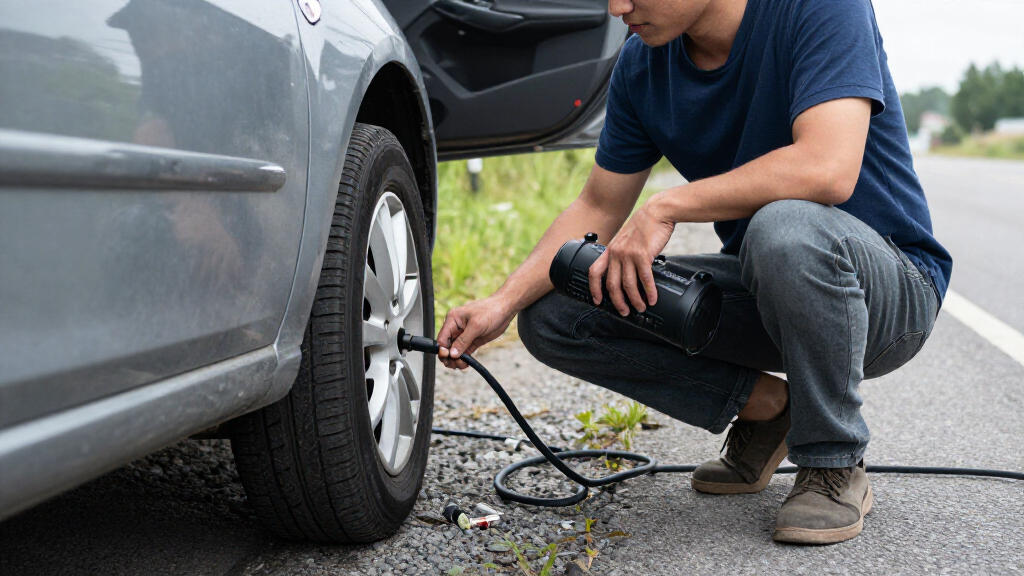
For most drivers, the DEWALT Tire Inflator is my best overall pick because its digital gauge and auto shutoff make routine tire top-ups straightforward. The OlarHike Dual Power stands out for drivers who want both a rechargeable battery and a 12V car connection, while the Craftsman 12V Inflator suits anyone who prefers a corded unit without a battery to keep charged. Choosing among portable tire inflators for cars comes down to the tradeoff between cordless convenience, dependable access to vehicle power, and the size or versatility you need. Some models also suit bicycles and motorcycles better than frequent car-tire inflation. Read on for the full breakdown and buying advice.

Get business pricing on garage and car supplies
- Business-only prices and quantity discounts
- Tax-exempt purchasing
- Multiple users, one account, clear invoices
Complete the kit


Key Takeaways
- Power-source flexibility separates the most adaptable picks: OlarHike’s dual-power design can run from its rechargeable battery or a 12V outlet, while corded models rely on vehicle power and cordless models depend on a charged battery.
- Auto shutoff and a digital gauge matter more for routine top-ups than a high PSI headline: several listed inflators offer these controls, so buyers should compare usability and power arrangements rather than choosing by maximum pressure alone.
- The lineup includes distinctly different use cases: the Craftsman and DEWALT options are car-focused, while Airmoto, OlarHike’s cordless bike pump, and AstroAI L7 also target bicycle use.
- Battery capacity and charging plans are practical buying questions: cordless options offer freedom from the 12V cord but need charging before use; a 12V model avoids battery readiness concerns but requires access to the car socket.
- Brand familiarity does not settle the ranking: the specific power source, controls, and intended use distinguish products even within the Craftsman and AstroAI ranges.


| portable tire inflators for car | Maximum pressure | Weight | Dimensions | Power source |
|---|---|---|---|---|
| Craftsman Portable Tire Inflat | 150 PSI | 1.3 lbs | 5 x 3 x 8 inches | — |
| Airmoto Portable Tire Inflator | 120 PSI | 1.2 pounds | 6.1 x 2.4 x 1.59 inches | Battery powered, 7.4 volts |
| 160 PSI Portable Tire Inflator | 160 PSI | — | — | — |
| OlarHike Tire Inflator Portabl | 51 PSI | 1.2 pounds | 6.5 x 2.76 x 2.17 inches | — |
| Craftsman Portable 12V Tire In | 150 PSI | 1.13 kg | — | — |
| DEWALT Tire Inflator Portable | 150 PSI | 0.63 kg | 3.7 × 7.1 × 4.1 inches | — |
| AstroAI AIRUN H Tire Inflator | 100 PSI | 800 g | — | 12V DC |
| OlarHike Portable Tire Inflato | 160 PSI | 15.52 oz | 5.91 × 2.76 × 1.97 inches | Rechargeable battery |
| Lamicall Car Tire Inflator Por | 150 PSI | 450 g | 6.3 × 2.7 × 2.1 inches | Built-in rechargeable battery |
| Avid Power Cordless Tire Infla | 100 PSI | 1.8 kg | — | — |
| 150 PSI Portable Tire Inflator | 150 PSI (10.34 bar) | 0.88 kg | — | 12V DC |
| Portable Cordless Tire Inflato | 150 PSI | 16 oz | 3.3 × 1.8 × 5.5 in | Lithium-ion battery and 12V DC car power |
| AstroAI Cordless Tire Inflator | 160 PSI | 1.15 kg | 6.69 × 3.15 × 9.45 in | Battery and 12V DC adapter |
| AstroAI Portable Tire Inflator | 100 PSI | — | 6.3 × 3.07 × 7.87 in | 12V |
| AstroAI L7 Tire Inflator Porta | 150 PSI | 15.36 oz | — | Battery powered |
More Details on Our Top Picks
Craftsman Portable Tire Inflator with Digital Pressure Gauge and 6000mAh Battery
The 6000mAh battery and stated 36 L/min flow rate give this Craftsman a stronger case for car-tire top-ups than the smaller-battery Airmoto, while its digital gauge and automatic shut-off help limit guesswork. At 1.3 pounds, it remains easy to stow for roadside use, and the LED light adds help when checking a tire after dark. Its 150 PSI maximum is ample headroom for typical car tires, but that figure does not mean it is suited to high-volume inflation. The key compromise is endurance: the product data says it can inflate up to four car tires per charge, so frequent users or households topping up several vehicles may prefer the dual-power 160 PSI inflator, which can also draw power from a 12V outlet. Battery output may vary with use.
Pros:- Rechargeable 6000mAh battery supports cordless roadside use
- 36 L/min stated flow rate favors quicker top-ups than lower-flow compact models
- Digital pressure gauge and automatic shut-off reduce monitoring
- LED light and multiple inflation modes add flexibility
Cons:- Rated for up to four car tires per charge, limiting repeated use
- Battery life can vary with frequent operation
- Compact format may be a poor fit for large-volume inflatables
Best for: Drivers who want a rechargeable inflator for occasional car-tire checks and prefer not to rely on a 12V outlet.
Not ideal for: Drivers who regularly inflate several vehicles or large inflatables and need more sustained runtime or higher-volume output.
- Power:12V DC
- Battery capacity:6000mAh
- Maximum pressure:150 PSI
- Flow rate:36 liters per minute
- Weight:1.3 lbs
- Dimensions:5 x 3 x 8 inches
- Noise level:78 dB
- Additional features:Automatic shut-off, LED light, portable design
Our verdict“Choose this Craftsman for cordless car-tire top-ups with a relatively high stated flow rate, but skip it if you need extended multi-tire runtime.”
Airmoto Portable Tire Inflator for Cars, Bikes, and Bicycles
The Airmoto’s slim 1.2-pound body makes it the easiest pick here to keep close at hand: its listed dimensions are just 6.1 x 2.4 x 1.59 inches, a shape that suits glove-box or trunk storage. For routine car-tire corrections, the digital gauge and auto shut-off make it more approachable than a basic manual pump, while adapters extend its use to bikes and bicycles. Compared with the Craftsman 6000mAh model, however, the Airmoto has a lower maximum pressure and a slower stated airflow of 20 L/min. Its compactness is the point, not sustained inflation of large items. Cold weather or larger tires can also affect battery performance, so drivers who want a backup power source should look instead at the 160 PSI dual-power inflator.
Pros:- Compact dimensions fit readily in a glove box or trunk organizer
- Automatic shut-off helps prevent over-inflation
- Digital gauge offers multiple pressure units
- Adapters and built-in LED flashlight support car and bicycle use
Cons:- 20 L/min airflow is lower than the Craftsman 6000mAh model’s stated rate
- Battery performance may decline in cold weather or with larger tires
- Not suited to large-volume inflatables
Best for: Urban drivers and cyclists who want a small cordless pump for occasional tire checks and easy storage.
Not ideal for: Drivers who need to inflate larger tires repeatedly, use the pump in cold conditions, or inflate air mattresses and other high-volume items.
- Power source:Battery powered, 7.4 volts
- Maximum pressure:120 PSI
- Airflow capacity:20 liters per minute
- Hose length:6.1 inches
- Weight:1.2 pounds
- Dimensions:6.1 x 2.4 x 1.59 inches
- Maximum power:0.12 kW
- Features:Auto shut-off, digital pressure gauge, multiple adapters, LED flashlight
Our verdict“Pick the Airmoto when storage size matters more than speed or extended inflation capacity.”
160 PSI Portable Tire Inflator Air Compressor with Built-in Battery and Dual Power
For drivers who want a cordless pump but do not want battery power to be their only option, this model’s dual power supply is its clearest advantage. The built-in 9600mAh battery handles portable use, while a 12V DC connection offers another route when the charge runs down. Its 30 L/min inflation rate and 160 PSI maximum put it above the Airmoto on listed output, and four preset modes plus auto shut-off simplify common tasks. The compromise is bulk and a 30-minute runtime limit; it is less appealing than the tiny Airmoto for glove-box storage, and the battery needs charging before first use. For travel or roadside preparedness, the extra power option matters more than shaving space, but it is not a set-and-forget device.
Pros:- Cordless battery and 12V DC operation provide two power options
- 9600mAh battery capacity is higher than the listed capacity of the other cordless models here
- 30 L/min inflation rate and 160 PSI maximum offer strong stated output
- Auto shut-off, four preset modes, and emergency light support roadside use
Cons:- Runtime is limited to 30 minutes per charge
- Bulkier storage footprint than the Airmoto
- Battery must be charged before first use
Best for: Road-trip drivers who want cordless convenience with a 12V backup option if the battery is depleted.
Not ideal for: Drivers with very limited storage space or anyone who wants a pump ready to use without first charging its battery.
- Maximum pressure:160 PSI
- Battery capacity:9600mAh
- Runtime:30 minutes
- Inflation rate:30 L/min
- Power options:Cordless battery and 12V DC
- Preset modes:4
- Temperature range:-4°F to 140°F
- Features:Smart auto shut-off, safety protections, LED emergency light
Our verdict“Choose this model for travel when a 12V backup matters more than compact storage or long uninterrupted runtime.”
OlarHike Tire Inflator Portable Air Compressor, Dual Power (Rechargeable Battery & 12V DC)
The OlarHike is aimed at drivers who want a compact pump for ordinary car and SUV tires, with cordless or 12V operation depending on whether portability or a car outlet is more convenient. Its listed timing—30 to 35 PSI in 55 seconds for a car tire and 2.2 minutes for an SUV tire—gives buyers a more concrete speed reference than the broad maximum-pressure figures on the Airmoto and Craftsman cordless models. A dual LED screen, auto shut-off, hose, adapters, and storage bag make it a ready-to-pack kit. The main limitation is its 51 PSI maximum, well below the 150–160 PSI claims of the other Craftsman and dual-power inflator. That is ample for many car tires, but rules it out for some higher-pressure or heavy-duty applications; its small battery also favors occasional top-ups over extended use.
Pros:- Cordless battery and 12V car-outlet power offer flexibility
- Listed car and SUV inflation times help set expectations
- Dual LED screen and auto shut-off support easier pressure checks
- Includes a long hose, adapters, charging cable, DC cord, and storage bag
Cons:- 51 PSI maximum is far below the 150–160 PSI claims of several alternatives
- Three 2000mAh batteries may require frequent recharging during extensive use
- Inflation speed varies with tire size and starting pressure
Best for: Drivers of cars or SUVs who want a supplied accessory kit and the choice of battery or 12V power.
Not ideal for: Owners of heavy-duty trucks, RVs, or other tires requiring more than 51 PSI, and drivers needing long cordless sessions.
- Power:Rechargeable battery and 12V car cigarette lighter
- Battery capacity:3 x 2000mAh
- Maximum pressure:51 PSI
- Car inflation time:30 to 35 PSI in 55 seconds
- SUV inflation time:2.2 minutes
- Weight:1.2 pounds
- Dimensions:6.5 x 2.76 x 2.17 inches
- Display:Dual LED screen with auto shut-off
- Included accessories:Long air hose, ball needle, French valve adapter, storage bag, Type-C cable, DC power cord
Our verdict“Choose the OlarHike for routine car or SUV top-ups and a useful accessory kit, but not for tires needing more than 51 PSI.”
Craftsman Portable 12V Tire Inflator with Digital Gauge & Auto Shut-Off
This Craftsman takes a simpler route than the rechargeable Craftsman 6000mAh: it runs from a 12V DC car outlet, so there is no onboard battery to charge or track before a trip. Its 150 PSI maximum, digital display, and auto shut-off cover the core needs of car-tire maintenance, while the LED light and included adapters add some usefulness for nighttime checks and smaller inflatables. Compared with the cordless 160 PSI dual-power pump, this is a more straightforward choice if the vehicle outlet is always available, but it cannot operate away from the car’s power connection. The 2.17-foot hose may also restrict placement around a vehicle, and the stated 78 dB noise level can be noticeable. At 1.13 kg, it is portable, though heavier than the Airmoto.
Pros:- 12V car-outlet power avoids reliance on a charged onboard battery
- 150 PSI maximum pressure suits a broad range of tire top-ups
- Digital display and auto shut-off simplify pressure setting
- LED light and multiple adapters add use for nighttime checks and small inflatables
Cons:- Requires access to a 12V car outlet and cannot run cordless
- 2.17-foot hose may limit placement around some vehicles
- Stated 78 dB noise level may be disruptive
Best for: Drivers who keep an inflator in the car and prefer direct 12V power over managing a rechargeable battery.
Not ideal for: Drivers who need cordless operation away from the vehicle or want a longer hose for awkwardly positioned tires.
- Power:12 volts DC
- Maximum pressure:150 PSI
- Hose length:2.17 feet
- Weight:1.13 kg
- Display:LCD display
- Features:Automatic shut-off, built-in gauge, LED light
- Recommended uses:Tire inflation, ball inflation, toy inflation
- Noise level:78 dB
Our verdict“Choose this Craftsman if you want a direct-powered car inflator with auto shut-off, and skip it if cordless use is a priority.”
DEWALT Tire Inflator Portable Air Compressor with Digital Pressure Gauge & Auto Shut Off
The DEWALT stands out for drivers who want a cordless inflator but prefer a backup power option for longer jobs. Its rechargeable battery and 12V car plug give it more flexibility than the battery-only Lamicall, while auto shut-off and a digital gauge help limit guesswork when topping up tires. The 150 PSI ceiling and presets for cars, motorcycles, bikes, and balls make it useful beyond the glovebox emergency kit. A built-in light also helps when checking a tire after dark. The tradeoff is its six-hour battery charge time, so it is less convenient if it is stored depleted. At 0.63 kg, it is not the lightest compact choice, and its 85 dB noise level may bother users inflating tires in quiet settings.
Pros:- Battery and 12V car-plug power provide two ways to run it
- Auto shut-off and a digital pressure gauge support controlled inflation
- Presets and included adapters cover cars, bikes, motorcycles, and sports balls
- Built-in LED light helps with roadside use in low light
Cons:- Six-hour battery charge time makes advance charging important
- At 0.63 kg, it is heavier than the Lamicall and OlarHike compact options
- Its 85 dB noise level may be intrusive in quiet areas
Best for: Drivers who want cordless tire top-ups with a 12V car-plug fallback and presets for several small inflatables
Not ideal for: Buyers seeking the lightest pocket-sized inflator or a tool ready to use immediately after a long period in storage
- Power:Rechargeable battery or 12V DC car plug
- Maximum pressure:150 PSI
- Noise:85 dB
- Battery charge time:6 hours
- Weight:0.63 kg
- Dimensions:3.7 × 7.1 × 4.1 inches
- Included accessories:12V car plug, air hose, Presta valve adapter, ball needle, inflatable adapter, spare fuse, storage case, USB-C cord
Our verdict“Choose the DEWALT if you want cordless convenience with a car-plug backup, and skip it if low weight or quick charging matters most.”
AstroAI AIRUN H Tire Inflator Portable Air Compressor, 12V DC, Auto Shut-Off, Digital Pressure Gauge, LED Light, Fast Inflation for Car, Motorcycle, Bike Tires
The AIRUN H is a practical pick for drivers who keep an inflator in the car and want it ready for routine pressure checks without managing a rechargeable battery. Its 12V plug and 9.84-foot cord let it draw power from the vehicle, while the 35 L/min maximum inflation speed, digital gauge, and auto shut-off make top-ups more straightforward. Compared with the cordless DEWALT, it gives up independent battery operation but avoids waiting for a separate battery to charge. The included adapters broaden its use to bikes and sports balls, and the LED light is handy for roadside work. Its 100 PSI maximum is lower than the DEWALT’s 150 PSI, and extended use may call for cool-down breaks; it is not meant for large, high-volume inflatables.
Pros:- 35 L/min stated maximum airflow supports routine tire top-ups
- Auto shut-off and a digital gauge help control the target pressure
- Long 9.84-foot power cord offers reach around a vehicle
- Multiple adapters and an LED light add roadside and small-item utility
Cons:- Requires a 12V DC power source, unlike the cordless DEWALT and Lamicall
- 100 PSI maximum is lower than the DEWALT’s 150 PSI limit
- May need cool-down periods during extended inflation sessions
Best for: Drivers who want a vehicle-powered inflator for regular car-tire checks and occasional bike or ball inflation
Not ideal for: People who need a cordless pump away from their vehicle or plan to inflate large, high-volume items
- Power source:12V DC
- Power:120 W
- Maximum pressure:100 PSI
- Maximum airflow:35 L/min
- Hose length:3 m
- Cord length:9.84 ft
- Weight:800 g
- Additional features:Auto shut-off, LED light, overheat protection
Our verdict“Pick the AIRUN H for vehicle-powered tire maintenance, but choose a rechargeable model if you need to inflate away from the car.”
OlarHike Portable Tire Inflator Air Compressor, Cordless Electric Bike Pump
For drivers who want a small pump they can move between the car and a bike bag, the OlarHike makes portability its main advantage. At 15.52 ounces and 5.91 inches long, it is easier to stow than the 800 g, corded AstroAI AIRUN H, and its cordless battery means there is no need to park beside a 12V outlet. The 160 PSI maximum, auto shut-off, and multiple pressure units support controlled inflation across different tire types; a built-in power bank adds a second use when away from home. That compact format brings a capacity tradeoff: the 2500mAh × 2 battery may need recharging after repeated jobs, and the product data gives a limit of up to 17 car tires per charge. It suits occasional top-ups better than frequent multi-car maintenance.
Pros:- Compact 15.52-ounce body is easy to carry and store
- Cordless battery operation works away from a vehicle power outlet
- Auto shut-off and multiple pressure units support controlled inflation
- Built-in power bank can charge other devices
Cons:- Battery capacity may require recharging after repeated use
- Listed capacity is up to 17 car tires per full charge
- Plastic construction may be less suited to rough handling than a heavier-duty unit
Best for: Cyclists and drivers who want one lightweight cordless inflator for occasional car and bike tire top-ups
Not ideal for: Households maintaining several vehicles or users who need a pump for frequent, extended inflation sessions
- Power source:Rechargeable battery
- Maximum pressure:160 PSI
- Battery capacity:2500 mAh × 2
- Battery type:Lithium-ion
- Connector:USB Type-C
- Weight:15.52 oz
- Dimensions:5.91 × 2.76 × 1.97 inches
- Listed capacity:Up to 17 car tires per full charge
Our verdict“Choose the OlarHike for compact cordless portability and occasional tire top-ups, not repeated inflation across multiple vehicles.”
Lamicall Car Tire Inflator Portable Air Compressor, 150 PSI, Auto Stop, Rechargeable
The Lamicall is a strong match for drivers who want a rechargeable inflator that takes up little room and is light enough to bring along regularly. Its 450 g weight and 6.3-inch length make it easier to pack than the 800 g AstroAI AIRUN H, while the built-in battery avoids relying on a car outlet. A stated 35 L/min flow rate, digital display, preset modes, and auto stop give it a useful mix of speed and control for routine tire top-ups. Compared with the OlarHike, it shares the compact cordless approach but lists a lower 150 PSI maximum and does not specify battery capacity or a per-charge tire count. Battery-only operation also makes it a less suitable choice for repeated jobs without time to recharge; its listed charging time is two to three hours.
Pros:- 450 g weight and compact dimensions make it easy to store
- 35 L/min stated flow rate supports relatively quick top-ups
- Auto stop and preset modes simplify pressure setting
- LED display and emergency light support roadside use
Cons:- Battery-only operation does not provide the 12V fallback found on the DEWALT
- Two-to-three-hour charging time can interrupt use if the battery is depleted
- Inflation speed may vary with larger tires and pressure settings
Best for: Drivers who prioritize a lightweight, rechargeable inflator for occasional tire maintenance and easy vehicle storage
Not ideal for: Users who need continuous operation, a 12V backup, or clearly specified battery capacity for planning multiple jobs
- Power source:Built-in rechargeable battery
- Maximum pressure:150 PSI
- Flow rate:35 L/min
- Weight:450 g
- Dimensions:6.3 × 2.7 × 2.1 inches
- Charging time:2–3 hours
- Features:Auto stop, LED display, emergency light, multiple preset modes
Our verdict“Choose the Lamicall for a lightweight rechargeable pump kept ready for occasional top-ups, but look elsewhere for corded backup or sustained use.”
Avid Power Cordless Tire Inflator Portable Air Compressor 20V Battery Pump
The Avid Power takes a more substantial battery-tool approach than the pocket-sized Lamicall or OlarHike. Its 20V battery, 12V DC adapter, and 30 L/min airflow suit drivers who want cordless convenience with an alternate way to power the pump, while the digital gauge and auto shut-off make target-pressure inflation more manageable. The 12V option gives it a useful fallback that the battery-only Lamicall lacks, though its 1.8 kg weight and 1.64-foot hose make it less convenient to carry and position than the smaller options. At 100 PSI maximum, it also falls short of the DEWALT’s 150 PSI ceiling. This is a tire-and-small-inflatable tool, not a pump for air mattresses or other high-volume jobs, and its battery may need frequent recharging.
Pros:- 20V battery and 12V DC adapter provide two power options
- 30 L/min airflow supports tire top-ups
- Digital pressure gauge and auto shut-off help control inflation
- Three-hour battery charge time is specified
Cons:- At 1.8 kg, it is substantially heavier than the Lamicall and OlarHike
- 100 PSI maximum is lower than the DEWALT’s 150 PSI limit
- Short 1.64-foot hose can restrict positioning around a tire
- Not intended for high-volume inflatables, and battery life may limit repeated jobs
Best for: Drivers who prefer a 20V battery-powered inflator with a 12V adapter as a backup for roadside tire top-ups
Not ideal for: Buyers who want a light, compact pump or need to inflate high-pressure or high-volume items
- Voltage:20 V
- Alternate power:12V DC adapter
- Maximum pressure:100 PSI
- Airflow:30 L/min
- Maximum power:200 W
- Hose length:1.64 ft
- Weight:1.8 kg
- Battery charge time:3 hours
Our verdict“Choose the Avid Power if you value a 20V battery and 12V backup more than low weight, but skip it for compact carry or higher-pressure needs.”
150 PSI Portable Tire Inflator with Digital Pressure and Auto Shut-Off
For drivers who keep an inflator in the car and want a quick pressure correction, this 12V model pairs a stated 50-second inflation time with automatic shut-off at the selected pressure. Its 21 L/min airflow is lower than the cordless models listed here, including the AstroAI L7’s stated 35-liter capacity, so I’d favor it for routine car-tire top-ups rather than repeated work on larger inflatables. The long power cord and included adapters broaden its usefulness around a vehicle, while the low-noise and low-vibration design may make roadside use less unpleasant. The tradeoff is dependence on a 12V source: unlike the battery-powered L7, it cannot operate untethered. Its 150 PSI ceiling is ample for typical car tires, but does not make it a heavy-duty compressor.
Pros:- Stated 50-second tire inflation time suits quick top-ups
- Automatic shut-off helps prevent over-inflation
- Adapters support car tires, bicycles, and balloons
- Low-noise and low-vibration operation
Cons:- Requires a 12V power source, limiting use away from a vehicle
- 21 L/min airflow is modest for larger inflatables
- 150 PSI maximum pressure limits suitability for specialized high-pressure needs
Best for: Drivers who want fast, preset-pressure tire top-ups from a 12V vehicle outlet and occasional use with bikes or balls
Not ideal for: People who need cordless use away from a vehicle or expect to inflate large items repeatedly
- Power source:12V DC
- Maximum pressure:150 PSI (10.34 bar)
- Power:130 watts
- Airflow:21 L/min
- Hose length:1.97 ft
- Weight:0.88 kg
- Additional features:Auto shut-off, low noise, low vibration
Our verdict“Choose this for quick, quiet 12V car-tire top-ups; pick the AstroAI L7 instead if cordless operation matters more.”
Portable Cordless Tire Inflator with Digital Pressure Gauge, 150 PSI, Fast Inflation, Auto Shutoff, Large Battery
This inflator is aimed at drivers who want more than tire air in a compact roadside kit: it combines a rechargeable battery, 12V car-power option, flashlight, and USB charging ports. That flexibility gives it an advantage over the 12V-only 150 PSI Portable Tire Inflator, which must stay connected to a vehicle while running. Its 35 L/min airflow is also higher than that model’s stated 21 L/min, while the digital gauge and preset modes reduce guesswork when switching between tires, bikes, and balls. The dual power setup does not remove every limitation: the battery may need recharging after several inflations, and users must select the right mode themselves. At 16 ounces and just 5.5 inches long, it packs easily, but its 150 PSI ceiling and battery capacity make it a portable emergency tool, not a sustained-use compressor.
Pros:- Runs on a rechargeable battery or 12V DC car power
- 35 L/min airflow supports quick inflation
- Preset and customizable modes with a digital pressure gauge
- Flashlight and USB ports add roadside utility
Cons:- Battery capacity may limit the number of inflations between charges
- Different inflation modes require manual selection
- 150 PSI maximum pressure is not suited to every specialized use
Best for: Drivers building a compact emergency kit who want cordless tire inflation plus a flashlight and device charging
Not ideal for: People who need to inflate many tires in one session without recharging or want a simple plug-in-only setup
- Power source:Lithium-ion battery and 12V DC car power
- Maximum pressure:150 PSI
- Airflow:35 L/min
- Voltage:7.4V
- Connectors:12V DC and USB-C
- Weight:16 oz
- Dimensions:3.3 × 1.8 × 5.5 in
- Additional features:Digital pressure gauge, flashlight, USB ports
Our verdict“Pick this if cordless convenience and emergency charging features matter more than extended inflation sessions.”
AstroAI Cordless Tire Inflator Portable Air Compressor 160 PSI, 12V DC Battery
Among these five, this AstroAI model has the highest stated ceiling at 160 PSI, giving it more pressure headroom than the 150 PSI AstroAI L7 and the other 150 PSI options. For ordinary car tires, that extra capacity is less important than the convenience of its digital gauge and auto shut-off, which help make pressure corrections straightforward. It can run from its battery or a 12V DC adapter, so drivers have a backup power route that the 12V-only 150 PSI Portable Tire Inflator lacks. The compact body, LED light, and included nozzle adapters suit travel and roadside use. There are tradeoffs: its plastic construction may be less reassuring than a metal-bodied unit, and battery life can limit repeated use. The listed USB-C cord also comes without a charger, so buyers should check their charging setup.
Pros:- 160 PSI maximum is higher than the 150 PSI AstroAI L7
- Battery and 12V DC adapter provide two power options
- Digital gauge and auto shut-off simplify pressure setting
- Compact design includes an LED light and nozzle adapters
Cons:- Plastic construction may be less durable than metal alternatives
- Battery life can restrict repeated inflation sessions
- USB-C cord is supplied without a charger
Best for: Drivers who want a cordless car-tire inflator with a 12V backup and extra pressure headroom for varied equipment
Not ideal for: Buyers who prioritize rugged metal construction or expect to inflate several tires frequently without recharging
- Maximum pressure:160 PSI
- Power source:Battery and 12V DC adapter
- Voltage:12V
- Hose length:19.7 in
- Weight:1.15 kg
- Dimensions:6.69 × 3.15 × 9.45 in
- Maximum current:5 A
- Additional features:Digital pressure gauge, auto shut-off, LED light
Our verdict“Choose this AstroAI if you want cordless convenience with more pressure headroom and can accept plastic construction and battery limits.”
AstroAI Portable Tire Inflator Air Compressor 12V DC with Digital Gauge and LED Light
This 12V AstroAI is the practical choice for drivers who value reach and organized roadside storage over cordless freedom. Its 11.9-foot hose and 9.8-foot power cord give it a different advantage from the battery-powered AstroAI L7, which is easier to carry but does not list a similarly long hose. A digital gauge and auto shut-off help with accurate top-ups, while the LED light and included adapters make it useful after dark or for small inflatables. The main compromise is its 100 PSI maximum, below the 150 PSI or 160 PSI ceilings of the other inflators in this group. At 25 L/min, its stated airflow exceeds the 21 L/min model, but the 80 dB noise rating points to a louder operating experience. I’d choose it for routine car use, not for quiet operation or higher-pressure tasks.
Pros:- 11.9-foot hose offers useful reach around a vehicle
- Digital gauge and auto shut-off support controlled inflation
- LED light and adapters add roadside and multi-use flexibility
- 25 L/min airflow is higher than the 21 L/min 150 PSI model
Cons:- 100 PSI maximum is lower than the other inflators in this group
- Listed 80 dB noise level may be disruptive
- Requires 12V vehicle power and a corded setup
Best for: Drivers who want a corded roadside inflator with a long hose, onboard storage, and light for evening tire checks
Not ideal for: People seeking cordless use, quieter operation, or an inflator with more than 100 PSI capacity
- Power source:12V
- Maximum pressure:100 PSI
- Airflow:25 L/min
- Hose length:11.9 ft
- Cord length:9.8 ft
- Maximum current:8.33 A
- Noise:80 dB
- Dimensions:6.3 × 3.07 × 7.87 in
Our verdict“Choose this for long-reach, corded car-tire top-ups, but select the AstroAI L7 if you need cordless operation or higher pressure capacity.”
AstroAI L7 Tire Inflator Portable Air Compressor, 150 PSI Cordless Bike Pump
For drivers who want to stash an inflator without dedicating much trunk space, the AstroAI L7 is the most compact-feeling pick in this group: it weighs 15.36 ounces and runs on a built-in battery. Its 150 PSI ceiling and preset modes cover typical car-tire top-ups, while the TrueGauge screen is intended to make pressure readings easier to monitor. Compared with the 12V-only AstroAI inflator, the L7 can work without staying plugged into the car; compared with the 160 PSI AstroAI cordless model, it gives up 10 PSI of maximum capacity. The flashlight and USB ports add emergency-kit value, but the small format has limits: it is not intended for tires over 25 inches, and prolonged use can trigger overheat protection. I’d pick it for portability, not repeated heavy-duty inflation.
Pros:- Lightweight at 15.36 ounces and cordless for easy storage
- 150 PSI maximum suits typical car-tire top-ups
- Preset modes and TrueGauge screen support controlled pressure setting
- Flashlight and USB ports are useful in an emergency kit
Cons:- Not suitable for tires larger than 25 inches, including heavy-duty truck tires
- Overheat protection may interrupt prolonged use
- Small-format design is intended for tires and small inflatables, not large items
Best for: Drivers and cyclists who want a lightweight cordless inflator for occasional car-tire top-ups and small inflatables
Not ideal for: Owners of heavy-duty vehicles, tires over 25 inches, or anyone planning prolonged back-to-back inflation
- Power source:Battery powered
- Maximum pressure:150 PSI
- Weight:15.36 oz
- Voltage:12V
- Noise:80 dB
- Capacity:35 liters
- Material:ABS plastic
- Additional features:TrueGauge screen, preset modes, flashlight, USB ports
Our verdict“Choose the L7 for a lightweight cordless inflator for occasional car use, but skip it for large tires or sustained inflation work.”
How We Picked
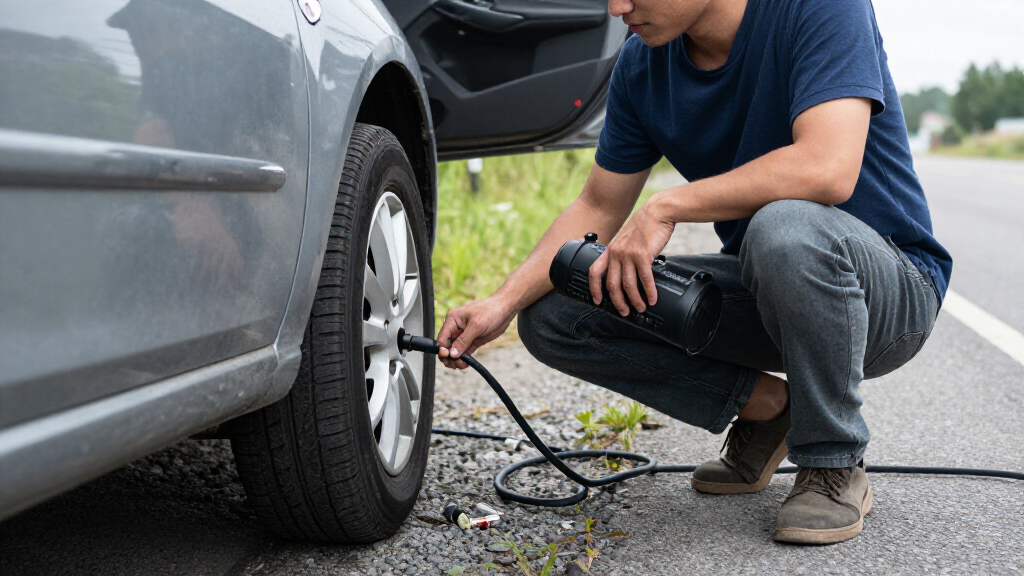
I compared these 15 inflators by how well their stated features address common car-tire needs: topping up pressure, setting a target, and keeping the unit usable when a tire needs attention away from home. Power source shaped the ranking: dual-power models can offer more ways to operate, cordless units reduce cable dependence, and 12V models trade that freedom for power from the vehicle. I also weighed controls such as a digital pressure gauge and auto shutoff, along with portability and whether a product’s stated uses extend beyond car tires.
The order favors practical fit over a maximum-pressure figure alone. Products with a clearer combination of car-oriented use, useful controls, and flexible operation rank ahead of options whose main advantage is a narrower use case or a more limited power arrangement. Since the supplied product information does not establish comparable inflation times, duty cycles, or tested accuracy, I do not treat those as proven differences. Buyers should check the exact model’s instructions and compatibility for their vehicle and tires.
Factors to Consider When Choosing Portable Tire Inflators For Cars
Before choosing, decide where and how you expect to inflate tires. The main tradeoff is not simply cordless versus corded: it is whether you value convenience away from the car, a power source you can rely on during an emergency, or a compact pump that also works for smaller tires. These factors help match an inflator to your routine rather than to a headline specification.
Match the power source to where you park
A rechargeable inflator is convenient when you need to work away from the vehicle or do not want a cord stretched across a driveway. That convenience depends on keeping the battery charged, so think about how often you would check its charge and whether you can recharge it in your usual storage spot. A 12V model draws power from the car, which avoids a separate battery but ties use to the vehicle socket and cable reach. Dual-power models offer a fallback, though they may add bulk or require you to keep track of more accessories. Do not assume every vehicle socket can supply every inflator’s needs; check the product instructions and your vehicle manual. Choose the power setup that suits your parking and storage habits, not just the one that sounds most convenient.
Treat maximum PSI as a limit, not a speed rating
A maximum PSI figure tells you the upper pressure the product is designed to reach, not how quickly it will fill a car tire. For everyday use, confirm that the inflator is intended for your tire type and the pressure range your vehicle requires. Tire pressure targets come from the vehicle maker’s placard or manual, not the maximum pressure printed on a pump. Buyers can be misled by comparing PSI figures without checking what they say about inflation performance, which is not established by that number alone. If you expect to inflate several tires in one session, consult the manufacturer’s guidance on runtime and cooling intervals. This is a better way to judge whether a compact model fits your workload than relying on a headline specification.
Choose controls that reduce pressure-setting mistakes
A digital gauge makes a target easier to read, while auto shutoff can stop inflation when the selected pressure is reached. Those features can make routine top-ups less hands-on, but they do not remove the need to set the correct target or follow the instructions. Check whether the display uses the pressure units you prefer and whether the controls are easy to operate in the conditions where you expect to use the pump. A built-in light may help when checking a tire in low light, but it cannot replace a separate roadside warning setup. Avoid assuming an auto-stop feature guarantees exact pressure in every situation; compare the maker’s instructions and verify pressure with a trusted gauge if precision matters. Simpler controls may suit an occasional user, while frequent use makes clear readings and straightforward settings more valuable.
Decide whether one pump must serve several kinds of tires
Some inflators in this roundup are positioned for cars, motorcycles, bicycles, or a mix of them. Multi-use appeal can reduce the number of devices you store, but compatibility depends on the included fittings and the product’s intended pressure and workload. Before buying, check the valve connection and included accessories for every tire you plan to inflate. A small cordless bicycle-oriented pump may be easier to carry, while a car-focused unit may be more suitable for keeping with roadside gear. Do not infer that a pump suitable for a bicycle is automatically a good choice for repeated car-tire top-ups. Let your most demanding regular use set the requirement, then treat secondary uses as a bonus.
Plan for storage, charging, and emergency readiness
Portability is useful only if the inflator is stored where you can reach it and kept ready to run. A cordless unit calls for a charging routine; a corded unit calls for a place to store its cable and access to a working vehicle socket. Check the package details for hoses, adapters, and storage provisions rather than assuming every pictured accessory is included. If the inflator will live in a hot or cold vehicle, follow the manufacturer’s storage guidance for its battery and operating conditions. A compact design may be easier to carry, while a larger unit can be less convenient to keep in a crowded trunk. Choose a storage plan before buying, especially if the pump is meant for unexpected roadside use.
Pay for useful flexibility, not features you will not use
Spending more makes the most sense when it buys a feature you will rely on, such as a second power option or a battery platform that fits tools you already own. A dual-power design can help if you want cordless use but also value a vehicle-powered fallback. A straightforward 12V model may be a better fit if the pump will stay in one car and you do not want another battery to charge. Likewise, a multi-tire pump earns its place when you regularly inflate both car and bicycle tires, but extra versatility adds little if you only need occasional car top-ups. Compare what comes with the exact model, including charging equipment and adapters, before treating two similar names as equivalent. The right value is the setup that matches your routine without leaving you dependent on an accessory you do not have.
Frequently Asked Questions
Should I choose a cordless inflator or a 12V car-powered model?
Choose cordless if you value working without a cable or may need to inflate a tire away from the car, and accept that you must keep the battery charged. A 12V model makes sense if the pump will stay with a vehicle and you want to draw power from its socket instead of maintaining a separate battery. Dual-power designs bridge those needs, though they can involve more parts to store and manage. Check the unit’s instructions and your vehicle’s socket requirements before buying. Your parking setup and readiness habits are better guides than the power label alone.
Can a portable tire inflator replace the pressure gauge I keep in my car?
A model with a digital gauge can make checking and setting pressure more convenient, and auto shutoff can reduce the need to watch the pump continuously. Still, do not assume the inflator’s displayed reading is a substitute for every pressure check, especially when accurate readings matter. Follow the maker’s directions for using the gauge and setting the target. You can keep a separate gauge as a way to verify pressure, particularly after using an inflator or if readings seem inconsistent. Set tires to the vehicle maker’s recommended pressure, not the tire’s maximum sidewall figure.
Is a 150 PSI or 160 PSI inflator better for my car?
Not automatically. Those figures describe maximum pressure claims, not how quickly the unit fills a tire, how long it can run, or how easy it is to operate. First check that the model is intended for car tires and that its instructions cover the pressure and workload you need. Compare power source, controls, runtime guidance, and included accessories instead of treating a small difference in maximum PSI as proof of better performance. For ordinary car-tire maintenance, the recommended vehicle pressure is the target that matters.
Will a cordless tire inflator be ready if I leave it in the trunk?
It can be, but readiness depends on the particular battery and how it is stored and maintained. Check the manufacturer’s guidance on charge level, storage conditions, and how often to recharge the unit. A pump left unused for a long time may not be ready when you need it, so make battery checks part of your car-care routine. If that upkeep does not suit you, a 12V model avoids relying on a separately charged battery, provided you can use the vehicle socket. Keep the instructions and required adapters with the pump.
Can I use one portable inflator for both my car and bicycle tires?
Some models are marketed for both, but compatibility is not guaranteed by the word “portable.” Check the included valve adapters and confirm that the manufacturer lists both uses for the exact model. Also consider workload: a compact bicycle pump may suit occasional top-ups but may not be the right choice for repeatedly inflating car tires. If car tires are your main need, choose a model clearly intended for them and treat bicycle support as an extra only after checking fittings. For a household with multiple tire types, the included accessories and operating guidance should decide the match.
Conclusion
For a broadly useful car-focused choice, I would start with the DEWALT Tire Inflator: its digital gauge and auto shutoff make it my best overall pick in this lineup. If flexibility matters most, the OlarHike Dual Power is my best pick for buyers who want both battery and 12V operation; for best value by practical fit, I would choose the Craftsman 12V Inflator if a corded setup meets your needs. Beginners who want a digital readout and automatic stopping can focus on those features in the DEWALT or Craftsman 12V options. For drivers who also inflate bicycle tires, compare the Airmoto, OlarHike cordless bike pump, and AstroAI L7 by their stated uses and included fittings. Pick the power source you can keep ready, then confirm the exact model’s compatibility and instructions before buying.
Fall Picks
fall essentials
As an affiliate, we earn on qualifying purchases.