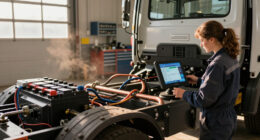
When selecting sound level meters for NVH analysis, accuracy, ease of use, and data logging capabilities are key. The Decibel Meter TS-501B stands out as the best overall due to its portability and clear display, ideal for field measurements. The Extech SL510 is a solid mid-range choice, offering reliable class 2 accuracy for general testing. For those seeking premium features like extensive data logging, the CRY2832-2 Lite provides advanced analysis tools. However, buyers often face tradeoffs between cost, precision, and functionality. Continue reading for a detailed breakdown of these options to find the best fit for your NVH needs.

Get business pricing on garage and car supplies
- Business-only prices and quantity discounts
- Tax-exempt purchasing
- Multiple users, one account, clear invoices
Complete the kit


Key Takeaways
- Top picks balance accuracy, usability, and data logging features based on NVH testing needs.
- Premium models offer extensive data analysis but come at a higher price, suited for professional labs.
- Portability and quick setup are crucial for field NVH measurements, favoring compact designs.
- Class 1 meters deliver higher precision, but class 2 meters may suffice for general NVH assessments.
- Buyer priorities vary: some need budget-friendly options, others require advanced logging and analysis tools.
| Decibel Meter TS-501B Sound Level Meter with Backlit LCD, Portable SPL Tester for Noise Monitoring |  | Best Overall for Versatility and Portability | Display: 2.25-inch LCD with backlight | Range: 30-130 dB | Frequency Response: 30-8000Hz | VIEW ON AMAZON | See Our Full Breakdown |
| Decibel Meter, Goldeep SL750A Digital Sound Level Meter 30-130dB, A/C Weighted DB Meter with dB/SONE, Fast/Slow, MAX/MIN, LCD Sound Meter for Home, Office, Factory, Neighbor Noise |  | Best for Versatile Environments with Multiple Response Modes | Measurement Range: 30-130dB | Accuracy: ±1.5dB | Frequency Response: 31.5Hz-8KHz | VIEW ON AMAZON | See Our Full Breakdown |
| Extech SL510 Sound Level Meter, 35-130 dB, Class 2 |  | Best for Compact, Reliable Measurements on the Go | Range: 35-130 dB | Accuracy: ±1dB | Standards: Class 2 | VIEW ON AMAZON | See Our Full Breakdown |
| Digital Sound Decibel Meter with Data Logger and Alarm |  | Best for Data-Intensive NVH Monitoring with Alerts | Measurement Range: 30~130dB | Accuracy: +/- 1.5dB | Data Storage: 43,000 points | VIEW ON AMAZON | See Our Full Breakdown |
| Decibel Meter (Range: 30-130 dB) Class 1 Sound Level Meter, Professional Noise Measurement Device Model SL-4033SD |  | Best for Highest Accuracy and Professional Data Logging | Range: 30-130 dB | Accuracy: ±2.0 to ±3.5 dB | Frequency Weighting: A & C | VIEW ON AMAZON | See Our Full Breakdown |
| Decibel Meter, Tadeto Digital Sound Level Meter Portable SPL Meter 30dB to 130dB with LCD Display |  | Best for Portable and Basic Noise Monitoring | Measurement Range: 30dB to 130dB | Accuracy: ± 2.0 dB | Display: 4-digit LCD with backlight | VIEW ON AMAZON | See Our Full Breakdown |
| Decibel Meter, RISEPRO® Digital Sound Level Meter 30–130 dB, Backlit, MAX/MIN, Data Hold, Auto Power Off, Dual Ranges HT-80A |  | Best for Versatile and User-Friendly Noise Monitoring | Range: 30–130 dB | Frequency Range: 31.5 to 4 kHz | Accuracy: +/- 1.5 dB | VIEW ON AMAZON | See Our Full Breakdown |
| Digital Decibel Meter with Voice Warning and Alarm Function |  | Best for Public Spaces and Safety Alerts | Measurement Range: 35dB to 135dB | Accuracy: ± 2.0 dB | Display Type: LCD with backlight | VIEW ON AMAZON | See Our Full Breakdown |
| Neoteck 30-130dB Decibel Meter with A/C Weighted Digital Sound Level Meter |  | Best for Environmental and Machinery Noise Analysis | Measurement Range: 30 to 130 dB | Weighting Modes: A and C | Display: 4-digit LCD | VIEW ON AMAZON | See Our Full Breakdown |
| CRY2832-2 Lite Professional Data Logging Sound Level Meter, Leq/Lpeak |  | Best for Long-Term Data Logging and Comprehensive Analysis | Standards: IEC 61672-1:2013 | Measurement Range: 30-130 dBA | Frequency Weightings: A, C, Z | VIEW ON AMAZON | See Our Full Breakdown |
| SW-525A Sound Level Meter Tester 30-130dB Large Screen Red LCD Display Wall Hanging Decibel Noise Measuring with Alarm |  | Best Overall for Versatile Noise Monitoring | Brand: TestHelper | Model Number: SW-525A | Measurement Range: 30-130 dB | VIEW ON AMAZON | See Our Full Breakdown |
| TopTes Decibel Meter TS-501A Sound Level Meter with Backlight LCD |  | Best Value for Portable and Accurate Noise Measurement | Measurement Accuracy: +/-1.5 dB | Measuring Range: 30 – 130 dB | Frequency Range: 30 – 8000 Hz | VIEW ON AMAZON | See Our Full Breakdown |
| Decibel Meter Wall Hanging Sound Level Meter with Large LED Display |  | Best for Large, Clear Readings and Multi-Environment Use | Size: 11 inches | Display: Large LED | Accuracy: +/- 1.5dB | VIEW ON AMAZON | See Our Full Breakdown |
| sound level meters for nvh | Accuracy | Measurement Range | Display |
|---|---|---|---|
| Decibel Meter TS-501B Sound Le | — | — | 2.25-inch LCD with backlight |
| Decibel Meter | ±1.5dB | 30-130dB | — |
| Extech SL510 Sound Level Meter | ±1dB | — | Backlit LCD |
| Digital Sound Decibel Meter wi | +/- 1.5dB | 30~130dB | Colored with line chart |
| Decibel Meter | ±2.0 to ±3.5 dB | — | — |
| Decibel Meter | ± 2.0 dB | 30dB to 130dB | 4-digit LCD with backlight |
| Decibel Meter | +/- 1.5 dB | — | — |
| Digital Decibel Meter with Voi | ± 2.0 dB | 35dB to 135dB | — |
| Neoteck 30-130dB Decibel Meter | ±1.5 dB | 30 to 130 dB | 4-digit LCD |
| CRY2832-2 Lite Professional Da | — | 30-130 dBA | — |
| SW-525A Sound Level Meter Test | — | 30-130 dB | Large Screen Red LCD |
| TopTes Decibel Meter TS-501A S | — | — | — |
| Decibel Meter Wall Hanging Sou | +/- 1.5dB | 30~130dB | Large LED |
More Details on Our Top Picks
Decibel Meter TS-501B Sound Level Meter with Backlit LCD, Portable SPL Tester for Noise Monitoring
The TopTes TS-501B stands out for its ease of use and portability, making it an ideal choice for quick noise assessments in various environments. Its high measurement accuracy with A/C weighting and a clear backlit LCD ensures reliable readings, especially compared to bulkier professional models like the SL-4033SD. While its 130 dB limit may not suit extremely loud industrial settings, its compact design and straightforward features make it perfect for fieldwork, home inspections, or office noise checks. The need for 3 AAA batteries is a minor inconvenience, but overall, it offers a balanced mix of performance and portability for most NVH applications.
Pros:- Easy-to-read backlit LCD display for quick readings
- High accuracy with A/C weighting for relevant noise measurements
- Compact and lightweight for portability
- Includes MAX/MIN and data hold functions for detailed analysis
Cons:- Limited to a maximum of 130 dB, restricting use in very loud environments
- Requires replacement of AAA batteries over time
Best for: Professionals or hobbyists who need a reliable, portable noise level meter for on-the-go measurements in diverse environments.
Not ideal for: High-end industrial engineers requiring measurements beyond 130 dB or with advanced data logging features.
- Display:2.25-inch LCD with backlight
- Range:30-130 dB
- Frequency Response:30-8000Hz
- Weighting:A/C
- Power:3 AAA batteries (included)
- Dimensions:2.17 x 0.98 x 5.51 inches
Our verdict“This device is well-suited for users who need a straightforward, portable sound level meter for daily NVH assessments without requiring advanced features.”
Decibel Meter, Goldeep SL750A Digital Sound Level Meter 30-130dB, A/C Weighted DB Meter with dB/SONE, Fast/Slow, MAX/MIN, LCD Sound Meter for Home, Office, Factory, Neighbor Noise
The Goldeep SL750A offers high accuracy (±1.5dB) and multiple response settings, making it more adaptable than basic models like the TS-501B. Its user-friendly LCD and versatile weighting modes suit a wide range of applications, from residential to industrial contexts. However, it lacks Bluetooth or advanced data logging, limiting its use for detailed analysis. Its 130 dB limit is sufficient for most NVH tasks, but users needing detailed data export or higher ranges may find it restrictive. Overall, this model balances precision and flexibility, especially for those who want more than just basic readings.
Pros:- High measurement accuracy of ±1.5dB
- Multiple response and weighting modes for comprehensive analysis
- Clear LCD display with portable design
- Includes batteries and user manual for immediate use
Cons:- Limited to 130 dB maximum, not suitable for very loud environments
- No Bluetooth or digital data transfer capability
Best for: Home inspectors, industrial workers, or environmental specialists needing a versatile, easy-to-operate meter with multiple response options.
Not ideal for: Professionals requiring detailed data logging or measurements exceeding 130 dB in loud industrial environments.
- Measurement Range:30-130dB
- Accuracy:±1.5dB
- Frequency Response:31.5Hz-8KHz
- Weighting Modes:A/C
- Units:dB/SONE
- Response Settings:Fast, Slow
Our verdict“This model makes the most sense for users seeking a flexible, accurate sound level meter for varied everyday NVH measurements.”
Extech SL510 Sound Level Meter, 35-130 dB, Class 2
The Extech SL510 combines compactness with high accuracy (±1dB), making it ideal for quick, reliable measurements in the field. Its Class 2 standard strikes a balance between affordability and precision, especially when compared to the SL-4033SD which offers higher accuracy and professional-grade features. Its backlit LCD and included accessories, like a wind-screen, support use in dim or outdoor environments. However, its limited standard (Class 2) may not satisfy professionals needing the highest accuracy or advanced data features. Still, for most NVH assessments, the SL510 provides dependable performance with minimal bulk.
Pros:- High accuracy of ±1dB for dependable readings
- Ultra-compact and portable design
- Backlit display improves visibility in low light
- Includes essential accessories like wind-screen and batteries
Cons:- Limited to Class 2 standards, not suited for professional-grade applications
- No data logging or Bluetooth connectivity
Best for: Field technicians or consultants who need a portable, reliable device for routine sound testing without the complexity of high-end models.
Not ideal for: Industrial noise monitoring requiring IEC61672 Class 1 precision or extensive data management capabilities.
- Range:35-130 dB
- Accuracy:±1dB
- Standards:Class 2
- Weighting:A & C
- Display:Backlit LCD
- Includes:Microphone wind-screen, wrist strap, batteries
Our verdict“This device is a practical choice for quick, accurate measurements in mobile or field settings where portability matters most.”
Digital Sound Decibel Meter with Data Logger and Alarm
The Digital Sound Decibel Meter excels in environments where detailed data collection is essential, with capacity for 43,000 data points and real-time alerts via visual signals. Its adjustable frequency weighting and PC export options set it apart from simpler devices like the TS-501B. While the large data storage and visual alarms make it suitable for thorough NVH analysis, its maximum measurement limit of 130 dB and reliance on a PC for analysis might limit standalone usability. The rechargeable battery adds flexibility, but heavy data logging can drain power quickly. This model is ideal for ongoing noise studies rather than quick spot checks.
Pros:- Massive data storage capacity with 43,000 points
- Visual alarms with multi-color alerts for immediate response
- Real-time display with adjustable frequency weighting
- Rechargeable battery for portable use
Cons:- Limited to 130 dB maximum, not suitable for extremely loud environments
- Requires PC for data analysis and export
- Battery life may decrease with heavy logging
Best for: Noise consultants or researchers who need extensive data logging, visual alerts, and detailed analysis capabilities in NVH testing.
Not ideal for: Users seeking a simple, portable meter for quick checks or environments where data logging is unnecessary.
- Measurement Range:30~130dB
- Accuracy:+/- 1.5dB
- Data Storage:43,000 points
- Connectivity:USB, PC export
- Power:Rechargeable
- Display:Colored with line chart
Our verdict“This device is best suited for NVH professionals needing comprehensive data logging and real-time alerts for detailed analysis over time.”
Decibel Meter (Range: 30-130 dB) Class 1 Sound Level Meter, Professional Noise Measurement Device Model SL-4033SD
The SL-4033SD offers the highest precision among these options, with IEC61672 Class 1 compliance and an accuracy of ±2.0 to ±3.5 dB. Its ability to log data directly to an SD card makes it ideal for detailed, long-term noise analysis. Compared with the SL510, it provides more rigorous standards and better suitability for legal or regulatory environments. However, its bulkier size and lack of wireless connectivity reduce convenience for quick field assessments. This model is perfect for environmental or occupational studies where accuracy and data integrity are paramount, but less so for everyday quick checks.
Pros:- IEC61672 Class 1 compliance for top-tier accuracy
- Real-time data logging to removable SD cards
- High resolution of 0.1 dB for precise measurements
- Versatile for environmental and occupational monitoring
Cons:- Bulkier and less portable than smaller models
- No built-in wireless or Bluetooth connectivity
- Requires SD card for data storage, adding extra steps
Best for: Environmental agencies, occupational health professionals, or researchers needing professional-grade measurements with detailed data logging.
Not ideal for: Field technicians seeking a lightweight, quick-use device without extensive data management features.
- Range:30-130 dB
- Accuracy:±2.0 to ±3.5 dB
- Frequency Weighting:A & C
- Resolution:0.1 dB
- Standards:IEC61672 Class 1
- Memory:Removable SD card 1-16 GB
Our verdict“This professional device is best for detailed, regulatory-compliant measurements where accuracy and data integrity take priority over portability.”
Decibel Meter, Tadeto Digital Sound Level Meter Portable SPL Meter 30dB to 130dB with LCD Display
This model stands out for its high accuracy within a manageable range, making it ideal for quick noise assessments in various settings. Compared to the Neoteck meter, it offers similar measurement precision but with a simpler interface, which may appeal to users prioritizing straightforward operation. However, its upper limit of 130dB restricts use in extremely loud environments like industrial sites, where the CRY2832-2 excels with broader logging capabilities. Its lightweight design and backlit display improve usability in dark or mobile scenarios, but the basic feature set means it may not satisfy professionals needing advanced data analysis or connectivity. This pick makes the most sense for users who need reliable, on-the-go measurements without complex features.Pros:- High measurement accuracy with ± 2.0 dB precision
- Multiple weighted modes (A and C) for versatile analysis
- Backlit LCD display for easy readings in dim environments
- Lightweight, portable design for on-the-move use
Cons:- Limited measurement range up to 130dB, unsuitable for loud environments
- Requires battery replacement when low voltage indicator appears
- Basic features may not satisfy professional data analysis needs
Best for: Professionals and hobbyists requiring accurate, portable noise measurements in environments up to 130dB
Not ideal for: Industrial sites with loud machinery exceeding 130dB or users needing advanced data logging features
- Measurement Range:30dB to 130dB
- Accuracy:± 2.0 dB
- Display:4-digit LCD with backlight
- Response Modes:Fast (0.125s), Slow (1s)
- Weighted Modes:A-weighted, C-weighted
- Power:Battery-powered (low voltage indicator)
Our verdict“This meter is best for users needing reliable, portable noise measurement within moderate sound levels.”
Decibel Meter, RISEPRO® Digital Sound Level Meter 30–130 dB, Backlit, MAX/MIN, Data Hold, Auto Power Off, Dual Ranges HT-80A
This meter excels in providing accurate readings across a broad range with added convenience features like MAX/MIN tracking and dual measurement ranges, making it suitable for both industrial and personal use. Compared with Tadeto’s model, it offers a slightly more user-friendly interface and additional features like data hold, but its maximum of 130dB limits its application in extremely loud environments. Its backlit display and auto power-off enhance usability, yet the need for manual calibration can be a hurdle for those seeking plug-and-play simplicity. This device suits users who want flexible, reliable noise measurements with some convenience features included.Pros:- Accurate measurement within a wide noise range
- Features like backlit display and data hold for convenience
- MAX/MIN readings to track peak noise levels over time
- Dual measurement ranges for flexibility
Cons:- Limited to 130dB maximum, not suitable for extremely loud sources
- Requires manual calibration for optimal accuracy
- Interface may be complex for some users
Best for: Industrial workers, building inspectors, or hobbyists needing versatile noise monitoring with easy-to-read data
Not ideal for: High-noise industrial environments exceeding 130dB or those requiring advanced data logging without manual calibration
- Range:30–130 dB
- Frequency Range:31.5 to 4 kHz
- Accuracy:+/- 1.5 dB
- Features:Backlit display, Data hold, MAX/MIN
- Response Modes:Fast and Slow
- Power:Requires batteries (not specified)
Our verdict“This meter offers a good balance of accuracy and usability for versatile noise assessment tasks within moderate sound levels.”
Digital Decibel Meter with Voice Warning and Alarm Function
This model stands out for its built-in voice alarm, which instantly notifies users when noise exceeds preset limits, making it ideal for environments like schools or hospitals. Compared to the Neoteck and Tadeto meters, it adds a vocal warning feature that enhances real-time monitoring. Its range from 35dB to 135dB covers most indoor noise scenarios but limits outdoor use where louder environments can occur. The remote control and multiple charging options improve usability, yet its primary design for indoor use means it’s less suitable for outdoor applications or long-term logging. This device is especially useful for settings where immediate feedback and alerts are critical.Pros:- Accurate measurement with real-time sound level updates
- Voice warning alerts when noise exceeds limits
- Remote control for easy operation from a distance
- Large, backlit LCD screen for visibility
Cons:- Designed mainly for indoor environments
- Limited to 35dB-135dB range, not suitable for very loud outdoor sources
- Requires batteries or power adapter
Best for: Facility managers, teachers, or health safety officers monitoring indoor noise and needing instant alerts
Not ideal for: Outdoor noise measurement or applications requiring extensive data logging and analysis
- Measurement Range:35dB to 135dB
- Accuracy:± 2.0 dB
- Display Type:LCD with backlight
- Power Source:6 AA batteries or AC adapter
- Features:Voice warning, remote control
- Item Length:11.65 inches
Our verdict“This meter is ideal for indoor safety monitoring where instant alerts can prevent noise disturbances or health risks.”
Neoteck 30-130dB Decibel Meter with A/C Weighted Digital Sound Level Meter
Compared with the Tadeto and Risepro meters, the Neoteck offers a built-in temperature sensor, adding value for environmental monitoring. Its accuracy of ±1.5 dB enhances reliability, especially in fluctuating noise conditions. However, its maximum measurement of 130dB limits use in louder industrial environments, and it requires 6 AAA batteries, which might need frequent replacement. Its real-time monitoring, max/min tracking, and backlit display make it a solid choice for environmental inspectors or machinery noise assessments. Yet, for long-term data logging or detailed analysis, the CRY2832-2’s advanced features make it a better fit.Pros:- High accuracy with ±1.5 dB precision
- Includes temperature sensor for environmental context
- Real-time max/min tracking and data hold
- Backlit LCD for easy visibility
Cons:- Requires 6 AAA batteries, which may need frequent replacement
- Limited to 130dB maximum, unsuitable for very loud sources
- Slightly more complex operation due to added features
Best for: Environmental engineers, machinery inspectors, or researchers needing accurate, real-time noise data with temperature insights
Not ideal for: High-noise industrial sites exceeding 130dB or users seeking extensive data logging features
- Measurement Range:30 to 130 dB
- Weighting Modes:A and C
- Display:4-digit LCD
- Resolution:0.1 dB
- Accuracy:±1.5 dB
- Additional Features:Max/Min tracking, temperature sensor
Our verdict“This meter offers precise environmental noise evaluation, especially when temperature data adds value, but is limited in handling extremely loud sources.”
CRY2832-2 Lite Professional Data Logging Sound Level Meter, Leq/Lpeak
This professional-grade device surpasses the others with its extensive data logging, connectivity options, and compliance with IEC standards, ideal for detailed environmental or industrial noise studies. Unlike the simpler models like Tadeto or Risepro, it supports long-term monitoring and data export via USB, Bluetooth, or WiFi. Its multiple measurement modes, including Leq and Lpeak, provide a thorough picture of noise exposure over time. However, its complexity and need for external microSD cards or training might deter casual users. This meter is best suited for professionals who require detailed, long-term noise data for compliance or research purposes.Pros:- Supports long-term data logging with export options
- Multiple measurement parameters including Leq and Lpeak
- Connectivity via USB-C, Bluetooth, WiFi for flexible data access
- Meets IEC 61672-1:2013 standards for professional accuracy
Cons:- MicroSD card must be purchased separately, adding cost
- Features may be complex for new or casual users
- Bulkier and more expensive than portable handheld meters
Best for: Environmental consultants, industrial safety auditors, or researchers conducting long-term noise assessments
Not ideal for: Casual users or small business owners needing quick, simple noise checks without data analysis needs
- Standards:IEC 61672-1:2013
- Measurement Range:30-130 dBA
- Frequency Weightings:A, C, Z
- Time Weightings:F, S, I
- Bandwidth:20 Hz to 8 kHz
- Connectivity:USB-C, RS232, Bluetooth, WiFi
- MicroSD Support:Yes (sold separately)
Our verdict“This device is tailored for professionals demanding detailed, long-term noise data with extensive analysis capabilities.”
SW-525A Sound Level Meter Tester 30-130dB Large Screen Red LCD Display Wall Hanging Decibel Noise Measuring with Alarm
The SW-525A stands out for its large, easy-to-read red LCD display and wall-mount capability, making it ideal for continuous noise monitoring in industrial or institutional settings. Compared with the TopTes TS-501A, it offers a broader application with its wall-hanging design, though it lacks detailed calibration info and has no clear battery life data. This model’s alarm function adds proactive noise management, but its bulkiness might hinder handheld use. For those seeking a fixed installation or real-time alerts, this is a practical choice. However, users requiring high precision or portability might find it less flexible. Large display and wall mounting make it suitable for permanent setups, while limited calibration details could be a downside for calibration-critical tasks.Pros:- Large, easy-to-read LCD display
- Wide measurement range (30-130 dB)
- Wall hanging design for convenience
- Includes an alarm feature
Cons:- Limited details on calibration accuracy
- No information on battery life or power source
- Potentially bulky for handheld use
Best for: Facilities needing a durable, wall-mounted noise monitoring device in industrial or institutional environments.
Not ideal for: Individuals requiring a lightweight, handheld meter for quick spot checks, due to its potential bulkiness.
- Brand:TestHelper
- Model Number:SW-525A
- Measurement Range:30-130 dB
- Display:Large Screen Red LCD
- Wall Mountable:Yes
Our verdict“This meter is best suited for fixed installations where ease of reading and alarm alerts are priorities over portability.”
TopTes Decibel Meter TS-501A Sound Level Meter with Backlight LCD
The TopTes TS-501A offers a solid balance of accuracy and portability, with a backlit LCD that makes readings clear in various lighting conditions. Its A-weighting ensures it captures human-perceived loudness, similar to the Decibel Meter TS-501B but with a more compact design. While its measurement accuracy of +/-1.5 dB is sufficient for most non-professional uses, it falls short of professional-grade precision. The 3 AAA batteries make it portable, but users should be aware of ongoing battery replacements. Its maximum 130 dB range is adequate for most environmental noise checks, but less suited for high-intensity industrial noise. This model is a good choice for homeowners, community monitors, or hobbyists needing dependable readings without complexity. Accurate, portable, and user-friendly, but limited maximum range and battery dependency are considerations.Pros:- Accurate noise level measurement with A-weighting
- Large backlit LCD for easy reading
- Includes MAX/MIN recording and data hold
- Portable with battery operation
Cons:- Requires batteries, which need replacement
- Limited to 130 dB maximum measurement range
- Accuracy may not meet professional standards
Best for: Homeowners, community noise monitors, and DIY enthusiasts seeking a reliable, portable sound level meter.
Not ideal for: Professional noise engineers requiring higher accuracy or higher measurement ranges for industrial environments.
- Measurement Accuracy:+/-1.5 dB
- Measuring Range:30 – 130 dB
- Frequency Range:30 – 8000 Hz
- Display Size:2.25-inch LCD
- Power:3 AAA batteries
- Dimensions:2.17 x 1.02 x 5.51 inches
Our verdict“Ideal for casual and semi-professional use where portability and decent accuracy are priorities over maximum measurement range.”
Decibel Meter Wall Hanging Sound Level Meter with Large LED Display
This decibel meter’s 11-inch LED display provides exceptional visibility, especially useful in environments where quick, at-a-glance data is needed, such as classrooms or factories. Its calibration feature offers high accuracy comparable to the Decibel Meter TS-501A, but without an audible alarm. The large display can be adjusted for brightness, making it adaptable to different lighting conditions. While the absence of an audible alert may limit proactive noise control, the multiple face icon alarms help indicate noise issues visually. Its wall-mounting flexibility and battery-powered operation suit both fixed and temporary setups. However, the limited indoor-only design and unspecified battery longevity mean it’s less suitable for outdoor or extended use. This meter makes most sense for environments where visual alerts are sufficient and clarity is a priority. Large, adjustable display and visual alarms make it ideal for multi-environment indoor use, but lack of an audible alarm could be a drawback.Pros:- Large, adjustable LED display for easy reading
- High accuracy with calibration capability
- Multiple visual alarm icons
- Flexible wall or desk mounting
Cons:- No audible alarm feature
- Battery life details are not specified
- Limited to indoor use
Best for: Classrooms, studios, or factories where large, clear visual noise indicators are preferred over sound alerts.
Not ideal for: Outdoor environments or settings requiring audible alerts for immediate responses, due to absence of sound alarms.
- Size:11 inches
- Display:Large LED
- Accuracy:+/- 1.5dB
- Measurement Range:30~130dB
- Battery:2000mAh Lithium
- Cable Length:9.8 feet
Our verdict“Best suited for indoor environments where large visual cues are preferred over audible alerts for noise management.”

How We Picked
I evaluated these sound level meters based on several key criteria: measurement accuracy, ease of use, data logging capabilities, build quality, and versatility for NVH testing. Devices with higher accuracy ratings and professional features were prioritized, especially for complex NVH analysis. Portability and user interface also played a significant role, as these meters are often used in field environments. We ranked products by how well they balance these factors for different user needs, from beginners to professionals, ensuring each choice offers distinct advantages for specific NVH applications.Factors to Consider When Choosing Sound Level Meters For Nvh
Choosing the right sound level meter for NVH involves understanding your specific application, budget, and required features. Not all meters are created equal; some prioritize portability and quick readings, while others focus on detailed data analysis. By considering these factors, you can select a device that enhances your noise, vibration, and harshness testing without overpaying for unnecessary features.Measurement Accuracy and Class Rating
Accuracy is fundamental in NVH testing. Class 1 meters deliver ±1.5 dB precision, making them suitable for detailed analysis, while Class 2 meters, with ±2.0 dB accuracy, are often sufficient for general assessments. Consider your testing demands—if you need pinpoint precision, investing in a Class 1 device is wise, but for routine checks, a Class 2 meter can save costs without sacrificing meaningful results.
Data Logging and Analysis Capabilities
For in-depth NVH studies, data logging features are invaluable. Devices like the CRY2832-2 Lite excel here, offering extensive storage, real-time analysis, and spectral data. If your work involves trend analysis or long-term monitoring, prioritize meters with robust data export options and software compatibility. Conversely, casual measurements might not require such features, allowing for simpler, more affordable models.
Portability and Ease of Use
NVH testing often takes place in varied environments, so a compact, lightweight design can significantly improve workflow. Look for models with straightforward interfaces, backlit displays, and intuitive controls. Avoid overly complex devices if you need quick readings in the field—simplicity can reduce errors and save time, especially for non-expert users.
Frequency Weighting and Response Time
Different NVH applications may require specific frequency weightings, such as A-weighting for general noise or C-weighting for vibration-like sounds. Fast or slow response times affect how the meter captures transient versus steady sounds. Understanding these technical details ensures you select a meter aligned with your testing scenarios, improving the reliability of your data.
Budget and Long-Term Value
Balancing cost with features is a common challenge. Budget options may lack advanced logging or high accuracy but can still serve well for basic NVH screening. Investing in a higher-end model offers better precision, durability, and analytical tools, providing value over time if NVH testing is a core activity. Clarify whether your needs are immediate or long-term to make a cost-effective choice.
Frequently Asked Questions
Should I choose a class 1 or class 2 sound level meter for NVH testing?
Choosing between class 1 and class 2 depends on your testing precision requirements. Class 1 meters offer higher accuracy, making them ideal for detailed NVH analysis, certification, or research. Class 2 meters are more affordable and sufficiently accurate for general assessments, troubleshooting, or routine monitoring. If your work involves detailed data or compliance standards, investing in a class 1 meter is advisable; otherwise, a class 2 device may meet your needs without added expense.
Are data logging features worth paying extra for in a sound level meter?
Data logging can significantly enhance NVH analysis by allowing you to record, review, and analyze sound levels over time. This feature is particularly valuable in environments where noise levels fluctuate or long-term monitoring is required. While models with robust logging tend to be more expensive, they can save time and improve accuracy in identifying noise patterns. If your NVH work involves troubleshooting or detailed analysis, investing in a data logging-capable meter is often worthwhile.
What is the most important feature for portable NVH sound level meters?
Portability and ease of use are the most critical features for field NVH measurements. A lightweight, compact device with a clear, backlit display enables quick readings in various environments. Durability and battery life also matter, ensuring the meter withstands outdoor conditions and extended use. Prioritizing these qualities helps maintain efficiency and accuracy when working outside controlled lab settings.
Can I rely on a budget sound level meter for professional NVH work?
While budget meters can handle basic noise level assessments, their limited accuracy and fewer features may not meet the standards required for professional NVH analysis. For critical measurements, such as certification or detailed research, higher-rated class 1 meters with advanced data capabilities are recommended. However, for preliminary checks or routine monitoring, a well-chosen budget model can be a practical solution, provided you understand its limitations.
How important is response time in NVH measurements?
Response time impacts how accurately the meter captures transient or sudden noises, which are common in NVH testing. Fast response times are essential for measuring impulsive sounds or vibrations, while slower responses may smooth out important data. Selecting a meter with adjustable response times or the appropriate setting for your specific application ensures you gather meaningful and reliable data during NVH assessments.
Conclusion
For those needing precise, professional-grade measurements, the Decibel Meter SL-4033SD or the CRY2832-2 Lite stand out as top choices, offering extensive data logging and high accuracy. Best overall goes to the Decibel Meter TS-501B for its balance of portability, usability, and performance. Budget-conscious users should consider models like the Goldeep SL750A, which provides reliable measurements at a lower price point. Beginners and casual users will benefit from simple, intuitive devices like the SW-525A. For specialized applications, such as vibration analysis, selecting a model with advanced spectral analysis features is advisable. Ultimately, your choice should align with your specific NVH testing needs and budget constraints.
Halloween Picks
halloween
As an affiliate, we earn on qualifying purchases.